

Many screenwriters focus on the feature film screenplay as the primary format they need to master: three-act structure, the Hero’s Journey, the inciting incident, turning points, and other core elements of screenwriting. The idea is simple: if you can grasp these fundamentals and sustain 90 to 110 pages of compelling narrative momentum, you’re set as a screenwriter.
While this skill set is important, writing exclusively in one format can limit how your storytelling abilities develop. You may become efficient within a familiar structure, but also more rigid and less adaptable. Exploring multiple storytelling formats can sharpen your craft, strengthen creative discipline, and open up more career opportunities, if you approach it strategically.
Different mediums stress different structural instincts, and will expose blind spots in your writing. Diversifying formats doesn’t dilute your voice. It reveals where your craft is over-reliant on one storytelling habit, and can lead to you growing as a screenwriter and writer overall.
Television: Designing Engines, Not Just Arcs
Feature screenwriting trains you to build towards a single climax. Television writing asks something more complex: can this premise generate conflict repeatedly and without exhausting itself?
Writing a teleplay forces you to think in engines rather than endings. A pilot is not just a beginning: it’s a durability test. Characters must produce story over time. The world must sustain tension beyond one climax. Stakes must renew and regenerate rather than conclude.
Mike White is a great example of a screenwriter who flourished because of his ability to bounce between feature and television writing. He wrote the films Chuck & Buck and The Good Girl — both sharp, contained character studies — as well as commercial comedies like School of Rock. But his voice expanded in episodic form with Enlightened and later The White Lotus. The series format allowed him to sustain discomfort, satire, and social critique across multiple chapters instead of compressing it into a 90 minute arc.
Danny McBride has likewise expanded his opportunities by bouncing between features and television. Between co-writing the popular series Eastbound & Down and The Righteous Gemstones, he has co-written screenplays for the Halloween film series and proven himself highly adaptable both in terms of medium and genre.
White and McBride strengthened their storytelling by adapting to different mediums. Episodic writing forces you to think about momentum structurally, not just climactically. When you return to a feature script after building a series engine, you will approach second acts differently: not just as a perfunctory bridge from beginning to end, but as a playground for various conflicts and possibilities.
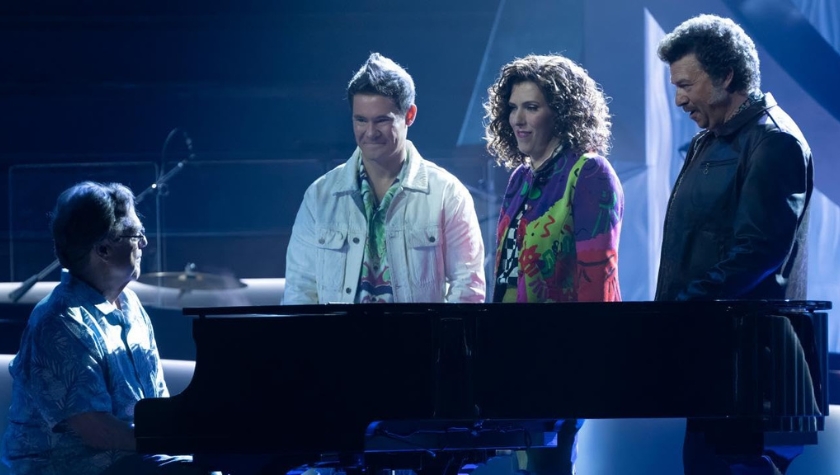
Stage: Dialogue Under Heat
Stage plays remove cinematic distraction. There are no cool visuals to hide weak motivation. No montages to mask thin character development. In a play, characters confront each other directly, often in confined spaces, and the tension must live inside the dialogue.
David Mamet built his storytelling foundation with plays like American Buffalo and Glengarry Glen Ross before transitioning into a sought-after screenwriter of the 1980s and 1990s. In addition to adapting many of his plays for the screen, he wrote the scripts for films like The Untouchables and The Edge. His dialogue is clipped, confrontational, and rhythmically controlled because it was forged under theatrical pressure. Every line must earn its place.
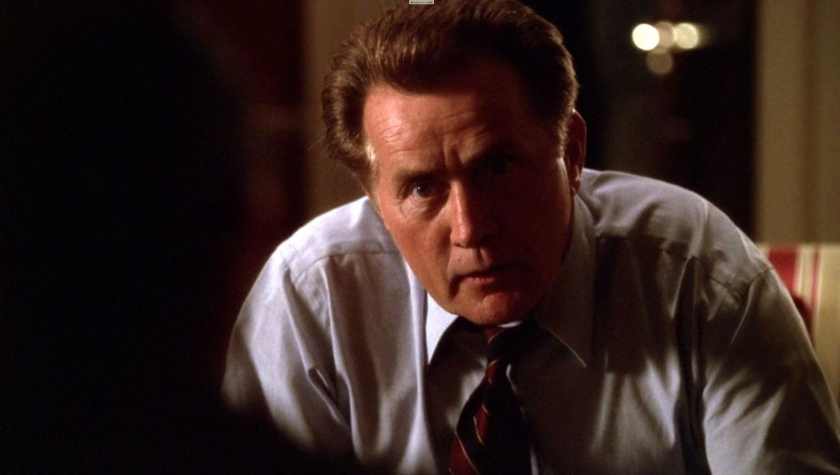
Aaron Sorkin’s trajectory echoes that discipline. From A Few Good Men on stage to film and television, including The West Wing and The Social Network, his writing thrives on verbal sparring. Scenes function as intellectual duels. Conflict intensifies through word choice.
Stage writing forces you to inject subtext purposefully and cleanly. It sharpens character objectives. It also eliminates filler dialogue — because the audience is present and alert. Dialogue is the show.
Prose: Interior Architecture and Thematic Depth
Screenwriting externalizes character through behavior and action. Prose allows you to enter the interior space: thought, memory, contradiction, thematic rumination. It helps you to think in macro terms: the big picture. Because of this, in addition to playwrights, many novelists have prospered in Hollywood over the decades.
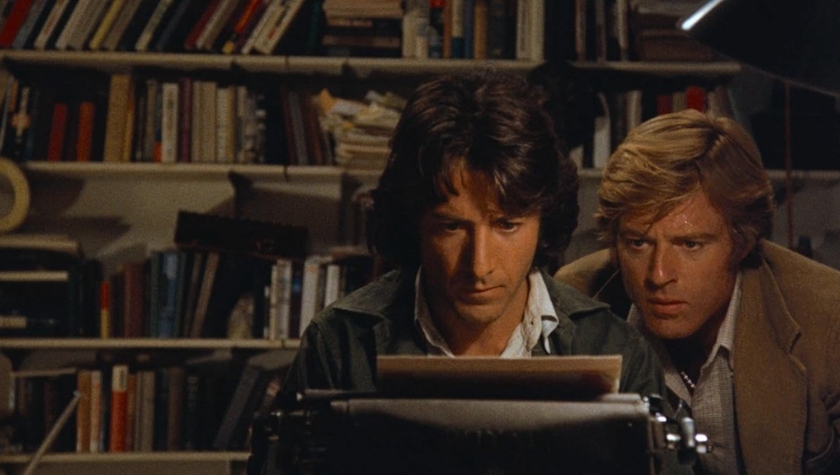
William Goldman navigated both worlds seamlessly. He wrote novels such as The Princess Bride and then adapted his own work for the screen, while also crafting original screenplays like Butch Cassidy and the Sundance Kid and All the President’s Men. His flexibility came from understanding narrative structure beyond format.
Michael Crichton likewise wrote prose and screenplays and excelled as a worldbuilder. He built expansive fictional ecosystems in novels like Jurassic Park, wrote screenplays, and created the television series ER. His ability to design layered systems — scientific, social, procedural — translated across media because his storytelling instincts were conceptual rather than format-bound.
Writing prose forces you to explore deeper themes and character psychology. It demands interior architecture as opposed to learning formulas and tropes. After attempting to write a short story or novel, you will come at screenwriting with greater depth and complexity.
Graphic Novels: Visual Impact and Structured Beats
Graphic storytelling is perhaps the closest to screenwriting. As with cinema, comic books and graphic novels rely heavily on visual impact. Panels are structure beats. Page turns function as plot turns. Composition becomes essential to the overall narrative design.
Robert Kirkman created The Walking Dead comic series long before serving as a scriptwriter and producer on the AMC adaptation and its expanding universe. The structural pacing, episodic cliffhangers, and mounting suspense that defined the television series were refined first in graphic form. It’s embedded in its DNA.
Graphic novels demand visual economy. You cannot rely on dense exposition. You must convey theme, mood, and escalation through imagery and sequence. This skillset benefits screenwriting directly. Action lines become cleaner. You prioritize what must be seen. You eliminate description that doesn’t serve movement.
Many screenplays today are enhanced by cinematic formatting, and what better way to master this than to write in a media that’s hyper visual.
Digital Content: Speed, Voice and Immediate Stakes
Short-form digital writing imposes a different kind of discipline. Writing scripts for YouTube — whether as a film reviewer, pop culture commentator, or comedic essayist — requires immediate clarity. You must establish the premise, your voice, and credibility within seconds.
Podcast scripting, especially in the screenwriting or film industry space, trains structural organization in conversational form. Segments must build logically. Transitions matter as much as punchlines. Similar to a play, every word works to keep us engaged.
Short scripts written for TikTok or Instagram, particularly for comedy writers, sharpen timing under format constraints. There is no room for a slow burn. Setups must be precise. Payoffs must land quickly.
Learning to write digital content increases your ability to quickly and directly engage. It also eliminates narrative indulgence and sharpens your decisiveness. When you return to feature writing after working in short-form spaces, your openings strengthen. You trim exposition. You introduce conflict earlier. You get out of scenes sooner.
In short, you become a leaner and meaner screenwriter.

How To Manage Writing Across Formats
Despite the advantages, there is a risk when writing in various mediums: you can fracture your attention if you don’t effectively manage your projects and it can become mentally overwhelming over time.
This is where organization becomes vital to your process and divided focus. Clear perimeters need to be constructed between formats so your brain can shift gears — and without carrying residue from one project into another. Creative range requires structural support.
Multiple mediums. Different drafts. Separate outlines. Research materials. Notes. Without a central environment, you’ll become counterproductive and waste energy locating files rather than refining scenes.
Cloud-based writing can be a solution to this.
In Final Draft Cloud you can create and manage projects across multiple formats — feature screenplays, television series, stage plays, general prose, graphic novels, digital content — all housed within a single organized Vault. Each project remains distinct, clearly categorized by medium, yet accessible within one workspace.
This organized system can reinforce mental clarity. When you open a feature screenplay, you are in screenwriting mode. When you pivot to a pilot, you know right where it is and the mindset to adopt. When you create a graphic novel, any inspirational images are saved alongside your template. When you experiment with digital scripts, they’re cleanly adjacent to your other writing projects — rather than scattered across disconnected platforms or devices.
The Vault functions as a command center rather than mere storage. It centralizes your creativity and keeps you from getting mentally overwhelmed.
Diversification Strengthens Screenwriting
Writing across formats strengthens your screenwriting because each medium develops a different storytelling muscle. Television helps you to build renewable engines. Stage sharpens your dialogue. Prose deepens your themes and the psychology of your characters. Graphic storytelling refines your visual clarity. Digital content improves your pacing and audience engagement. Together, these formats expand your structural awareness and creative discipline.
But diversification only works when it’s well-organized. When your projects are divided thoughtfully and housed within a centralized system, your expansion becomes controlled rather than chaotic.
You don’t lose focus. You gain dimension.
And a multi-dimensional, highly-adaptable writer is a force to be reckoned with.