

Digger (Tom Cruise) is an eccentric billionaire whose oil drilling company has put the world at risk of a catastrophic environmental disaster. Now, it falls on him to use his influence and powers of persuasion to get the world on the side of his business interests and potentially save the planet.
Kinda. Sorta.
"Digger is about nature, but human nature, the way we deal with things, with our emotions, with our decisions," Academy Award-winning filmmaker Alejandro G. Iñárritu said in an interview with The Playlist.
Iñárritu's dark comedy is pure satire, holding up a mirror to ourselves and forcing us to confront some extremely difficult questions. Many of those questions are asked in Digger's most ambitious scene — a 10-minute monologue in which Digger addresses a political assembly.
"This is a story about power, greed — about responsibility and being irresponsible," Cruise said in an ABC News interview when asked about his character. "He's trying to control things that are just — you can't control it."
Iñárritu, along with Cruise in his first post-Mission: Impossible endeavor, is taking a big swing with Digger. It took nearly a decade to go from concept to theaters, involving careful message-crafting, letting the story evolve, and going through nearly 70 versions of the famous monologue before landing on the one that made it into the movie.
Whether it's praised or panned or whether it becomes a box office hit or not, screenwriters can use Iñárritu's passion to inspire them to create the story they need to tell.
Turning Passion into Story
Every screenwriter has ideas, and many writers have a long list of ideas sitting in a document that will never see the light of day. Which story is worth pursuing? The answer may lie in the one you can't stop thinking about.
Iñárritu first had the idea back in 2017 and started with a version that is very different than what ended up hitting theaters.
"The film Digger was a different film," Iñárritu said in an interview with The Playlist. "The tone was different. The approach was different. The budget was massive."
Iñárritu continued developing the story until he felt comfortable enough to share it with Tom Cruise, and then they developed it further. That kind of commitment suggests the story held deep personal meaning for Iñárritu.
"When we started exploring this as an idea about 10 years ago, surprisingly, the world has become very loud, very fragmented and very weird since. We are in a constant reality show and everything is performative. It's hard for every human being, having so many narratives in our phones and fragmented realities, to figure out how to tell ourselves the story of where we are now, how to really talk about the common reality. I found that it's through humor and separation," Iñárritu said in a Hindustan Times interview.
It's no wonder that a master storyteller realized that people tell themselves their own stories to make sense of their reality. Iñárritu said in The Playlist that what interested him was how two people could live through the same event and walk away telling themselves completely different versions.
Iñárritu examines these ideas in human nature through the lens of power, greed and humanity's relationship with the environment. The themes in Digger are the ones that captured his imagination all those years ago.

Like Iñárritu, you should pay attention to the subjects that fascinate you, because the ones you can't stop thinking about may be the beginning of your next story. John Grisham's The Firm is a good example. The idea began with a conversation with a law school colleague who told Grisham that a prestigious law firm trying to recruit him felt like the mob. That simple observation became the seed for a best-selling novel, a Tom Cruise movie, and a decades-long career.
Writers need to be open to stories that might come from anywhere, at any time: a random thought, a conversation, or a question about humanity.
Digger Isn't the Only Character
Digger is a huge personality with enormous influence. He wants to surround himself with yes-men and believes in profits over just about everything, maybe not his beloved cat. As peculiar as he is, Digger is capable and ambitious. So, when he's responsible for an ecological disaster that threatens humanity, he's the one called in as an expert.
It's one thing to have an outsized character, but it's another to surround them with supporting characters that define them, add conflict, expose their flaws, and give them someone to react to.
Each supporting character in Digger, from the president to the scientist to the veterinarian, represents a different perspective on central ideas of the story: power, greed and the environment. And just like the protagonist, the supporting characters must have their own wants, fears and reasons for being a part of the story.
Whether supporting characters agree with the protagonist or not, they shouldn't exist only to reinforce or oppose the protagonist's worldview. For instance, imagine a protagonist and two supporting characters. The protagonist wants to use a gun for revenge. One supporting character disagrees and says violence isn't the answer. The second one agrees with revenge — but not using a gun, but a bomb.
Your protagonist sits at a baseline, and everyone around them should represent something that challenges where that character and forces them to make decisions.
When Life and Art Get Close
In January 2025, when Iñárritu was about to start shooting a scene that pits Digger and Ganesh (Riz Ahmed) against each other over the causes and responsibilities of the ecological disaster, he recalled his crew watching raging wildfires creep across Los Angeles.
"It was right there," Ahmed recalled in an interview with IndieWire. "So much of what is explored, exposed, and satirized in this film was staring us right in the face."
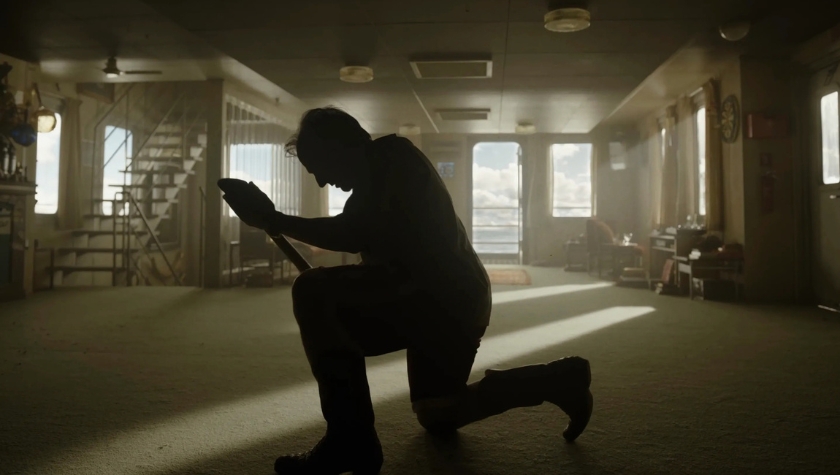
Art has the ability to make sense of the world. How often have The Simpsons been credited for predicting the future? And what about Veep, whose creators said the absurdity of real life was beginning to catch up with the show's satire?
The biggest comparison to Digger is Dr. Strangelove, which, in 1964, satirized politics, the Cold War, and nuclear annihilation with larger-than-life characters bringing the world closer to the brink of destruction.
Life and art are often connected because artists have a knack for seeing the world in ways others may overlook. Whether it's a satire, drama, horror, or any other genre of story you want to tell, choosing to draw inspiration from the world around you can make your story feel more immediate and stand the test of time.
Some critics even believe Digger will get better with age because it reflects the moment we're living through.
Writing a Dark Comedy
"Humor is the only way for us to separate ourselves and recognize ourselves in it," Iñárritu said in an interview with HOLA! "In a world so fragmented, when touching on profound subjects, humor is essential."
Dark comedies make light of serious or even painful subjects, but they can be difficult to pull off. While they lean toward the absurd, they often expose uncomfortable truths. They also don't rely on the laugh-out-loud jokes that conventional comedies use. Digger, as a dark comedy, approaches its themes from a farcical angle without diminishing the seriousness of those themes.
When writing a dark comedy, look for the humor that naturally exists within the story rather than forcing jokes into serious moments. If this genre appeals to you, consider watching these recent dark comedies:
The best movies have something to say about the world and the people living in it, whether they are in-your-face satire or a little subtle. Digger shows that filmmakers can believe in their passion, be ambitious in their storytelling, and not be afraid to make big swings.