
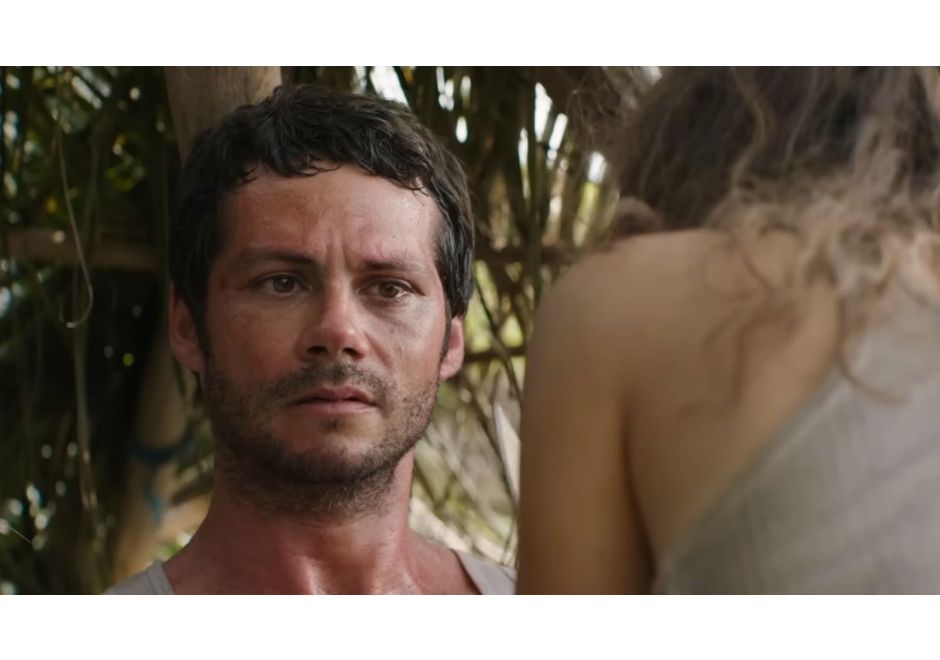
Send Help is a lot of things. It’s a story of survival on a deserted island, a commentary on power dynamics and unchecked dominance, and a high-pressure thriller.
The movie follows Linda Liddle (Rachel McAdams), a socially awkward corporate strategist who happens to be a genius at number crunching. The founder of the company (who had passed away) all but promised her a VP position, but his son, Bradley (Dylan O’Brien), a nepo baby who inherited the company from his dad, decides to give it to his frat bro instead. As socially awkward and shy as Linda is, there is an aggressive side that leads her to storm into Bradley’s office and demand answers.
From the very beginning, audiences see the power dynamics in play. Bradley wields his entitlement and arrogance as if he’s earned it. Linda struggles in the male-dominated business world even though she is capable, competent and smart. Linda also has dreams of being on Survivor and has seemingly read every book on how to survive in the wild. That works in her favor after the private jet she’s on with a bunch of the office bros crashes in the Pacific Ocean.
Welcome to Corporate Island
One of the smartest structural choices in Send Help is that power is never treated as a personality trait. Once Linda and Bradley have survived the plane crash, the office becomes a tiny island somewhere in the Pacific Ocean in which she is the one in charge, and not afraid to let Bradley know.
On the island, power belongs to whoever has the information and capability to find food and water and build shelter. Therefore, Linda’s dominance has nothing to do with physical strength or intimidation, but from knowledge; which is already established by her diligence in the office and survival books at home.
Bradley doesn’t lose power because he becomes weaker. He loses it because the environment no longer rewards the “skills” that made him think he could lead. But for someone like Bradley, power isn’t something he’s willing to give up easily, even as he realizes that Linda is the one truly in control.
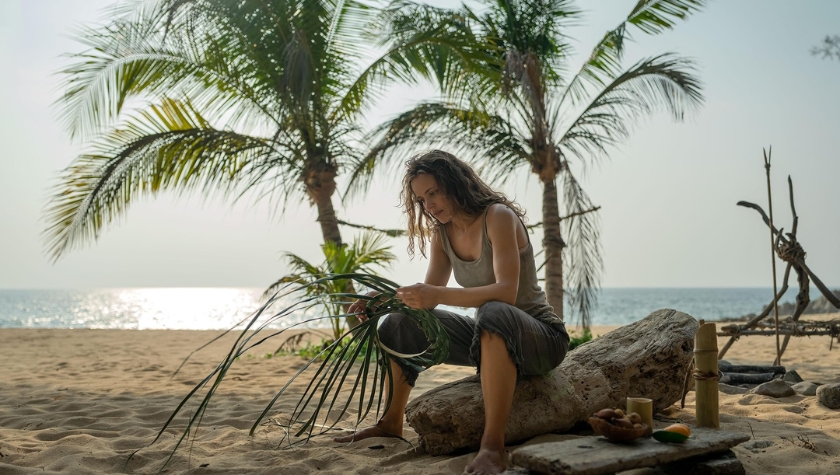
Corporate Brutality vs. Nature’s Brutality
“I really like the ‘what if?’ aspect of the movie,” director Sam Raimi said in an interview with Bloody Disgusting. “What if a woman at work was cheated? She’s got this terrible, mean boss. What if they crash-landed? And what if I was trapped on this island?”
Bradley can be brutal in the office but he learns quickly that outside the cozy corporate world, he is useless, incompetent and that his skills are not transferable. This isn’t an easy pill for him to swallow. He clings onto this illusion because giving up his power is hardly an option.
Therefore, Linda must take it away. Or at least, show that in nature, she has the competence.
Establishing a high-pressure setup reminiscent of Cast Away’s isolation combined with the obsessive/helpful vibes of Misery, Send Help turns the unforgiving island into a place where social dynamics and power struggles play out as the underappreciated employee suddenly becomes indispensable, while the dominant CEO is inept. Linda is like Annie from Misery, she’s a caretaker who traps someone in a place that is itself a trap.
There is another aspect of brutality – the internal brutality. While typical survival dramas center on external obstacles, Send Help focuses on internal conflicts as the two stranded characters must contend with distrust, resentment, ego and control. Unlike many survival stories, Send Help presents a highly-capable protagonist with almost no issues trying to survive alone on a tropical island.
Releasing the High-Pressure Valve
One aspect of a Sam Raimi film is placing humor into suspenseful or violent situations; something he has done for decades starting with The Evil Dead. Look no further than the plane crash sequence as passengers fight for the chance to take Linda’s seat. This tense set piece is filled with a few chuckles, likely the only time the audience is liable to laugh while watching a plane fall out of the sky.
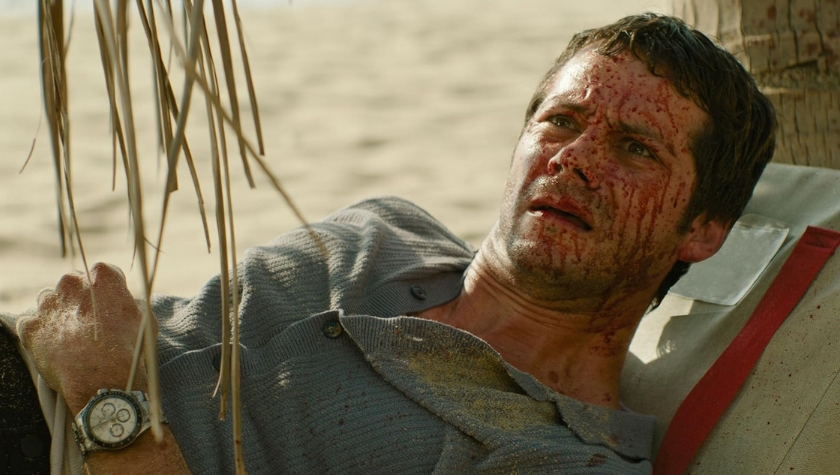
Raimi also peppers other tense and violent scenes with outrageous moments, such as a fight with a boar that includes an ungodly amount of blood flying everywhere. This shows how screenwriters can turn scenes into rollercoaster rides that set the audience’s heart rate skyrocketing before releasing the tension.
A Buddy Movie with a Twist
What do most buddy movies have in common? The two “buddies” never start out as friends. Send Help is no exception, and Raimi recognizes it.
In a High On Films interview, Raimi said that the movie begins with “the oldest story in the world, two people that didn’t get along and have grievances…”
The buddy movie concept is another means of adding pressure to a situation. When two characters seem like opposites and can’t work in sync, accidents and mess ups happen causing frustration. This builds tension and resentment between the characters and exacerbates a situation already on edge.
With the power dynamic flipping, it’s not necessarily about two people learning to get along, but rather how Linda’s new found power gets corrupted and how Bradley reacts.
Send Help shows screenwriters how the buddy movie concept isn’t just a device used in comedies but can expand into any genre – it becomes about a character and their foil.
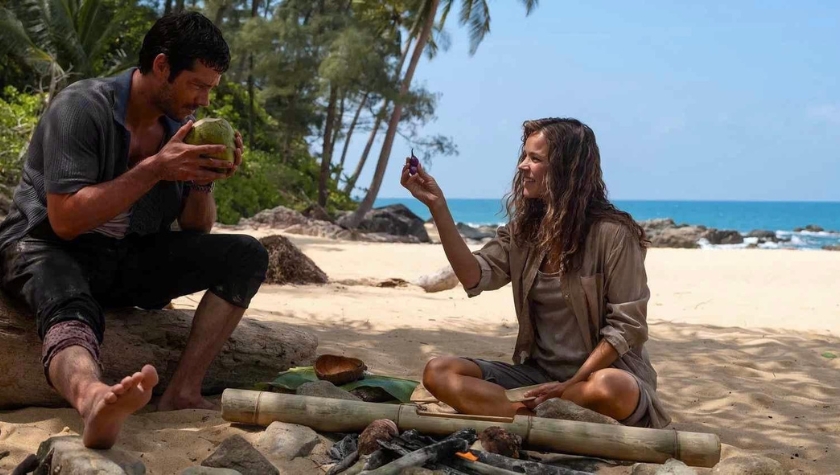
Same Person, Different Environment
When power dynamics are context-dependent, they can become interesting when the environment changes. In Jumanji: Welcome to the Jungle, the characters in the real world suddenly have their power dynamics shift when they are thrust into the world of Jumanji. The pretty girl becomes a character played by Jack Black and the star football player becomes a character played by Kevin Hart (next to Dwayne Johnson), all of which realigns the hierarchy. The same is true in Send Help when a sanitary corporate environment becomes an unforgiving island.
Send Help is simply two characters in one hostile environment and a clear imbalance of resources which is enough to generate escalating conflict. This demonstrates that you don’t need large ensembles or sprawling mythology, such as Dune or The Hunger Games, to explore power. And in Cast Away, it was someone who had to learn his environment and how to survive with no one but himself. It goes to show that a concept like Send Help can play out in a variety of ways, while still maintaining the idea of changing dynamics.
Send Help takes toxic corporate culture and flips it. Raimi creates an environment that exposes weaknesses where characters must discover uncomfortable truths about themselves once they’re no longer protected by familiar systems. But at the basic level, Send Help asks two questions that storytellers can pose in their stories:
What happens when someone who abuses their power suddenly loses it?
What happens when someone who has been abused by someone with power suddenly has all of it?