
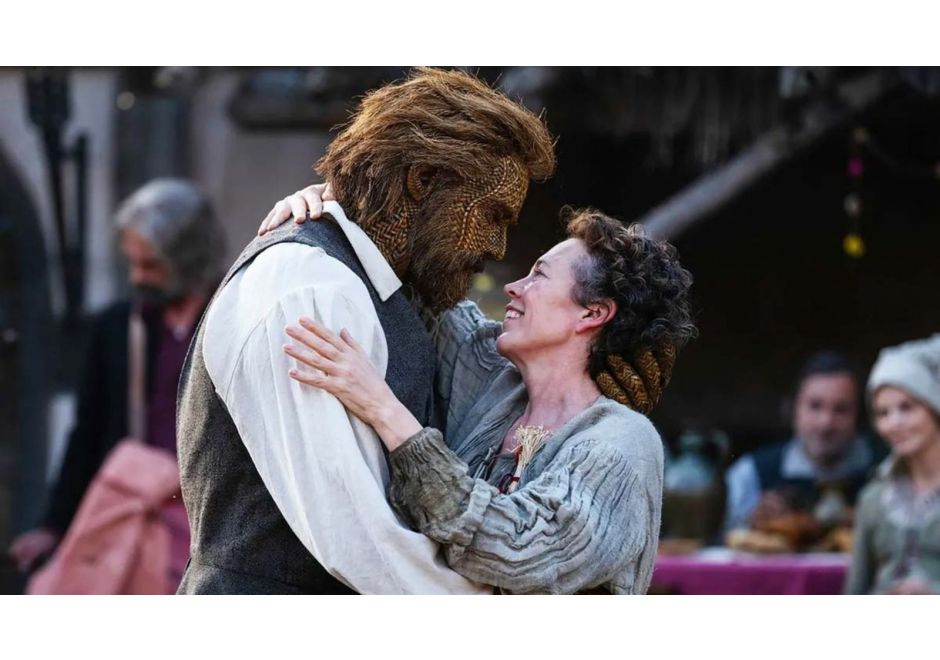
If you were a lonely, ostracized, slightly stinky fisherwoman in a nondescript medieval village, and you really wanted a man, what would you do?
Your first answer probably wouldn't be to turn to a mysterious local Basketmaker and ask him to make you a wicker husband. But that's exactly the premise of Wicker, a new dramedy from writers/directors Alex Huston Fischer and Eleanor Wilson.
Olivia Colman stars as the Fisherwoman, with Alexander Skarsgård as the Wicker Husband and Peter Dinklage as the Basketmaker. The film premiered to much acclaim at this year's Sundance Film Festival and has only been gathering steam since then, with much of the public just as enamored of this handsome wicker man as the Park City crowds were.
TikTok has been particularly fun, with wicker memes galore.
"She just thought she wanted to shake things up and piss everyone off," Colman told Deadline earlier this year. "And then accidentally, they fell in love, and then the village unravels, because we had a better relationship."
The film releases in U.S. theaters on Oct. 23. Final Draft spoke with Fischer and Wilson ahead of the wide release to learn more about their writing process.
Adapting a Short Story
The original short story came to them through a producer.
Fischer said, "So our producer, Justin Lothrop, was a fan of Ursula [Wills], the writer, and this is an unpublished short story, but he read this one, and he thought this one could be a movie. He sent it to us."
Before taking on an adaptation, they asked what a film could add that the original story didn't have.
"Obviously there was a very visual element at the center of the film with the Wicker Husband that we were just excited to be able to bring to life visually," Wilson said.
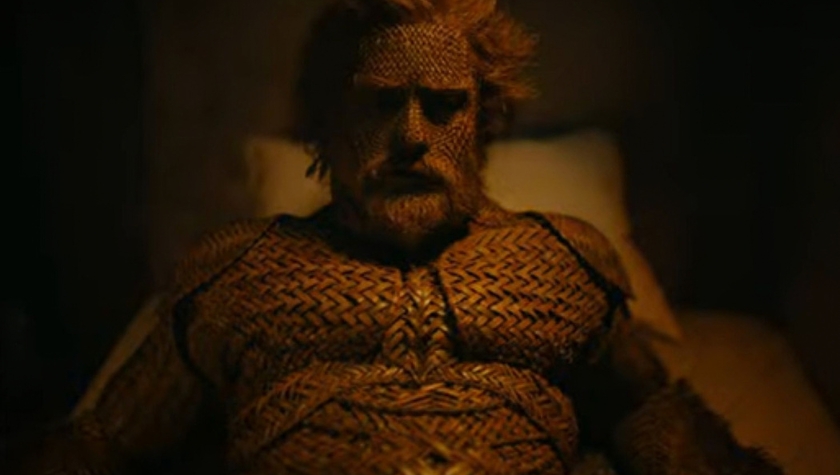
The rest was already there for them. Wilson said the story ran only about 10 pages but had a beautiful five-act structure, with a complete beginning, middle and end. Their job was to fill in the village and give its strange residents and stranger customs room to grow.
Outline Every Scene
The five acts in the short story gave them a framework, but Fischer said they don't fuss over structural theory while drafting. That comes later, when someone reads the script and pushes back.
"The writing process for us is much more intuitive. Then when we send it off, and somebody reads it, and they have questions about it, then we put up some scaffolding and can point to it."
Intuitive doesn't mean unplanned.
"We do outline before we start writing," Wilson said. "We heavily outline, so we have every scene laid out, and that's a lot of the hard work."
Fischer said every scene gets a slugline, even though those can change later. The goal is to keep the drafting fun, so neither of them gets stuck in a scene with no direction. Wilson also said a detailed outline makes scenes easier to end. When you know what comes next, you know where to stop.
Once the outline is done, they split the work by enthusiasm.
"Once we have the outline, we divide up scenes to who's excited about writing what," Wilson said. "And obviously we jump ahead of each other sometimes."
How They Develop Characters
Some of their most useful writing never appears on screen.
"The other thing we do in prep is character work," Wilson said. "We'd write letters between characters or scenes that would've taken place years before, that kind of fun stuff."
Sometimes that work pays off in ways they didn't plan, Fischer said.
"So Eleanor wrote this backstory for the Tailor's Wife and the Fisherwoman, so Debicki and Colman. And then I ended up using that and wrote a scene in the movie based on it. Which we didn't plan on doing, but it just came up."
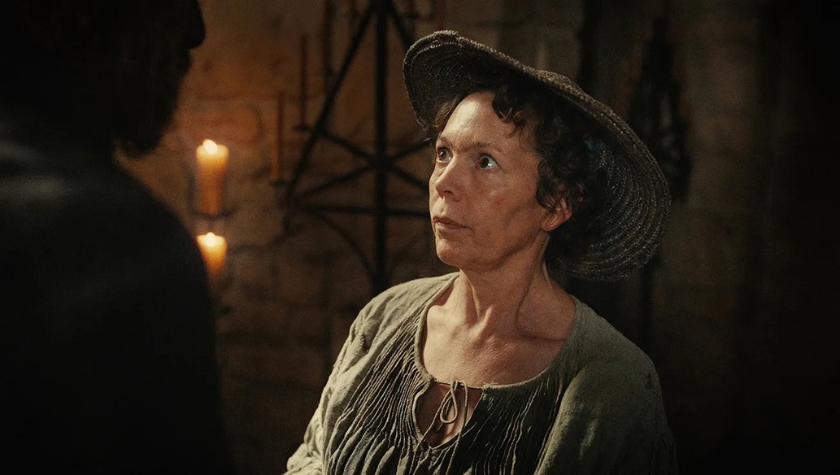
The point is to arrive at the dialogue already knowing who's talking, Wilson said.
They didn't do this for every character. Wilson said they focused on the key players and asked questions like what their childhoods were like and where the Basketmaker fit into his life. Other characters revealed themselves once the dialogue started.
Theme Comes from Revision
Neither of them begins with a thesis statement. Wilson said they talked through a few big ideas with producers early on, including marriage, the silly traditions people keep up, and the ways relationships go wrong. What the film ended up being about surprised them.
Wilson said, "Really, this movie became about accepting love into your life and learning to love yourself."
Fischer said that wasn't the plan going in. The theme showed up once there was a draft to look back on.
"We write to make each other laugh or cry or try to impress each other, and then we write for fun," Fischer said. "And then at the end of it, you finish the draft, and then you look back, and you think, 'Well, this is kind of what this movie's about. Let's make sure that every scene is in service of that now.' And a lot of it naturally will be. And then sometimes you're like, 'This scene isn't really working. Oh, it's because it's not really'—"
"In service of the story or the theme," Wilson agreed.
You often find out what a script is about by writing it, then use that to decide what stays. Wilson said theme comes up far more once they're in revisions.
Revision Sharpens Dialogue, Too
Revision is also where the fights between the Tailor's Wife (Elizabeth Debicki) and the Fisherwoman were sharpened into emotional gut-punches. Their scenes are full of conflict as they fight for the upper hand, and once the writers knew both women well, they could ask what each one could say to hurt the other most.
"So it's like, 'What can I say to you?'" Fischer said. "And anybody who's gone to middle school knows how this works. 'What can I say to this person to win, to get them off my back or to make myself heard or get them to shut up?'"
That understanding of the characters gets the dialogue written, but revision makes sure it says something impactful.
"Some of the more important or poignant lines of dialogue in the movie probably came from the revision process of just making sure that the point was made," Wilson said, "because you don't want to just be too intuitive about it that the point is lost."