

What is situational irony? At its basic level, it’s a type of irony that refers to an actual outcome being contradictory to what was expected. It’s not just major situational moments in movies and TV shows, but could also be a humorous headline from The Onion, a marriage counselor filing for divorce, or someone posting on social media how social media is bad for you.
Situational irony is everywhere and, as a screenwriter, you can use it to enhance your story and add depth to characters and the plots you place them in.
Different Kinds of Situational Irony
There are 3 main types of situational irony you can use. Knowing what they are, how they differ, and whether or not they make sense in the story you want to tell, will determine what kind you want to apply.
Poetic Irony
Poetic irony is when a character’s fate is especially fitting, often in a dark or unexpected way. It usually reflects their actions, beliefs or flaws. Think of it as karma or “poetic justice.”
- The Lion King - Scar is killed by the hyenas he once controlled.
- Inglorious Basterds - Just when the villainous Nazi thinks he’s escaped, he is branded permanently as a Nazi with a carved swastika in his skin.
- Iron Man - Toward the end of the film that started the Marvel Cinematic Universe, Tony Stark (Robert Downey Jr.) is battling his old pal, Obidiah Stane (Jeff Bridges) in their own iron man suits. Stane’s is bigger and stronger but, the poetic irony comes in when they are rocketing into the atmosphere and Stark says, “How did you figure out the icing problem?”
The reason why villains getting what they deserve is so satisfying is usually because of poetic irony, and the audience loves to see it.

Cosmic Irony
Cosmic irony is a type of situational irony that has to do with fate. In other words, some powerful force takes care of the events as if to mock or irritate the protagonist or any other character it chooses.
Cosmic irony involves fate, destiny or the power of the gods. If you ever have a character reach their hands to the heavens and yell, “Why God?,” then you might have some cosmic irony going on.
Cosmic irony tends to be tragic or humorous.
- Groundhog Day - Phil (Bill Murray) is stuck living the same day over and over with no explanation
- Liar, Liar - A lawyer who “lies” for a living can’t tell a lie for 24 hours
- A Serious Man - In the Coen Brothers’ loose adaptation of the biblical Book of Job, a man’s life starts falling apart and leads to his questioning of God’s reasons
- Titanic - An unsinkable ship just so happens to hit an iceberg and sink.
Structural Irony
Structural irony is a type of situational irony that contrasts something surface-level with what’s really lying underneath. In other words, the storyteller is purposely deceiving the audience.
A perfect example is the “fish out of water” scenario, in which the audience is learning about the world through the protagonist’s eyes.
- Memento - A man who can’t make short-term memories is determined to solve his wife’s murder, but how he pieces clues together reveals something more sinister
- Forrest Gump - Forrest (Tom Hanks) is not a smart man, but throughout the story the audience learns there is something far deeper than his surface shows
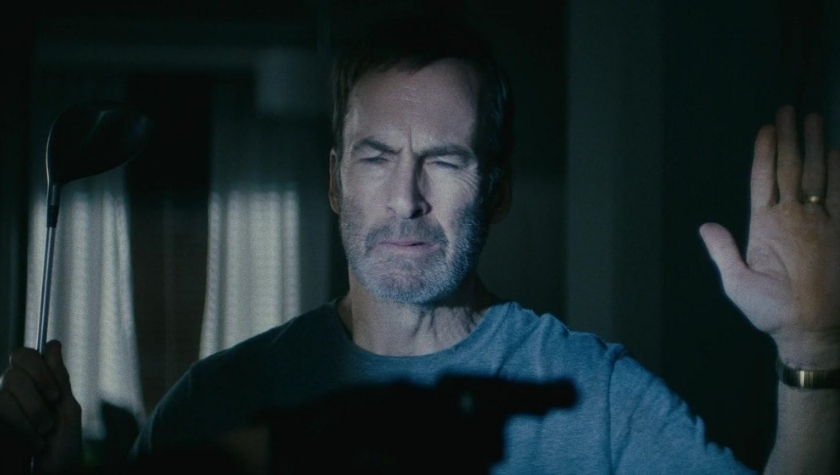
- Nobody - What looks like a dopey middle-aged man on the surface ends up being a trained killer underneath when pushed too far
How Does Situational Irony Differ from Other Ironies?
Dramatic Irony vs. Situational Irony
Dramatic irony requires the audience to have more information than the character. For instance, in The Truman Show, Truman (Jim Carrey) navigates the world he has always known while the audience (both inside the movie and the movie-goer) knows otherwise.
Dramatic irony isn’t as dependent on a surprise or unexpected twist as it would in situational irony.
Verbal Irony vs. Situational Irony
Verbal irony at its core has to do with what the character says, and the irony comes from the actual meaning versus what they say. A classic case of verbal irony is saying how nice the day is when it’s pouring rain. Situational irony would be knowing it’s supposed to be a sunny day so you plan a picnic, only it starts raining.
Whereas verbal irony is a comment, situational irony is reflective of the event.
How Writers Can Use Situational Irony
Situational irony is a great tool used by some of the best filmmakers and storytellers, even if they don’t realize they’re using it. But now that you’re aware of situational irony, you can use it to enhance your story, build off a new idea and add depth to your characters.
Here are some situational irony examples.
Let the Characters Create Their Own Downfall
This is an example of a protagonist’s strength becoming their weakness.
- A perfectionist causes chaos by over-controlling
- A protector ends up putting loved ones in danger
- A truth-seeker uncovers something that destroys them
Think about Batman (Christian Bale) in The Dark Knight, and how he is a hero who must become the villain.
Play the ‘What If’ game
Not only is the ‘What If’ game useful in situational irony, it’s also a great tool if you’re suffering from a little writer’s block. This involves creating an unexpected situation that yanks the protagonist from their comfort zone.
- What if my character’s ex showed up in this scene?
- What if the professor at the magical boarding school who was thought to be a villain has actually been helping the boy wizard the whole time?
- While delivering the money to release the hostage, what if the hero gets into a major car wreck?
Don’t be afraid to get creative here. Who knows, you could get an Oscar nomination for a movie that ends with raining frogs (wink, wink: Magnolia).
Mislead Expectations
The movie Get Out feels like it’s going to be about awkward social discomfort and ends up turning into something far more sinister. As long as the clues are planted throughout, the audience will forgive you for misleading them, which writer/director Jordan Peele did in the first act.
It’s important to play fair so the twist feels earned. Here’s how you can do it:
- Lean into familiar tropes
- Indicate a predictable outcome
- Then throw in the twist

Reverse Power Dynamics at the Worst Time
This involves flipping the power to a new character or situation. In Send Help, the laughingstock of the office becomes the only one who can help her cruel boss survive on a deserted island. The boss who clings to his real-world power status must relinquish his control in a situation he can’t manage.
Here are some more examples:
- The confident character becomes helpless
- The underestimated character gains control
- The rescuer needs saving
Another movie example is Jurassic Park in which a theme park built to control dinosaurs shuts down due to malfunction, and the humans lose the power dynamic.
Make Success Feel like Failure (and vice versa)
“Oh my god, what have I done?” If you have your character uttering those words then you have yourself some situational irony. Or maybe the hero has risked it all and lost, but realizes what’s truly important. Both can be used to create emotional depth and even tie themes together.
- They win, but at a cost too high
- They get what they wanted, but it doesn’t satisfy them
- They realize too late they wanted the wrong this
This situational irony tends to involve protagonists achieving their dreams, but not getting the life they wanted, such as in the film Jay Kelly when an actor who has achieved acclaim and fame realizes he has lost his family in the process. This doesn’t make it the end of the story, but maybe a point where the protagonist changes direction.
When using situational irony, treat it like any tool and use it deliberately to strengthen your story. Not every film relies on it, and sometimes it only appears in a single scene or act. Still, finding moments that surprise the audience can add impact, so as you plan scenes and character arcs, look for opportunities where situational irony can work effectively, and lead you to greater discoveries about the story you’re working on.