

Every screenwriter knows the feeling: you sit down to write, the cursor blinks, and the page stares back at you. We’ve been mentally conditioned to think of this as a “blank page.” This mindset creates unnecessary anxiety and can be detrimental to your creativity.
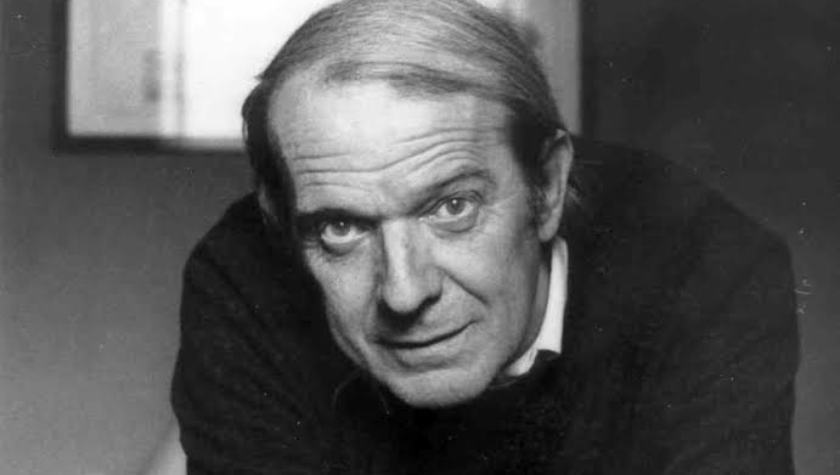
French philosopher Gilles Deleuze believed the blank page — or, more precisely, the blank canvas — was a myth. In his landmark work Francis Bacon: The Logic of Sensation, Deleuze wrote that the painter doesn’t work on an empty canvas. The canvas is already “entirely covered with all sorts of clichés, with which he will have to break.” The same is true for writers. Before a single word is typed, the page is already full: full of life experience, creative influences, genre conventions, cultural trends, and the accumulated weight of every story and event you’ve absorbed since childhood.
If anything, the page is overcrowded.
Deleuze called these preloaded assumptions “opinions”: ready-made ideas that society uses to insulate itself from genuine originality. Left unchallenged, we default to them automatically. The screenwriter who sits down to write a crime thriller and produces something indistinguishable from every crime thriller they’ve ever seen hasn’t done this for lack of talent. The clichés held an advantage from the start; we’re all programmed to the default.
True creativity, in the Deleuzian framework, is therefore a subtractive act.
The work is clearing away what’s already there.
The Catastrophe as Method
To understand what this clearing looks like in practice, Deleuze turned to the British painter Francis Bacon (one of the most distinctive and difficult-to-imitate visual artists of the 20th century). Bacon’s distorted, visceral figures emerged from disruption.
He would begin a canvas with a relatively conventional figure: a portrait of a recognizable form. Before the cliché could fully set, he would introduce what Deleuze called “the catastrophe”: a sudden, non-deliberate physical intervention. A handful of paint thrown at the canvas. A wet rag scrubbed across a face. A smear here. A smudge there.
Bacon would study “the accidental mark”: the unintended contour, the involuntary shape, following it somewhere the original intention never could have gone. A smeared cheekbone suggested a twisted jaw. A thrown splash became suggestive of a scream.
The disruption unlocked the work and transformed what was familiar into something unique and new. Similarly, when writing, you can start with a more formulaic framework, then disrupt and transform it.
The Rough Draft: a Canvas To Work From
The screenwriting equivalent of Bacon’s initial figure or form is the rough draft.
The rough draft, or “vomit draft,” is the commitment to writing quickly, without editing, without judgment, or without pausing to assess whether what’s landing on the page is any good. You write everything you think the story might be, everything you’ve inherited about what a story like this should be, and you get it out of the way.
When starting a screenplay, think of your rough draft as merely a launching pad: its primary job is simply to exist. Regardless of the quality or lack of originality, you have something far greater to work with than a “blank page.” And because you’re working unconsciously as opposed to methodically, you might create some accidental contours you didn’t plan and couldn’t have anticipated, some of which will point toward something worth following.
A Page Full of Influences and Experiences
One of the persistent anxieties in screenwriting is the fear that there are no new stories, that everything has been done, every concept exhausted, every genre mined to the point of collapse. The Deleuzian framework reframes this entirely: the clichés are the raw material.
Influence should be thought of as clay to be molded. By watching and learning from movies, you have a cinematic vocabulary at your disposal. There was never a blank page for Quentin Tarantino. He absorbed every movie he loved and used them as an initial springboard to leap from: spaghetti westerns + 1970s crime dramas + martial arts films + French New Wave aesthetics. Some of these genres were never aligned before, creating their own “accidental marks” in the process. By the time Tarantino finished mixing all the components together, something new emerged.
A popular term in screenplay development is “the same but different.” This is more or less a mandate that reps, producers, and studio execs give writers working with familiar genres or existing IP. The “same” refers to the basic form or genre. The “different” refers to how they want the formula updated, subverted, or approached from an unexpected angle. This isn’t dissimilar to the creative method Deleuze described. You start with the established form (e.g., the heist film, the survival thriller) and introduce a catastrophe: a perspective shift or personal obsession that convention wouldn’t previously have allowed.
In addition to your grab bag of influences, inserting your personal life into your writing can also help you remove clichés and fill the page. This doesn’t mean turning a screenplay into a memoir or your diary. It’s simply about adding an autobiographical smudge here and there. Like Brian De Palma’s teenage surveillance of his father re-channeled as a murder mystery in Dressed To Kill, or Jordan Peele’s navigation of racial dynamics with his in-laws transformed into satirical horror in Get Out. De Palma’s film used Psycho as a template; Peele’s used The Stepford Wives; however, both filmmakers introduced enough private catastrophes into their chosen templates that they created truly individualistic works.
The overcrowded page becomes a canvas to both remove from and add to: everything that can be used should be used, but then remolded and elevated.
Write Into the Disruption
None of this creative clearing should happen in a state of timid caution. Bacon threw paint at his canvas. The screenwriter who approaches a draft with total investment, no holding back, and full permission to be wrong, instinctive, or even embarrassing is the one most likely to introduce the accidental mark that changes everything. Bring all the passion you can to your rough draft, and see where it takes you. The reshaping and refinement come afterward.
Another term Deleuze used is “de-formation”: the result of the instinctual creative technique he championed. When a truly gifted painter de-forms a face, being avant-garde isn’t the end result; it’s about revealing the essence of the subject. Deleuze referred to this finally-realized image as “the Figure.” For a writer looking to do the same, after you’ve finished your rough draft, start dismantling what you’ve created: strip away unnecessary exposition and any comforting context. Instead of explaining why every character feels a certain way, plunge the reader into a hot and immediate present. Narrow the focus to a singular, intense state of being — a precise gesture, a specific ache — forcing the reader to confront the sheer presence of the character’s reality rather than being spoon-fed their psychological history.
Many screenplays are full of clichés because the necessary clearing wasn’t performed, especially in the description. “He paces the room anxiously” or “She cries softly." These are shorthand instructions that reduce action to a mechanism. To introduce desired chaos into a script, use evocative, visceral action lines that force the reader to feel and experience what’s happening.
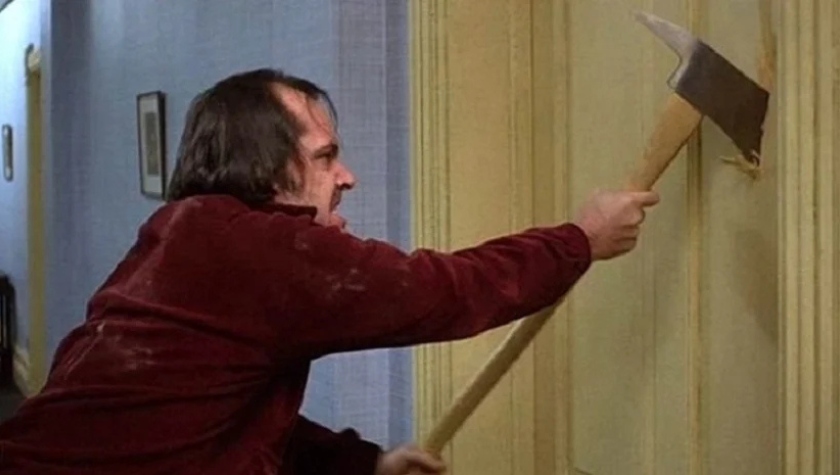
Instead of writing a standard physical action, a Deleuzian screenwriter writes the force behind the action. Let’s take these two different ways you could describe Jack Torrance’s iconic attack in The Shining.
Standard (The Cliché):
Jack cuts through the bathroom door with an axe.
Visceral (The Figure):
Jack’s axe splinters the wood. His face a mask of primal adrenaline, he’s trying to tear through reality.
By writing action lines that describe sensory weight, you introduce a chaotic energy onto the page that can’t be lazily digested; it’s felt by the reader and, as a result, inspires an emotional reaction.
Clear the clichés in your script, write into the disruption, and the figure will emerge.
No Blank Pages with Screenwriting Software
Scriptwriters today have even less of a blank page thanks to screenwriting software.
When you open Final Draft, the page comes pre-structured with automated formatting: industry-standard margins, proper screenplay elements ready and waiting (Scene Heading, Action, Character, Dialogue, etc.). This foundation is there for you before a single word is written.
The Beat Board and Outline Editor push this further still. You can map your story at the beat level before a scene is written, move cards around, test structural logic, and send your outline directly to script when ready. Any preoccupation with “what happens next” is cleared before the actual writing. Once again, the page is already full; it’s full of ideas, scenes, moments, and a general trajectory to follow.
As you write your script, you can make detours and creatively disrupt with a free mind because you’re not wasting mental energy on the structure. This not only helps with your workflow, but it helps you to write at an elevated state and take your script to the next level.
The Page Was Never Blank
What Deleuze understood about Bacon, and what applies directly to any writer facing a first draft, is that the density of what’s already there is the foundation that makes genuine creativity possible.
The page was never blank. Before a single word is typed, it’s full of genre conventions, preloaded structural expectations, cultural clichés, and the accumulated weight of everything you've absorbed since childhood. This is a far better springboard than a blinking cursor. You need something to disrupt. You need the cliché in order to break from it. The overcrowded page gives you everything you need to create the accidental marks that only you could make.
Write your rough draft. Throw paint at the canvas. Then clear away whatever needs clearing, and start adding and refining. A memory here. A burst of inspiration there. Before you know it, something will emerge…
Deleuze would call it the Figure. But you can call it your screenplay.