
For most of us, when we write a screenplay, the dream is to someday see it realized. Sometimes we’re lucky enough to experience a table read. Or a contest (like Final Draft’s Big Break Screenwriting Contest, which also accepts short film scripts) can land you reps, and maybe even a production deal.
But if you’re a go-getter and feel like taking your creative journey into your own hands at your own pace, writing and making a short film yourself is definitely a viable option.
It’s a different beast than writing a feature with challenges of its own, but if you approach it with certain considerations and goals, it’s totally doable, and you can end up with something that demonstrates your sensibilities as a writer that adds to the body of work you can point to.
Here are three things to keep in mind when you’re writing a short film that you want to make yourself.
1. Make It About One Thing
We all have big ideas. Sometimes it’s hard to scale them down, but chances are, you’ll make things infinitely easier on yourself if you put some guardrails on your story.
I recently had the opportunity to hang out with Oscar-nominated short filmmakers Julia Aks and Steve Pinder, and I know I’ve shouted out this advice a couple of times already, but it’s worth repeating.
Aks said she’d heard a useful way to approach crafting a short is to think of it as a single event. A short should be about one thing, one moment, one beat.
Can you distill even a complex premise into a single story beat, emotional or otherwise? Can you scale it down?
Say you have a story set during wartime. We don’t have to know the backstory of the conflict or your character, and we don’t need to see a bunch of set-up battle sequences. Maybe the “event” of this story is your character’s interaction with a medic, or a peaceful beat they experience in nature amidst the violence of your setting.
If you can, try to make your short about one thing happening in your character’s life. An impending move. A fight with their mom. A swim lesson. The options are endless, but it should be easy to break down into a single event.
2. For Your Sanity, Impose Some Production Limitations
You’ve landed on the event you want to focus on. How feasible is it to actually shoot?
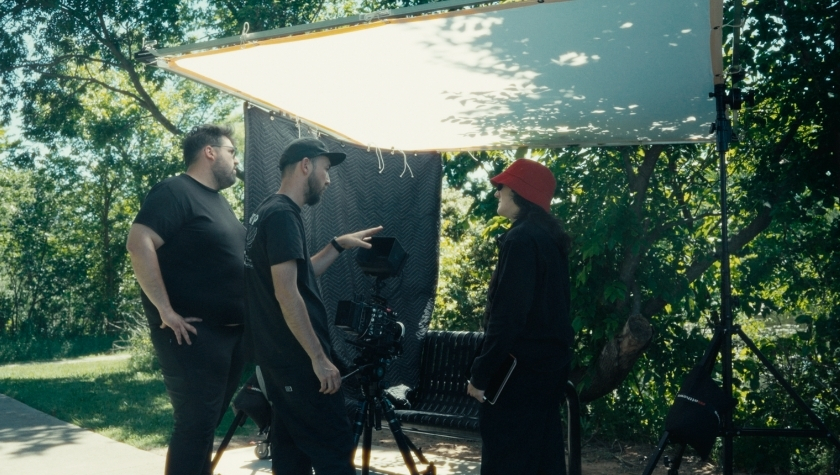
What I mean by this is, can you envision what the actual process of shooting your short film looks like? How many crew will you need? How many days will it take to finish? Does it require location moves? What about specific makeup or effects? Is there a period setting? What costumes and props will you need?
I’ve given notes on friends’ 20-page short scripts that have 10 locations, huge casts, and call for an enormous VFX sequence in the finale. All that is great in concept, but nearly impossible to pull off at the indie level, and I told them so.
By all means, write this version of your story, but be prepared for the challenges of actually achieving it. And scale back if you have to.
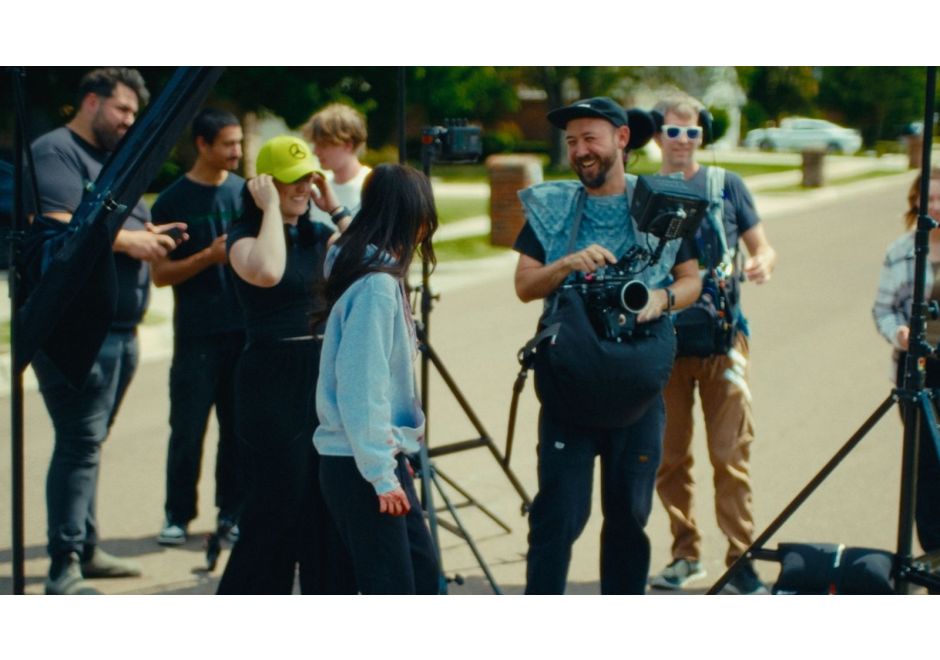
On a practical level, be aware that everything moves slowly during the production stage. I recently wrapped a short I co-directed, and at seven pages, it took two full days plus a day of pick-ups. We had just a couple of quick company moves, but each one ate up an hour or so. A throwaway line for a close-up of an item I wanted took precious time to set up and light.
We had one practical visual effect, and it took half a day to achieve. Then we had to think about makeup continuity for the rest of the shoot. I texted my co-director Spenser Sakurai at one point in total dismay—“Why did I do this?!”
Almost everything is hard when you move into actual production. Even if you’ve already focused on the single event of your short, try to limit your number of characters, your locations, the complexity of your imagery. Anything that will save your sanity later.
3. Know What You Want Out of Your Short
Certainly, making a short just for the heck of it can be a valid reason. Every experience is something to learn from, and you can take those lessons into whatever you do next. Creating art is always worthwhile.
But hopefully, you’re being strategic about what you want from your short film. Chances are, you’ve spent a lot of time on the work, and if you’re involved on the production side, you’ve probably invested even more time and money into the project.
If you’re writing a short and you want to make it, you should ask yourself why you’re doing it.
A short made as a proof of concept for a feature is a different piece of writing than one you're entering into festivals, or one that's purely a calling card to show a potential partner what you're capable of.
They can overlap, sure, but knowing your primary goal going in will inform everything from your ending to your tone to how much creative risk you take.
If you're making a proof of concept, you probably want to leave your audience wanting more. You might be able to get away with an open-ended story, which works well here because it implies a larger world beyond the frame. You're essentially writing the first chapter of something, not the whole book.
If a festival run is the goal, you might prioritize emotional impact over plot mechanics. Festival programmers see hundreds of shorts. The ones they remember tend to have a single, resonant image or feeling. That means your ending carries enormous weight. (Know also that your shorts should ideally be—well—short, especially for fests. It’s generally easier to program something that’s around 10 minutes long, rather than a 30-minute film.)
Or maybe your short is purely about demonstrating your voice as a writer. You want to show someone your tonal sensibilities, your genre chops, whatever. In that case, lean into what makes your writing distinctive.
Let your short be weird, then pop in on a platform somewhere to show what you’re all about. Curry Barker, writer/director of Obsession, did that with a lot of his team’s early material (and his first feature).
The short film you make yourself is a rare opportunity to control the entire pipeline from script to screen. Whatever your goal is, write toward it deliberately as soon as you open Final Draft. The limitations you've already imposed will serve you better when you know exactly what you're trying to prove.