
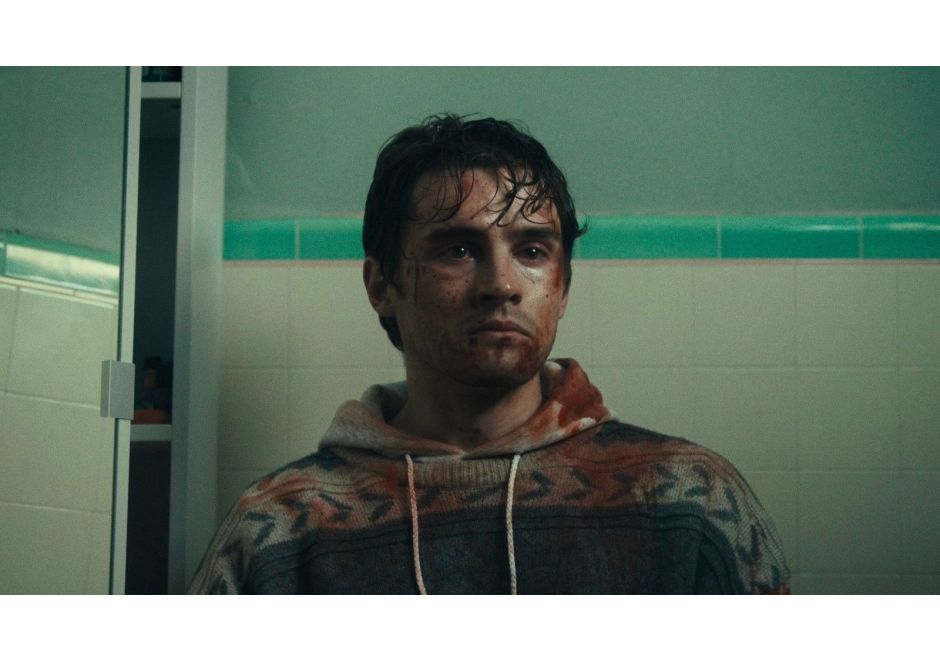
Writer/director Curry Barker got his start making YouTube shorts, then moved on to a self-funded feature released on the same platform, all in collaboration with his creative partner, Cooper Tomlinson. That feature, Milk & Serial, went viral in 2024.
The work got him enough attention that he’s now been given bigger budgets and casts, and has broken into the mainstream Hollywood scene with Obsession, a sharp, stylish possession drama that had the SXSW crowd laughing, squirming, and everything in between.
Obsession is about unrequited love. Bear (Michael Johnston) can’t seem to confess his feelings for Nikki (Inde Navarrette), so of course, he does the next best thing—make a wish on what seems like a gag gift. What if Nikki loved him more than anything else in the whole world? When the wish comes true, the results are slightly… off.
Barker, who also edited the feature, manages to wring tension from every scene as this relationship devolves into chaos, giving us a fresh new voice in horror writing that audiences should be very excited about. Final Draft spoke with him ahead of the film’s wide release to learn more about how it all came together.
Dialogue Should Say What Isn't Being Said
All work is obviously practice, and you find your voice and rhythm through trying and seeing what works and doesn’t. For Barker, that came through YouTube sketches, which he acknowledges are totally different from writing a feature. “I feel like the dialogue, that really got strengthened, I think, through sketch comedy,” he said.
His intent with dialogue is to avoid affectations (he called it “too movie-y”) and aim for naturalism. “More saying the thing that's not being said. Like there's an elephant in the room. There's something that's being unsaid. That's the most interesting way to write dialogue, right?"
The thing he’s pointing to is subtext. In reality, we rarely say what we mean. We avoid the point. Working subtext into your dialogue affords new opportunities to braid a hint of tension into every single line.
Tension on the Page First
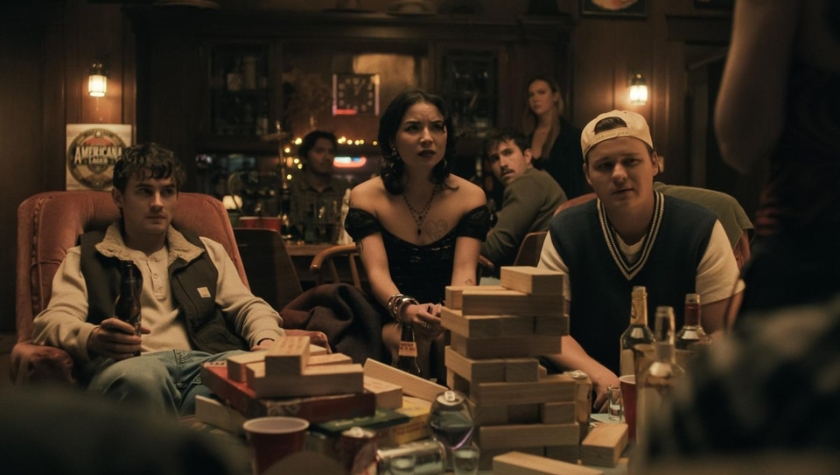
Speaking of tension, Obsession has that dark undercurrent throughout. And with Barker being both director and editor, he’s able to envision it from the beginning of the process.
“I feel like tension is something that you can really build in the edit, but it's so integral to me when I'm writing as well,” he said. “I put those beats and pauses and stuff in the script. And sometimes I even tell the actor, ‘Hold it, hold it.’ I shoot long takes, sometimes not cutting for a while. So you have to get the pacing of the scene on the day. There's nothing to cut to. There's nothing to save you from your mistake.”
Melding his editing and screenwriting brains also means he’s thinking about perspective and how the world will come to life on set.
“When I'm writing, I have the edit in my head,” he said. “If you read the way I write, I have a lot of CUT TO, SMASH CUT TO, or ‘the camera pushes in’ or ‘we follow this.’ Because, to me, it's part of the way it's integral to the story. I like to write from only one character's perspective—or at least choosing one or maybe two characters' perspectives—and only show from that. So when you do that, you're not just pointing the camera at everything. If the character doesn't see it, then the audience probably won't see it either."
Make Audiences Care about the Movie, Not the Backstory
There is definitely an immediacy in Barker’s storytelling style. Audiences watching Obsession are dropped right into the middle of Bear’s desire to confess his feelings for Nikki, and the in-the-moment tension pulls taut like a wire from that moment on.
Staying with Bear this way, during his highs and lows, is how he develops him as a protagonist. He looks for intimate moments with other characters to show character development.
And the audience, who can understand something as simple as one person being desperately in love with another, will be intrigued to follow his journey even when he’s at his most selfish.
“Once I've already got you that you care about this character, it almost doesn't matter. You can start to not like him, but you care about his well-being because you're already attached to the character enough to see him want to survive. It's human nature to want to see someone survive.”
Barker says in-depth character backstories or nonlinear storytelling aren’t as interesting to him.
“I think it's more important to focus on the things that are happening in the movie than to focus on the backstory of a character, whatever traumas they went through when they were a kid,” he said. “Sometimes that's hard to latch onto because it feels so far away. I think it's easier to get an audience to care about a character if you can make them care in the movie, if that makes sense. Something that's happening to them now. 'Oh, his cat died,' or you can see that this guy has an infatuation with this woman and wanting him to just tell her how he feels. These are all things that happened in the movie. They didn't happen when he was 12.”
For him, writing a character is almost like getting to know them as they develop their adventure.
“Don't try to give your characters these crazy backstories,” he said, “because what it's going to do is it's going to block you from just writing the story that's in front of you when you're trying to include that your character is allergic to fish, or you're trying to include the detail that your character is this or that.”
Keep Action Lines Tight
Barker isn't slowing down. He's already wrapped Anything But Ghosts, a Blumhouse/Focus Features horror/comedy he wrote, directed, and stars in alongside Aaron Paul, Bryce Dallas Howard, and Tomlinson, about two fraudulent paranormal investigators who encounter the real thing.
And it was announced last month that he's also writing and directing a reimagining of The Texas Chain Saw Massacre for A24. He’s moved from an $800 YouTube film to A24 in just a few years. But he noted he’s always learning. “Every single film I write, I learn a lot, and I'm just trying to be better and better,” Barker said.
One thing he’s focusing on after working on Obsession is slimming down his screenplays.
“I'm trying to learn better use of the page. I'm trying to keep my page counts low, because I tend to write a lot of dialogue, and I don't want to scare people with my page count. I just write a lot of dialogue, and a minute per page is not accurate for me. So sometimes my page count goes a little higher. I want to be a better writer, obviously. I'm always pushing, I want to be better."
Obsession is in theaters May 15.