

Every industry professional asks the same question about your script before anything else: What's it about?
Your answer is the logline. It's what's responsible for opening the door to everything that follows, and the rest of your script gets a chance to deliver if your logline does its job.
So let's build one that works.
The craft side of this is straightforward once you isolate the right elements. The industry side makes it mandatory: managers and readers go through submissions quickly, and if you want your script read, your logline needs to grab them right away. Both sides come down to the same skill, which is knowing your own story well enough to compress it without losing what makes it worth telling.
What Is a Logline?
So what is a logline, exactly? It's a short description of your script's core dramatic engine. It reveals your protagonist, the event that sets the story in motion, what your protagonist wants, and what stands in their way.
That's it. Four moving parts, one or two sentences, few exceptions.
Logline vs. Tagline vs. Synopsis
Many writers mix these up, and doing so can potentially derail an otherwise good submission.
A tagline sells a finished film to an audience. It's the line on the poster or billboard, usually written by a marketing team rather than the writer. "In space, no one can hear you scream" from Alien is a tagline. It's punchy and evocative, but it tells you nothing about the story.
A synopsis runs one to two pages and walks through your plot beat by beat. Sometimes your script will be read by a professional reader who creates "coverage" in which they'll summarize your script for their boss or the next reader up the chain.
A logline reveals less than a summary but more than a tagline. It's the essence of your story while presenting the most basic yet important details.
The Logline Formula
Every strong logline runs on the same formula: protagonist, inciting incident, goal, and central conflict.
Protagonist. Who is this about? Skip the character's name. Use a role and a sharp adjective instead: "a disgraced astronaut," "a terminally ill chemistry teacher," "a volatile rookie detective," etc. The description should tell your reader who this person is without a paragraph of backstory.
Inciting incident. What blows your protagonist's life apart? A death, a discovery, an unexpected assignment? This is the event your reader needs to know happened to give your story context and stakes.
Goal. What does your protagonist want once that event hits? Make it specific and testable. "A man builds a robot" is vague. "A discredited scientist builds a robot to win a national competition and reconnect with his estranged daughter" gives your reader something to track.
Central conflict. What stands between your protagonist and that goal? Usually your antagonist, but it can be a system, a situation, or a physical obstacle. Pick the version with the highest stakes that still tracks with your actual story.
These four elements don't need to appear in this order. Plenty of strong loglines lead with the conflict. Others open with the inciting incident, before landing on what your protagonist actually does about it. What matters is that all four show up somewhere in the logline.
How Long Should a Logline Be?
Aim for one sentence, twenty-five to thirty-five words.
Two sentences or a compound sentence is sometimes acceptable, but only if your story genuinely needs the extra description (e.g., a more complicated drama).
Clarity is the metric that matters most. A reader should finish your logline knowing exactly what kind of story you're telling and why it's worth their time. If that takes forty-five words, use forty-five. If it takes twenty-two, don't pad it to hit a number. Generally, the leaner, the better.
Logline Examples: Feature Films
Studying professional loglines teaches you more than any formula on its own. Here are eight, pulled from produced features across genres.
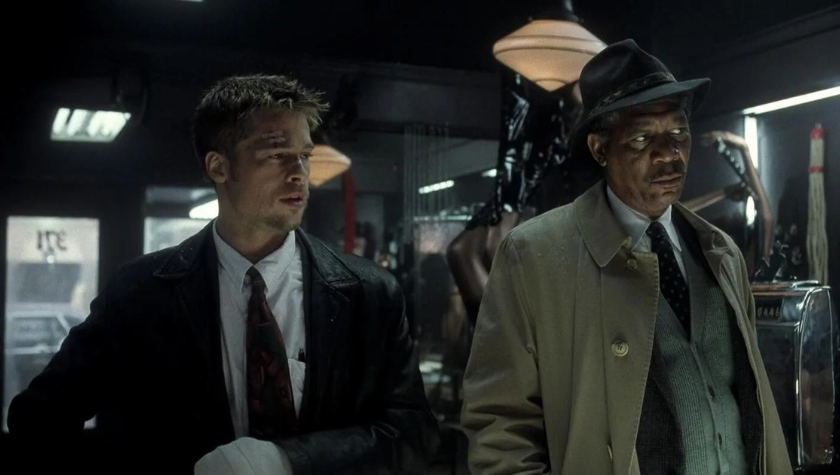
Se7en (1995)
Two homicide detectives, a veteran about to retire and a volatile rookie, track a sadistic serial killer who chooses his victims according to the seven deadly sins.
The protagonist description does double duty here. Pairing a veteran with a rookie sets up conflict inside the partnership before the killer even enters the sentence.
The Hangover (2009)
Three buddies wake up from a bachelor party in Las Vegas with no memory of the previous night and the groom missing, forcing them to retrace their steps across the city to find him in time for his wedding.
The clock is doing the work. "In time for his wedding" turns a comedy premise into a compelling story with clear stakes and a hard deadline.

Avatar (2009)
A paraplegic Marine dispatched to the moon Pandora on a unique mission becomes torn between following his orders and protecting the world he feels is his home.
Notice the internal conflict layered onto the external one? The Marine's real fight is with his own loyalties, and that internal battle is the engine.

Inception (2010)
A thief who steals corporate secrets through the use of dream-sharing technology is given the task of planting an idea into the mind of a C.E.O.
In addition to the high concept idea, one clean reversal injects dramatic irony: the skill built for extraction gets repurposed for the opposite job.

The Social Network (2010)
As Harvard student Mark Zuckerberg creates the social networking site that would become known as Facebook, he is sued by the twins who claimed he stole their idea, and by the co-founder who was later squeezed out of the business.
This one runs long, and it earns the extra length. Two separate lawsuits signal a structure built on dueling perspectives before you've read a page.

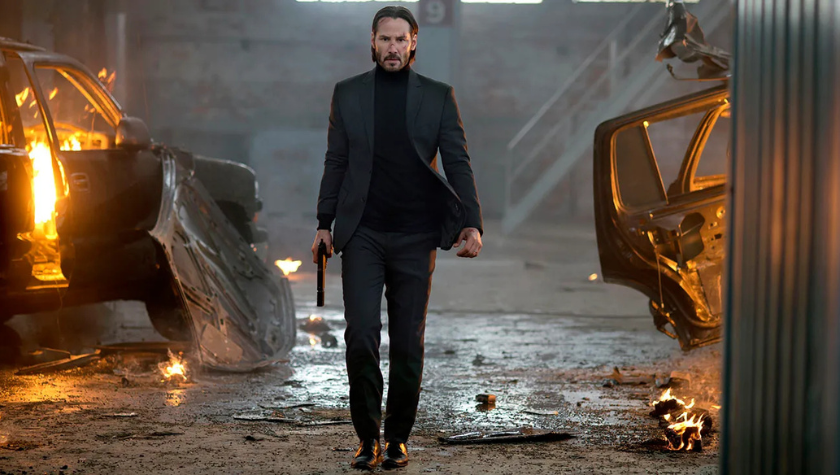
John Wick (2014)
When sadistic thugs attack John Wick, a brilliantly lethal ex-assassin, he hunts them down with the skill and ruthlessness that made him an underworld legend.
Simple and propulsive, built entirely on escalation. Attack the wrong man, reap the consequences.
Once Upon a Time... in Hollywood (2019)
A faded television actor and his stunt double strive to achieve fame and success in the film industry during the final years of Hollywood's Golden Age in 1969 Los Angeles.
This logline trades urgency for atmosphere, which fits a story more interested in a world than a plot. It still delivers protagonist, goal, and a specific setting doing the work of conflict. This variation is perfectly acceptable if you're writing a biopic or historical drama.

Obsession (2026)
After breaking the mysterious "One Wish Willow" to win his crush's heart, a hopeless romantic finds himself getting exactly what he asked for but soon discovers that some desires come at a dark, sinister price.
The irony is baked directly into the premise. Getting exactly what you want turning into the worst thing that could happen to you is the kind of scenario that makes a reader want to immediately dive into a script.

Logline Examples: Television Pilots
A logline for a TV pilot does a different job than a feature film logline. Rather than a contained story demanding some kind of resolution, a TV pilot logline has to promise the opposite. It needs to convince a reader that the conflict on the page can regenerate itself episode after episode, season after season, without running out of fuel.
That difference shows up in the language itself. Feature loglines name a specific goal with a trajectory: rescue someone, stop something, etc. TV pilot loglines lean on ongoing dynamics instead: a job, a double life, a mystery, a world and overarching scenario that can keep generating new conflict long after the first episode.
Here are two examples of that engine at work:
Breaking Bad (First Season, 2008)
A terminally ill chemistry teacher teams up with a former student to manufacture and sell crystal meth to secure his family's financial future.
This logline gives you the premise and the built-in escalation machine in one concise sentence. The idea of a teacher and student working together in a criminal venture suggests numerous opportunities for conflict: between each other, competing meth dealers, etc.

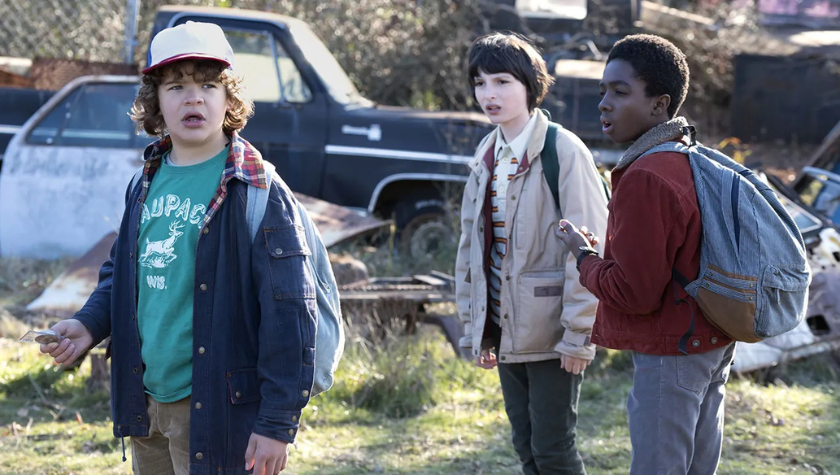
Stranger Things (First Season, 2016)
When a young boy vanishes, a small town uncovers a mystery involving secret experiments, terrifying supernatural forces, and one strange little girl.
Notice how the scope widens as the sentence goes? One missing boy becomes a town, then experiments, then a supernatural threat. That widening is exactly what a pilot needs to promise: this story is open-ended and has the potential to keep growing.
When you write a logline for a proposed TV series, ask yourself whether the conflict you've described could fill fifty more episodes. A pilot conflict that resolves too cleanly might be better served as a feature.
Common Logline Mistakes
Overcomplication is arguably the biggest mistake writers make. They try to cram every subplot and twist into one sentence, and the result reads like a tangled web. A logline needs to focus on what's essential.
Vague language is another big mistake. "She must confront her past" or "he embarks on a journey" tell your reader nothing. What past? What journey? Specificity is what makes a stranger want to read your script.
A less obvious mistake: forgetting the irony. The best loglines illuminate the gap between who the protagonist is and what they're forced to do. A marine who will have to turn against his own unit; the woman who is a hopeless romantic loves becoming his worst nightmare, etc. This irony points to a story heavy with drama and conflict.
Another mistake is matching tone incorrectly. A comedy logline written with somber, weighty language doesn't suggest a funny script. A logline for a drama or horror that tries to be snarky or quirky undercuts the mood. Readers register tone in the first few words, often before they consciously register plot, so make sure your sentence sounds like the genre it's describing. Sometimes it comes down to a signal phrase. Try different words until you hit the right tone.
Once your logline works on the page, the next test is saying it out loud. This is your elevator pitch, and it's worth developing as its own skill.
Logline Template
If you're staring at a blank page, here's a logline template to work from:
When [INCITING INCIDENT], a [ADJECTIVE] [PROTAGONIST] must [GOAL], but [CENTRAL CONFLICT / ANTAGONIST] stands in their way.
Plug in your own protagonist and story elements into the brackets and see what comes out. At very least, it'll get your four elements onto the page, and you can start building your logline from this blueprint.
Before You Submit Your Logline
Ask yourself the following questions before you send your logline anywhere:
Does it name a specific protagonist with concrete, defining detail?
Does the inciting incident happen before the goal, so cause and effect are clear?
Is the goal something a reader can picture succeeding or failing?
Have you cut every word that isn't doing work?
If your script is a TV pilot, could the conflict fuel fifty more episodes?
Your logline is the introduction to your script, and it can lead to you getting a read.
So give it the attention it deserves.