
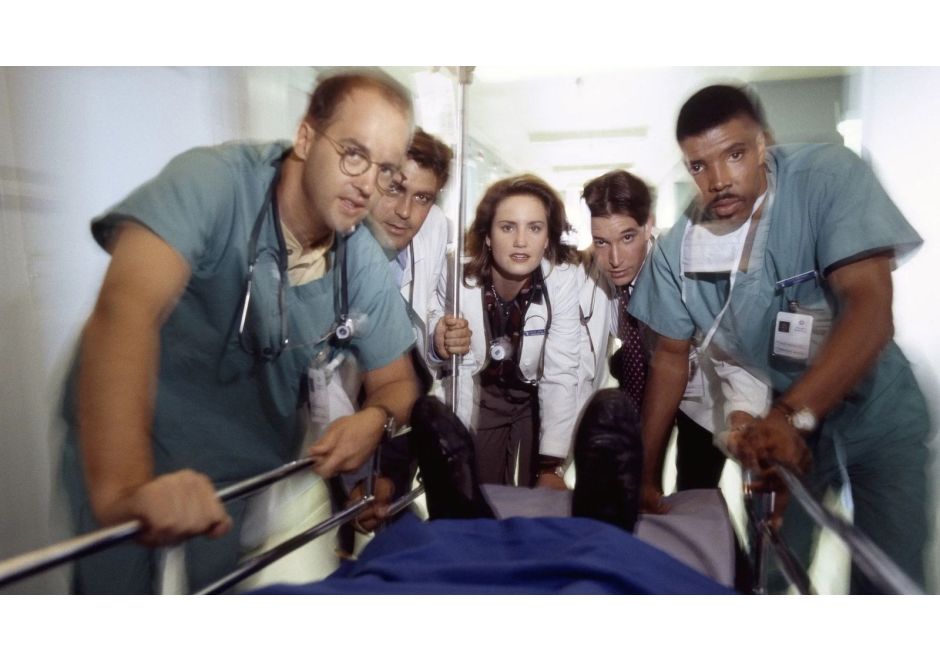
The walk and talk is a storytelling technique used in film and TV that allows multiple characters to converse while walking. The technique is used to emphasize how busy characters are or to create a sense of urgency during an exposition dump.
Let's break down why you would want to use the walk and talk technique in your story, how to write one, and how to format a walk and talk in a screenplay, as well as some great examples you can reference when you need a hit of inspiration.
Why Use a Walk and Talk in a Screenplay?
Humans are natural multitaskers, so it makes sense to see humans in films and TV walking to a destination and talking along the way. Beyond it being a totally normal thing to do, the walk and talk, in a way, lets storytellers add energy to any conversation.
Walk and talks should be used deliberately — a quiet, emotional conversation may not be the best place to bring the energy the technique brings to the scene.
Some reasons you would want to use the walk and talk technique include:
- Exposition: This is dialogue that lays out the information the audience needs to know for the story to progress. Adding a walk and talk can keep the audience distracted from the straight dialogue that can bog down a scene.
- Emphasize busyness: Walk and talks can underscore how busy a character or characters are by having them move from one task to the next without pausing for an important conversation.
- Introduce setting: The technique can do more than add energy to dialogue — it can show the audience a location's layout, establishing where everything is by the end of the conversation.
- Getting from one location to another: Walking is an effective way to get from point A to point B, so why not give your character something to talk about while doing so? This can help deliver exposition and build tension before they arrive at the next location.
How to Write a Walk and Talk in Your Screenplay
Despite looking visually different from regular conversations, walks and talks look very similar to most conversations written on the page. Really, the focus of a great walk and talk is the conversation. The rhythm, pacing, and fluidity of the conversation matter, so make sure your dialogue is solid. Everything your characters are saying should be necessary and engaging, maybe even develop a character while we're at it.
Here is how you can write a walk and talk scene in your screenplay:
- Add a scene heading: Like every scene, you'll want to include a scene heading. If there are multiple locations, you will include multiple scene headings as the scene moves from one location to another.
- Focus on the dialogue: It is the star of the scene, so focus on the key points to convey. Keep it sharp, focused, and reflective of the characters or the scene's intention.
- Write out the action: For readers, note that your characters are, in fact, walking. You should also include any action lines that add context or depth to the conversation or the scene.
- Note blocking: Blocking is crucial for a walk and talk. While you can let the director decide on specifics like camera angles, you should call attention to any moment where the blocking reflects what's being said.
- Revise and refine: After writing, read the scene aloud and rework any lines that don't flow naturally or break the intended rhythm for the scene. Part of writing and editing — don't be afraid to spend some time working out the kinks of your walk and talk.
Writing a great walk and talk scene is about balancing dialogue and action. It should feel natural and engaging, and add a layer of depth to the characters who find themselves walking and talking. After writing and reworking your walk and talk, you'll be able to use this technique to create scenes that are visually and emotionally dynamic.
Useful Locations to Use in a Walk and Talk
Where your walk and talk takes place is just as important as the dialogue itself. Some locations where you can set this scene include:
- Busy city streets: There is so much action going on in the streets of a city that you immediately make your characters look like everyday people going about life. Whether they are running late, running into friends, or yelling "I'm walking here!" at a taxi, busy streets add atmosphere, energy, and life to your scene automatically.
- College campuses: Not every story will have the opportunity to use the quad, but if you do have a college-based story, the visual layout of a campus perfectly captures the on-the-move energy of being a student or a professor just trying to get a task done so they can relax after a hard day of academia.
- Hallways and elevators: Waiting for the elevator, entering or exiting, pressing buttons, or making or avoiding eye contact are all great ways to create tension between characters who have somewhere to be and often someone to avoid.
- Public transportation: From subway cars to buses to city bikes, it offers a great moment for your characters to be on the move while having a conversation. These locations can also provide distractions, diversions, or spectacles that interrupt the pattern of the conversation.
- Bars and nightclubs: What's more exciting than a character in a crowded space full of noise, lights, and people? The dialogue can be hard to hear, but that's a great way to make the audience lean in and understand what's really going on between characters in the middle of a party.
Of course, there are many more locations where a walk and talk can take place; it really just depends on where your story takes place and why you want to use the technique in the first place.
How Do You Format a "Walk and Talk"?
Formatting a walk and talk is pretty straightforward. You can simply write: "They do a walk and talk." It is enough information to set the action into motion for the reader, who now knows that the characters are walking as they talk.
Of course, you will want to format your screenplay correctly to introduce location, or locations if your characters are walking somewhere in particular, or if there are any additional action lines that add depth to the conversation. At the end of the walk and talk, you will need to describe the characters' actions as the conversation concludes, and the story moves on to the next scene.
5 Best Examples of Walk and Talks in TV and Film
The West Wing
Screenwriter Aaron Sorkin's walk and talks are iconic because they are fast-paced and develop complex character relationships. Sorkin's approach to the technique has created many memorable, engaging, and dynamic scenes in his films and TV shows, with The West Wing being his most famous example. These long, uninterrupted takes, paired with complex sets and intense dialogue, put the cast and crew to the test, engaging the audience by prompting them to pay close attention to what is being said and how each line affects the characters' relationships. If there's one screenwriter to study walk and talks from, it's Sorkin.
ER
ER predates The West Wing and arguably popularized the technique by having its doctors and nurses constantly walk and talk to simulate the chaos and pace of an emergency room. During these walk and talks, the characters trade in medical jargon while weaving through gurneys, staff, and patients, often ending with the superior doctor delivering a devastating ego blow or a witty one-liner.
30 Rock
30 Rock famously poked fun at TV tropes throughout its 7 seasons, including walk and talks. The most iconic walk-and-talk in the series featured a stroll with Sorkin himself. Liz Lemon (Tina Fey) takes a stroll with Sorkin to talk about the technique being used, creating a meta moment that ends with a hilarious joke: the two characters just walked in a giant circle.
Law and Order
Similar to the energy of ER, the detectives in Law and Order have places to be and don't have time to stand and talk. Walks and talks are used effectively to keep the energy high during jargon-filled conversations regarding the case of the week, avoiding visually static scenes that can come with a long-running franchise.
Parks and Recreation
Parks and Recreation uses the walk-and-talk more comedically, thanks to its mockumentary storytelling. It heightens the show's signature frantic pacing, visually stringing together rapid-fire jokes, transitions from one scene to the next, and smoothing out exposition-heavy scenes without making the character stand still.
Veep
Similar to Parks and Recreation, Veep uses this technique for comedic effect, often with overlapping, chaotic dialogue that mirrors the dysfunction of the characters' political operations. It is the satirical inversion of The West Wing, where the characters say and walk to nowhere in particular, but they sure do look busy while doing it.
By studying these great examples of a walk and talk in Film & TV, you can set your characters in motion — both figuratively and literally — and keep your story moving and your audience leaning in, wanting to know where they will end up.