

Exposition is a necessary evil. It’s information that needs to be shared, but can end up slowing the story down if not done well. And because it simply explains what’s going on and doesn’t necessarily create conflict, it can sometimes end up boring the audience.
Exposition is often misinterpreted as an information dump, revealing backstory, character relationships, motivations, what’s at stake and other plot details the audience must know for the story to make sense. The fact is that, on a technical level, all of that is accurate. However, the great writers can make exposition part of the story and keep the info dump entertaining.
In the 1997 satire-comedy, Austin Powers: International Man of Mystery, there is literally a character named Basil Exposition (Michael York) who is Austin Powers’s (Mike Myers) handler and has the sole purpose of dumping important background information, which in turn gives the audience much needed context. Basil Exposition works because of the name and its wink to the audience. It allows him to deliver info in an entertaining way that the audience sees coming.
Not everyone has a Basil Exposition, so let’s look at how screenwriters can use exposition when writing their screenplay and ensure that it doesn’t stall the story.
The Difference Between Good and Bad Exposition
Bad Exposition
Bad exposition feels like a lecture. It stops the story so characters can explain things the audience should know, but does so in an obvious way. For example, have you ever been watching a movie or TV show and one character walks into the room and another says, “Well, if it isn’t John, my friend of 20 years who I met back in high school.”
That’s bad exposition because it gives information in a dry, boring and unrealistic way.
Science fiction often has bad exposition because it usually exists in a world that needs to be explained. You may not always be able to avoid bad exposition but here are some indications that it’s there.
- The dialogue exists only for the audience’s benefit
- Nothing changes during the scene
- There are no conflicts, stakes, or emotion because the sole purpose is to provide information
Good Exposition
Good exposition puts the story first and is presented via character action, desire, emotion or conflict. It entertains while informing. Exposition works when:
- Characters want something in the moment
- Stakes rise because of the information revealed
- You show, don’t tell
- You can remove the information aspect and the scene is still entertaining
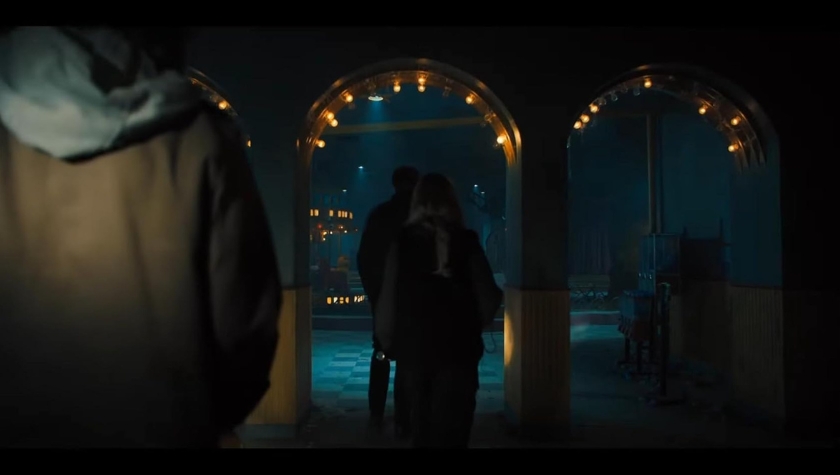
In the film Five Nights at Freddy’s 2, there is a scene at the beginning when a security guard takes a ghost hunting film crew through the abandoned location and provides information about its history. This is a good exposition scene as it meets several of the listed points above: stakes rise as the crew takes in its dark past and wonder if they’ll make it out alive, there are lots of showing and not telling moments and, if you remove the exposition, the scene works for suspense.
Recent Examples of Good Exposition
Here are two great examples of how recent movies used exposition to help advance the story and keep the audience engaged and entertained.
Knives Out (2019)
There is a lot of information that needs to be told regarding the family dynamics after the patriarch is found murdered. What might have been a case of someone telling the two detectives and Benoit Blanc (Daniel Craig) about the family, filmmaker Rian Johnson instead used the concept of interviewing the individual family members as a means of getting exposition out in the open.
As each character recounts the night of the murder, which we see in flashback (elements of showing, not telling), they reveal information about themselves and the other potential suspects, including conflicts between characters, personalities toward people of authority and how they feel, or what they’re hiding, when it comes to deceased.
Barbie (2023)
In Barbie’s world, the characters play and interact as if a child is playing with them. Well, if you had someone explain it like that, it would be boring.
However, Greta Gerwig shows us the world of Barbie and the rules they live by through character actions. Barbie (Margot Robbie) doesn’t drink anything out of a cup but she raises it to her lips as if she does. She also floats out of her house and her heel doesn’t touch the floor when her shoes are removed. All aspects of how a child might play with their Barbie doll. This approach is more entertaining than if you had a human character just telling the audience how things are.

How Writers Can Make Exposition Interesting
When you’re starting to write your screenplay, that first draft might have plenty of exposition. That’s okay. As you start rewriting, you can turn exposition into action. Here are 4 ways you can make exposition interesting.
1. Reveal Information through Conflict
Looking back at the Knives Out interview scene, there is a lot revealed about the night of the murder as well as family dynamics. The audience can see which characters might be hiding information, reluctant to share details and be flat out lying.
Even though the characters aren’t directly interacting with one another, it’s a scene filled with conflict and exposition.
2. Deliver Exposition while Moving
Two people standing next to each other and talking can be a pretty boring way to deliver exposition. But if you can keep the characters moving, you’ll be able to give out information in a more interesting way.
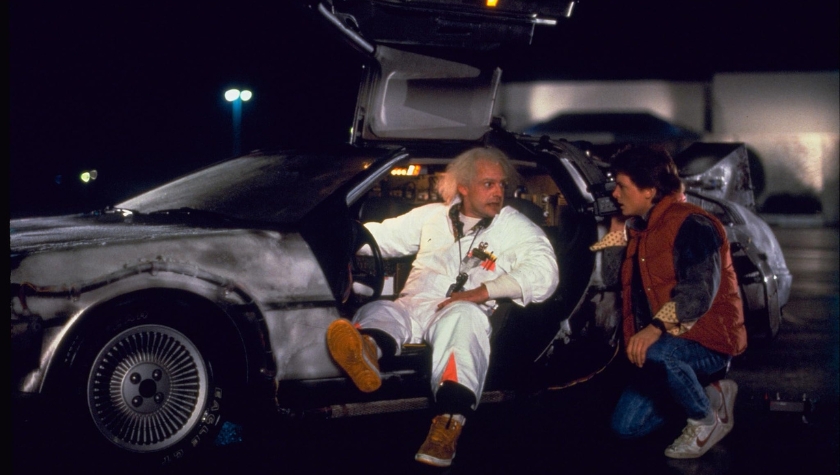
In Back to the Future, Doc (Christopher Lloyd) has Marty (Michael J. Fox) videotape him as he explains everything about the time machine. There is A LOT of exposition in this scene, but having Doc moving constantly, pressing buttons and preparing the time machine and Marty asking questions, it doesn’t feel forced.
Think about the scene and how much we learn, from Doc’s recollection of visualizing the flux capacitor to the need of an energy source like plutonium to make time travel possible.
3. Entertain the Characters
In Jurassic Park, the characters brought to the island need to know how the billionaire brought dinosaurs back to life. To explain the process, they sit through a video sharing the complex process. This scene educates them and the audience. Not only is it entertaining to the characters, but the viewer as well.
4. Exposition through Montage
Even if you don’t like animated movies, you’ll want to watch the first scene in Up. It’s an emotional montage of the life of Carl (Ed Asner) and his wife. We see the love and heartbreak he experiences without a single word spoken.
Another example is Rocky IV as one of its many, many montages reveal the two different styles of training that the rival boxers do to prepare for their fight.
Exposition is Not a Bad Word
Exposition is essential to storytelling, but it works best when it never feels like exposition. When you weave information into conflict, emotion, humor, movement, or suspense, you give readers what they need without slipping into a lecture. A great way to sharpen this skill is to study how movies reveal their worlds and characters. Notice how you learn what you learn: are the characters stopping the story to explain things, or is the information unfolding naturally - through tension, action, and moments that keep you engaged? The more you observe these techniques, the more effortlessly your own exposition will come alive.