

You've done the work. Your outline is finished, and you've mapped out all your major story beats. You even know your protagonist's emotional through line and character arc, and now you feel ready to "go to script," which is another way of saying start writing your actual screenplay draft.
You sit down and start writing. At first, everything is going well, but then it occurs to you: there are some things you didn't cover in your outline. You don't know what a character says in one scene. Or how they get from the kitchen to the car. Or what a certain room looks like. Or how exactly your protagonist reacts to a minor reveal.
This happens to every screenwriter, on every script, no matter how thorough the outline. The bigger the story, the more of these small gaps you'll find waiting for you once you actually sit down to write the thing.
These are the unknown parts of your screenplay, and we're going to show you how to tackle them.
The Space Between Your Beats
An outline houses your story's major beats: the opening, the inciting incident, the midpoint, the lowest point, the climax, etc. Outlining is an important part of the screenwriting process, and the more plot-driven or complex your story, the more you'll rely on it.
But an outline was never meant to account for everything, and it shouldn't. The space between your beats is filled with connective tissue: transitions, setting description, small character behavior, incidental dialogue, the little notes that don't move plot forward so much as they make the plot worth reading. None of it needs to exist when outlining, but it should all be there by the time you finish your script.
Treating an outline as the whole story is a mistake. The outline is the skeleton: essential, load-bearing, but not the element a reader usually falls in love with. The unknown parts are the muscle, the skin, the nervous system. They're what make your script move and breathe.
Some writers try to close these gaps before they open, mapping every line of dialogue and every piece of description into the outline itself. This rarely works. An outline that detailed stops functioning as a map and starts functioning as a cage, and you'll likely suck any genuine inspiration out of your writing.
The goal is to trust that the unknown parts will resolve themselves once you're actually inside the scene with your characters. This is where preparation and spontaneity work together to create something special.
Every Line Is an Opportunity
It's tempting to treat these unknown parts as filler, material you need to get through in order to reach the next planned beat.
Resist this instinct. Every line of your script is a chance to do real work, and the writers who separate themselves from the pack are usually the ones who understand this on a scene level as well as a story level.
A transition can control pace and mood. A piece of setting description can deepen your worldbuilding, telling the reader something about where your characters live before the plot fully kicks in. Describe a kitchen as cluttered with unopened mail, and you've told the reader something about who lives there without a line of dialogue. A small, unplanned character moment can add nuance no outline could have predicted, because outlines are built from plot logic and small moments are built from personal experience.
These unknown parts can also build tension and suspense. A beat sheet tells you a character needs to discover a body in the basement, but it doesn't tell you how long they hesitate at the top of the stairs, what they mutter to themselves, what they notice on the way down, or how the ordinary details of the house suddenly appear threatening once they know what's been waiting below.
Atmosphere works the same way. Two scripts can share an identical beat sheet and read like entirely different films, because one writer used the unplanned moments to build a specific mood and the other rushed past them to get to the next plot point. A hallway can be described in a single flat sentence, or it can be made to feel foreboding. Nothing in your outline told you to make this choice. You made it when you opened your mind to the unknown part.
These are the moments where your voice shows up most clearly. Plot is often dictated by genre and structure; two writers handed the same premise will likely land on similar beats. The connective tissue is where you get to sound like yourself, because nobody outlined your specific sense of humor, your rhythm, or the odd detail you'd notice that another writer wouldn't.
Filling the Spaces with Inspiration
Oftentimes, some of the most beloved and memorable moments in movies weren't part of an outline or beat sheet, but dreamed up during the writing.
Jaws is a well-documented example. Quint's USS Indianapolis monologue, the speech that gives the character his depth and his death its weight, wasn't part of the original blueprint the way the shark attacks were. Not only was it not part of Peter Benchley's novel, but this backstory also didn't appear in the earlier drafts of the script. It emerged during the rewriting process, in the same unknown territory this article is about, and it became a highlight of the film.
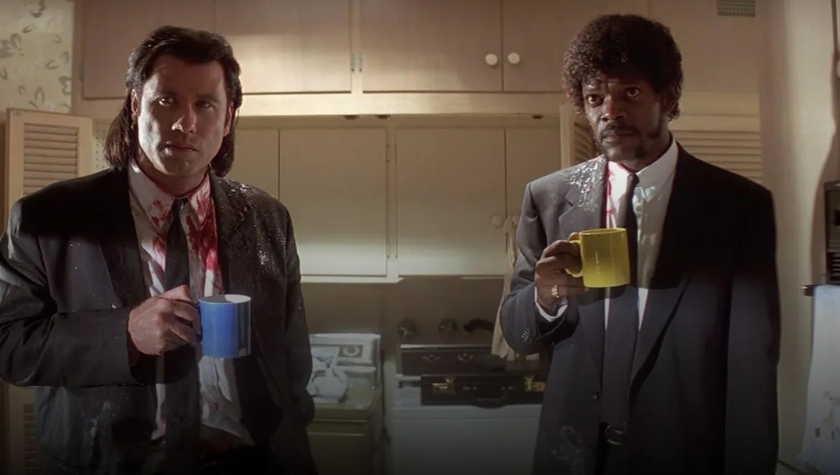
Quentin Tarantino's scripts are another example, built in large part from unknown parts. His scenes are loaded with little character moments and digressive asides that appear to wander away from the plot: a conversation about a pop song, a debate about foot massages, a monologue about rats and squirrels. These detours are deceptively digressive. They reveal far more about the characters delivering them than any plot-driven exchange could, and they're where his voice as a writer comes through most clearly.
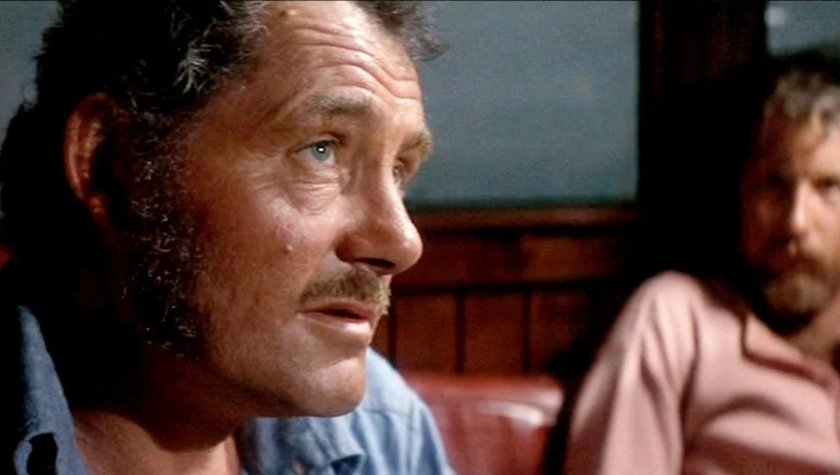
Neither the Indianapolis monologue nor Tarantino's colorful digressions existed as beats on a card. They're lightning caught in a bottle. The unknown parts of your screenplay are where this can likewise happen for you, and suddenly you write a scene everyone remembers.
When the Scene Pushes Back
Sometimes, in these uncharted parts, you'll run into resistance. You'll try to get a character from one plot point to the next, and for some reason it feels off: this isn't what they'd do. The moment doesn't read true.
Usually, the real problem is an assumption buried somewhere in your outline, one that doesn't hold up once characters are speaking and moving through your story. What they needed to do at a specific moment might've made perfect sense at the outline stage, but now — in the thick of the script itself — it rings false. The character is more fleshed out and, as a result, you know them better. You know what they'd do and what they wouldn't do in this scenario.
This is where you have to seriously rethink the scene. Once again, an outline should be a map, not a cage.
Trust the Detour
Treat your outline as a general destination, flexible enough to allow for a detour along the way. If the detour gets you somewhere better…
Take it.
This doesn't give you license to abandon your entire structure. Your protagonist's throughline, your major turning points, your resolution should stay intact unless you have a genuinely better idea for them, one that defends itself on the page. But within your scenes, in the space between your planned beats, give yourself permission to follow what feels true over what you jotted down months ago.
A useful test: if a moment in your outline is fighting you on the page, ask what it would actually take for your character to get there naturally. Let that answer replace the version you'd already decided on, even if it changes the scene and creates a slight ripple effect. More often than not, the natural version is the stronger one, because it was built from character instead of imposed on it.
This requires a certain amount of trust in yourself as a writer, which can be harder to summon than trust in a well-built outline. A detour asks you to make a decision in real time, with less certainty about where it leads. But this uncertainty is exactly what keeps a script from reading like it was assembled from a template. Managers, producers, and industry script readers have seen enough screenplays to recognize the difference between a scene that's following a formula and one that's following its characters.
Get Excited, Not Anxious
Facing the unknown parts of your screenplay is the reward for having done the work of outlining it. You've already answered the big questions: your plot, your themes, your characters, their trajectory. Now it's time to put the meat on the bones: filling in transitions, describing rooms, giving your characters small human moments that no beat sheet could have anticipated. This is where imagination and self-expression take over, and the fun truly begins.
So the next time you hit a moment in your script you didn't map out beforehand, don't get anxious. Get excited. This is when you finally become more than a person with an idea and a bunch of index cards. This is when you become a writer.