

Sometimes a scene you wrote to devastate the reader gets a laugh. Other times your best joke lands with a thud because it's tone deaf.
Every screenwriter runs into this eventually. Balancing humor and drama is one of the trickiest parts of writing a feature screenplay or television pilot, but it can also be one of the most rewarding when you manage to pull it off. Scripts that shift nimbly between laughter and heartbreak feel alive on the page, and they give a reader the full range of experience a great film or series delivers.
The good news: developing a tonal sleight of hand is achievable for any writer when they start thinking of the narrative choices they're making — both larger and smaller — and the relationship these choices have with tone. Character, dialogue, irony, subtext, and timing all play a role in this, and they can help you balance humor and drama.
Character Reaction Dictates Tone
Tone is the emotional instruction your script gives the reader. It tells them how to feel about what's happening, and one of the best ways to instruct comes from how your characters respond to events.
A death is about as dramatic as story events get. Put a grieving family around a hospital bed and let them hold each other, and you've written a drama. Have that same family argue over who has to call the funeral home and who left the parking meter running out front, and you've started writing a comedy.
The death stays the same. Only the reaction changed.
Quentin Tarantino's Pulp Fiction pushes this to the extreme. When Vincent Vega's gun goes off and kills Marvin in the back seat, the moment is gruesome, yet the scene plays comedically because Vincent and Jules treat the killing as a logistical headache: who's to blame, how to clean the car, etc. Two professional killers react to a corpse like a stain on the upholstery. Despite the horror of it, we're instructed to treat the scene as dark comedy.
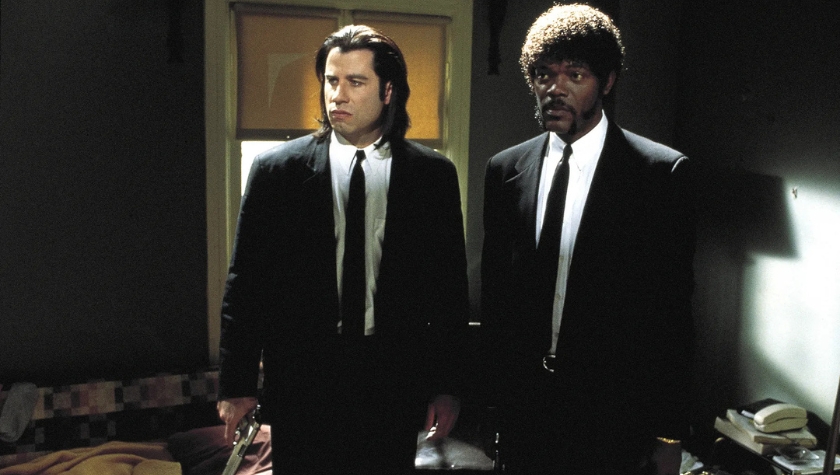
Character response is the easiest method for balancing humor and drama. Take a dramatic scene you've already written and rewrite your protagonist's reaction as petty, distracted or absurdly practical. Then take a comedic scene and let one character respond with complete sincerity. You'll learn how much of your script's tone is dictated by their reaction.
Well-Defined Characters Give You Both Registers
A reaction only lands when the reader understands who's doing the reacting. This is why tone is easiest to control when your characters are clearly defined. A reader who knows exactly what your protagonist wants will laugh when that desire gets undercut in a small way and feel the loss when it's taken away for good.
This is my "right story, right character" principle applied to tone. A character's goal, along with the emotional through line beneath it, becomes the raw material for your comedy and your drama alike. John Hughes's Planes, Trains and Automobiles runs on two such desires. Neal Page wants to get home for Thanksgiving. Del Griffith wants company, and he attaches himself to Neal at every turn. For most of the film, the collision of those desires is pure comedy.
But Hughes shifts the tone considerably in two key scenes. The first, in a Wichita motel room, when Neal unloads a cruel tirade on Del, and the scene seems headed for a punchline. However, Del answers with quiet dignity: he likes himself, his wife likes him, his customers like him. At this moment we see Del as a three-dimensional person, and not just as an obnoxious guy generating laughs. Neal's reaction underlines the tonal shift: taking pause, he now views Del differently as well, and the scene plays out with genuine heart.
The second and most powerful turn comes at the end. Neal doubles back to an L station and finds Del sitting alone, and Del confesses that his wife, Marie, died eight years ago. Neal has spent the film racing toward a home. Del has been searching for one. Because these characters are so well-defined, everything tracks organically and we believe it when Neal invites Del to his home for Thanksgiving, and we feel it when Del smiles that last bittersweet smile.
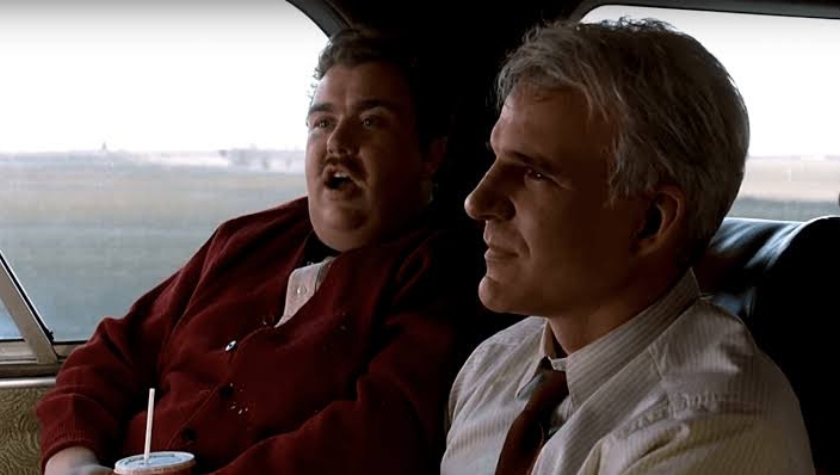
The more you know and invest in characters, the more places you'll be able to go with them: whether they're headed for laughs or heartache.
Dialogue Choices Shape Tone
Once you know your characters, the next question is how they talk: because the way a character speaks tells the reader which register a scene is in. Quick back-and-forth and one-upmanship play light. A long, uninterrupted speech slows the reader down and asks for their full attention. Shift between the two, and your dialogue can move a scene from comedy to drama, sometimes within seconds.
The Orca sequence in Jaws does exactly this. Below deck, Quint and Hooper drunkenly compare scars, one-upping each other's shark and eel stories while Brody quietly keeps his appendix scar to himself. The lines are short, competitive and funny. They react with boozy laughter.
Then Brody asks about a mark on Quint's arm. Suddenly pensive, Quint reveals it's a removed tattoo from the USS Indianapolis. Hooper, realizing the significance, responds soberly. Quint proceeds to tell a long, unbroken account of the ship's sinking and the sailors lost to sharks, and his speech becomes the most emotionally powerful scene of the film. Brody and Hooper are silent through all of it: taking in every word with the weight they deserve. The shift feels organic because the banter earned it: the boozy male bonding lowered the characters' guard and, as a result, Quint opening up about what happened is a natural progression.
When you want to shift tone mid-scene, focus on how the characters speak. Shorter lines and interruptions lighten it. One character holding the floor deepens it, and the listeners' silence tells the reader the temperature has changed. Think about the way people talk in real life: learn from it and reflect it whenever shaping tone.
Irony Cuts Both Ways
Tonal shifts like these hit hardest when something larger is pulling a story in two directions at once. Often, that something is irony: the opposite of what's expected. An unlikely hero, an unlikely romance, a plan that produces the exact outcome it was designed to prevent. It can be funny or tragic, depending on how much your character stands to lose and how much of that loss is expressed.
Joel and Ethan Coen's Fargo delivers both outcomes inside one story. Jerry Lundegaard, a car salesman drowning in debt, arranges his own wife's kidnapping so his wealthy father-in-law will pay the ransom. The premise is a dark joke, and initially the Coens play it that way: Jerry's nervous fumbling, the kidnappers' bickering, the relentlessly polite Minnesota small talk surrounding every incident.
Then the stakes escalate considerably, becoming life and death. Jerry's wife and father-in-law are killed and one kidnapper murders the other. The scheme meant to rescue Jerry destroys his family. Marge Gunderson, the pregnant police chief who solves the case, can only marvel that all of it happened for "a little bit of money."
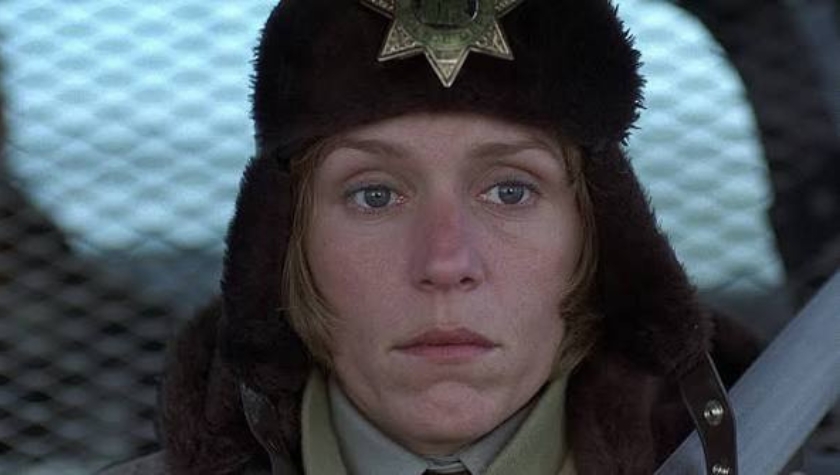
The irony holds steady from start to finish. What shifts is who pays for it, and that's what turns a dark joke into a tragedy. As a narrative device, irony is neutral. It's the stakes that determine the tone.
Subtext Creates Tonal Complexity
Irony is often buried beneath what characters say, which is where subtext comes in. Characters rarely announce what they want. They talk or joke about it, or chase something adjacent to it. This space between what is said and what isn't is another way to control tone. A character insisting everything is fine while their life unravels could be played for comedy or drama, and how much the reader is clued-in allows them to gauge the tone for themselves.
Mike White's The White Lotus is a dramedy fueled by tonal contradictions. The character arc of employee Belinda Lindsey shows how subtext can carry irony across an entire series. In season one, Tanya, a wealthy and grieving guest, dangles the idea of funding a wellness center for Belinda, the resort spa manager. Tanya's flighty enthusiasm plays as comedy, but underneath she wants someone to tend to her grief, and Belinda wants a way out of service work. Once Tanya falls for Greg, the offer evaporates, and Belinda realizes she invested time and emotional energy on just another spoiled guest.
In season three, the roles reverse. Belinda, suddenly wealthy after a hush-money payout from Greg, drifts away from Pornchai, a colleague who dreamed of opening a wellness center with her, and leaves him behind exactly the way Tanya left her. The characters leave the parallel unspoken, and we're left to recognize it ourselves. Once we do, the reversal is darkly funny and sad at once.
Subtext tells the reader what your characters really want. Whether this desire gets a laugh or stirs emotion depends on how you let it surface. Look at a scene in your script where a character states their goal outright. Rewrite it so they talk about something adjacent: a menu, the weather, someone else's problem. The less is said, the more subtle and complicated the tone becomes.
A Complicated Tone is a Realistic One
Subtext feels true because people rarely say what they mean, and this is your richest source for balancing humor and drama: reality itself. Life refuses to stay in one genre. People crack jokes at funerals and receive devastating news at the most absurd moments. We're wired to cope with pain through humor, and readers recognize this.
This is why inserting your personal life into your script pays off tonally. Creator and showrunner, David Chase built The Sopranos on this approach. He modeled Tony's mother, Livia, on his own mother, and several of Livia's signature lines came straight from her. Livia's guilt trips and martyrdom play as dark comedy until it's finally revealed she steered Tony's uncle Junior toward having him killed.
Chase drew that push and pull from his own life, which is why Livia works as both a punchline and a threat. Your own collisions of comedy and drama can do the same work, and they sharpen your voice in the process.
When a scene reads tonally flat, ask how it would unfold if it happened to you or someone you know. Real people slide between emotional registers constantly, and your characters can as well.
Reality gives you permission to mix tones. It also gives you a blueprint.
Timing and Tone
Once you have the material for both registers, the last question is timing. Comedy and drama run on the same mechanics: a joke builds anticipation via a setup, and it pays off with a laugh; a dramatic event likewise requires setup, which is usually accomplished through mounting tension (much like horror and suspense). Humor itself is a timing tool: often used as a release valve between heavier moments, and allowing us to settle and emotionally regroup.
Writer-director Jordan Peele came to Get Out from sketch comedy, and he used that knowledge with precision. Chris Washington's best friend Rod, a TSA officer, supplies the laughs that let us breathe between stretches of dread. At the climax, as Chris stands over a wounded Rose, red and blue lights appear, and we brace for the worst. Then the car turns out to be Rod's airport vehicle, and the tension breaks into one of the film's biggest laughs.
Peele stacked the tension as high as it could go, so the release lands as pure relief.
Watch where your own laughs land. A joke placed directly after a devastating beat can undercut it before the reader has felt it. Push the release a beat later, after the weight has registered, and it reads as relief. Likewise, give a dramatic turn some white space on the page and keep it clear of rapid-fire banter.
Tonal whiplash happens when a shift arrives without setup, whether through character or plot, so earn each one by letting the tension build first.
Balancing Humor and Drama in Your Script
Balancing humor and drama in a script comes down to tone, and tone is a craft tool you can control.
Your characters' reaction, their goals being clearly defined, dialogue choices, making use of irony and subtext, inserting reality, and being mindful of timing are all ways you can accomplish this. The more familiar you become with these techniques, the easier it'll be for you to shift tone in your screenplay or pilot.
Humor and drama come from the same place: characters who want something badly. How it plays out is what decides if it's funny or tragic.
Learn to control tone and your script can deliver both.