
While it might seem easier to write a screenplay when the story and characters have already been established, it can be quite a challenge. An adapted screenplay is a script based on previously existing material, such as a novel or play. While many of the pieces are in place, it’s the screenwriter’s job to reshape it so that it works within the constraints of a movie. Going from novel to script often involves condensing lengthy plots, enhancing the visual aspects of storytelling, restructuring events and even removing or consolidating characters.
Here are 7 of the best adapted screenplays that screenwriters can learn from.
1. Jurassic Park (1993)
Novel Written by Michael Crichton, Screenplay by David Koepp
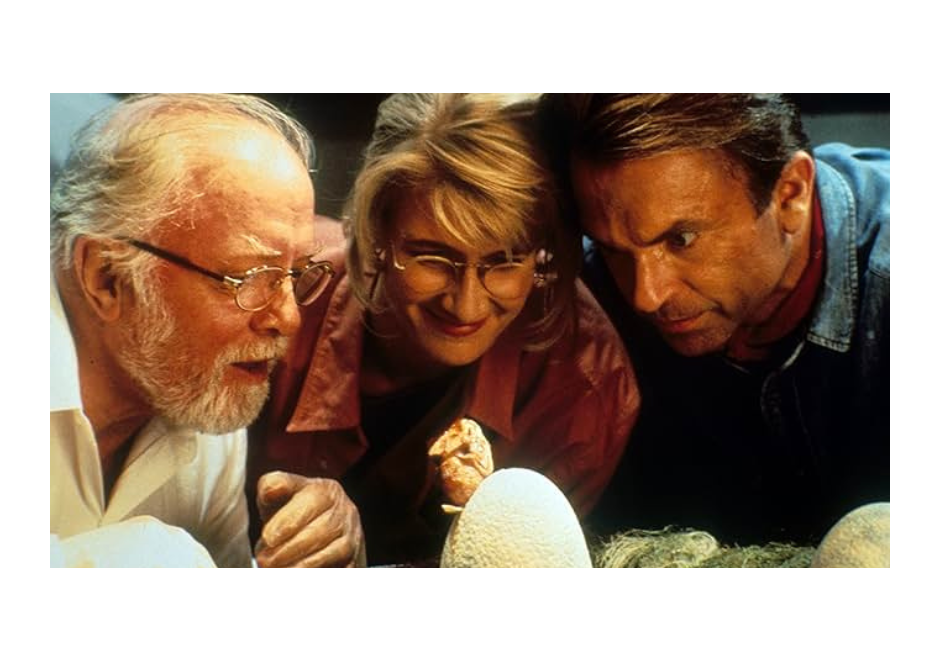
A box office smash followed by six sequels and counting wasn’t much of a thought when author Michael Crichton was writing his 17th novel, Jurassic Park. But with Steven Spielberg behind it, the book-turned-movie became a worldwide box office phenomenon.
At 460+ pages, Jurassic Park (the book), which is filled with scientific concepts, chaos theory and way more scenes that would fit into a conventional 2-hour film, had to be written to meet the visual needs of the story. What screenwriter David Koepp had to do was find the characters, moments and themes that he could take from the novel, and write them into a screenplay.
Jurassic Park did an amazing job at taking pages and pages of exposition and turning it into a line or two in the movie, such as Hammond’s lawyer saying investors need to know this park will work, whereas in the novel Hammond speaks in front of a room of investors asking for money. It also took complex science and explained it to the layperson as if they were on a theme park ride - Dino DNA!
2. To Kill a Mockingbird (1962)
Novel Written by Harper Lee, Screenplay by Horton Foote
Most people read To Kill a Mockingbird in high school and it’s quite a badge of honor that this film has been the only adaptation of the novel. The book was an instant success and has sold 30 million copies over the last 66 years.
The idea of turning the hit novel, which tackles themes of racial injustice, class, courage, and the loss of innocence, into a movie was too much for Lee, so she recommended Foote. He accepted but wanted Lee to know something important about his adaptation: “You know, there’s going to come a time when this has got to belong to me and I’ve got to take this over,” Foote recalled telling Lee in a Virginia Quarterly Review interview.
“I didn’t use it merely as a ‘departure’ and write something entirely new, but I did write many scenes for the film that don’t exist in the novel,” Foote said. “The whole time sequence had to be redone because the novel is sprawling in the sense that it goes over many years and we wanted to find a unity of time.”
To Kill a Mockingbird has stood the cinematic test of time because Foote knew which themes to preserve and crafted a screenplay that resonated with audiences.
3. No Country for Old Men (2007)
Novel by Cormac McCarthy, Screenplay by Joel Coen and Ethan Coen
Okay, when this movie came out, I remember sitting in the theater and starting to zone out during Tommy Lee Jones’s final monologue as Ed Tom Bell (I didn’t know it was the last scene of the movie). When the screen cut to black, I realized I missed the ending. Fortunately, there was a bookstore nearby, and I was able to find the book and read the last few pages, which matched his monologue almost exactly.
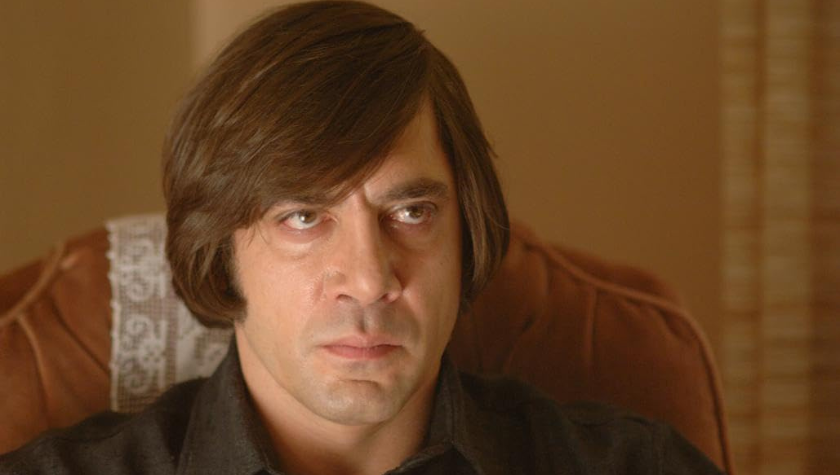
Unlike the film, the entire book is narrated by Bell, in which he has an extensive backstory. So does Anton Chigurh (Javier Bardem), both of which are missing in the film version. This Oscar-winning screenplay shows that writers can remove character backstories if it benefits the pacing and isn’t needed to tell the story as a movie.
"Parts of the book are lifted verbatim but they appear in the book as first person ruminations by the sheriff in alternating chapters outside of the action,” Joel Coen said in an interview with The Skinny. “One of the interesting challenges of adapting the novel was how to preserve that voice. In certain cases, we took his words, but put them into the context of a scene usually involving the sheriff and the deputy."
4. The Godfather (1972)
Novel by Mario Puzo, Screenplay by Mario Puzo and Francis Ford Coppola
When The Godfather novel was released it became an instant classic and several actors, producers and filmmakers fought to secure the rights. It ended up getting bought by Paramount Pictures, and soon became a massive challenge to adapt, produce and shoot (there are several books and a TV miniseries on this that are worth reading/watching).
"To me originally, and anyone who remembers the original Godfather book, it had a lot of sleazy aspects to it, which of course were cut out for the movie, and I didn't like it very much for those reasons," Francis Ford Coppola said in a 1985 BBC interview.
In fact, The Godfather Part II was also based on the original novel. So adapting the novel into the first film, as Coppola stated above, involved cutting a lot from the book and not just the sleazy part, but Vito Corleone’s whole backstory. Coppola focused on the cultural aspect of the story he could relate to: his Italian heritage, tradition, family and the story of America (it’s why the first scene line of the movie is “I believe in America.”)
What helped make the adapted screenplay work was that Coppola understood the themes on a personal level, and knew how to maintain that vision from book-to-screen.
As for me, I was always lukewarm on the movie, which is sinful as a filmmaker. Then I read the novel and now I love the movie. What works is that both stand alone, but both novel and film elevate each other.
5. The Silence of the Lambs (1991)
Novel by Thomas Harris, Screenplay by Ted Tally
As with any adaptation, it’s important to focus on what matters most in a film rather than the nuances of the book. The film adaptation of The Silence of the Lambs pared down subplots and removed characters (including a major one), while diving deeper into Clarice Starling (Jodie Foster), particularly her underdog status among her male FBI colleagues and her perceived weakness in the field. Her chess-like battle of wits with Hannibal Lecter (Anthony Hopkins) proves her capability and shows that someone so intelligent sees her as a worthy match.
The movie relies on the actors’ subtle expressions and behaviors to convey meaning and emotion without the extensive exposition found in a novel. The filmmakers preserved the relationship between Starling and Hannibal, as well as the terrifying kidnapping and serial killings carried out by Buffalo Bill (Ted Levine). Perhaps what stands out most is that the audience ultimately finds itself rooting for Lecter: a cannibalistic, psychotic serial killer.
6. Project Hail Mary (2026)
Novel by Andy Weir, Screenplay by Drew Goddard
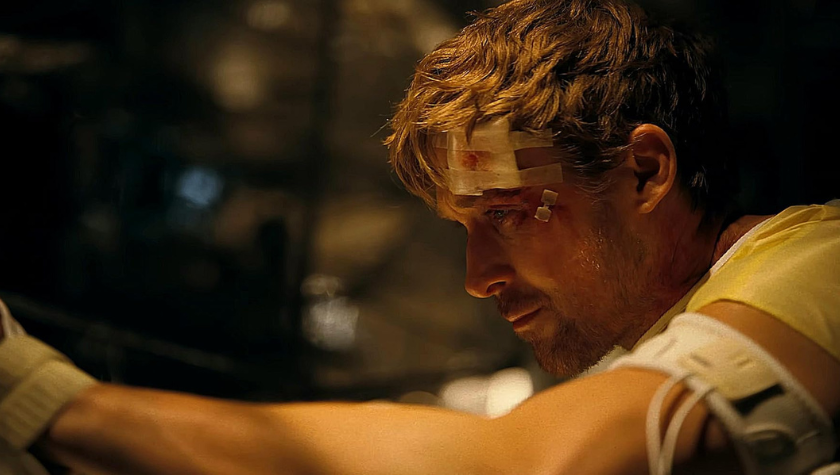
Project Hail Mary will go down as one of the best adapted screenplays of the 2020s. It’s not only a well-made and popular film, but writing a screenplay about a man alone in space befriending an alien who is all but impossible to talk to is no easy feat.
Fortunately, for Goddard, Ryan Gosling had already signed on to star in Project Hail Mary, so he could write protagonist Ryland Grace with an actor in mind.
The adaptation is a great example for many of the same ways Jurassic Park worked. It explained complex scientific information without talking down to the audience, turned exposition into action and found the best scenes that stick out in the source material and then crafted a story around those moments.
7. Dune (2021)
Novel by Frank Herbert, Screenplay by Jon Spaihts, Denis Villeneuve and Eric Roth
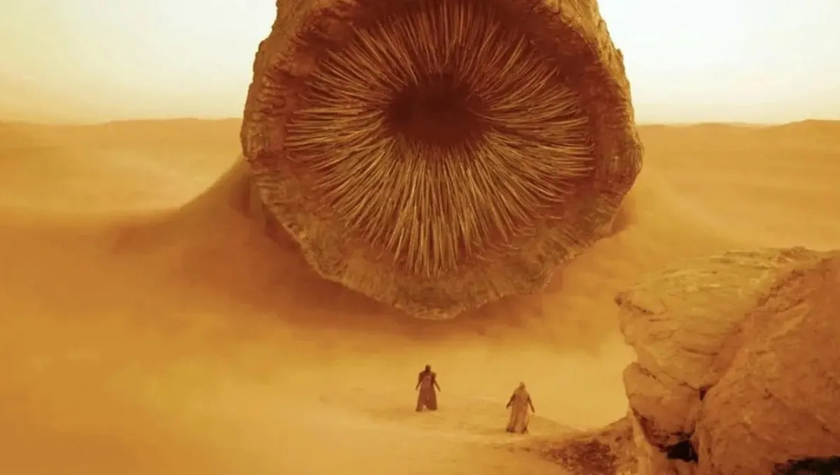
Dune is considered one of those novels that is nearly impossible to adapt. It was tried in 1984 with David Lynch at the helm but it didn’t quite find its audience.
The latest iteration spans several movies and a TV series to follow up. Unlike the 1984 version, plans were set in motion to make the new movies as epic as the dozens of books in the series. This involved making two movies based on the original Dune, followed by a third film due out in December 2026 based on Herbert’s second Dune novel.
What works best in Dune is how the writers were able to do what most great adaptations accomplish: knowing the themes, maintaining the plot and developing its characters.
Adapting original material into a screenplay is inherently challenging, as complete fidelity to the source material is largely impossible. The most successful adaptations focus on what matters most: the core themes, and the characters that drive the story. They are also shaped by their time; many are produced soon after a book’s release, allowing them to retain cultural relevance.
But what if To Kill a Mockingbird were adapted again today? How would it differ from the 1962 film? These are essential questions, but perhaps the most important is: Why this story, and why now?
While the answer may begin with its popularity and commercial appeal, the strongest adaptations go further. They justify their existence by revealing why the story must be told now and what it offers to a modern audience. In the end, a truly meaningful adaptation doesn’t just revisit a story; it redefines its relevance for a new generation.