
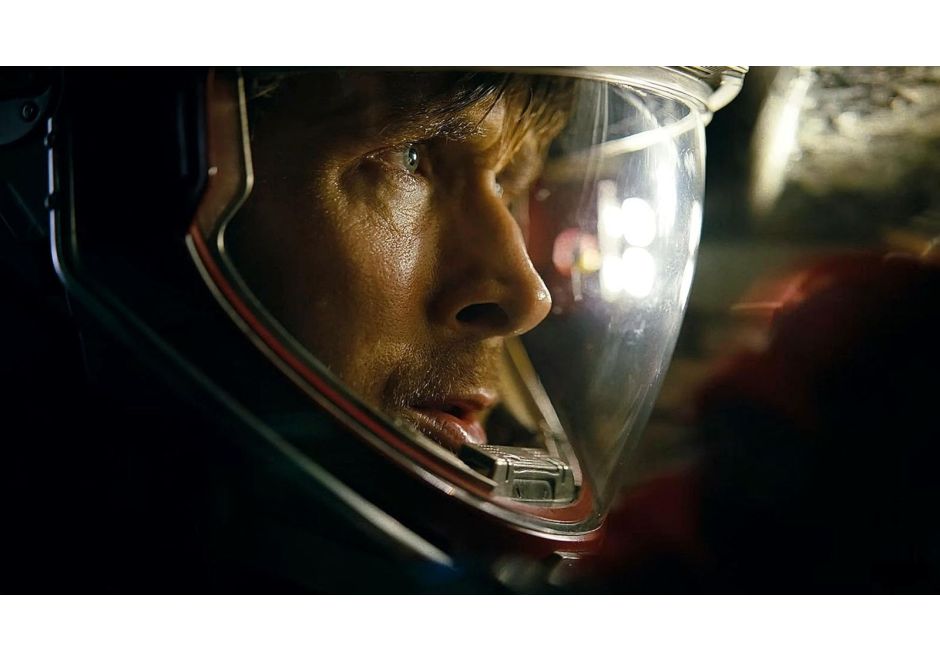
Ryland Grace (Ryan Gosling) is a middle school science teacher. His kids love him and he enjoys what he does. He’s also extremely smart, which is why he gets recruited to an ambitious program designed to figure out why the sun is dying.
Project Hail Mary is the second novel by Andy Weir, whose first novel-turned-movie, The Martian, made audiences experience life on Mars and what it takes to survive on your own with no chance of anyone showing up to help for months.
Written for the screen by Drew Goddard, adapting Project Hail Mary felt like a near-impossible task, especially considering how technical the book was and how much of it revolves around a central character who does a lot of internal thinking. Goddard, who also wrote The Martian, accomplished this feat by creating a relatable, empathetic character without all that science getting in the way of telling an emotional story.
Writing the Everyman
“I love watching competent people do their jobs,” Goddard said in an IndieWire interview. “We’re not doing a story about the world’s greatest astronaut. We’re going to start with a schoolteacher’s point of view. On a core level, ‘the school teacher saves the universe’ sounds preposterous, and yet felt so right to me.”
While most of the audience won’t have the expertise that Grace does, the fact that he is a teacher makes him instantly relatable. Everyone who sees the movie has had some form of a teacher in their life; in fact, most can fondly remember one that had a lasting impact – Grace becomes that teacher.
Most people can also understand that being a middle school teacher is a hard-to-do, low-paying job. When this “everyman” is called upon to save the planet, it’s easier for the audience to go on the journey with him, because many feel in the same boat as he does; struggling to make ends meet in a draining job, and dreaming of doing something more than what one is doing now.
But still, writing dialogue for a smart character who knows science and engineering has its challenges. Goddard knew he wasn’t smarter than Weir, someone who went college for computer science and was a software programmer before writing novels, so he defined his job as a screenwriter as someone capturing how smart people sound rather than what they say.
“I grew up around scientists in Los Alamos, New Mexico” Goddard said in a RogerEbert.com interview. “I know what geniuses sound like, and my job is to capture that. And then when I would screw it up, Andy (Weir) was always there to say, like, ‘I know what you’re trying to say here, but the smarter way to say it is this way.’ So, it was very much a collaboration.”

Writing Technical Science-y Stuff in a Screenplay
Fortunately, Goddard knew that Weir had the science part covered so he could focus on emotions.
“It’s how I structure everything I do; no matter the genre, it’s an emotional journey,” Goddard said in his IndieWire interview. “What I care about is the love of science and the purpose of science — not the science itself.”
It’s okay if the audience doesn’t understand the science. I mean, does anyone understand what the ER doctors are saying in any number of medical shows, or the forensics team on a cop show? In fact, in Star Wars, no one knew what a Jedi, the Force, C3PO, R2D2 or how a ship made the Kessel Run in 12 parsecs, when the film first came out.
“It’s OK if they don’t understand,” says Goddard. “As long as the emotional intent is pure, audiences will go with it…As long as the emotions are clear, the rest will take care of itself.”
When a Non-Linear Story is More Than Flashbacks
Project Hail Mary is a film that takes place in two different times: the past and the present.
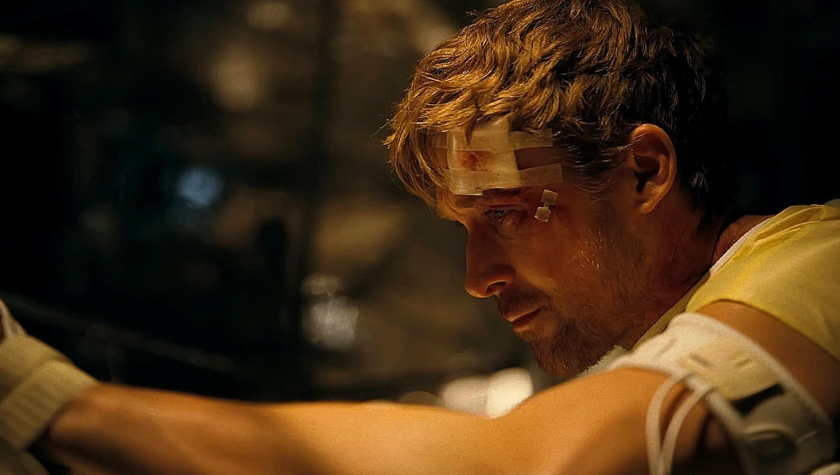
In the present time, Grace has been traveling for decades in an induced coma inside a ship headed toward the single star in the universe that isn’t dying. Upon waking, he seems confused about why he’s there, and roams around the ship in a self-destructive state not accepting his reality. He soon meets a fellow traveler from a different planet who begins communication, and they forge a bond that could possibly help them save the galaxy.
The past is shown through flashbacks centered on Grace’s time on earth as he helps discover what is causing the planets to die and how to possibly fix it. At first they seem like standard flashbacks, but as the movie continues, they reveal information that changes the audience's perception of the present day.
It’s not easy to write non-linear, but keeping the two intertwined and disclosing information slowly makes the impact of flashbacks more meaningful to the entire story. In Project Hail Mary, it helps the audience feel closer to the protagonist, making his journey feel earned and inevitable.
The flashbacks answer not only how he got there, but why he was the only one who could do it.
Write Original, Find Inspiration
“Whenever you’re doing anything that feels bold or different, I’ve learned, people are going to push back against it. There’s a human quality in what we do that you feel comforted if it’s been done already,” said Goddard in the IndieWire interview. “So, anytime something’s different, and you take a chance on something, there’s an initial reaction to say, ‘No…it feels weird. I don’t understand this.'”
As different as Project Hail Mary is, and despite the challenges of adapting the book into a coherent film, Goddard pressed forward, using long-established structures to make the movie feel bold and distinct while still retaining familiar elements.
“I see James Cameron’s influence on structure. He, from my point of view, for big event movies, there’s nobody better at structure,” Goddard shared in a Variety interview. “If you look at something like Titanic, we meet two kids, they fall in love, we root for them, the ship hits the iceberg. These movies are about two individuals dealing with these big emotional things in the middle of wildly complicated situations.”
The same is true for The Abyss, True Lies and The Terminator, as well as Project Hail Mary with the alien Grace meets and names Rocky.
“Creating a believable but relatable Rocky was the greatest challenge,” Goddard said in the Variety interview. “He can’t talk. He speaks in whale sounds. They don’t even have the same atmosphere. That’s preposterous, because you’ve got a boy in a bubble scenario without a face.” And yet, just like with Cameron’s films, Goddard could take the ideas of two individuals who are dealing with big emotional moments and turn it into a relatable story.
If there is a lesson screenwriters can take away from Project Hail Mary, it’s that Goddard had to think like an engineer to write the screenplay.
“There’s an engineering mindset where they just don’t take no for an answer. There’s no right or wrong with an engineer. It’s just, ‘We haven’t figured it out yet.’ That is the way they approach any problem. It’s not that they failed to solve it. It’s that they just haven’t solved it yet,” Goddard said in the RogerEbert.com interview.
So, if you find yourself struggling to find the right beats of the story, discover something isn’t working or plot holes are becoming the size of sinkholes, remember that it’s not a matter of failing to find the right answer, but knowing that it hasn’t been solved yet.