
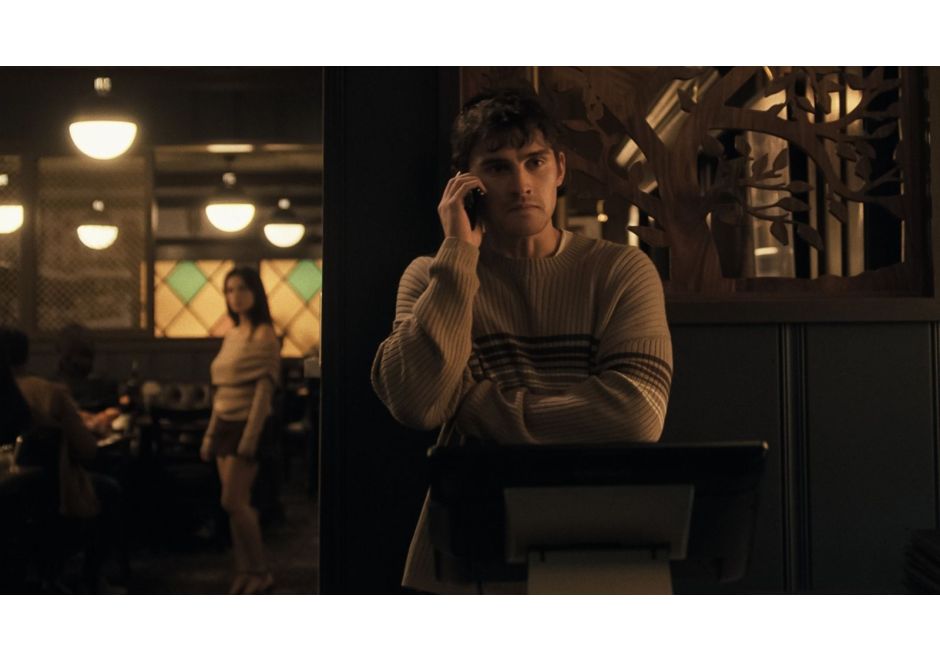
You’ve probably heard the buzz around one of the country’s biggest indie movies right now, Obsession, a horror film that has frightened and surprised audiences, to the tune of $68 million at the worldwide box office.
The film’s writer/director/editor, Curry Barker, started his career on YouTube sketch comedy before making the microbudget found-footage horror Milk & Serial, which went viral in 2024. Obsession premiered in the Midnight Madness section at TIFF in September 2025, where it was runner-up for the People's Choice Award. Focus Features acquired it for a reported $14 million. The film was made for around $1 million.
Barker has already wrapped his next feature, Anything But Ghosts, for Blumhouse/Focus Features, and is set to write and direct a reimagining of The Texas Chain Saw Massacre for A24.
If you haven’t already checked out our interview with Barker about the film, you should definitely do that. There are additional lessons we can take away from the film itself—beware the spoilers ahead, but there's lots of scary-good advice, too.
1. Keep Your Idea Simple and Familiar
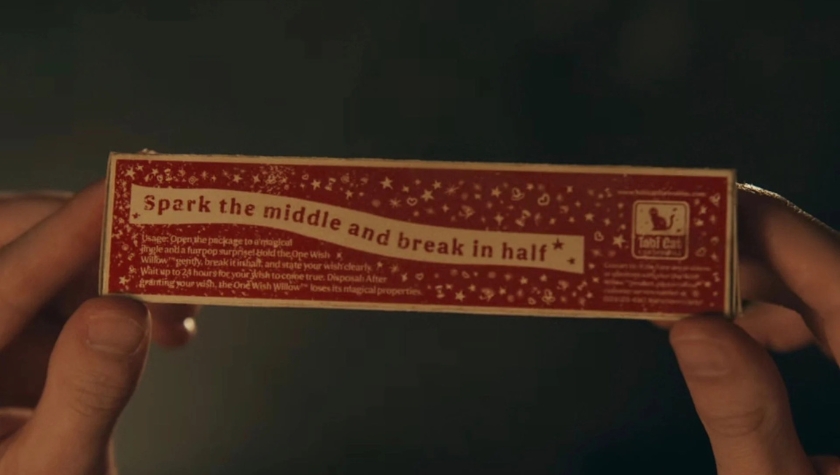
The premise of Obsession is almost aggressively simple. A shy guy can't confess his feelings, buys a wish-granting novelty item at a new-age shop, and wishes his crush would love him. Things go poorly. It’s great.
The device is an updated version of the monkey's paw from W.W. Jacobs' turn-of-the-century short story. And per Barker, his specific inspiration was a Simpsons episode. Simplicity doesn’t mean boring—you can still tell a high-concept story.
When we spoke to him ahead of the film’s release, he told us that the simplicity of the idea was part of what attracted him to telling this story.
“I was really surprised at how little had been done with this concept, even though [the] attitude was very early on like, ‘Oh, this has been done. Oh, it's going to be another slasher movie,’” he said. “But to me, it was just grounding it in reality, like, ‘Okay, fine, magic is real in this world, but then let's throw that away. Now it's about a girl who really, really wants a guy, and I think you can take it to really uncomfortable places.’ I was kind of shocked at what hadn't been done, and it kind of felt like my playground because I was just like, ‘What else could she do? Send him a billion texts? Or how clingy could we go with it?’”
Working within extremely tight narrative and budgetary confines, Barker knows how to keep things simple yet effective. The familiarity of the premise makes things easier on everyone. Audiences know the genre shape, which gives Barker room to subvert it.
2. Know Who the Characters Are Immediately
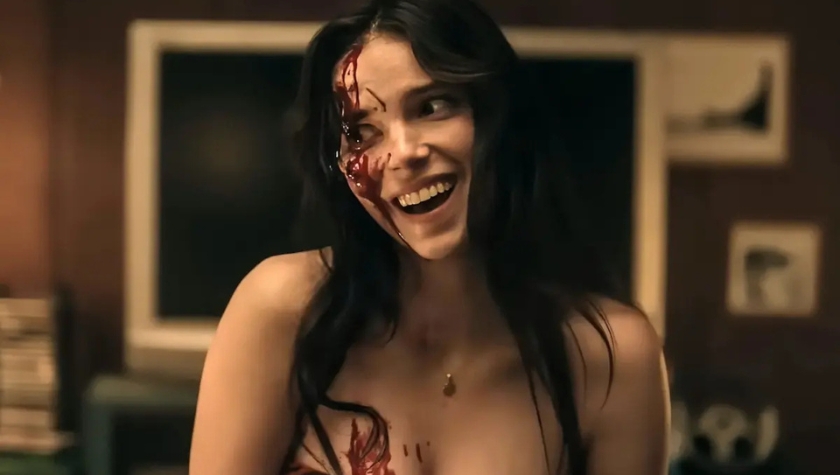
Ideally, your characters should feel wholly realized with internal lives and goals of their own, even if they only appear in one scene. Barker is really good at this, and it’s evidenced throughout Obsession.
Barker told us that he resists backstory in favor of present-moment character revelation. So put your characters in situations that force them to tell us who they are.
Does your character give twenty bucks to an unhoused person outside a bar? Are they a shop employee who just won’t get off the phone, even when helping a customer? Do they hug a friend when their cat dies?
One detail can be enough sometimes. Do they chew gum with their mouth open? How do they carry themselves? Is there a verbal tic they use constantly? All of these are solid options. Look to the people around you for other examples. Go to a coffee shop and observe how people interact. Can you pick one trait that distinguishes everyone you see?
This kind of detail can tell us more about a character than paragraphs of exposition. Behavior is character. Every action tells the audience something.
3. Subversion and Originality from the First Scene
The film opens with Bear’s uncomfortable declaration of love to Nikki—only to reveal the person he’s appealing to is a server at a diner, not Nikki at all, but a stand-in, and his friend Ian is offering commentary.
Eventually, romance movie tropes are pulled in as well, but get twisted by the horror setting. The horror beats themselves are even subverted (think the other shop employee who pretends not to know what a One Wish Willow is).
The film does this constantly to surprise and delight the audience, even in the middle of its dark relationship tale. This is how Barker creates uncertainty despite the film relying on a concept that’s been seen before.
Barker told us that he builds tension on the page through control of perspective. He writes from a single character's point of view and shows only what that character sees, so if the character doesn't see it, the audience probably won't either. The absurdity of Bear’s situation makes familiar beats feel new.
Tropes exist for a reason. They work. But it can be so fun to flip them on their heads and use them in creative ways.
4. The Benefits of Keeping Things Small
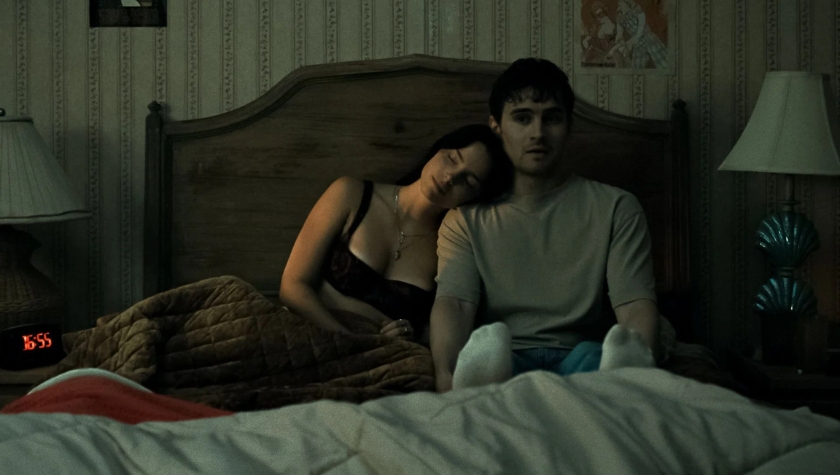
The locations are real and tightly clustered—a music store in the San Fernando Valley, a pizza restaurant, a bar, a new age shop, all on the same Burbank strip. The bulk of the dramatic action takes place in Bear's house.
The cast is similarly limited, focused mostly on a group of four friends.
This containment can be a production consideration and a budget strategy, for sure. Fewer locations and cast members keep costs down. But at the same time, these choices help create the suffocating atmosphere that many audience members have praised. The film keeps you uneasy almost from the start and never lets up.
If you’re writing something you hope to produce, you don’t want to write small. That’s not the advice we’re giving. But you can approach a contained screenplay knowing you want to keep things tight and focused, which might help ratchet up your tension at the same time.
5. One Page Doesn't Necessarily Mean One Minute
Typical industry expectations are that for every page of your screenplay, you get a minute of screentime. That’s why scripts usually fall around 90 pages for a film that is expected to be about an hour and a half long.
Barker writes a lot of dialogue, he told us, and “a minute per page is not accurate for me.” He also said he likes to stretch his scenes for the sake of tension, so they often run long in the actual shot. He’s working to tighten up his drafts, he said.
The rule exists as industry shorthand, but dialogue-heavy writers shouldn't be constrained by it (and readers/producers shouldn’t dismiss a script on page count alone).
But if you find your script is running unnecessarily long, or you’re being told to trim things down (we know it’s hard), consider these tips for cutting your page count.