

Throughout its 98 year long history, the Academy Awards has celebrated both original and adapted screenplays since its first award show in 1929. While not all of the 196 winning screenplays have aged well, there are a few standouts Best Screenplay winners that many would consider to be the best screenplays ever written.
Writing an Oscar winning screenplay is no easy feat, neither is listing the top 10 best Oscar-winning screenplays. Whether they are original stories or adapted from a play, novel, or foreign film, the best screenplays to study can suspend disbelief in the first 10 pages, build characters with meaningful and memorable dialogue, and tell well-paced stories that make bold choice and leave the audience with a meaningful message that sticks with us long after the credits roll.
1. Chinatown (1974)
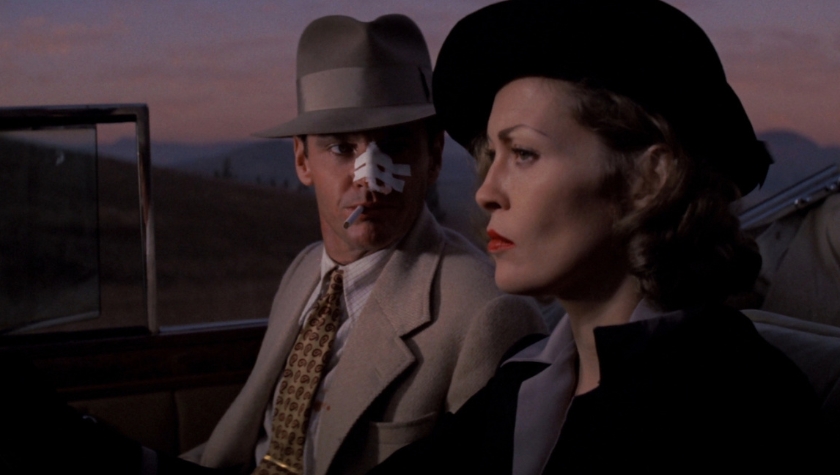
It’s hard to deny that Chinatown is the best Oscar-winning screenplay, and perhaps the best screenplay in history, hands down. Not only has the screenplay, which is written by legendary screenwriter Robert Towne, been considered “perfect,” but Towne’s attention to detail and excellent subversion of noir tropes and tricks like Chekov’s Gun reward your investment and trust that you’re paying close enough attention to see the pieces fitting into place. It’s a complex story, but not convoluted, so it keeps the reader engaged.
It's rare to read a screenplay that is shockingly airtight and full of darkness and violence that surprises the audience. At its thematic core, the audience knows what is to come when power, corruption, and the abuse of innocence are universal truths we all unfortunately know too well. Even in its mundane premise (development of the Los Angeles water aqueduct – how exciting), Towne made an entertaining story through fascinating characterizations, close attention to detail, and clever foreshadowing through tried and true screenwriting tools. It's these reasons that make Chinatown an easy pick for the greatest Oscar-winning screenplay ever written.
2. Eternal Sunshine of the Spotless Mind (2004)
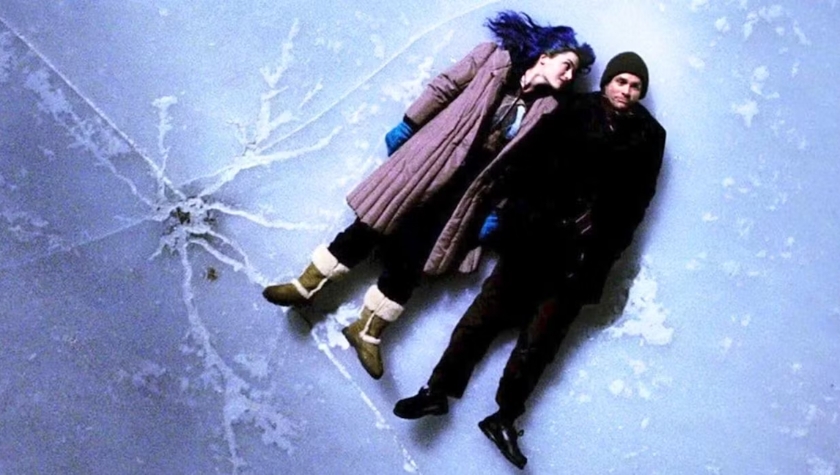
Charlie Kaufman’s writing is always a masterclass in conveying the right amount of information, unfolding surrealism bit by bit. Eternal Sunshine of the Spotless Mind carved itself into the cultural zeitgeist through its organic, poignant non-linear structure, capturing the theme of memory simply through the way the story exists. This structural choice allows the narrative to unfold naturally without feeling heavy-handed or overexplained.
But the hallmark of Kaufman’s writing that resonates most strongly in Eternal Sunshine is his focus on dialogue. The pages are sparse in action, giving readers space to unpack what is said, and left unsaid, between characters, creating tension through interpersonal conflict. It is this attention to character that grounds the sci-fi melodrama, making us care about what happens as each person struggles to coexist with love.
3. It Happened One Night (1934)
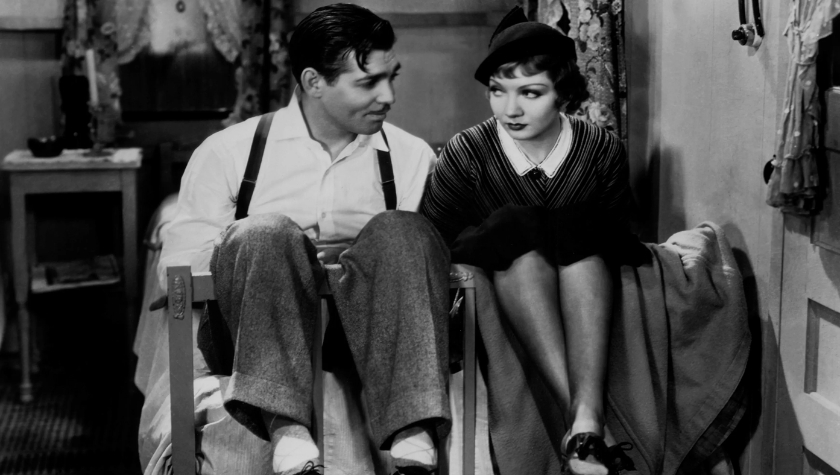
Frank Capra’s genre-defining rom-com It Happened One Night became the first of (at the time of writing) only three films to win the “Big Five” Oscars: Picture, Director, Actor, Actress, and Screenplay. While the film remains one of the best romantic comedies ever made, screenwriter Robert Riskin’s subversion of 1930s social norms, and his playful poking at the Hays Code, created situations that felt scandalous at the time, setting a rhythm that strums at the heartstrings and makes audiences ache for the slapstick to end and the longing gazes to begin.
Reading Riskin’s script, it’s shocking to remember it is nearly a century old. It established a foundational template for the modern rom-com: pulling two lovers together, tearing them apart, and reuniting them with a grand third-act gesture. But studying the scripts that defined genres is what helps us understand why storytelling conventions exist, and how they were first perfected.
4. No Country for Old Men (2007)
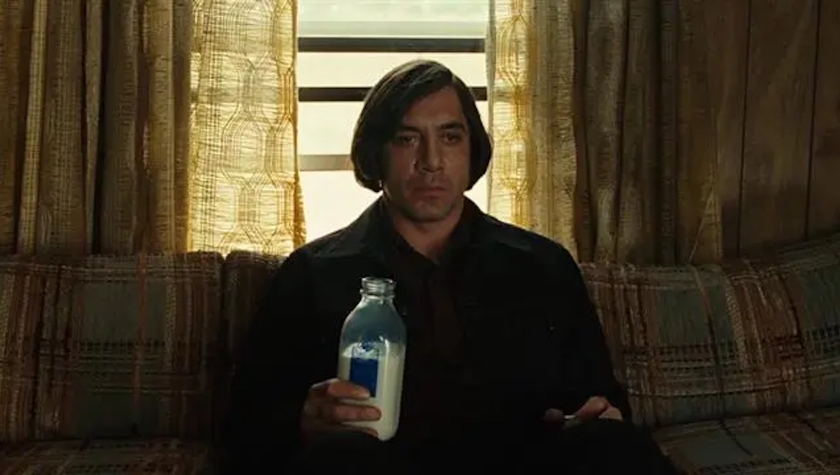
This Coen Brothers classic is adaptation at its finest. No Country for Old Men, based on the novel by Cormac McCarthy and adapted for the screen by Ethan and Joel Coen, is a unique screenplay on this list because it often reads almost like direction on the page.
Screenwriters are frequently told to avoid writing action lines like stage direction, but the Coens break that rule to convey the sweeping tone of a neo-western. While it’s difficult to recommend writers follow the footsteps of auteur filmmakers, this approach works because the film’s moral center acts like gravity, pulling every character, and every choice, into its orbit.
5. Parasite (2019)

Bong Joon-ho’s Parasite became a cultural touchstone after sweeping the Oscars for Best Original Screenplay, Best Director, Best International Feature, and Best Picture. This South Korean thriller thrives on its suspenseful power play between a struggling family that schemes to infiltrate a wealthy household, only to uncover a devastating secret.
Beneath its sharp critique of class inequality (a universal theme that resonates beyond language) Joon-ho’s script operates with razor-tight structure, evolving the story every ten pages. Each new revelation redirects the narrative, injecting fresh conflict and steadily raising the stakes until the cataclysmic climax. It is thrilling, but more importantly, it is relentlessly entertaining, fully investing the audience and suspending disbelief before delivering its final blow.
6. Get Out (2017)
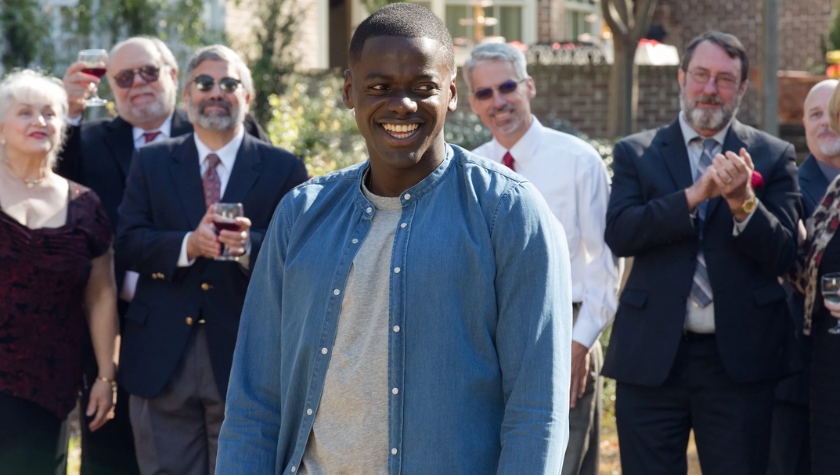
Horror is rarely celebrated at the Academy Awards. But when it is, we have to take a moment to truly celebrate the greatness that this “low-brow” genre allows for. For his directorial debut feature, Jordan Peele’s Get Out is a savvy exploration of socioeconomics and race, which comes through Peele’s incredibly layered storytelling that still manages to build tension and suspense.
This razor sharp, original storytelling with a Spielberg-esque sci-fi quality still manages to pay homage to Peele’s comedy roots, never losing that sense of humor that makes Peele an artist who understands genre tropes and how to expertly subvert them. Get Out is equal part satirical of white preformative liberalism and suspenseful psychological horror, capturing the golden standard of genre writing on his second feature screenplay.
7. Casablanca (1940)
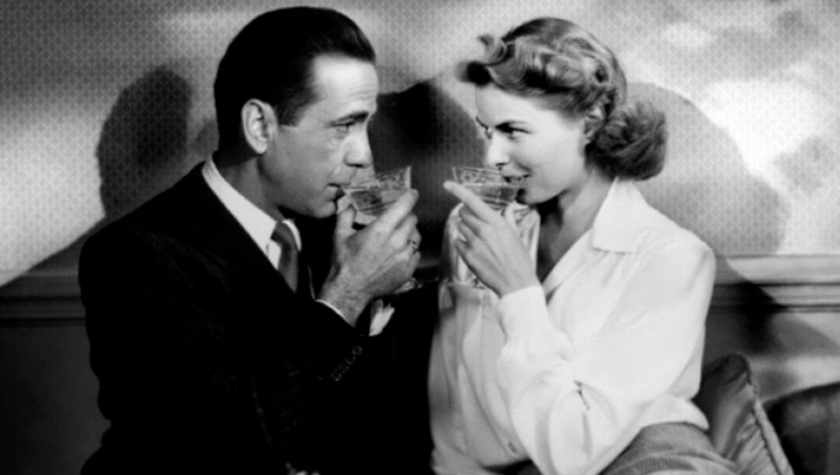
Casablanca is, beyond a shadow of a doubt, one of the most beloved Oscar-winning films in history. Adapted from the unproduced play Everybody Comes to Rick’s, the screenplay’s longevity stems from its universal emotions, shaped by a love triangle, anti-fascist sentiment, and unforgettable dialogue that made lines like “Here’s looking at you, kid” endure for over 85 years.
While it took a village to write the screenplay (infamously unfinished during production by Julius J. Epstein, Philip G. Epstein, and Howard Koch) the strategic use of flashbacks provides exposition and context efficiently without sacrificing emotional impact. Ultimately, Casablanca remains a great Oscar-winning screenplay not only for its story, but for the collaboration that made it possible.
8. The Apartment (1960)
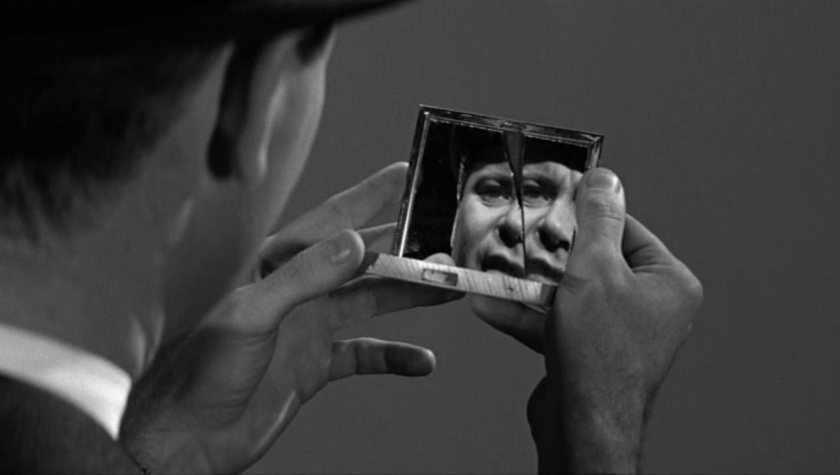
The Apartment is one of the best films of the 1960s and a high point in Billy Wilder and his co-screenwriter I. A. L. Diamond’s career. With five Oscar wins, including Best Picture, this rom-com is both gleeful and sentimental, delivering an emotionally complex story that later staples of the genre, like When Harry Met Sally… attempt to emulate.
What makes The Apartment exceptional is its structure, specifically its midpoint. When Baxter finds Fran in his apartment, the story pivots, shifting its focus to Baxter becoming responsible for someone other than himself. The titular apartment transforms from a borrowed space of secrecy into a home, a place to care and be cared for. Of course, the dialogue, use of location, and dramatic irony all contribute to the film’s greatness, but that midpoint is what makes it a screenplay worth studying.
9. Pulp Fiction (1994)
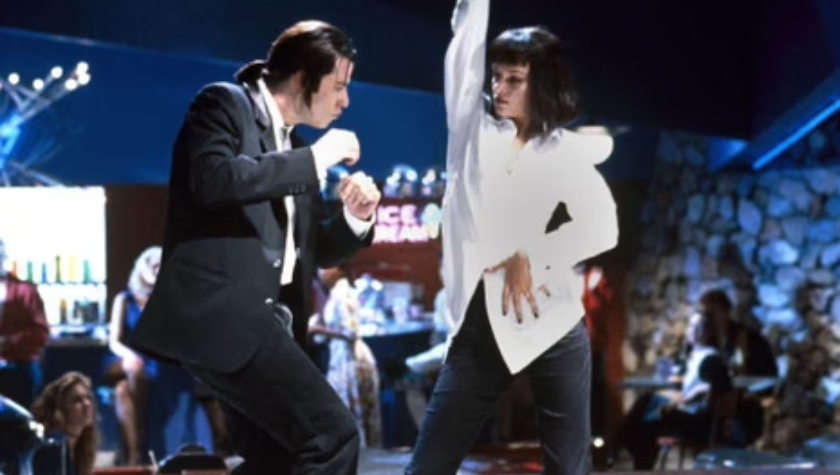
The stories of the Pulp Fiction screenplay being passed around Hollywood are enough to cement Quentin Tarantino’s second feature as one of the best original screenplays ever put to paper. Tarantino’s world is entertaining, stylized, and chaotic, pulling from pop culture and giving it a Jack Rabbit Slim’s twist that captivates.
While there are other great non-linear narratives, Pulp Fiction’s bold decision to kill characters only to have them re-enter later, weaving their stories together, fuses the violence and redemption at the heart of the film. Combined with a voice that is now unmistakably Tarantino’s, it’s hard to deny the magic of turning narrative complexity into clarity.
10. The Social Network (2010)
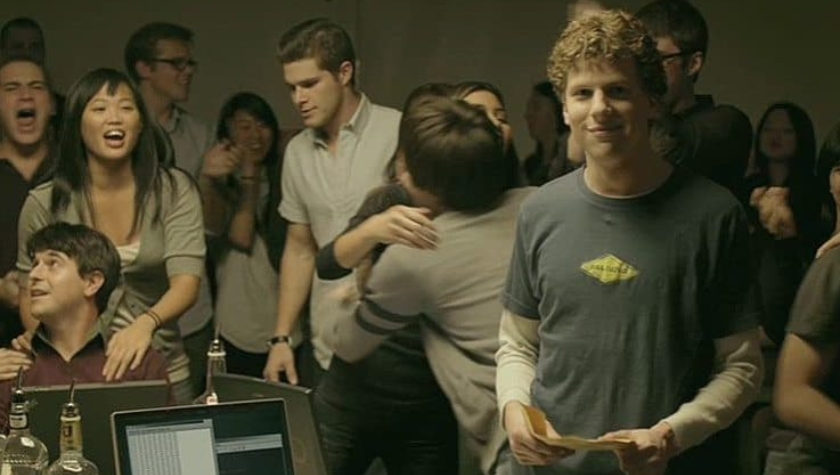
Aaron Sorkin’s approach to dialogue is second to none. His conversations and monologues are some of the best-sounding, best-paced words put to paper. The Social Network is shining proof. Not only does the film feature some of Sorkin’s sharpest dialogue, but its characters, plotting, pacing, and structure make this Oscar-winning screenplay his magnum opus.
Beyond Sorkin’s mastery of dialogue, the flashbacks that unfold alongside the deposition hearings are notably devoid of overt judgment about Mark Zuckerberg and the rise of Facebook, an almost impossible restraint for a writer. Our biases are often baked into our word choices, but by constructing a narrative around competing versions of the truth and deeply flawed characters, Sorkin allows the audience to form its own conclusions about who is right and who is wrong. It is this freedom that invests viewers in The Social Network and allows it to endure as a truly great piece of screenwriting.