
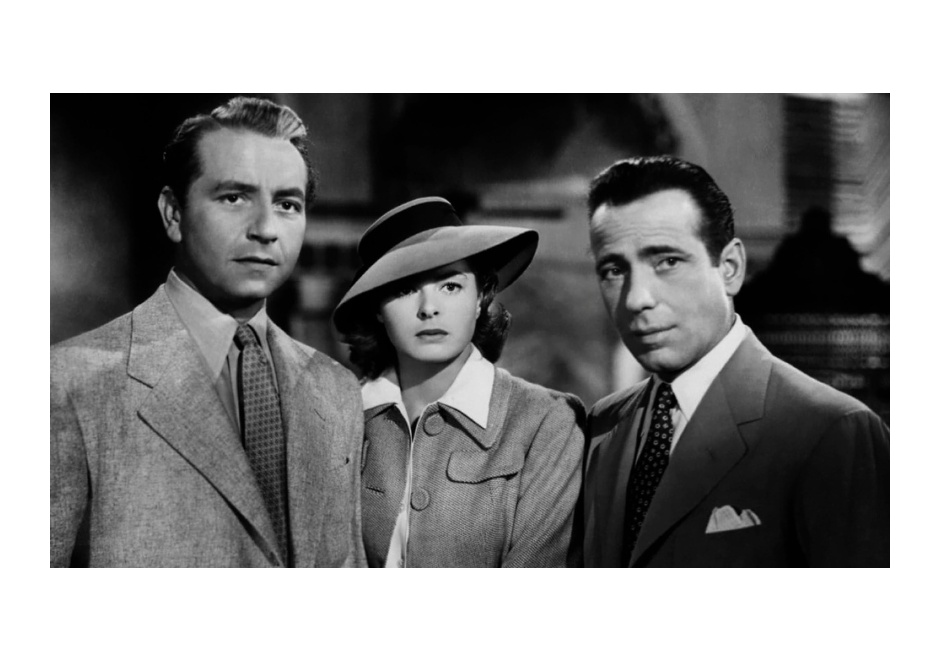
In 1942, Warner Brothers began production on a romantic wartime melodrama with all the workmanlike routine of any of the other dozens of programmers they churned out each year. No one involved had any clue that this particular assignment would become one of the most famous movies of all time, an Academy Award-winning classic that would transcend generations, Casablanca.
There are myriad reasons for its longevity, from the universal emotions of the central love triangle, to the sadly all-too-resonant anti-fascist sentiment, and unforgettable movie star performances, but in trying to determine what authorial voice crafted this near-perfect screenplay, the answer is far messier than the simplicity of the auteur theory. In fact, Casablanca is one of the greatest examples of cinematic storytelling as total collaboration.
Andrew Sarris once called Casablanca “the most decisive exception to the auteur theory,” and in reading the exhaustively researched and endlessly fascinating The Making of Casablanca by Aljean Hermetz, it’s hard to disagree. Hermetz used the meticulous memos that Warners ran off of in its day, comparisons of the many drafts of the screenplay, and interviews with the creatives to paint a picture of the inner workings of the studio system during its Golden Age. Actors, directors and writers alike were seen less as singular artists than as contracted professionals, paid weekly for their specific technical contributions to the construction of a mass-produced product.
“Warner Brothers was like the assembly line at an automobile plant,” says screenwriter Julius Epstein in Harmetz’ book, “You were assigned a script, and when you were through with it, the studio would give it to another writer, and someone else would polish it and if you were good at a particular thing, you would do that type of scene on one picture, and another and another.”
Epstein and his brother Philip were two of the writers assigned to adapt the unproduced play, Everybody Comes To Rick’s, by unknown writers Murray Burnett and Joan Alison, along with fellow contracted screenwriter, Howard Koch. The Epsteins, Burnett and Koch were all very different writers with different strengths, but all had in common that they were staunchly anti-fascist Jewish New Yorkers. In the months after America joined WWII, they injected their firmly held beliefs and contrasting styles into this run-of-the-mill melodrama whose fateful wartime release would make it not only a beloved entertainment, but a political act.
Top WB screenwriter Casey Robinson noted and polished the script under the creative oversight of prolific producer Hal B. Wallis and director Michael Curtiz, but writing from all parties continued well into production. Some of the most iconic lines in the film even came from the actors themselves, and the ending wasn’t decided upon until the day they needed to shoot it. So it becomes clear in studying the film’s production, that there is no one, or even two authors of Casablanca. It’s the type of classic whose quality is made up of the contrasts and tensions of a great many creative personalities playing tug of war with one of many inconspicuous films they’d be beating into shape that year. The writing of Casablanca is a testament to the merits of collaboration and the studio system working at its best. These are the authors who created Casablanca.
MURRAY BURNETT & JOAN ALISON (Original Playwrights)
Murray Burnett was a New York school teacher and struggling writer in his late 20s when he traveled to Nazi-occupied Vienna in 1938 to smuggle some money out for his Jewish relatives. His travels through Europe truly frightened him as the wide-spread oppression of Nazi occupation surpassed his wildest expectations. Large billboards depicted anti-Jewish propaganda images and German soldiers could be heard marching in the streets of the cities he passed through. It was in a French nightclub where a Black jazz pianist entertained a clientele of refugees and German soldiers alike that Burnett found the setting for a play in which he could write about the horrors he’d seen. He began taking notes to channel his panic over the fast-spreading expansion of Hitler’s rule, the first sketches of Casablanca.
Back in the states, he and fellow writer Joan Alison co-wrote the play together, about Rick Blaine, a cynical American bar owner in Vichy France-controlled Morocco, who redeems himself when he helps smuggle his former lover and her anti-Nazi resistance fighter boyfriend out of the country. Rick represented an archetype of the “I stick my neck out for nobody” hero who can’t help but do the noble thing in the end, a mold that would inspire selfish Hollywood heroes with hearts of gold from Han Solo to Tony Stark. They titled it Everybody Comes To Rick’s, and though they failed to mount a theatrical production, destiny took a hand when Warner Brothers story editor Irene Diamond came across the play during a trip to New York, and brought it back to Warner Brothers just before the Japanese attack on Pearl Harbor. In the days and weeks prior, a play whose sentiments were as nakedly anti-Nazi as this might’ve been discarded in an America that still hadn’t joined the fight. But fatefully for Burnett and Alison, in December of 1941, their play was just the sort of project Hollywood needed.
HAL B. WALLIS (Producer)
Diamond shared the play with her boss, Hal B. Wallis, who not only carried out the marching orders of studio head Jack Warner during his tenure as Head Of Production at Warner Brothers, but served as the creative and administrative lead on such classics as The Adventures Of Robin Hood (1938), Sergeant York (1941) and The Maltese Falcon (1941). Relative to today, the leadership in Hollywood was quite young, and Wallis was in his 30s for the majority of his prolific time at Warner Brothers. By 1942, Warner allowed Wallis a producer role due to his success, and in that year alone he churned out Raoul Walsh’s Desperate Journey starring Errol Flynn, the acclaimed Bette Davis romantic melodrama, Now, Voyager, and yes, Casablanca. He was only 44. With an idea that Everybody Comes To Rick’s could be a good romantic leading role for their budding star, Humphrey Bogart, who until then had only played violent tough guys, Wallis convinced Warner to buy the play for $20,000. Inspired by the recent success of United Artists’ North African-set drama, Algiers (1938), starring Charles Boyer and Hedy Lamarr, Wallis changed the name of the project to Casablanca.
In memos referred to in Hermetz’ book, as well as in Alan K. Rode’s Michael Curtiz: A Life In Film, it becomes clear just how much Wallis was involved in every aspect of production. He not only kept a tight leash on budget, speed and efficiency, but advised on the quality of the lighting, suggested scenes to maximize dramatic potential, and sanded down story beats. In the case of Casablanca, he even authored the classic final line: “Louis, I think this is the beginning of a beautiful friendship,” one of many alts that they had Bogart record during post-production to fix the ending. Wallis had collaborated with workhorse Hungarian director Curtiz on every one of his films for Warner Brothers, and while the two could be contentious during production, they were best friends outside of work. In studying the production of Casablanca, it’s clear that Wallis played as much a role in shaping the plot, tone and occasional classic line, as any other author on the film.
JULIUS & PHILIP EPSTEIN (Screenwriters)
The first order of business when Wallis brought in a new project like Casablanca would be to circulate it among the studio’s contracted writers and get feedback. Several hated the play, some tried to bang out treatments for it, but the first writers to really click with the material were 32-year-old identical twin brothers Julius and Philip Epstein. The New York-born screenwriters shared a lightning fast wit and fondness for gags and practical jokes, and were often assigned to do dialogue polishes on Warner scripts to add humor and zippiness. Among their most notable comedies were The Man Who Came To Dinner (1942) and Cary Grant screwball comedy Arsenic and Old Lace (1944).
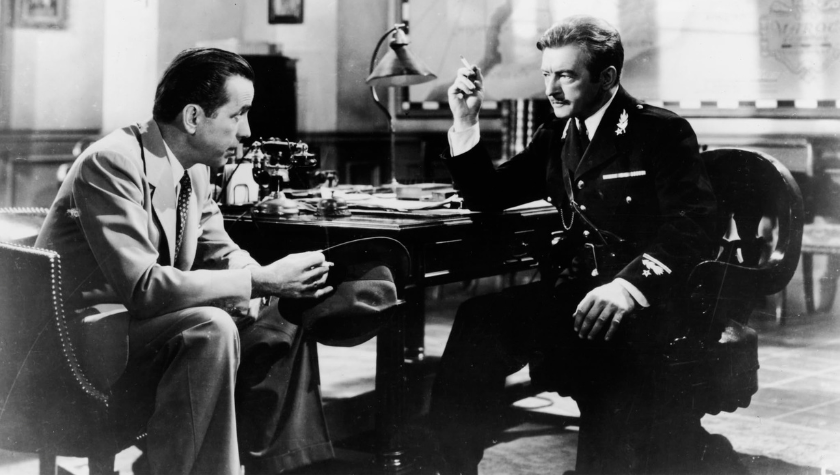
It’s the Epsteins who lent the first dose of humor and cynicism to Casablanca, as well as laying out the bare bones of the structure. The first thing they turned in was a rough pass at the first 40 pages. From the narrated explanation of Casablanca’s geographical and political context, to the pickpockets on the streets, and introductions of the major characters, the first act remained largely intact through the rest of the writing process. They adapted Rick’s character from the sad sack married lawyer of the play to a more hardened bachelor, typical of Bogart, transformed the corrupt police captain, Renault, who would be played by Claude Rains, from a purely evil villain to a comic, cowardly cad, and created a sort of love-hate mutual respect between the two that would lead to the “beautiful friendship” by the film’s end. Naturally, they also wrote an endless stream of classic comic interchanges.
“What in heaven’s name brought you to Casablanca?” Captain Renault asks elusive Rick.
“My health. I came to Casablanca for the waters.”
“The waters? What waters? We’re in the desert.”
“I was misinformed.”
Pure Epstein.
HOWARD KOCH (Screenwriter)
While the Epsteins continued on to the next 40 pages, Wallis brought in Howard Koch to do a rewrite on their first 40. Koch, a New York lawyer turned playwright of largely politically themed plays and satires, gained notoriety through his bold work with Orson Welles, writing for the Mercury Theater. In 1938, he adapted H.G. Wells’ The War of the Worlds into a Welles radio broadcast that sent countless Americans into a state of hysteria, convinced that the nation was actually under attack by aliens. Koch soon joined the Warner Brothers writing staff, where he infused his fierce political ideology into such classics as The Sea Hawk (1941), a typical Errol Flynn swashbuckler that he injected with pro-British, anti-fascist propaganda, the patriotic Oscar-winner Sergeant York (1941) and later, the controversial Mission To Moscow (1943). The communist themes of the latter played a role in the House Un-American Activities Committee denouncing Koch for extreme leftist beliefs, resulting in his blacklisting from Hollywood. (When the Epsteins were questioned by the HUAAC during the same period, they were asked whether they’d ever been part of a subversive organization. Characteristically, the jokers responded, “Yes. Warner Brothers.”)
In Hermetz’ book, Koch is quick to categorize his contributions to Casablanca as being largely political ones. He fleshed out Rick’s backstory of fighting for the loyalist cause in Spain and running guns to Ethiopia, to help explain his redemptive actions at the end of the film. Captain Renault points out that he always seems to fight for the underdogs even though the more powerful side would pay better. He also pitched a scene set at an underground meeting where Paul Henreid’s character, Victor Laszlo, Ingrid Bergman’s current lover in the central triangle, would give a rousing speech. That and other more overtly political scenes ultimately didn’t survive in the script.
As drafts went back and forth between the Epsteins and Koch, who never worked together in the same room, Koch pointed out to Wallis that they appeared to be attempting to write different scripts.
“Although the Epstein script follows in a general way the new storyline,” Koch wrote Wallis in a memo, “I feel it is written in a radically different vein from the work I’ve just finished on the first half of the picture. They apparently see the situations more in terms of their comic possibilities while my effort has been to legitimize the characters and develop a serious melodrama of present day significance.”
This tension between the Epsteins, whose humor and cynicism threatened to undercut the drama and sentiment of the film, and Koch, whose serious treatment of the politics threatened to leave little levity in what was to ultimately be an audience-friendly entertainment, resulted in a perfectly balanced fusion of the two. Under the tactful direction of Curtiz, who could barely speak legible English, but had a preternatural sense of visual storytelling, and watchful oversight of Wallis, the film’s tone managed to both get its laughs through the Epsteins’ comic characters and poison-penned digs at the political situation, while also taking very seriously the issues close to Koch’s heart, like the threat of Hitler’s army and the heartbreaking effects the war had on Casablanca’s refugees, many of whom were played by real life European refugees. And none of this is to say that the Epsteins didn’t contribute to the politics or Koch to the humor as well. This tonal miracle allows the film to go from vaudevillian dialogue interplay, to a scene as heartbreaking and triumphant as when the patrons of Rick’s Cafe drown out the singing Nazi soldiers with a chorus of “La Marseillaise.”
CASEY ROBINSON (Uncredited Screenwriter)
As the Epsteins and Koch went back and forth finalizing the script as best they could, Wallis sensed that the core of the film was still underdeveloped - the romance. Casablanca is many things - a political thriller, a comedy, but above all it’s a romance. And when it came to romance, there was no better writer at Warner Brothers than Casey Robinson. The Utah-born writer was responsible for some of Bette Davis’ most popular and acclaimed romantic melodramas like Dark Victory (1939), All This, and Heaven Too (1940) and Now, Voyager (1942). So he was a natural go-to when Wallis needed to pump up the romantic center of Casablanca.
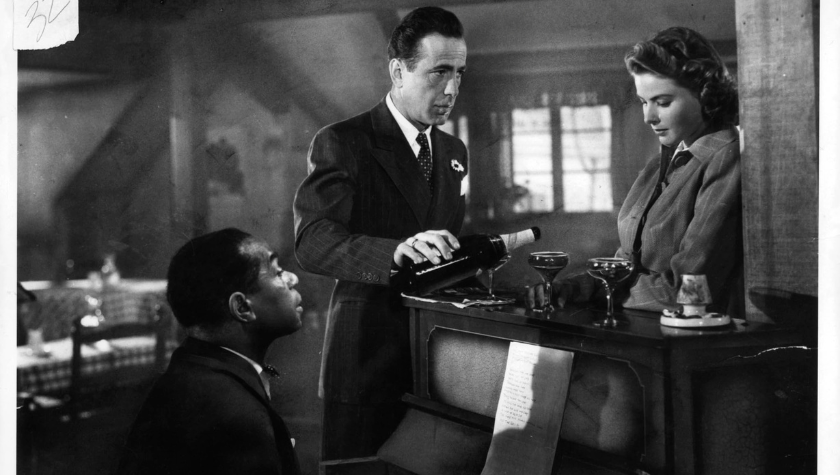
Though Robinson is not a credited screenwriter, he did contribute extensive notes, lines and story ideas to help strengthen the characters and relationships, in particular, highlighting the importance of Arthur “Dooley” Wilson’s pianist character, Sam. In his aim to make the love triangle more powerful, he suggested that the scenes between both Ilsa and Sam, and Rick and Sam, and the use of the song in the film, “As Time Goes By,” could be strengthened to show just how serious the past passion between Bogart and Bergman had been. Robinson was also one of the key players in figuring out just how to make the ending work, a debate between all the writers that lasted until the morning of the scene’s production and beyond.
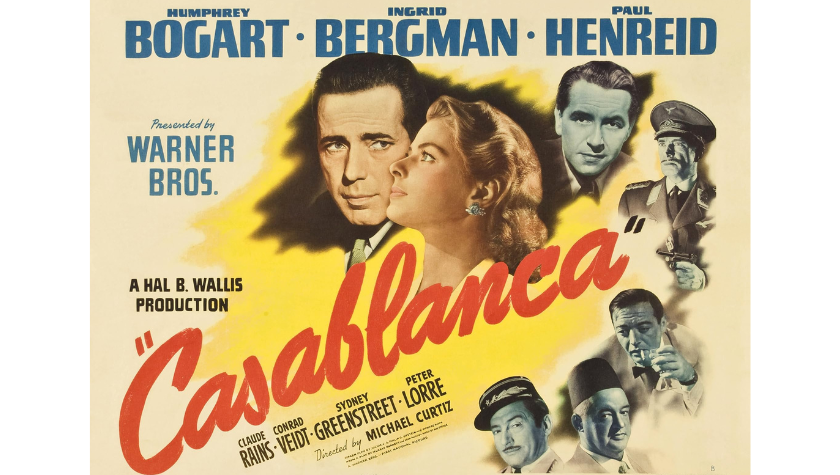
A True Collaboration
Casablanca’s ending is a perfect example of the all hands on deck collaboration that made up the classic. There was never any doubt that Ilsa would wind up going with Laszlo, leaving Rick behind in Casablanca, but the mechanics of how it would happen was the subject of debate up until they shot it.
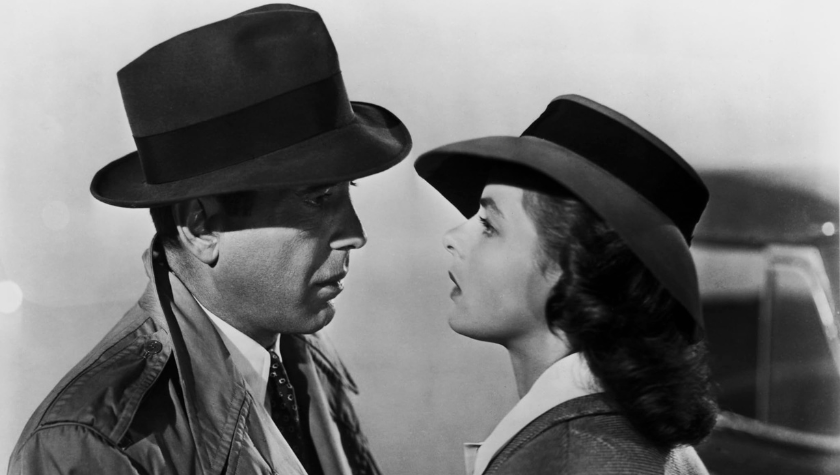
For much of production, the final scene was meant to stay in Rick’s Cafe instead of on the now iconic airport runway, which the production fogged in primarily to hide how cheaply the fake airplane was made on short notice. There were versions where Rick shot Conrad Veidt’s Nazi Major and versions where the character didn’t even show up, and every writer took a crack at the final speeches of the film. But the key beat that finally solved the scene, was to give Ilsa greater agency over her decision. They had previously tried every different version on the page of Rick insisting she go or stay or even knocking her out so that Laszlo could carry her away, none of them satisfyingly resolving the romantic triangle and character arcs as well as Ilsa having to ultimately make the decision for herself. For most of the shooting, Bergman was upset because she didn’t know how she was meant to feel about either of her male romantic partners. The filmmakers told her to just “play it in between”. Rick’s final, famous line to Ilsa, however, has the least likely writer of all: Bogart himself. Hermetz relays that during on-set poker games between Bogart and Bergman, he would repeat one phrase that he wound up ad libbing in earlier scenes until it gained a great enough significance to utter once more during their on-screen goodbye: “Here’s looking at you, kid.”
In the years after Casablanca, Jack Warner used the film as an example of the type of chaotic production that Warner Brothers wanted to avoid at all costs. And though the writing of the film took on a messy process that’s best avoided, what’s undeniable is how the voices and points of view of the different writers all fused perfectly to strike just the right flavors, like ingredients in a stew. Without the story know-how and oversight of Hal Wallis, the humor and cynicism of the Epsteins, the political passion of Koch, the romance and character focus of Robinson, and the openness to letting the actors, director and whoever else contribute lines and ideas, Casablanca would not be the classic it is today. It truly is the prime example of screenwriting collaboration at its finest.