
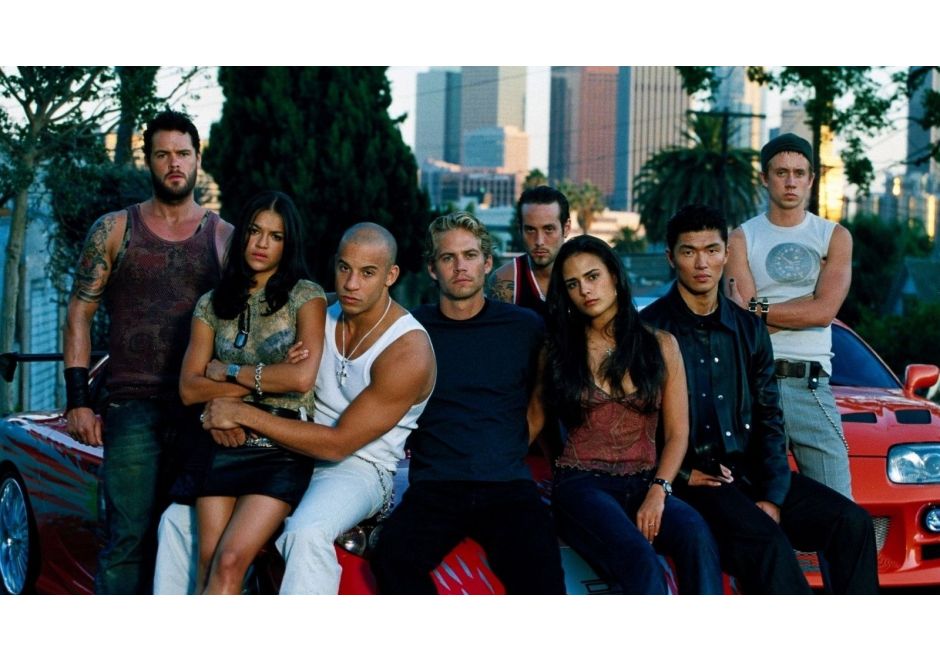
Earlier this month, Vin Diesel took the stage at the NBCUniversal upfront presentation and announced that Peacock is developing four television projects set in the Fast and Furious universe. That’s right: four separate TV series, each presumably expanding on the characters and world the franchise has spent 25 years building.
This news is a milestone for Diesel and company, and it raises a question worth asking: how does a movie that started as a relatively small-scale street-racing film about truck hijackings become one of the most enduring and expansive franchises in Hollywood history?
The answer is a series of smart creative decisions — about character, world, stakes, and scale — made at exactly the right moments.
From Street Races to Global Stakes
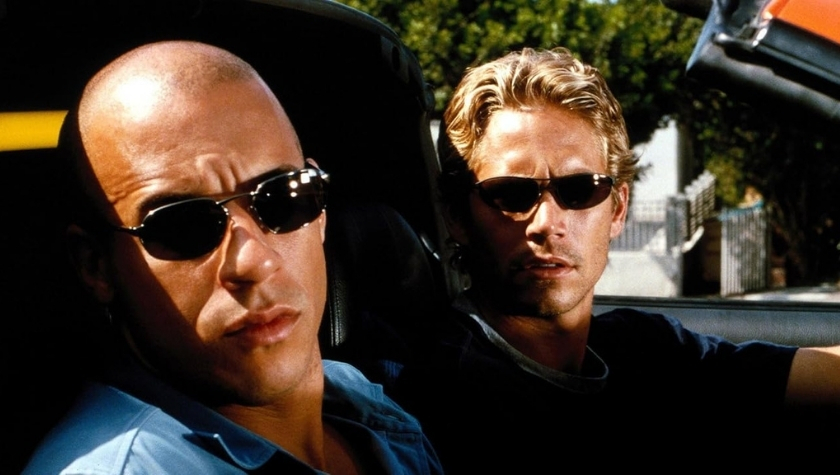
The original The Fast and the Furious (2001) wasn’t trying to launch an empire. Directed by Rob Cohen and written by Gary Scott Thompson, Erik Bergquist, and David Ayer, it was a lean, efficient undercover cop movie with great cars and an appealing cast. Vin Diesel’s Dominic Toretto and Paul Walker’s Brian O'Conner had real chemistry. Michelle Rodriguez brought something unique to the genre as Letty. Because of these factors, the film grossed $207 million on a $38 million budget and earned a sequel. However, it’s safe to say that at this point, nobody was betting on a multi-decade run.
2 Fast 2 Furious (2003) proved the brand had commercial legs even without one of its leads: Walker was back in the driver's seat, but Diesel didn’t return. John Singleton directed, and Michael Brandt and Derek Haas wrote Brian O'Conner into Miami with a new partner, Roman Pearce (Tyrese Gibson). It made more money than the first. The franchise had traction, but it needed a new direction or else the formula would get stale. There were only so many times they could play “the undercover cop + street racing” angle.
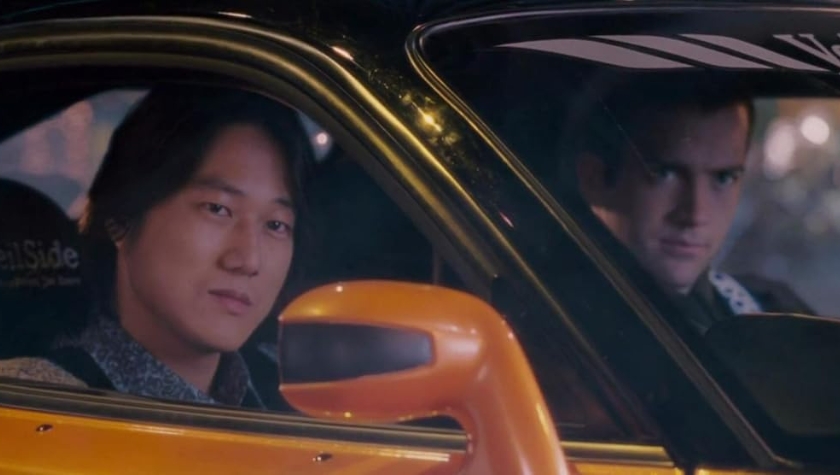
This led to a fresh take from director Justin Lin and screenwriter Chris Morgan: The Fast and the Furious: Tokyo Drift (2006). On paper, it looked like a low-stakes detour – a standalone sequel with no returning leads – but it became the moment the franchise found its future. Tokyo Drift introduced Han Lue (Sung Kang), a character so immediately compelling that the creative team later restructured the entire franchise’s chronology to keep him alive longer. In addition to Lin bringing a hyperkinetic style to the racing sequences, Morgan’s screenplay was fun and inventive, capturing the spirit of the original film. The story also created new possibilities for the franchise: its settings could be anywhere around the world.
The DNA was all there, but Tokyo Drift — despite still being profitable and developing a cult among hardcore fans — didn’t make as much at the box office as the first two films. It became clear that the original cast needed to return, but would Lin and Morgan continue to helm the series? So far, no creative team had returned for a sequel.
This was a choice that made all the difference.
The Chris Morgan Streak
In a rare case of a studio and producers not making a bottom-line decision, but a creatively sound one, Justin Lin and Chris Morgan would become the franchise’s first returning creative team. Morgan wrote or co-wrote the next five films and spinoff Hobbs & Shaw (2019), and Lin would direct the next three (and return once more to helm 2021’s F9). Their influence on what the franchise became can’t be overstated: they elevated it from a profitable racing series to one of the highest-grossing franchises of all time with mass international appeal.
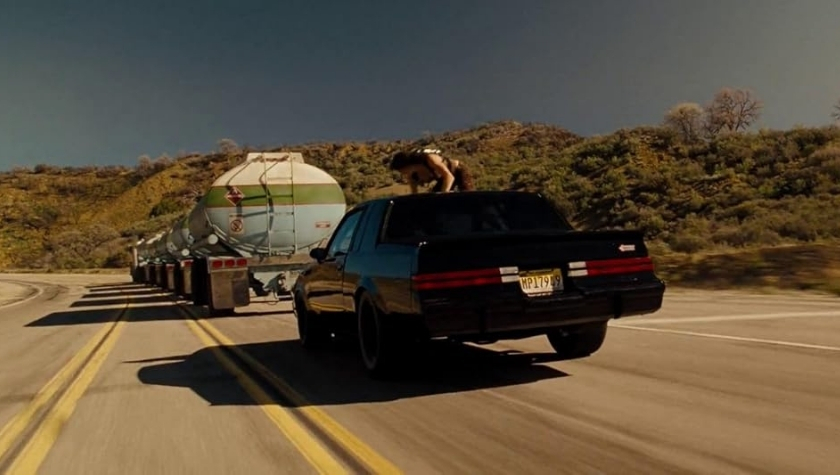
Fast & Furious (2009) reunited the original cast with Vin Diesel and Paul Walker back in their respective driver seats. At the time, it was the most successful film in the franchise and served as a soft reboot: following many of the beats of the first film, but with a bigger budget, nostalgic elements, and higher emotional stakes. It was the film’s opening and ending, however, that planted the seeds for what was to come: Toretto’s international crew hijacking a fuel tanker in the Dominican Republic expanded the series’ scope and became a blueprint for later action set pieces; and concluding with O’Conner firmly siding with Toretto, freed his character and the films from the “undercover cop” storylines.
From this point on, there would be no limits.
Fast Five (2011) is where the franchise fully reinvented itself. The film moved away from street racing and into heist territory, and Morgan executed this pivot with a script that assembled the franchise’s best characters into an Ocean’s Eleven-style ensemble. It also introduced Dwayne Johnson’s Luke Hobbs: a lawman so formidable he functioned as a one-man genre injection. Fast Five grossed $630 million worldwide. The franchise had become something else entirely, and that something else was bigger.
Fast & Furious 6 (2013) expanded the world further, brought Letty back from apparent death without it feeling like a cheat, and set up Furious 7’s dramatic core in its final moments with the reveal of Deckard Shaw. Morgan’s storytelling architecture across these films is worth noting: he was carefully threading connective tissue between them, and making each installment feel like it mattered to the one after it. By doing so, he was creating a Fast and Furious universe in the same vein as the Star Trek, Star Wars, MCU, and DCU franchises.
Furious 7 (2015) continued to test the limits of what Toretto’s crew could pull off, while also being the series’ emotional peak. Morgan navigated the tragedy of the actor Paul Walker’s death mid-production and turned it into a genuinely moving film. And by this point, the characters had enough history, and fans had invested enough in them that the goodbye felt truly earned.
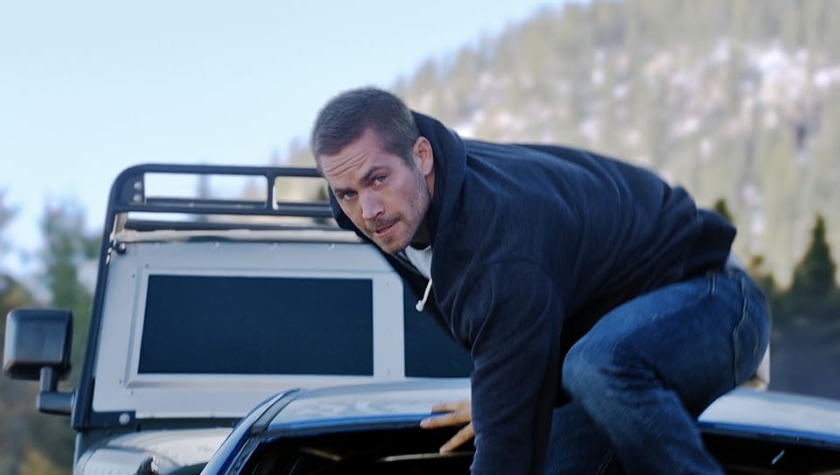
The Fate of the Furious (2017) continued to expand the global stakes and set pieces while Hobbs & Shaw (2019) demonstrated that the universe Morgan built was expansive enough to sustain a buddy action spinoff.
No doubt, Morgan’s above streak laid the groundwork for the television projects.
Each movie during its run was another chapter in a saga; another piece of asphalt paved and leading you to an even bigger highway.
Worldbuilding as Franchise Infrastructure
What Peacock’s four-series announcement really signals is the payoff on decades of worldbuilding. After 10 films and a spinoff, the Fast and Furious universe has enough characters and backstories to sustain several stories. Luke Hobbs can carry a testosterone-fueled law-enforcement procedural. The Shaw family — Deckard, Owen, Hattie, and Queenie — can support a British hard-boiled crime drama. Letty and Han’s stories have threads that still feel unexplored (and both are popular enough that they were resurrected from the dead). The franchise’s chronological complexity, often criticized as needlessly convoluted, turns out to be franchise infrastructure.
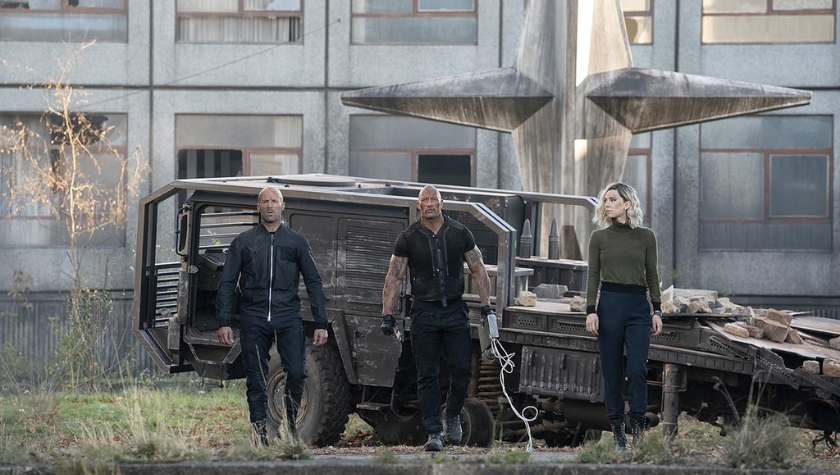
The supposed “final film” in the series, Fast Forever (scheduled for a 2028 release), will most likely set up additional subplots that will continue into the proposed TV projects. Following the path of other noted franchises, the Fast and Furious films will close the main narrative while simultaneously launching a television expansion.
Diesel described the decision to enter the TV space as something the fanbase had been asking for over a decade, and that the consolidation of Universal’s film and television oversight under Donna Langley gave him confidence that the characters’ integrity would be protected. That’s the language of a producer who understands brand stewardship. The fact that Chris Morgan is among the executive producers on the Peacock series, alongside Diesel and Neal Moritz, suggests there will be creative continuity.
The Fast and the Enduring
The Fast and Furious franchise’s endurance is the result of perfectly-paced evolution and expansion. From the original street racing undercover thriller to a global heist ensemble to a superhero-scale action universe, each pivot made this fictional world bigger and fuller.
At the same time, this was accomplished while maintaining a core foundation: a diverse, multicultural surrogate family bounded by loyalty and operating according to their own code of honor. This is something Lin and Morgan never forgot as they took the franchise from the streets of LA to any road imaginable.
In addition to Lin and Morgan, this franchise was built by many people — producers, actors, crew — who all contributed to its longevity. Lightning in the bottle is one thing, but having the right people at the right time to capture it is another.
As Dom Toretto will tell you: “It’s not the car, it’s the driver.”