
To put it as simply as possible, a scene is a single beat in your story, while a sequence is a series of beats that perform together to create a more impactful narrative shift that serves broader story and character arcs.
Once a screenwriter understands how these two concepts work together, screenwriting will feel more intuitive, more natural, and more cinematic. It’s about gaining a clearer sense of the necessary structure, pacing, story momentum, and character momentum to write screenplays that not only flow better, but are also read more visually enticing and impactful for script readers and the audience.
When you see how individual moments (scenes) connect to form something larger (sequences), you’ll understand how important each and every scene and sequence is when it comes to writing a screenplay that feels like a movie when it’s being read.
With that in mind, let’s delve a bit deeper into the differences between scenes and sequences, and how you better your scripts with that knowledge.
What Is a Scene?
A scene is the most basic building block of a screenplay.
At its core, a scene is a continuous moment in a script that takes place in one location (or a continuous moment moving between two or more locations) and unfolds in real time. It typically begins when a character enters a situation with a clear goal in mind (or showcasing a reaction to a previous scene) and ends when that goal is either achieved, denied, or changed.
In screenwriting, every single scene should matter. Every single scene should ideally serve a purpose that propels the story forward.
When you’re writing a scene, try your best to have these three essential components present:
- A clear objective (what the character wants)
- Conflicts and obstacles (what stands in their way)
- A shift or outcome (what changes by the end of the scene)
Without those elements, a scene can feel static and out of place. It may contain dialogue (information) and action (movement), but if it doesn’t move the story forward, it’s an easy sign pointing towards a possible cut in future drafts.
Scene Example: Project Hail Mary (Minor Spoiler Warning)
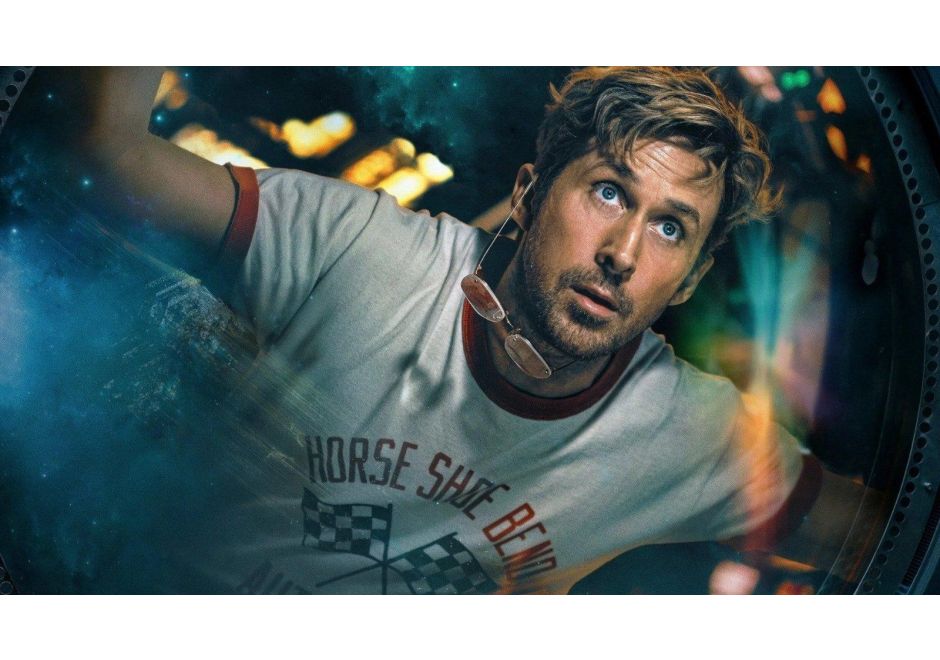
Midway through the story, Grace detects another spacecraft and initiates first contact. In one scene, he comes face-to-face with an alien later known as Rocky.
This first interaction is a single scene.
- Objective: Grace wants to investigate the unknown vessel and determine whether or not it’s a threat.
- Conflict/Obstacles: He’s dealing with the fear of the unknown, lack of communication, and the potential danger of alien contact.
- Outcome: He confirms intelligent life, makes a new friend, and is no longer alone.
It’s contained, focused, and immediate. And, more importantly, it moves the story forward. All in just one single scene.
What Is a Sequence?
A sequence is a series of connected scenes that work together to create a larger story or character swing in those respective arcs.
Sequences have beginnings, middles, and ends, building towards a mini-climax or turning point that advances the story in a more significant way. They usually revolve around a larger and more central goal or obstacle, with multiple scenes showing the character or characters attempting to achieve a larger goal.
If you’re looking to increase story momentum and better your script’s pacing, peppering your script with sequences is a highly effective way to make your script a better read and make your eventual movie a better and more entertaining and cathartic watch.
Sequence Example: Project Hail Mary (Minor Spoiler Warning)
So, Grace first met Rocky in that amazing single scene. While that scene propelled the story forward, it was only the beginning of an exhilarating, humorous, and sweet sequence that truly catapulted the story in a whole new, exciting, and impactful way, centered on one specific goal - figuring out how to communicate and work together.
Grace and Rocky discover that they are both on the same mission to save their respective planets.
This sequence is made up of multiple scenes:
- Grace and Rocky having repeated interactions.
- The realization that Rocky perceives sounds differently.
- Attempts at creating a shared form of communication using math and patterns.
- Breakthrough moments of communication.
- Setbacks and misinterpretation that create either tension or hilarity.
- The eventual establishment of meaningful communication and trust.
Each of these moments is its own scene, even though many of them take place in the same location.
The unified goal between Grace and Rocky is communication. It also moves their character arcs forward as both had been dealing with loneliness. By the end of the sequence, there’s a clear outcome - they can understand each other. This moves the story forward because now they are able to work together to tackle the bigger narrative goal and obstacle - figuring out a way to save their planets from the same scientific threat.
That is what defines a sequence. Not just multiple scenes, but multiple scenes working together towards a single dramatic purpose.
Scenes and Sequences Should Be Thought of as Moments
Screenplays that don’t properly utilize scenes and sequences to move the story forward feel more and more episodic with every turn of the page.
Every scene and every sequence should be thought of as moments. Each scene needs to be a moment with emotion, reveals, and story momentum. Each sequence needs to be full of those moments to create a larger and more overarching narrative swing.
When you’re just writing scenes and sequences to get to the end of the story, the reader or audience aren’t being moved. Moments contain emotional arcs for the story and the characters. Moments are memorable, not just expositional dumps.
- The “It’s not your fault” scene in Good Will Hunting is a moment.
- The “Go the distance” scene in Rocky is a moment.
- The training sequence in Rocky is a moment.
- The therapy sessions sequence in Good Will Hunting is a moment.
Each of them are impactful and memorable moments.
Scenes
- Good WIll Hunting: When Will is told by Sean that it’s not his fault over and over, Sean finally gets Will to be fully vulnerable for the first time. That scene is a true moment to remember.
- Rocky: When Rocky lays down with Adrian the night before the fight and admits that he can’t beat Creed, but all he wants to do is go the distance with him, that’s a memorable and cathartic scene.
Sequences
- Good WIll Hunting: When Will is forced to attend two therapy sessions (told in two different scenes), the sequence establishes that he’s trying to derail them as much as he can, until he sees Sean, which ends the sequence with Sean making a huge impactful (and violent) gesture that Will can relate with and almost respect.
- Rocky: The iconic training sequence in Rocky, consisting of multiple scenes of him training, shows his transformation leading to the big fight.
Think in moments, not just scenes and sequences. If you can write a script that has continual impactful and cathartic moments with each scene and sequence, you’ll have written something that truly stands out amongst the rest.
How Scenes Function within a Sequence
Now that you understand how important it is to create moments in your scenes and sequences, let’s discuss how scenes should function with a sequence.
A sequence isn’t just a random collection of scenes. Each scene within a sequence should serve a specific function in building towards a climax. Remember, every sequence should have a beginning, middle, and end. You build towards that end.
Sequences can follow certain patterns that you can utilize:
- Setup: Introduce the goal or problem
- Obstacles: Conflict arises and stakes increase
- Escalation: Attempts to confront obstacles intensify or backfire
- Climax: Resolutions of the above, or evolved continuing conflict
- Aftermath: What propels the story forward from that sequence of events
Each scene is a moment and beat that feeds the needs of the sequence.
Look no further than Michael Mann’s Heat, which showcases how multiple scenes serve the purpose for the climatic bank robbery sequence in the third act.
- One of their team reveals that they’ve been made.
- The ex-con cook trying to go straight is recruited to take his position as the driver.
- The bank robbery begins.
- The homicide task force receives information that leads them to believe the crew is targeting a certain bank.
- The crew robs the bank and begins to exit, thinking their robbery is a success.
- The task force gears up as they drive to the bank, directing police officers to contain the area.
- Moments of tension as the crew loads into their getaway car and police move towards the bank.
- A firefight ensues.
- The crew escapes in the car, with one man dead, another injured, and another on foot on his own.
- That bank robber is taken down as the others escape.
This is a tension-filled sequence made up of multiple scenes. You could argue that this third act sequence continues to build and build with the scenes that follow.
Each scene connects to the next, building the tension higher and higher towards a climax.
If you want an example of a sequence that happens within the same single location in real time, look no further than Steven Spielberg’s Jaws and its iconic beach attack sequence.
The goal for Chief Brody is to keep the people safe from any shark threat.
- Brody watches the crowded beach.
- He’s distracted by people talking to him as he does.
- We see a few false alarms and misdirects.
- Brody continues to scan the water.
- A dog owner can’t find his dog, who was previously swimming in the water.
- We see the POV of the shark.
- The shark kills the boy.
- The beach reacts in confusion and horror, as does Brody.
- Chaos as Brody gets people out of the water.
- A mother can’t find her son.
You could call this a single scene, but it also works as a thrilling, scary, and emotional sequence comprising many mini-scenes in mini-locations throughout the beach with multiple points of view from different characters - all connected by Brody’s observations and reactions.
Why This All Can Be a Game-Changer for Screenwriters
When you start thinking of scenes and sequences as connected moments, something clicks in your writing process and style.
- Scripts become tighter.
- Pacing improves.
- Tension builds more naturally.
- Your scripts start to feel and read more cinematic.
If you embrace this perspective, it can be a game-changer for not just your scripts, but for your screenwriting as a whole.