
Every great movie has at least one great set piece, that cinematic moment that stands the test of time and is forever identified as the core identity of the movie.
- The opening Omaha Beach battle set piece in Saving Private Ryan.
- Indiana Jones maneuvering through the booby traps within the Peruvian temple, in search of the Golden Idol in Raiders of the Lost Ark.
- The reveal of Neo taking the red pill and waking up in the real world outside of the Matrix in The Matrix.
- The Death Star Trench sequence in Star Wars.
- Brody, Hooper, and Quint chasing the shark and drawing it towards the surface of the water using air-filled barrels in Jaws.
These are just a few of the most iconic set pieces in the history of film. But what are set pieces, and why do we remember them? What sets them apart from any other scenes or sequences in movies? And, for screenwriters, what goes into writing a compelling set piece?
Here we share a simple and easy beginner’s approach to writing compelling, engaging, effective, and, most important, memorable movie set pieces.
What Is a ‘Set Piece’?
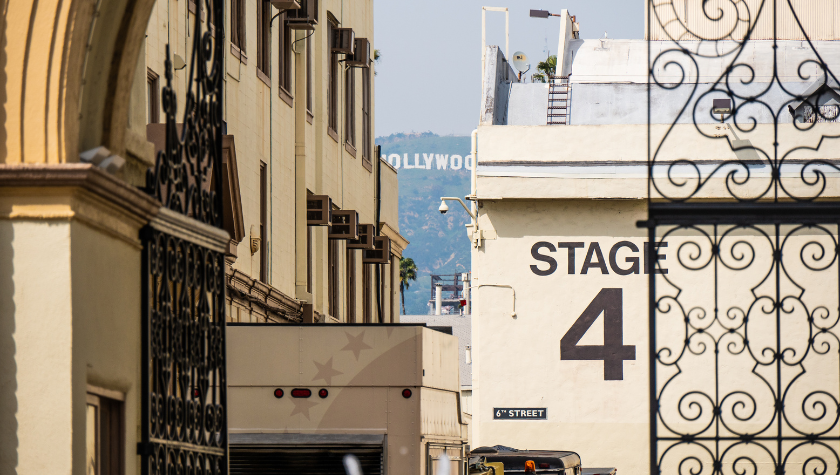
The term originates from Old Hollywood, when most movies were shot primarily on studio lots. Studio lots, even to this day, house sound stages, sets, and backlots with city facades, neighborhood facades, etc. Studios utilize these production assets for all kinds of productions (movies, TV shows, commercials).
But sometimes a screenplay calls for a special set to be built - something original and not available on the lot. The studio is tasked with deciding if the set is worth the cost of building.
The term set pieces derives from these conversations, referring to set pieces within a script that require a set - or multiple sets - to be built from scratch. Other times, location shooting is utilized if a set piece is either specific to a particular iconic location, or a specific type of location (desert, waterfall, river, jungle, etc.) that can’t be replicated on a studio sound stage or backlot.
Overall, set pieces entail scenes or sequences that stand out within the script. They have multiple functions for a movie, including:
1. Marketing Hooks
Set pieces are often referred to as trailer moments, where a film’s marketing campaign would center around them within TV spots and movie trailers. It’s what would get audiences into the theaters. The set pieces are teased, whether it’s an exciting and exhilarating action visual (action adventure, sci-fi), hilarious laugh (comedy), or scary moment (horror).
2. Pitching Hooks
Even well before a script is greenlit for production, set pieces within spec scripts or assignment scripts can determine whether or not a script is even purchased and/or greenlit. Studio executives, financiers, and distributors love set pieces, whether they be action set pieces, comedy set pieces, horror set pieces, suspense set pieces, and even drama set pieces. They need them because that’s how they can sell movie tickets and get butts in seats and fingers clicking on titles (for streamers).
3. Story Structure Anchors
Most great set pieces are used as story act anchors to open a story with a compelling hook, send the story into the second act, catapult characters into the third act climax, and then leave audiences thrilled with a final set piece.
4. Audience Payoffs
Most set pieces end up being the perfect payoffs for audiences. Audiences pay a lot of money to go to the movie theater. There’s a reason why smaller character-driven dramas make far less than bigger studio tentpoles released, primarily because they want to get more bang for their buck after spending a hundred dollars on tickets and concessions. They want that rollercoaster ride experience.
5. Character Showcases
Set pieces are an effective way to visually showcase your characters. Why? Because we see how and who they are when faced with the ultimate conflicts of the story you’re telling. The audience won’t really care about seeing random characters in random action set pieces or comedy hijinks. What they really want to see is how your protagonist(s) handle the seemingly endless conflict being thrown at them. Audiences either love to live vicariously through the protagonist’s plights, or they love to see how the script plays with the audience’s expectations. It’s a thrill to gauge how a character is going to deal with what’s being thrown at them.
The Anatomy of a Great Set Piece — S.T.A.K.E.S.
Set pieces are all about stakes. The higher the stakes, the more the audience will become invested in the outcome of the set piece, and, as a result, the more memorable the set piece will be.
If you’re wondering how to write great set pieces in screenplays, you always need to start with a foundation. We call this foundation S.T.A.K.E.S.
S - Suspense
Suspense is everything for set pieces. The best set pieces build anticipation. It’s not just applicable to action flicks, horror stories, or thrillers - you can do this in drama and comedy as well. It’s all about creating that sense within the audience of them waiting for the other show to drop.
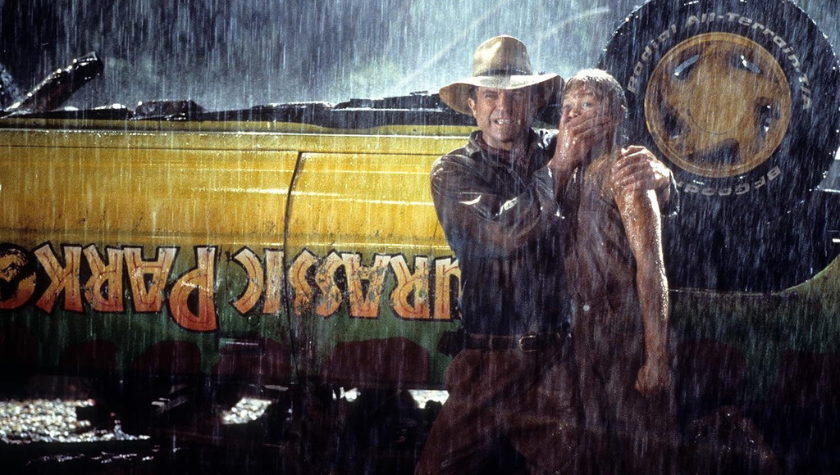
Think of the rippling water before the T-Rex attack in Jurassic Park. The suspense begins with the fact that the power goes out. Then builds even more with basic visuals that prove something is out there. When the characters hear the rumble and see the accompanying rippling water, they know something big is approaching. Suspense is building with each layer you offer the audience until the big reveal.
T - Timing
Comedy, action, drama, thrillers? It all starts with timing. You use time and beats to create suspense. When you’re writing a set piece, you want to time your evolving conflict perfectly so that just when the audience thinks the protagonist or character has it all figured out, you flip them into more conflict and higher stakes.
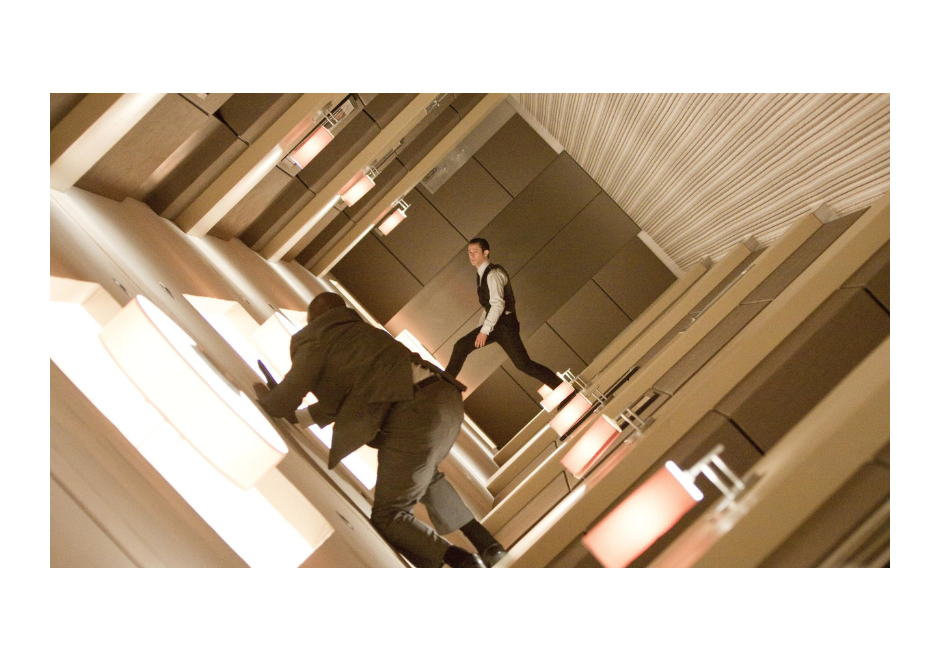
Inception literally flipped the characters just when they started getting the upperhand in the hallway battle amidst shifting gravity in the hallway set piece. They were forced to adjust their approach with each flip of the hallway.
A - Anticipation
You can write better set pieces by putting yourself into the audience’s seat. Ask yourself questions like:
- What would the audience expect?
- What has the audience seen before in similar movie scenes?
- What would the audience not anticipate?
Play with the audience’s anticipation. This is how you really create unique and original set pieces that stand out. Go find similar scenes, sequences, and set pieces from other movies. Audiences have watched a lot of flicks. They have seen it all. They know how to anticipate twists and turns. They know how to anticipate plot shifts and action.
Use that knowledge to your advantage, subvert their expectations, and create moments that they wouldn’t anticipate. That is what makes a set piece stand out. That is what makes a set piece memorable. When you create scenes and sequences that they couldn’t have anticipated, you create set pieces that resonate far after they watch the movie.
Look no further than the original Mission: Impossible (and nearly every MI movie since) with the vault break-in sequence. How did the screenwriter use anticipation to subvert audience expectations?
- Nobody had seen a scenario like it where a character could not touch the floor, make any sound, or raise the heat of a room when trying to perform a heist.
- The audience struggled to anticipate when one of those things was going to happen.
- When one of those things did happen, it forced the audience to anticipate the effect it would have on the character and mission objective at hand.
Anticipation is what built that scene into the iconic set piece we know today.
K - Kinetic
Set pieces need to be kinetic - alive with energy and movement. They don’t stand still. They are dynamic, fluid, and visually compelling. But they don’t always need to be about the visuals themselves. Look no further than the iconic Always Be Closing scene in Glengarry Glen Ross. It’s all dialogue-driven, beyond the movement of the character Blake, who was sent from corporate to deliver a strong message to the struggling salesmen.
However, the dialogue created kinetic reactions from the characters. And the kinetic dialogue kept building and building with more and more intensity, creating and building tension within each salesman.
It’s easy to see the kinetic aspects of an action set piece, be it within a Mission: Impossible movie, Indiana Jones movie, or Die Hard action flick. You showcase building dynamic movement, motion, and energy. But you can also accomplish that in drama as well, using impactful dialogue, followed by the effect the words have on other characters.
E - Emotion
Set pieces aren’t just about exciting and thrilling visuals or, in the case of drama, using kinetic dialogue that creates more and more intensity within the characters. Emotion plays a big part in an effective set piece.
In Saving Private Ryan, we have a lot of intense and kinetic action going on. We have explosions, running, bullets, dodging, etc. It’s an action scene full of action. However, there’s emotion behind it that makes the scene that much more cathartic.
- We see desperate soldiers in hopeless situations.
- We see the horrors of war.
- We see a dying soldier screaming for his mommy.
- We see a shell-shocked Captain Miller watching the carnage around him.
In Jurassic Park, we see the screaming and terrified children being attacked by the T-Rex. We also see the desperation of Alan Grant as he watches them being attacked.
Emotion is an essential ingredient to a memorable set piece in a movie. The audience needs to care about who is going through high stakes set pieces.
S - Show, Don’t Tell
Even in the dialogue-heavy Glengarry Glen Ross scene, the visual reactions of the salesmen being yelled at in degrading fashion are far more effective than any words they speak.
Set pieces stand out primarily because of what is seen, not said. We know the old adage of show, don’t tell in screenwriting. It’s a true adage all screenwriters should follow. However, when it comes to set pieces, it’s far, far more vital.
Different Types of Set Pieces
As you learn the foundation of set pieces using the S.T.A.K.E.S acronym, here are some of the different types of set pieces you can use in your screenplays.
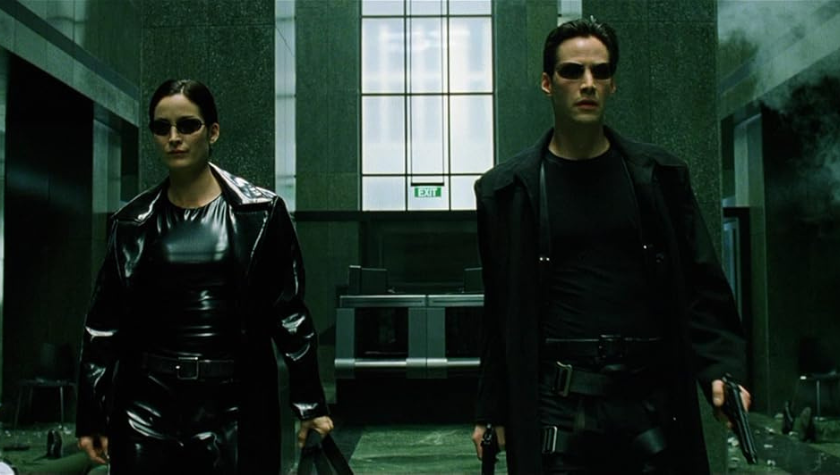
- Action Set Pieces - Car chases, shootouts, fight sequences (the lobby scene in The Matrix).
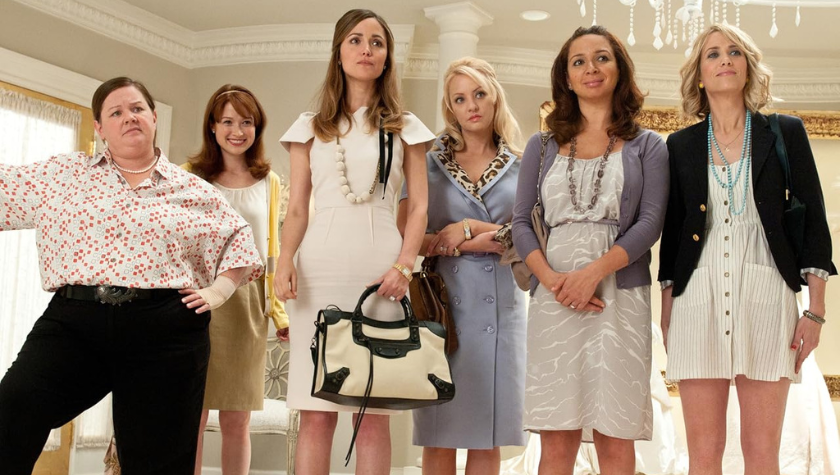
- Comedy Set Pieces - Awkward social disasters, escalating gags, situational scenarios (the bride-to-be and her bridesmaids dealing with food poisoning while trying on expensive dresses in Bridesmaids).
- Horror Set Pieces - Suspense-driven moments that play with anticipation, expectation, silence, and shock (the opening shark attack scene in Jaws).
- Dramatic Set Pieces - Emotional climaxes, big confrontations (the “It’s not your fault” scene in Good Will Hunting).
- Romantic Set Pieces - Meet cutes, grand gestures of love, magical kisses (the “You complete me” scene in Jerry Maguire).
No matter what the genre, your script will benefit from scenes and sequences that rise above the baseline of ordinary scenes and plotting. It’s not just important to know how you can write them. It’s important to know that you can use them in any genre.
Where to Place Set Pieces
We touched on this before, but here’s a general breakdown to give you options where you can or should place much-needed set pieces in your scripts.
1. Opening Hook
There’s no better opening hook set piece than the shark attack that opens the movie Jaws. Fifty years plus after its debut, the set piece is still effective and memorable. People don’t go into the ocean water because of it. The set piece defined the whole movie - the fear of the unknown beneath the surface of ocean waters.
2. Act Breaks
Major set pieces serve as easy and effective transitions from one act to another. In Raiders of the Lost Ark, Indiana Jones travels to Nepal where he meets Marion in a bar she owns. He’s there to find more information that he learned in the first act. The set piece of the Nazis and their henchmen fighting Indiana Jones and Marion helps launch the characters into the second act, as Marion has the medallion necessary to locate the location of the Ark.
3. Midpoint Showstoppers
The second act of the story is often considered the most difficult to write. It’s usually where things need to slow down a bit as the characters learn more about the conflicts they must face. This is where most beginning screenwriters struggle. However, you can use set pieces to punch up the second act, making it a bit more kinetic and lively. To stay with the Raiders of the Lost Ark mold, look no further than the marketplace chase and fight sequence in the middle of the second act - one of many set pieces within that middle act.
Indy fights the bad guys, famously shoots an impending sword-wielding threat, and then tragically believes that he has lost Marion in an explosion. This pushes us deeper into the second act until he finds her alive, eventually leading to another showstopping set piece when they are both thrown into a poisonous snake-infested tomb, tasked with surviving and escaping, which launches them into another second act set piece - chasing down the ark.
4. Climax
Once they lose the ark to the Nazi’s again, in a second act mini-set piece with Indy climbing onto a Nazi submarine, we’re launched into the third act, leading to a climactic set piece of the ark being opened, unleashing horrors from within around them.
Raiders of the Lost Ark is the ultimate example of how to use set pieces throughout your script. There are so many of them throughout the movie. But they are strategically-enough placed throughout to avoid over-usage of set pieces. They’re all iconic set pieces, and they all push the story forward brilliantly.
But don’t fret. If you’re writing comedy or drama, you can still look at a film like that and mirror the placement of its set pieces while adapting them to the genre you’re writing.
Final Thoughts to Remember While Writing a Set Piece in Your Screenplay
Here are some simple pro tips on how to write effective set pieces:
- Write Visually - Set pieces need to be cinematic. Use strong action lines, keep scene descriptions short, and make the reader see the sequence unfolding like a movie in their mind.
- Use White Space Effectively - Don’t use long blocks of scene description. Use line breaks to control rhythm. Each sentence should be a visual you’re throwing at the reader - this is what you see, now you see this, then this happens.
Focus on Broadstroke Beats, not Choreography- Don’t try to describe every punch, kick, and bullet. Write in beats as far as what changes, how things escalate or reverse, etc. Let the director and stunt coordinator figure out the rest. - Focus on the Characters - The audience needs perspective. We need to know whose eyes we are experiencing this set piece through, as opposed to just a bunch of people battling it out. Without characters and seeing the stakes they are facing, a set piece is nothing more than a forgettable spectacle.
- Subvert Expectations - Set pieces have to be something we haven’t seen before - or at least a new twist on something familiar. Take the audience down a path they know, and then pull and push them in unexpected directions. Not for the sake of shock alone, but to give them something they haven’t experienced before.
Lastly, remember that set pieces were originally elements of a screenplay that stood out from the rest of the script. And they were only allowed to be produced if they were truly necessary for the story. Otherwise studio execs wouldn’t allow the added film budget expenditures.
Effective set pieces need to be crucial to the story - to the point where if you take them out, the script is a house of cards that falls because of that extraction.
Imagine your favorite movie without its most iconic set pieces.
In the end, Hollywood doesn’t just buy scripts. They search for cinematic moments. Special cinematic moments that stick with them after reading the script. Moments that they know will get audiences to come to theaters in droves. Moments they know will stand the test of time.
Those moments are set pieces, and now you know how to write them.