
When Virginia Feito was 11 years old, her conservative mother had one important rule: No R-rated movies. But Feito, who had a surprising thirst for dark and disturbing stories, discovered a workaround. Her older brother was a film buff with a collection of screenplays, and while she wasn't allowed to watch movies like Pulp Fiction, American Beauty or Se7en, nobody said she couldn't read them.
So, she began sneaking into her brother's bedroom and borrowing his scripts. This is how she learned about screenplay format, that INT. meant interior, and the basics of film structure. By age 12, she'd written her first screenplay, a not-so-original take on Léon: The Professional, starring a young Natalie Portman.
"To me, Natalie Portman was the most beautiful person I had ever seen. I wanted to be her," she says.
From Humble Beginnings as a Copywriter
Years later, after ditching a stressful career as a copywriter, she quit her job and began writing novels. Her debut novel, Mrs. March, became a critical success, and Elisabeth Moss has signed on to star in the film version.
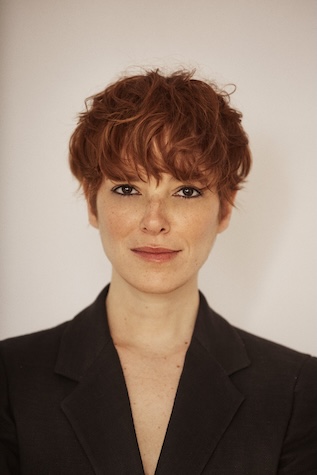
After the success of Mrs. March, Feito started getting a lot of attention from people in Hollywood. One of the people who reached out was director Zachary Wigon, who had read her debut novel and was eager to collaborate.
The two began brainstorming ideas for a film while Feito was simultaneously writing her second novel, Victorian Psycho. When she finished the first draft, she sent it to Wigon, hoping for some feedback from a filmmaker whose storytelling instincts she trusted. Instead, Wigon saw a movie.
"He immediately saw how he'd create a visual personality for it, how it had made him feel, and how he could transmit that to the screen," Feito says. The plan was to write the screenplay on spec and take it out to potential buyers.
"He directed me, shall we say, in writing the script, and then we sent it out, and it was really fast," Feito says.
Feito recalls working on the screenplay in 2024, publishing the novel in early 2025, and shooting the film later that year. She credits Wigon's determination for making it happen.
"As soon as I met him, I'm like, if this guy wants to make a movie, he's going to make a movie," she says.
Fun and Rage With a Homicidal Governess
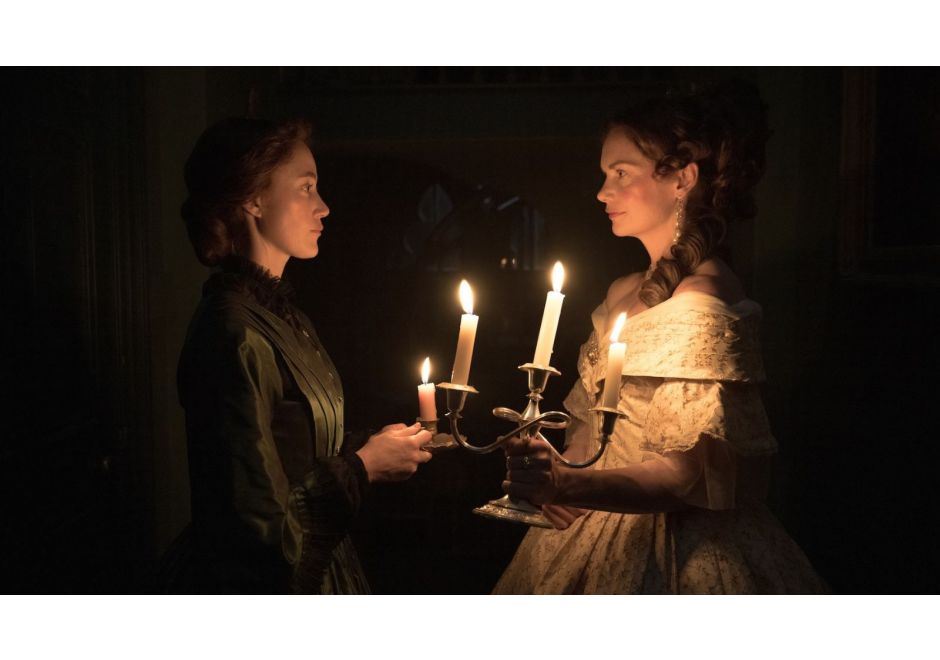
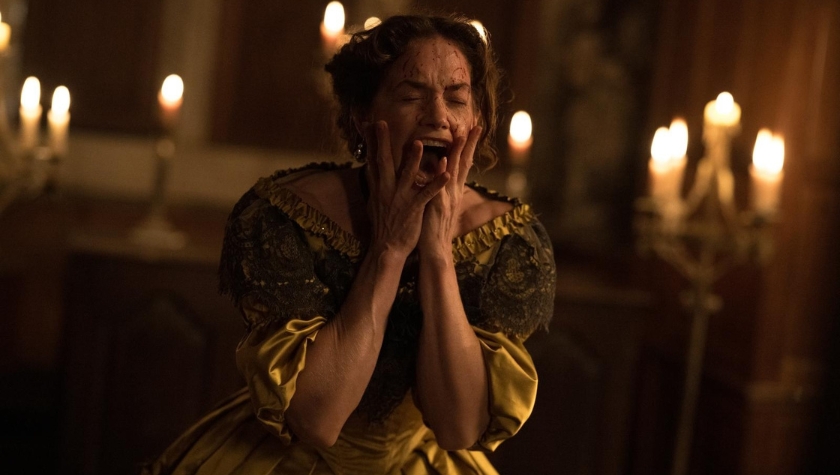
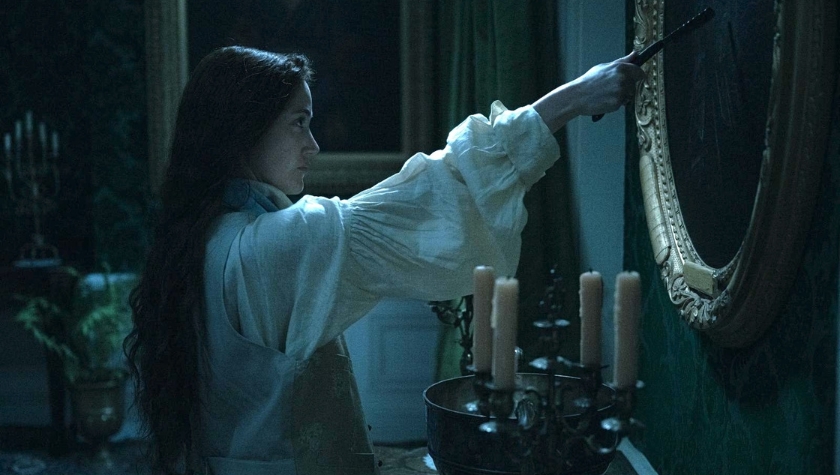
Victorian Psycho is a deranged horror-comedy about a homicidal governess, Winifred Notty, played by scream-queen Maika Monroe. She's a scheming young tutor who arrives at a gothic English estate in 1858 to educate the wealthy Pounds family's two children. Unfortunately, Winifred has a few extracurricular interests of her own, including, well, murder. When members of the household begin disappearing, it becomes clear that the new governess may be hiding more than a few skeletons in her closet.
For the story, Feito imagined combining the language and atmosphere of the Brontë sisters with the confrontational humor of Fleabag. She was also inspired by the visceral intensity of Ottessa Moshfegh's novel McGlue. But the biggest inspiration for Winifred's personality came from Feito herself.
"I think I just pictured myself if I was not afraid of every single thing in life," she says. "But still kept my sense of humor."
While researching Victorian England, Feito found herself growing increasingly angry about the treatment of women and children. The more she read about the legal abuses and social restrictions of the era, the more furious she became.
She also began questioning why events that happened more than a century ago could still provoke such a strong emotional response.
"I felt really angry when I was reading what they did to women and children at that time, legally normalized every day," she says. "It was just so much that it started to become funny," she says.
Winifred became the embodiment of that fury, a character whose outrageous behavior exposes the hypocrisy of the supposedly civilized society around her.
Learning to Think Like a Screenwriter
Despite reading so many screenplays as a kid, Feito discovered that writing a script was a bit different from writing a novel. In a novel, she could use elaborate descriptions to explore the internal thoughts of her protagonist. In a screenplay, though, she needed to communicate those same ideas primarily through images. "I didn't know that it was visual from the moment it's on the page," she says.
Working with Wigon helped her understand how to make her writing more visual, even down to the construction of action lines, the use of dashes and ellipses, and the rhythm of the screenplay itself. She also learned that a scene that works beautifully in a novel doesn't necessarily translate to film and vice versa. Now, she jokes, she's worried that returning to fiction will mean filling her novels with the short action lines, dashes, and ellipses she's grown accustomed to using in scripts.
Finding the Right Creative Partner
One of the biggest lessons Feito learned from adapting Victorian Psycho was the value of collaboration. Unlike novel writing, screenwriting demands working closely with other creative voices, particularly when a project moves toward production.
"I'm finding that, obviously, screenwriting is a very team-working-centric career, whereas book writing for me is way more solitary," she says.
Her advice to aspiring screenwriters is to seek out collaborators they admire, people who can challenge their ideas while helping them bring a shared vision to life. For writers hoping to make period films, she offers another possible route: Write the novel first, then adapt it. Or find a lesser-known Victorian novel and bring it to the screen.
Of course, if you're going to write a novel about a murderous governess, it probably helps to have a particularly vivid imagination. Feito admits that some of the more disturbing scenes involving children were written while she was on airplanes, where an unruly child kicking the back of her seat provided all the inspiration she needed.
"I murdered them in fantasy," she says. "I murdered them in Final Draft."
Her mother, meanwhile, has occasionally wondered whether she and Feito's father did something wrong to inspire their daughter's fascination with such dark material. Feito insists she had a happy childhood, and her parents have been wonderfully supportive of her career, even if her mother still prefers Mrs. March to Victorian Psycho.
Perhaps those forbidden screenplays weren't such a bad influence after all. They helped turn a curious 11-year-old into a writer with a wonderfully twisted imagination and a positive way to channel her darkest impulses. Luckily for us, Feito prefers to commit her murders on the page.
Victorian Psycho is now in theaters.