
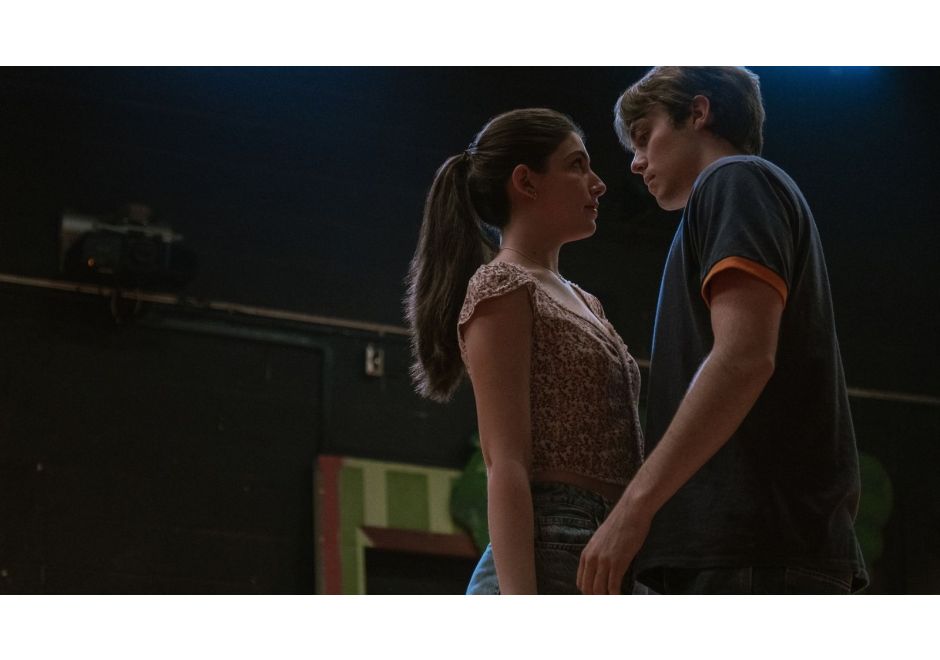
The new Netflix film Don't Say Good Luck presents itself like a musical comedy about a teenage girl named Sophie (Sunny Sandler), who surprisingly lands the lead role in her high school production of Waitress. At first glance, it looks like a coming-of-age story filled with theater games, opening-night jitters, first kisses, and teenage crushes. But that's only half the story.
Beneath the spotlight is a tender, heartbreaking portrait of a mother and daughter trying to hold onto each other while life quietly changes around them. Sophie's relationship with her mother Elizabeth (Melanie Lynskey) gives Don't Say Good Luck its emotional center, transforming what could have been a familiar teen musical into something more universal.
For novelist-turned-screenwriter Laura Hankin, the story began with one of the most painful experiences of her own life. As a high school theater kid, Hankin unexpectedly landed the lead role in her school's delightfully bizarre musical.
"It was actually a spoof of Moby Dick. The plot is a Catholic girls' school puts on a student-written production of Moby Dick. So it's like a musical within a musical," Hankin says. She played Ishmael, of course. It should have been one of the happiest moments of her teenage years.
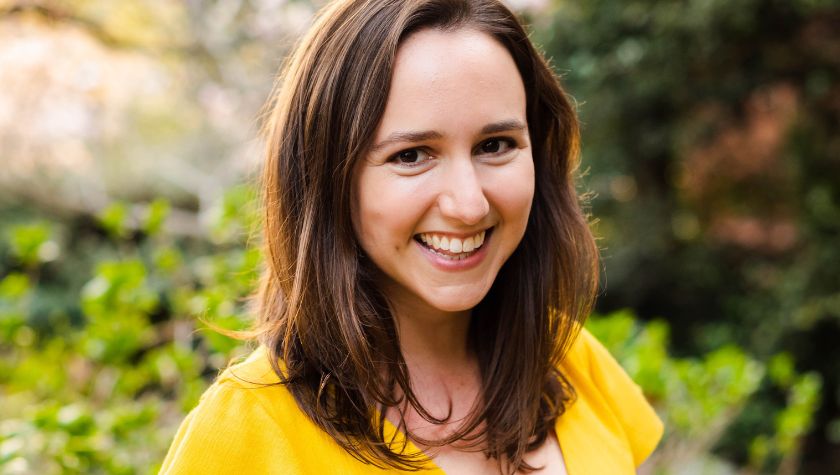
Instead, the dream role coincided with her mother's cancer taking a turn for the worse. Just two weeks after the final performance, her mother passed away.
"It was terrible," Hankin says. "I feel like I couldn't process any of it at the time. And it wasn't really until 15 years later that I started writing this and was able to work through my emotions. I wanted to take the worst thing that ever happened to me and make it into something that could speak to people, or make them feel less alone, or be something beautiful."
But Hankin was careful not to recreate her own life beat for beat. It had to be the cinematic version.
"I wanted to make sure it was fictionalized," she says. "I was drawing inspiration from this real-life thing that had happened. But right away, I was like, I don't want the family to be exactly like my family."
As the screenplay evolved through years of rewrites, the details continued to change. New characters were added. Even the central conflict shifted to create stronger dramatic tension.
"My parents never hid anything from me," Hankin says. "They were very honest with us about the diagnosis."
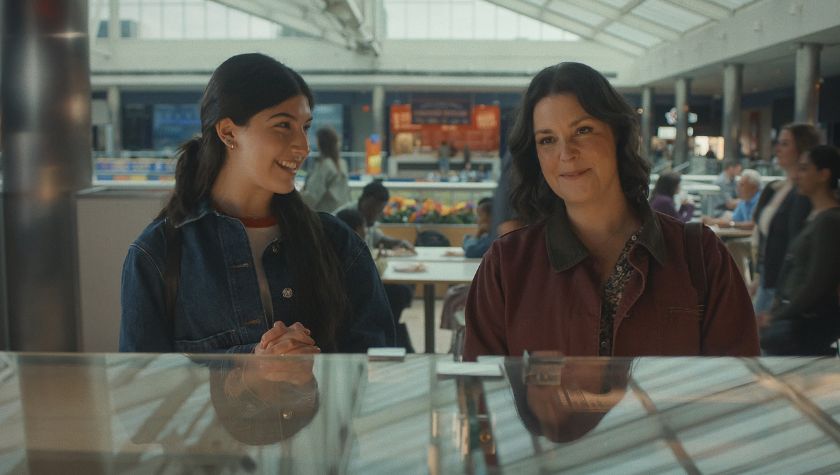
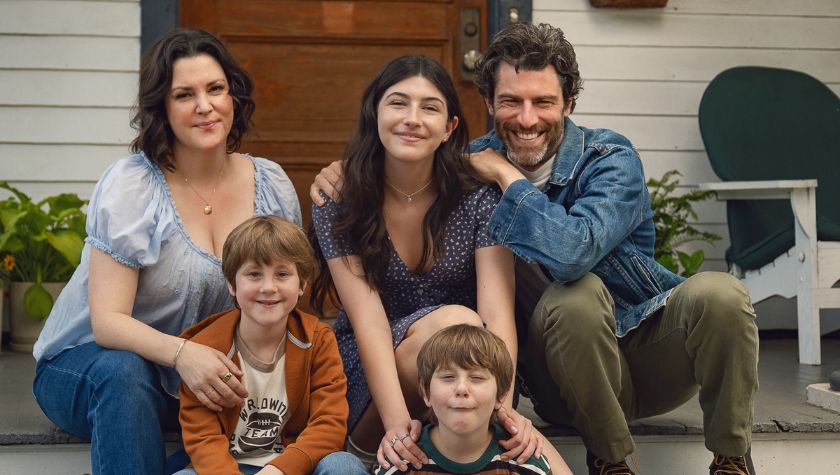
A producer suggested Hankin make Elizabeth a single mom, upping the stakes for the kids who would be left alone after her death. But Hankin didn’t want to go that far. Instead, she made it so the parents were hiding the worsening diagnoses from Sophie and her siblings. "The note behind the note was that there needs to be more tension. The stakes need to feel higher."
Protecting the emotional truth of the true story also guided her choice of the musical featured in the film. As she developed the screenplay, she realized the production needed to reflect Sophie's emotional journey. She began looking for a musical with a young woman carrying the story, emotionally demanding songs and moments of romance.
"Waitress fell into those parameters," Hankin says. "Once I started weaving Waitress into the script, I was like, 'This is perfect.'"
The role of Elizabeth demanded an actress capable of balancing humor, strength and vulnerability without ever becoming sentimental. For Hankin, one actress immediately came to mind.
"Melanie [Lynskey] was always right up there," she says, remembering the dream cast list she kept on her computer for years while writing the screenplay. Director Julia Hart felt exactly the same way. Watching Lynskey bring Elizabeth to life exceeded even Hankin's expectations.
"She has such an incredible warmth to her, but also a real backbone and this quiet strength—and an amazing sense of humor," Hankin says. "It was really important to me with this movie that it keeps the humor throughout."
That balance is what makes the relationship between Sophie and Elizabeth feel so authentic. Elizabeth isn't defined by her illness. She's still teasing her daughter, encouraging her dreams and finding moments of joy even as both of them quietly recognize that life is changing.
One of the film's most moving scenes comes when Sophie asks her mother what it was like to be pregnant with her. The conversation feels incredibly intimate, but surprisingly, it wasn't part of Hankin's original screenplay until Hankin had a life change of her own. Between writing the first draft and later revisions, Hankin became a mother herself.
"I got pregnant and had my daughter," she says. "I was having a lot of feelings about that. My perspective on this movie had changed from only being a daughter to now being a daughter and a mother." The scene became a reflection of both perspectives.
Even then, it continued evolving. Julia Hart refined the sequence, and once filming began, Lynskey and Sunny Sandler discovered emotional moments that weren't on the page. One exchange in particular has become one of Hankin's favorite moments in the finished film. "I really, really loved the way they found those beats,” she says.
For Hankin, that collaboration became one of the most rewarding surprises of filmmaking.
Coming from the world of novels, where authors control nearly every word, she initially wasn't sure how it would feel to hand her story over to directors, actors, and hundreds of crew members. Then she discovered something beautiful.
Crew members quietly incorporated personal tributes to loved ones they had lost. Actors uncovered emotional nuances she never imagined. Every department brought something of themselves to the story.
"I am thrilled about the final product," Hankin says. "This is what I wanted to say, and now it just reflects the contributions of hundreds of passionate and talented people."
Perhaps the most meaningful validation came from someone who understood the real woman behind Elizabeth better than anyone.
After watching an early cut of the film, Hankin's father turned to her. "I think your mom would have been really proud of how Melanie portrayed her." For Hankin, no review could ever mean more.
By the time Don't Say Good Luck reaches its emotional finale, it's no longer simply a movie about a teenager starring in a high school musical. It's about the conversations we wish we could have one more time, the memories we hold onto and the extraordinary way storytelling can honor the people we love.
That journey came full circle as Hankin prepared for the film's premiere. Just weeks after giving birth to her second child, she searched desperately for something to wear. Nothing seemed right.
Then she opened her closet and noticed a dress that had belonged to her mother. She tried it on. It fit perfectly.
"That's what I'm going to wear to the premiere," Hankin says. "It feels a little bit like I get to bring her with me."
Don’t Say Good Luck is now on Netflix.