
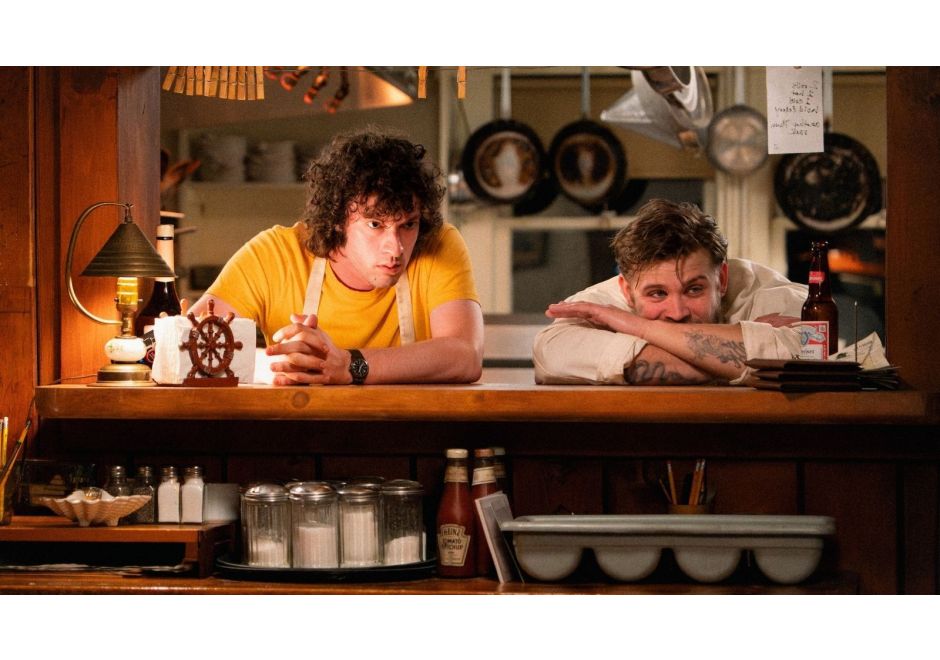
Inspired by Anthony Bourdain's 2000 memoir Kitchen Confidential, the new film Tony focuses on a single transformative summer in Provincetown, Massachusetts, when a 19-year-old Bourdain (Dominic Sessa) takes a summer job at a Cape Cod restaurant after being rejected for a writing fellowship. Cocky, immature, and practically useless in the kitchen, Tony, as he was called back then, learns a series of valuable life lessons over that summer, making for one of the most arresting and surprising coming-of-age films in years.
Finding the Story No One Else Was Telling
Writers Todd Bartels and Lou Howe have admired Bourdain for years. They knew there were countless stories that could be told about the celebrity chef and TV host, but they didn't want to make a stuffy cradle-to-grave biopic.
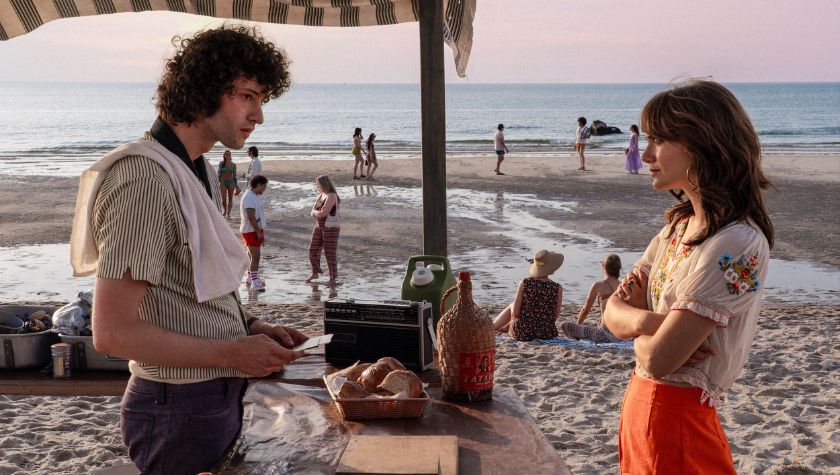
"We wanted to tell his story and wanted to find a window where we could kind of zoom in on a smaller period of time in his life," Howe says. "The idea of a summer romance on Cape Cod, a coming-of-age story, felt like the type of movie we want to see."
Bartels and Howe wrote Bourdain as naive and a bit of a f*ck up, but they also wanted to show the promise of who he'd become. Walking this tightrope in the script gave the film a stronger emotional focus while allowing audiences to experience the uncertainty, mistakes, and growing pains that shaped the future storyteller.
"In general, we're sort of allergic to cradle-to-grave biopics," Bartels says. "If you can find a smaller window that serves as a microcosm, I think that can be more interesting."
Writing the Script Before They Had Permission
After collaborating on an unproduced Dolly Parton biopic, Bartels and Howe jokingly wondered whether they had become "the biopic guys." Since both shared a love of food, travel and Bourdain's writing, they decided to focus on Bourdain next.
Their first instinct was to secure the cooperation of Bourdain's estate before writing a script, especially since Dolly Parton's estate decided not to approve their earlier effort. Their manager arranged a meeting with Ottavia Busia, Bourdain's former wife and mother of his daughter, along with longtime literary agent Kim Witherspoon, who helped shepherd Kitchen Confidential into publication.
The meeting went well, until the obvious question arrived: What happens in the movie? The writers had a concept but not yet a screenplay.
"They said, 'Come back to us once you write it,'" says Howe.
Then the Hollywood strikes hit. With no writing work, they took a risk and wrote the screenplay on spec. Soon they attached producers Tim and Trevor White, brought director Matt Johnson and actor Dominic Sessa on board, and eventually returned to the estate with a completed vision.
This time, the answer was yes.
Research Beyond the Memoir
Most writers assume adapting a memoir simply means following the source material. Bartels and Howe quickly discovered that wasn't possible.
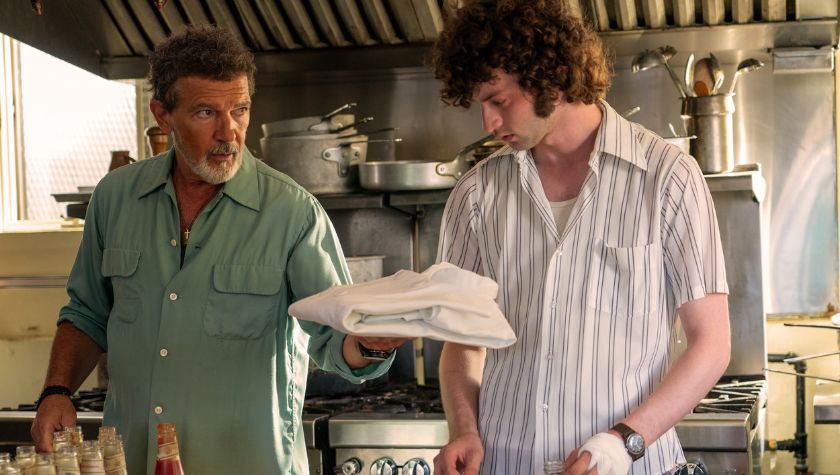
They learned that Kitchen Confidential isn't a strict autobiography but, as Howe describes it, "A fictionalized memoir." Names were changed. Timelines shifted. Events were exaggerated for dramatic effect. Instead of treating that as an obstacle, they widened their research.
They traveled to Provincetown, spending time in local bars Bourdain frequented. They revisited episodes of his television shows, interviewed people who knew him during that period, and dug into Laurie Woolever's oral biography to separate literary embellishment from historical fact. "There are a lot of things that are unknown about what really went on that far back," Howe says. "We tried to get beyond the book."
Writing an Imperfect Hero
One of Tony's greatest strengths is that it refuses to treat Bourdain as a legend. Instead, audiences meet an impulsive young man who makes terrible decisions, alienates people around him, and still has a great deal of growing up to do.
"He wrote about himself as an angry little sh*t," Howe says. "He treated the world like his ashtray." Those brutally honest reflections gave the writers permission to portray a version of Bourdain that hadn't yet developed the empathy and curiosity that later defined his public persona. Bartels believes that evolution became the heart of the film.
"It's through that humility he learns that maybe I'm not the most interesting person in the room," he says. "Maybe everybody else is."
That realization eventually became Bourdain's greatest gift as both a writer and television host.
Anthony Bourdain Wanted to Be a Writer
Perhaps the biggest surprise during their research had nothing to do with cooking. It was writing.
"I didn't really realize how much he always wanted to be a writer," Bartels says. Bourdain dreamed of becoming a cartoonist and author long before he became famous for food. Cooking was almost accidental; a profession that ultimately gave him the subject matter he'd been searching for. "He never really wanted to be a great chef. He was more the observer and raconteur," says Bartels.
Rather than seeing him as a chef who learned to write, the film presents him as a storyteller who discovered he could tell amazing stories with food. And that's exactly what he did.
Capturing the Emotional Truth
Biopics always rely on the writer's interpretation of the events to take the true story and make it an entertaining film. But Bartels argues that Bourdain's storytelling in Kitchen Confidential may have been heightened versions of real people, but the emotional truth remained intact. "There was something authentic about him," Bartels says. "He was deeply himself and not afraid of every aspect of himself."
Keeping that authenticity became very important to the writers as they focused on capturing Bourdain's voice, personality and emotional journey. Howe offers this advice for aspiring biopic writers.
"Immerse yourself in the research and learn as much as you can, but then let go of it. Focus on telling a great story."
A Love Letter to Bourdain
The writers deliberately chose not to build the film around Bourdain's tragic death. When asked whether their research gave them any insight into Bourdain's suicide, Bartels says no.
"There was a sort of cottage industry around his death, which is interesting but sad, so we decided to refocus the light on the beginning, when it was about the promise and potential of this extraordinary human being."
Rather than asking why Anthony Bourdain's story ended, Tony asks a far more interesting question: How did an angry, directionless young man become one of the world's most curious observers of humanity?
Bartels and Howe found the answer in this love letter to Bourdain that plays out over one unforgettable summer. If you love Anthony Bourdain, you will love this film.
Tony opens in limited release on August 7, before opening wide on August 15.