

Hannah McMechan and Danya Jimenez met when they were film students at Loyola Marymount University, which is currently ranked the #5 best film school by The Hollywood Reporter. They say their close bond has led to their biggest success yet: Netflix’s global animated phenomenon, KPop Demon Hunters that’s currently nominated for two Oscars and the winner of two Golden Globes. We sat down with the writing pair to find out more about their partnership, how they are dealing with success, and the importance of having a distinct voice in the time of AI.
The Meet Cute
When McMechan and Jimenez met as freshmen at LMU, neither was searching for a writing partner. They were simply trying to get through their first year of college.
“At that time, our headspace was not at all about our careers,” McMechan says. “We were both in survival mode, trying to make friends, trying to figure out college, being away from home for the first time.”
Though both were California natives, McMechan grew up in the woods outside Yosemite, while Jimenez is from Orange County, they initially believed they were creative opposites.
“I was doing more dramatic stuff. Danya was doing more comedic stuff,” McMechan says. “At the time, we were like, ‘We could never write together. We’re so different.’”
Only in hindsight did they realize how similar their instincts actually were.
“If you look back, all of our stuff was the exact same types of characters and stories,” McMechan says. “Everything was indie, quirky girls. It was the same vibe, just slightly more dramatic or comedic.”
Still, for their first two years at LMU, they didn’t write together at all. Their friendship came first, allowing them to create a foundation that would later prove essential.
A Semester Abroad and a Weird Subway Scene
The shift from friends to collaborators happened during a semester abroad in Budapest.
“We were staying in a lover’s hostel,” Jimenez says, laughing. The housing arrangement placed the two of them in a single room where they shared a bed, while another student slept above them in what Jimenez describes as, “A bunk-bed treehouse situation.” Things got even weirder, though, when they started riding the Hungarian subway, prompting an idea for a TV show which they decided to write together mostly because they were around each other 24/7.
“We wrote a British mockumentary, which is not okay to have written because it’s about a group of unhoused people living in a subway system in London, which neither of us has ever experienced,” McMechan says.
They may not have ever experienced homelessness, but they saw a lot of it deep in the bowels of the Budapest Metro. In Hungary, subway stations function as communal living spaces in a way that felt radically different from the U.S.
“It was like a dorm setup,” Jimenez says. “There were posters on the walls, mattresses. Basically bedrooms within the subway system.”
Despite its unusual premise, the script was proof they were good at writing together.
“It was a comedy, but with heart,” says Jimenez.
“Which is how we deal with most things, with comedy,” says McMechan.
They enjoyed the process so much that they decided to submit the pilot to fellowships, a decision that would change the trajectory of their careers.
A Fellowship and a Signal
The script was accepted into the Black List x Women in Film Episodic Lab during their senior year at LMU. With graduation looming, the fellowship made their next steps clearer.
“This felt like a very clear sign of what we’re supposed to be doing,” McMechan recalls. “We were about to enter the real world, and wouldn’t that be great if we did it together?”
So they used the lab as a tool to contact reps. “Now we’ve got this fellowship, we can email everybody and say, ‘Hey, sign us,’” Jimenez says. It worked. The team is currently repped by WME.
The Underrated Training Ground: Kids TV
Before KPop Demon Hunters, McMechan and Jimenez steadily built their careers through rewriting work and television rooms. One of their most formative experiences came in children’s television, a space they say sharpened their craft more than almost anything else.
They joined the Disney Channel writers’ room for Gabby Duran & the Unsittables and quickly realized how challenging “clean” comedy can be.
“People think of Disney Channel and kids TV and they’re like, ‘That must have been so boring,’” McMechan says. “But they are the funniest writers I’ve ever worked with. I was peeing my pants every single day.”
The challenge wasn’t writing jokes, it was writing them within restrictions.
“You have to be so smart to do comedy without doing anything crass. You really have to work within a very small toolbox,” she says.
“We weren’t even allowed to have them drinking soda because it was too much sugar,” Jimenez added. Those limitations trained them to rely on character for the comedy and be good problem solvers.
“Voice isn’t just your taste,” McMechan says. “It’s your ability to express that taste under constraint.”
KPop Demon Hunters
McMechan and Jimenez also were accepted into the Sundance Writing Lab, where they met Nicole Perlman, co-writer of Guardians of the Galaxy. Perlman later recommended them to director Maggie Kang, who was assembling the creative team for KPop Demon Hunters. Kang immediately saw the similarities between the feisty young writers and the characters she wanted in the film.
“We were roommates, best friends, and coworkers,” Jimenez says. “Which is what the girls [in the band] are.”
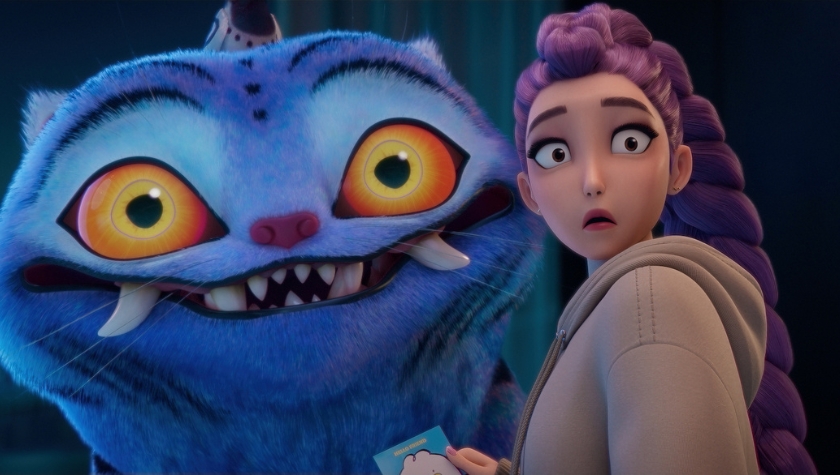
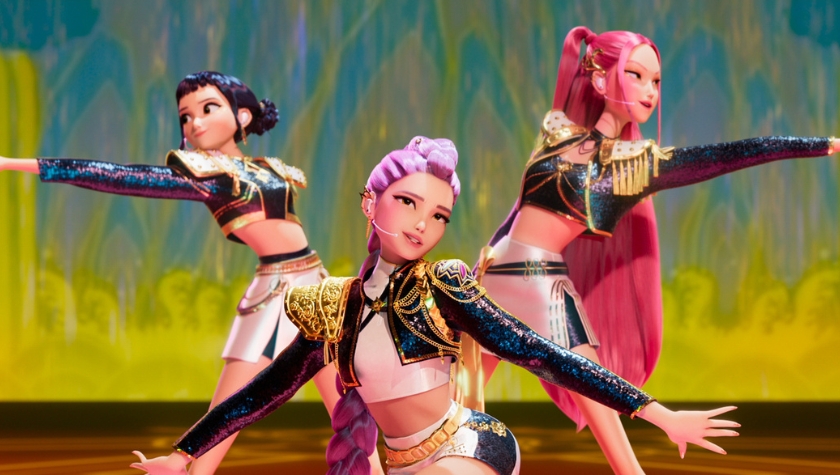
The animated musical follows Huntr/x, a K-pop girl group who secretly battle demons. When their lead singer, Rumi, begins to struggle with a dark secret, the group’s friendship is pushed to the brink.
From the start, Kang made it clear the film needed to be relatable to people of all ages.
“Maggie wanted this to feel like it wasn’t just for kids,” McMechan says. “It was for everybody. If anything ever felt too young, she was like, ‘No, that’s not it.’”
At times the storyline would get overly complicated and the writers admit they had to take a step back.
“We were writing some versions of this that were like The Hobbit – a hero’s journey so complicated I didn’t even know where we were,” McMechan says.
At one point, they realized the film was trying to hold too many ideas at once.
“We had a million different themes going on,” Jimenez says. “And we were like, okay, we’re going to have to choose one.” That decision became the most important learning curve of the project.
“The best lesson we’ve had is to always try to simplify,” McMechan says. “If you’re having trouble understanding it, your audience is going to be completely lost.”
The team ultimately knew they had to clarify the emotional engine. They landed on shame as Rumi’s obstacle to overcome, but not as a childish lesson, as a grown-up one.
The Emotion Behind the Songs
Another unique challenge involved the film’s musical elements. While McMechan and Jimenez didn’t write the final songs, they played an important role in shaping how music told the story.
“Maggie knew where she wanted the songs to be,” McMechan says. “So she asked us to write temp lyrics.”
Those temporary lyrics were included directly in early drafts, clarifying the emotional purpose of each song.
“When the music producers came on, they referenced those lyrics to understand what the characters were feeling in each scene,” Jimenez says.
Success, Numbness, and Attack of the 50 Foot Woman
When KPop Demon Hunters became a global hit, the writers didn’t feel immediate euphoria. Instead, they felt sensory overload.
“It’s so surreal,” McMechan says. “I feel like we still haven’t really sat with it.”
Their nervous systems, they admit, defaulted to numbness.
“When things get overwhelming, we kind of numb out,” Jimenez says. “That’s how we survive.”
But the most surprising part of success wasn’t the Huntr/x Halloween costumes or global streaming numbers. It was the industry suddenly offering them big opportunities.
“For most of our career, we’ve had to prove our worth over and over,” McMechan says. “And now, finally, it feels like people are taking us seriously.”
That new phase includes projects they never imagined landing, including a reimagining of Attack of the 50-Foot Woman with Tim Burton directing and Margot Robbie producing.
“We’ll be in a meeting and just be like, yeah, we’re all drinking the same coffee,” Jimenez says. “And then later you’re like, that was insane!”
Protecting the One Thing AI Can’t Replicate
When asked what advice they’d give emerging writers, their answer is clear. “Write who you are,” Jimenez says. “Don’t write what you think people want.”
They believe that specificity is the only path to a career, especially in an AI-integrated industry.
“You could ask AI to write XYZ script and it’s going to do, I guess, an okay job. But it’s never going to have your specific voice,” says Jimenez.
Their hope is that audiences and studios will increasingly value that human imprint. “We need people to know something wasn’t written by a robot,” McMechan says.
Becoming “Real” Writers
Both writers were excited to share that they wrote KPop Demon Hunters in Final Draft.
“Of course, we are huge Final Draft fans. I remember when we were in college, we were like, ‘Oh, one day we’ll get Final Draft, and that’ll be the best day ever,’” says McMechan.
“When we got Final Draft, we were like, ‘We’re real writers now,’” says Jimenez with a smile.
KPop Demon Hunters is currently streaming on Netflix.