
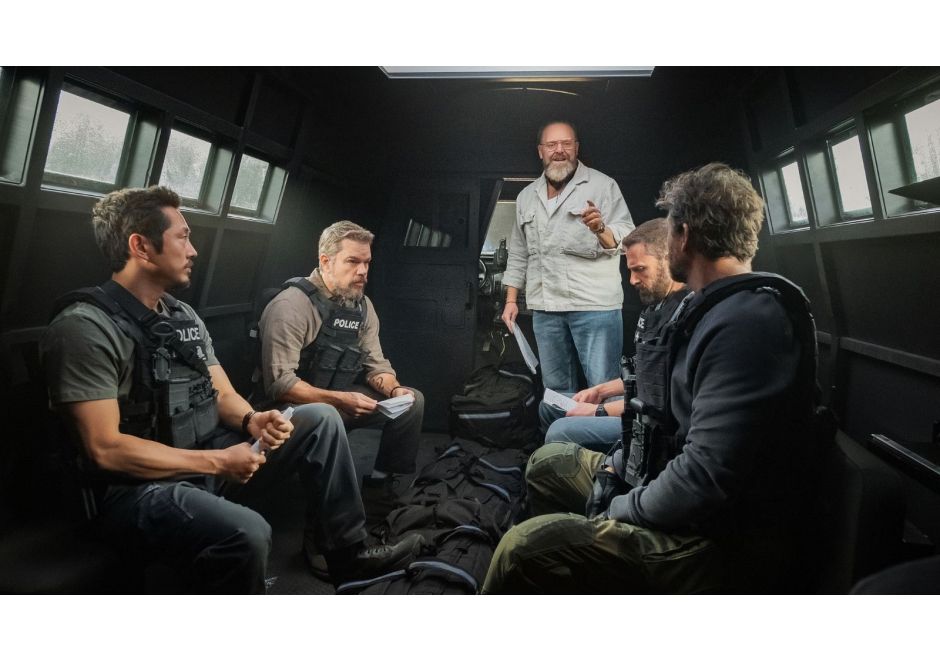
The Rip starring Matt Damon and Ben Affleck is the kind of movie that has you constantly questioning the characters’ motives. Are these cops good guys? Are they bad guys? Or somewhere in between? Suspicion runs rampant as every character glance feels loaded. Every line of dialogue sounds like it might be a tell. And everyone, no matter how honest they seem, feels capable of crossing a despicable line. That sense of unease is deliberate.
Writer-director Joe Carnahan (Shadow Force, The Grey), set out to make The Rip not just a high-octane action thriller, but a deeply personal, character-driven story. One that uses genre to explore grief, loyalty, and the damning pull of temptation.
A true story
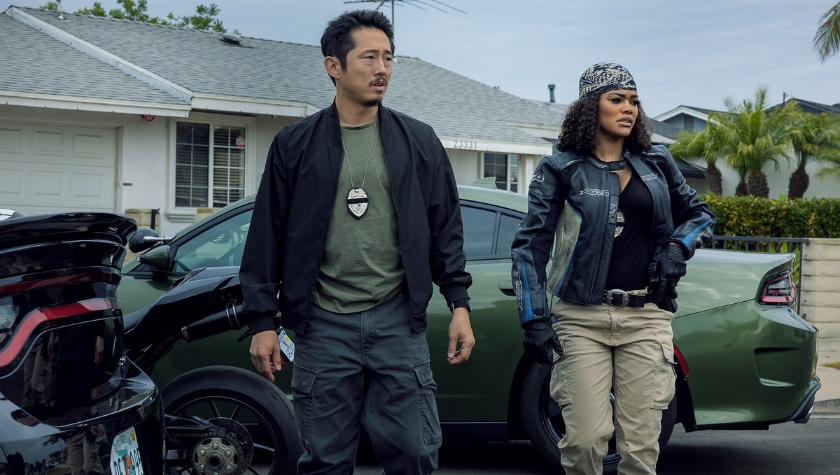
The film’s origin comes from Carnahan’s longtime friend we’ll refer to as Chris C., a Miami police officer who participated in a real-life drug money seizure. In reality, the stash was even larger: $24 million. And the individual living in the home wasn’t a young woman but an older Colombian man. Those details shifted for the film, but the emotional core remained intact.
What mattered most was something far more personal: Chris C. lost his 11-year-old son to cancer. “I wanted to create almost like a vessel for the grief,” Carnahan says. “Not to overcome it, but to diminish that terrible sense of loss and tragedy.”
That grief became the emotional spine of The Rip. Lieutenant Dane Dumars, played by Matt Damon, isn’t simply navigating a dangerous moral dilemma, he’s a father shaped by a loss he couldn’t prevent. JD Byrne, portrayed by Ben Affleck, is also dealing with his own grief after losing his boss and romantic partner, Captain Jackie Velez, played by Lina Esco. Their shared pain informs their choices, their loyalty, and ultimately the lines they are – and aren’t – willing to cross.
“The engine on this thing is so interpersonal,” Carnahan says. “All the other stuff is just pyrotechnics. What makes it go are the relationships.”
Crafting suspicion
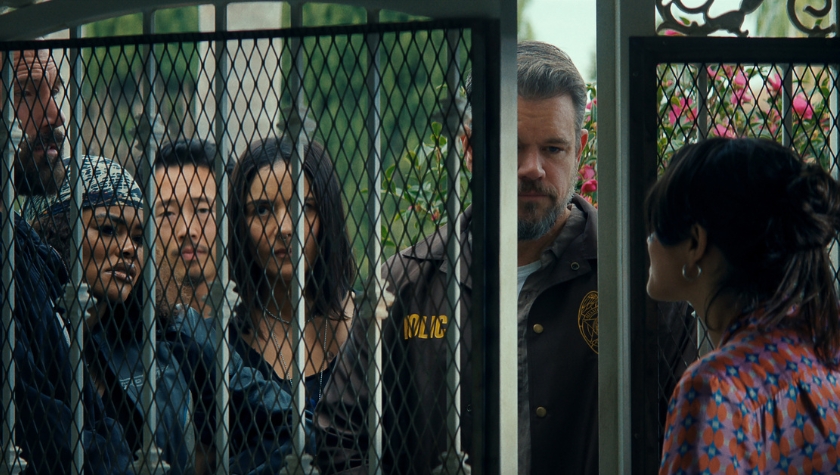
One of The Rip’s most effective tricks is how completely it messes with the audience’s trust. Carnahan knew the actors he cast would bring their own undercurrents to the roles, particularly the real-life friendship between Damon and Affleck.
“You’re trading on their relationship and also them as movie stars,” he says. “Wait a minute – that’s Jason Bourne. That’s Batman.”
By playing with audience familiarity, the script plays on two levels at once: the characters we see on screen and the cultural baggage viewers bring with them. The result is a constant low-grade anxiety. If these guys can turn, anyone can.
Carnahan reinforces that paranoia with subtle actions, like Dumars telling different characters different amounts of money in the seized stash.
“I wanted to cast suspicion on him. Why is he doing that?” he says.
It’s a classic setup/payoff move, but one designed to fade into the background as the story moves forward. By the time the audience remembers the detail, they’ve already internalized the doubt.
Outline first so you can write fast
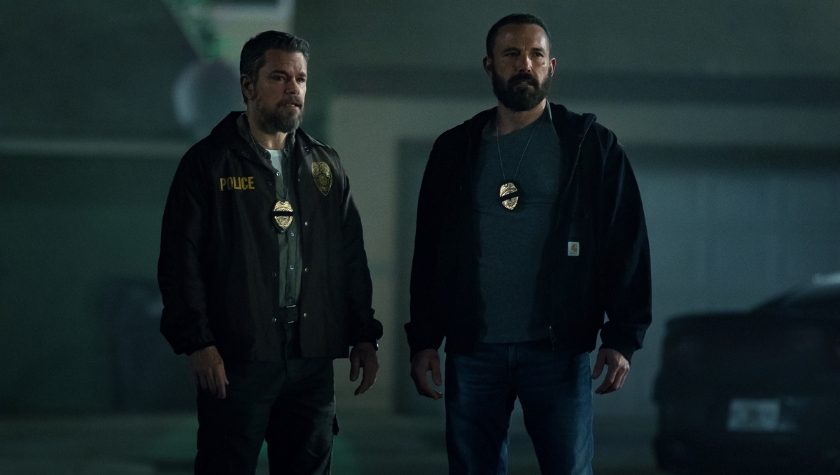
Despite the film’s intricacy, Carnahan wrote The Rip in about five weeks. That speed wasn’t from instinct, it came from preparation.
“We really spent a lot of time outlining,” he says. “We really wrung this thing out.”
For Carnahan, outlining was essential to balancing a Hitchcockian whodunit with emotional accessibility. The outline wasn’t just a list of beats; it was a diagnostic map of information, suspicion, and moral consequence: who knows what, when they know it, and how the audience’s allegiance shifts at every turn.
That groundwork gave the script what Carnahan describes as a machine-like quality, a Rube Goldberg device of setups and reversals that ultimately snaps shut like a mousetrap.
It also allowed the film to become leaner as it evolved. Scenes and bits of dialogue were dropped which sped up the pacing.
“We realized we already got that,” Carnahan says. “We’d already hit it.”
The lesson here is that story complexity requires lots of planning. Once Carnahan knew the engine worked, he could write fast, take risks, and trust the structure.
The scene that gets the audience thinking about their own morality
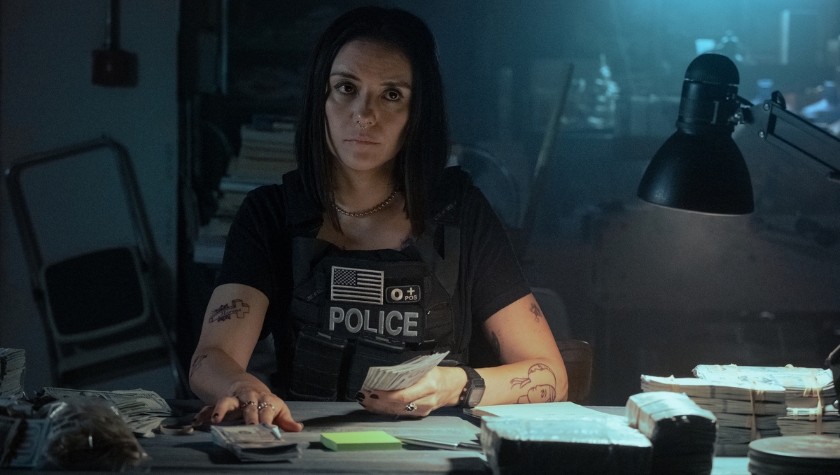
Carnahan singles out one quiet moment as his favorite in the film: a scene involving Detective Lolo Salazar (Catalina Sandino Moreno), holding a stack of cash and contemplating what that money could do for her family.
“She conveys hope, guilt, desperation, wish fulfillment, all in one shot,” Carnahan says. “You’re reminded these are civil servants. They make a salary.”
Viewers instinctively begin doing the math themselves, asking, “Would I take the money? If so, how much?”
“You get pulled into that morass,” Carnahan says. “What would it mean for me if I crossed that line?”
It’s a masterclass in contained storytelling. The scene deepens the moral stakes so profoundly that everything that follows lands harder.
Writing for the rewatch
Carnahan wanted the audience to be able to go back and rewatch the set ups that they may have missed watching it the first time.
“If you go back, there are a lot of indicators of what’s going on if you’re paying attention,” he says. “I love that.”
This philosophy echoes his literary influences like Murder on the Orient Express, The 39 Steps, Strangers on a Train, all stories built on firm ground: setup, payoff, setup, payoff. For Carnahan, that rhythm isn’t just structure, it’s trust.
“I think we can pull this one over on them,” he laughs. “That was the goal.”
Advice for thriller writers
For writers tackling high stakes, contained thrillers, Carnahan’s advice is blunt and practical.
“Great writers are great readers,” he says. “Spend the time. Seek out the materials that let you do the job well.”
And above all: outline relentlessly.
“Movies like this demand it,” he explains. “It gives you a portrait of the whole film. Then you can tinker, get leaner, throw things away.”
The goal isn’t complexity for its own sake, it’s about setting a trap. When the trap finally snaps shut, it should feel both shocking and unavoidable.
The Rip is currently streaming on Netflix.