
Reports of the movie theater’s death have been premature.
For the better part of the last decade, a familiar panic settled over Hollywood. People were crying, “Streaming is killing cinema!” “Audiences are choosing to watch movies at home!” Many started claiming the theatrical experience was a relic on life support, and anyone who didn’t accept that reality was fooling themselves. It was a story that got repeated so often, it felt like a foregone conclusion.
Now, the anxiety wasn’t irrational. There was data behind the pessimism. Theater attendance numbers had plummeted. The pandemic accelerated viewing habits that were already forming. Franchise fatigue was real, and superhero sequels that once felt like guaranteed performers started underdelivering. The culture war had also spilled over into Hollywood and turned off large sections of the country.
But as it turns out, audiences weren’t done with movies.
They were done with movies that didn’t give them a reason to leave the house.
The Numbers That Changed the Conversation
The first quarter of 2026 has made the case clearly. The domestic box office posted $1.77 billion through Q1: the strongest start to a calendar year since before the pandemic, and an 11% increase over the same period last year. That number reflects a genuine shift in audience behavior, not an anomaly driven by a single opening weekend.
The standout of the quarter is Project Hail Mary (based on the Andy Weir novel and adapted by screenwriter Drew Goddard). The sci-fi hit starring Ryan Gosling crossed $217 million domestically, on pace for $300 million or more, with a remarkably strong third-weekend hold. It set a record as the first 2026 release to cross $200 million. What makes that figure noteworthy is the nature of the film: a new story, not a sequel, not a reboot or franchise extension.
In addition, Hoppers added another $149.6 million for Disney’s animation slate. Scream 7 hit $120.5 million, a series high for the horror franchise. GOAT crossed $102 million. Taken together, Q1 built its record not on one massive performer, but on consistent theatrical attendance across multiple genres and audience demographics.
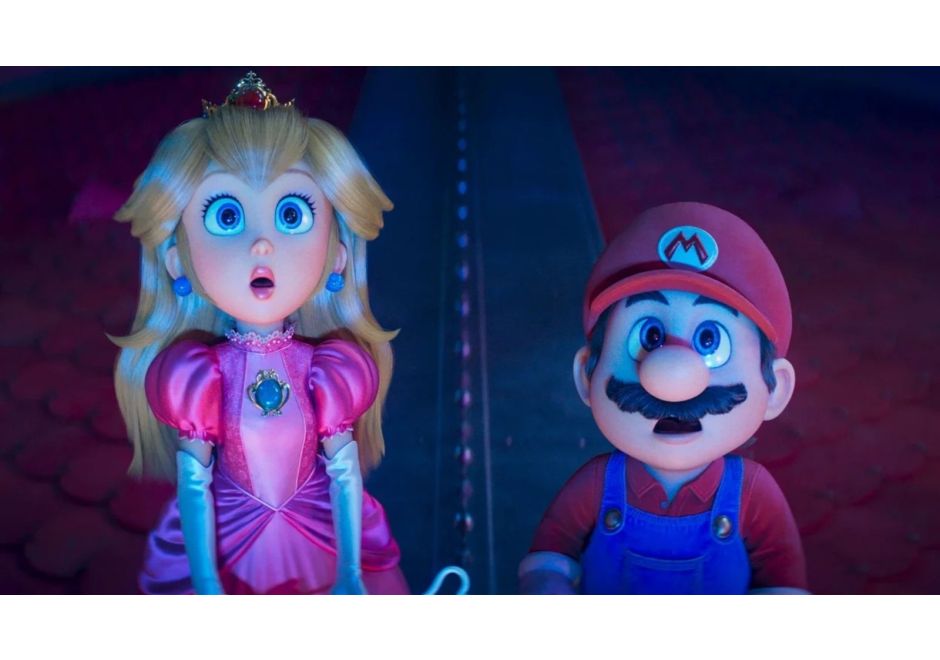
And Q2 is already shaping up to be strong with The Super Mario Galaxy Movie amassing a whopping $190.8 million domestically over the holiday weekend. This shows the momentum from Q1 is still going strong.
The Holdovers
The Q1 story didn’t begin in January. Some of it was written before the new year even started.
Avatar: Fire and Ash carried its late 2025 momentum well into Q1, contributing $137.9 million to the domestic total and pushing its cumulative past $400 million. A sustained theatrical run like this — months of audiences continuing to buy tickets — is the kind of performance that reminds studios why the theatrical window still matters. Arguably more impressive, The Housemaid crossed $399 million worldwide against a $35 million budget. That return on investment didn’t go unnoticed. And Marty Supreme quietly became A24 studio’s highest-grossing film at $179 million globally, built almost entirely on word of mouth from an opening of just six theaters.
These three films couldn’t be more different: a sequel to a sci-fi/fantasy blockbuster, an erotic thriller, and an indie sports dramedy. But what they have in common is that audiences kept showing up for them.
It's Not Just the Big Tent
The success of The Housemaid and Marty Supreme are significant because they show this rise in theater attendance isn’t reserved for big franchises and family films. In addition to The Housemaid, other female-led psychological thrillers, Wuthering Heights and Send Help, posted solid Q1 numbers as counter-programmers to the bigger event films around them. This proves that 2023’s “Barbenheimer” phenomenon wasn’t a fluke, but a foreshadowing.
In addition to the four quadrant sci-fi and animated hits, A24’s The Drama, starring Zendaya and Robert Pattinson, opened this past weekend to $14.38 million domestically and $28 million globally. This effectively recoups the film’s entire production budget in three days, with 68% of its audience being women under 35.
The public’s appetite isn’t narrowly calibrated to tentpoles and familiar characters. When a movie looks intriguing or dynamic, it’ll find an audience.
This Was Predictable
A couple years ago, when many of my peers were convinced that streaming would lead to less work for screenwriters, I had a different take. I also argued that streaming wasn’t going to destroy theatrical cinema any more than television destroyed movies in the 1950s, cable destroyed them in the 1980s, or home video finished them off in the 1990s. Each of those technologies was predicted to make the theater obsolete. In retrospect, television, cable and home video expanded the overall audience for filmed entertainment and ultimately created more demand for content, not less.
And sure enough, streaming is proving to be following suit.
The relationship between streaming and theatrical isn’t antithetical. A great film can perform well in theaters and then extend its life and audience on a streaming platform. And even if a film is solely a platform hit, it can generate the kind of cultural conversation that drives people to seek out a filmmaker’s next theatrical release. Streaming and theatrical can function together, almost symbiotically, when the material is strong enough to justify both.
What streaming accelerated was audience selectivity. When thousands of titles are available at no incremental cost, the bar for what earns a trip to the theater naturally rises. Audiences became more discriminating. Films like Project Hail Mary, Marty Supreme, and The Housemaid were hits because they gave audiences something they couldn’t get by staying home. That’s not a crisis for cinema. That’s cinema doing exactly what it's supposed to do.
What This Means for Screenwriters
A healthy box office has a cascade effect that reaches every level of the industry. Studios tracking these Q1 numbers are going to be green-lighting more films. Producers who’ve been cautious about bringing material to market will start moving faster. Development slates will expand. The pipeline that runs from a screenplay on someone’s computer to a movie in front of a paying audience will get more traffic, more investment, and more urgency behind it.
More films being greenlit means more writers being hired for assignment jobs. Even if many of the films that topped the last two quarters were adaptations of books and other IPs, they still required screenwriters to translate them from one medium to another. Also, franchise films need fresh voices to push the material somewhere audiences haven’t already been. If you're a working professional or a writer with heat, the revitalized box office is likely to create a fuller job market. In many ways, the current marketplace is much healthier for screenwriters than it was pre-pandemic when everything was about superhero films and slick remakes.
But the opportunity doesn’t stop at the assignment level, and this is where this story connects to something I’ve been watching build for the past year.
Two Trends, One Direction
In my article, “The Return of the Spec Screenplay Sale,” I wrote about 23 feature spec sales and pitches closing in a single summer, with nine of them in August alone: the highest monthly volume since March 2017. Studios and producers are buying original material again. Some of these deals were in the high six figures and a few even crossed seven figures. A hot spec is once again a commodity.
That trend didn’t appear out of nowhere, and it’s not separate from what’s happening at the box office now. Spec script purchases are a bet on where the audience is heading. Studios and producers reading the cultural signals in 2024 and 2025 — growing streaming fatigue, renewed interest in the theatrical experience, audiences increasingly hungry for fresh material — started investing in original material ahead of the demand curve. Don’t be surprised if next year some of these specs join the ranks at the theatrical box office and further expand the marketplace.
Spec scripts are the movies of tomorrow. The films opening in theaters two and three years from now are being written today. The specs circulating right now, the ones getting read by managers and production companies and development executives, are the raw material that becomes the next wave of theatrical releases. When the box office is strong and studios are confident, that pipeline accelerates. Material that might have sat in development limbo for years gets pushed forward. Projects that needed a green light, get it.
This is why the spec sale resurgence and the box office recovery aren’t separate trends that just happen to be occurring at the same time. They’re the same trend viewed from two different points in the process. The industry was already signaling its confidence in the future through the spec market before Q1 confirmed it in ticket sales. Writers paying attention to both markets have a clearer picture of the landscape than writers watching only one.
More Movies, More Screenplays
More movies are going to be made in the coming years, and this naturally means more screenplays will need to be written. If you’re a beginner screenwriter, the spec is your entry point into this expanding marketplace. Whether it’s through a sale or your spec working as a writing sample, it’s still one of the best ways to break into the industry.
The return of the box office and spec sale, especially when viewed alongside one another, confirm the industry has moved past the period of uncertainty. It isn’t operating exclusively around a few safe bets. It’s embracing new material, different genres, fresh voices, and scripts that haven’t been written yet by writers who haven’t had their break yet. The pipeline is open and the appetite is real.
People are going back to the movies.
Now write something worth the ticket.