
As The Mosquito Bowl begins, we see a breathtaking image of our beautiful blue-and-green planet from space. A super over the image reads:
Older men declare war. But it is youth that must fight and die. And it is youth who must inherit the tribulation, the sorrow, and the triumphs that are the aftermath of war. — Herbert Hoover
It's a sobering reminder of the human cost of war, one that feels particularly relevant today as conflicts rage across the globe. With his new World War II drama The Mosquito Bowl, filmmaker Peter Berg hopes to honor the extraordinary sacrifices made by a generation of young Americans while delivering a cautionary tale about the devastating consequences of war. His hope is that by remembering the horrors of the past, we might avoid repeating them in a potential World War III.
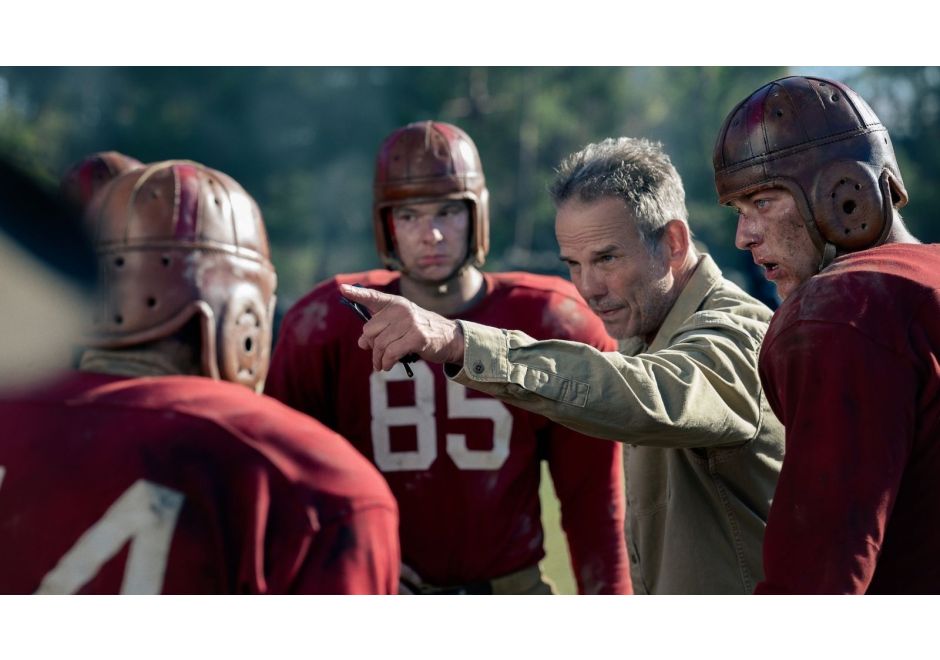
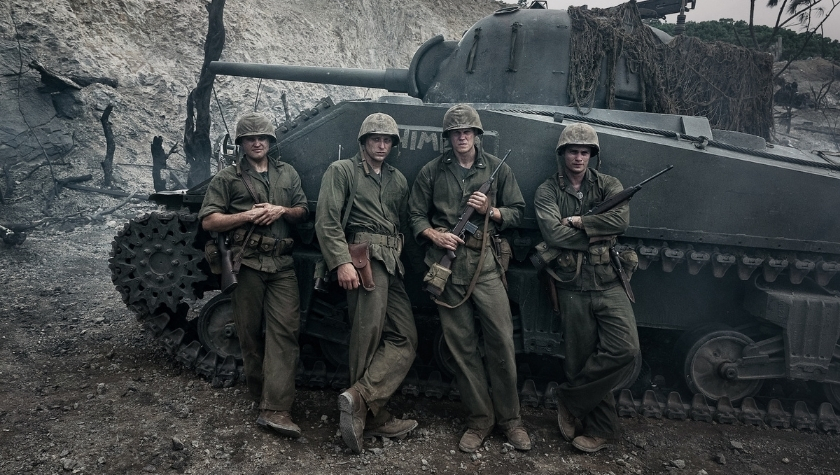
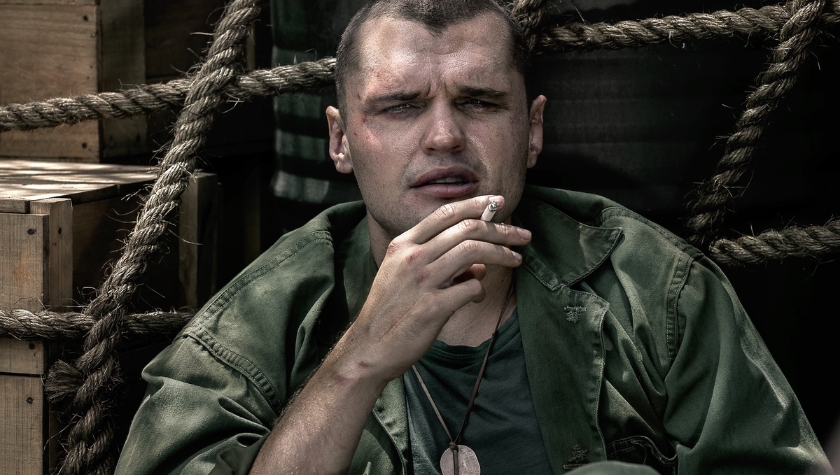
Berg, known for films like Patriot's Day, Lone Survivor and Friday Night Lights, has directed and co-written this movie with Mark L. Smith (The Revenant), based on Buzz Bissinger's book The Mosquito Bowl: A Game of Life and Death in World War II. While based on a true story about a group of star college football players who enlist in the Marines after the Japanese bomb Pearl Harbor, it's also one of the most powerfully visceral films of the year.
Starring Nicholas Galitzine, Bill Skarsgård, Ray Nicholson and Tom Francis, the story is set around a real football game that offers a fleeting moment of joy and normalcy just before the brutal battle at Okinawa.
For Berg, the story was personal. Bissinger is his cousin, and both men grew up with fathers who served in the Marine Corps. Bissinger's father fought in Okinawa, while Berg's father served during the Korean War. But Berg was also drawn to the themes that run deep inside the story.
"Buzz [Bissinger] might write a book that you think is about football, but it's really about family and commitment and community and all kinds of themes that are lurking around something like football," Berg says. "I knew when he was telling me about the book that it was more than just a simple war story."
Filling Up the Creative Tank
For Berg, writing a screenplay begins with immersing himself in the world he's about to create on film. When preparing Friday Night Lights, he lived in Texas with a football team. For Lone Survivor, he embedded with a Navy SEAL platoon in Iraq for a month. For his television series Wonderland, which takes place in a psychiatric hospital, he even checked himself into Bellevue's psychiatric ward for a week. "Yeah, that was a rough one," he admits.
For The Mosquito Bowl, Berg traveled to Okinawa, where Marine Corps historians took him on an immersive three-day tour of the battlefield. From there, he went directly to Parris Island, South Carolina, where he spent time observing Marine recruits and their drill instructors.
"I want to be able to get that kind of fire in my soul. That environment gave me the inspiration to start writing, so it was a great place for me to write," he says, adding, "I had Final Draft with me on the Marine Corps base."
Berg has a name for this in-depth approach to doing research. "I call it filling up the tank. I'm trying to fill up my tank. Everyone has a different way. That's how I do it. I love that part of the process."
Breaking the Rules on the Page
When asked about the secret to writing battle scenes, Berg says he focuses on communicating the intensity and overall movement of the action then adding specific details that will increase the tension. For example, he describes imagining a soldier who loses his helmet during combat and grabs another from the ground, only to discover there's still a severed head inside.
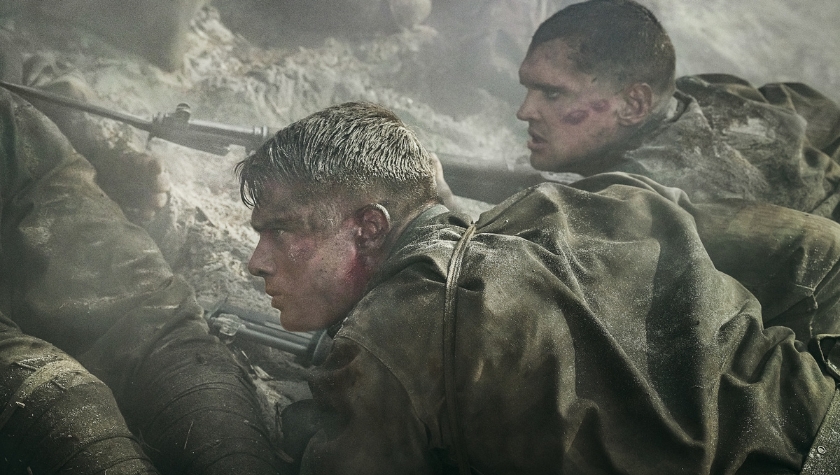
During his research, Berg repeatedly watched With the Marines at Tarawa, a documentary featuring actual combat footage captured by Marine Corps photographer Norman Hatch. To give his screenplay readers a sense of what to expect from the battle scene at Tarawa, he wrote in the script that the reader should pause reading to go watch Hatch's documentary. Then he wrote, "I'll wait." The reaction surprised him.
"A lot of people called me and said they'd never seen a writer do that," Berg says. "I had studio people call me from Netflix, my bosses, and say, I've never seen that in a script," he says.
But it worked, proving a lesson Berg thinks every screenwriter should remember. "There are truly no rules. You can do anything. You can explain it in great detail, or you can tell them that you're going to wait while they look at a video."
Making the Audience Feel the Story
In the film, Berg incorporates grainy, archival footage, sprinkling it in with the footage he shot. Examples include real historical footage during the football game, a Bob Hope performance and the final battle at Okinawa.
"I knew I wanted to constantly try and remind the audience that this really happened," he says. He even referred to using this footage in the script.
But blending archival footage with dramatic scenes can be a challenge. Too much could distract audiences or feel gimmicky. Berg tested the technique with early audiences and worked closely with his editors to find the right balance. "You're looking for a sweet spot there," he says.
The battle sequences were super important in the film, but so was the football game for different reasons. After surviving the brutal Battle of Tarawa, the Marines are asked to play a football game to provide an escape from the horrors of war and build camaraderie. "In the middle of fighting a war, they had this little three-hour break where they truly got to experience innocence, happiness, love, things like that. Real positive brotherhood for three hours. And then it was gone," he says.
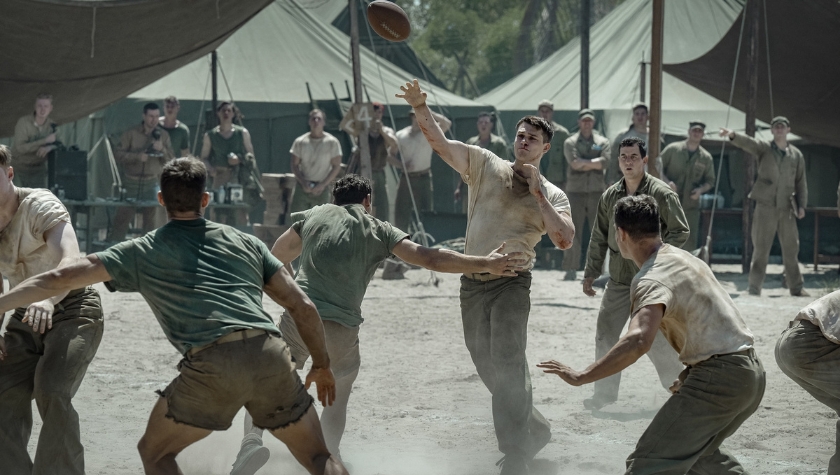
Berg says he wanted to make the audience experience what those young men felt on an emotional level. The contrast between joy and horror also plays out in one of the film's most disturbing scenes, where a Marine attempts to sell human teeth taken from dead Japanese soldiers. Berg says the scene was inspired by actual accounts of wartime atrocities, including those described by Marine veteran Eugene Sledge in his memoir With the Old Breed.
"One of the horrific effects of this kind of war is that good people go crazy," Berg says. "Good people, as Eugene Sledge said, can round the bend and turn into really dark versions of themselves."
For Berg, these moments are vital to understanding the psychological cost of combat. "If this film can be a little gentle nudge for anyone who sees it to remember what the cost of war is today, I'm all for it."
The Human Experience Comes First
For screenwriters hoping to tackle war stories, Berg offers advice that applies to almost any genre: Spectacular action doesn't mean anything unless the audience feels connected to the characters experiencing it. "I look for opportunities to take me into the battles, the fighting, and the intensity of that kind of fighting," he says.
But the emotional connection is what makes those sequences meaningful. "I feel their fear, and I feel their bond, and I feel connected to the why of why they're fighting, and what they're fighting for, and who they're fighting for."
Ultimately, it's that combination of visceral action and human emotion that Berg hopes will make The Mosquito Bowl resonate with audiences.
The Mosquito Bowl opens in theaters Oct. 30 and will stream on Netflix starting Nov. 26.