
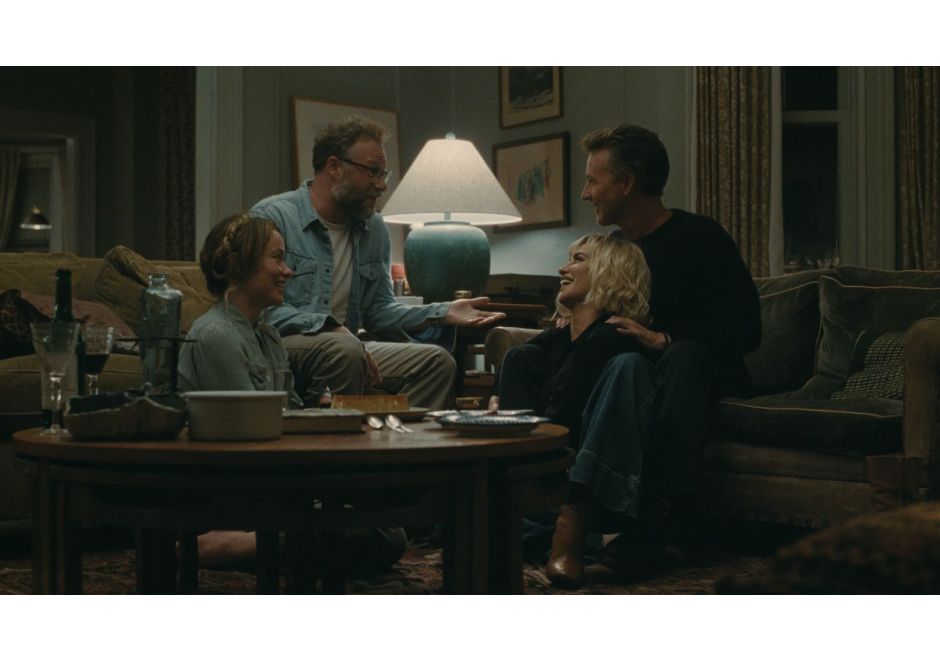
Imagine you’re a writer racing toward the start date of your new feature, and you don’t have the ending locked. You and your creative partner are frantically rewriting and incorporating suggestions from your talented cast and director to make the screenplay better, all while this deadline looms.
Writers Rashida Jones and Will McCormack pulled it off with incredible grace and talent on The Invite, Olivia Wilde’s electric chamber drama that premiered at Sundance this year and is now very much in the awards conversation.
The film is a retelling of Cesc Gay’s Sentimental, and features two modern couples on opposite sides of temperament and appetite. Wilde plays high-strung Angela, who’s married to listless Joe (Seth Rogen). She invites the sexier, edgier couple from upstairs to dinner. When Hawk (Edward Norton) and Piña (Penélope Cruz) arrive, they make a proposal that turns the whole night upside down.
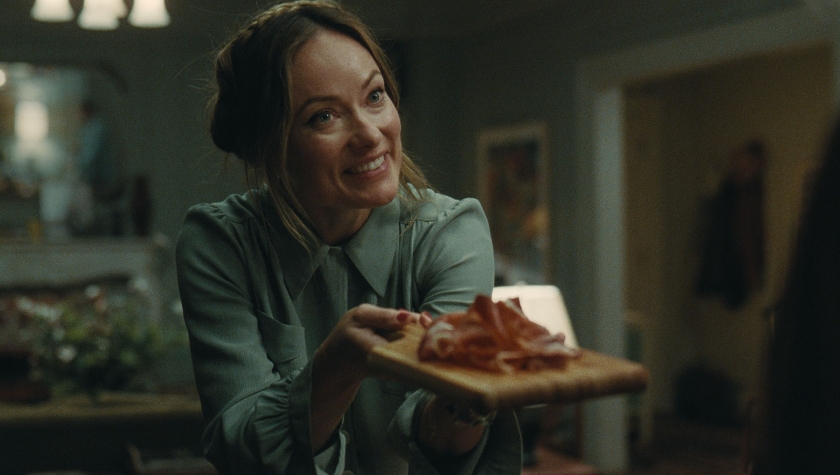
I don’t know if there’s anything more stressful than last-minute rewrites, but it’s not as uncommon as you might think, whether due to a location falling through or a cast member dropping out or simply something not working that really needs to work. On The Invite, they were approaching the start without their ending locked.
Final Draft spoke with the duo about how they write as a team, how they kept a script alive all the way through production, and how you keep a story moving when it never leaves one apartment.
How Rashida Jones and Will McCormack Write Together
Jones and McCormack have written together since Celeste and Jesse Forever. More recently, they also worked together on the story of Toy Story 4. McCormack also won the Oscar for the animated short If Anything Happens I Love You.
They told me they’d recently used Final Draft’s Collaboration tool side by side on a plane. So even when they’re apart, they can be working, though they still very much value being in the same room.
“Over the years, throughout the decades, we’ve changed our styles,” Jones said of their partnership. “It really depends on the project. The first draft of The Invite we wrote in the same room essentially, which is the most fun way to do it, to be honest. We love the tools, we love being able to do it remotely. We love being able to pass drafts back and forth to each other. But I think for us, it’s great to be in the same room. And we’re still on our own computers, and sometimes it’s fun to write something and wait for the other person to see what you’ve written to see if you make them laugh.”
Both started as actors, and they still read everything aloud. Jones wondered how anyone couldn’t.
“A script, I feel like you have to read it out loud. Because then how do you know how people talk?”
McCormack agreed, “We’ve done that since we first started writing together, and it’s been helpful just because if something ever felt false, you knew because you said it out loud and you thought, ‘Oh, that didn’t feel quite right.’ But it’s also just been fun.”
Rewriting Up to the Shoot
Jones and McCormack didn’t finish the script and just hand it off. They workshopped it with the cast for several days, integrated suggestions, and kept rewriting close to the shoot date. When I told them that kind of schedule is a personal anxiety of mine, Jones said, “I had zero anxiety. I don’t know what you’re talking about. I was fine.”
She was, of course, joking.
“It was gnarly. Your anxiety is correctly placed. It was very stressful, but it was sort of the only way, and I think it set the tone for the kind of propulsive tenor of the movie, in a way. The way that we wrote it is the way that it, I think, landed on the page, is the way that it was shot, is the way that it was acted. It all sort of felt of the same frequency, which I guess if it were a super chill piece, it wouldn’t be great, but it did fit the movie.”
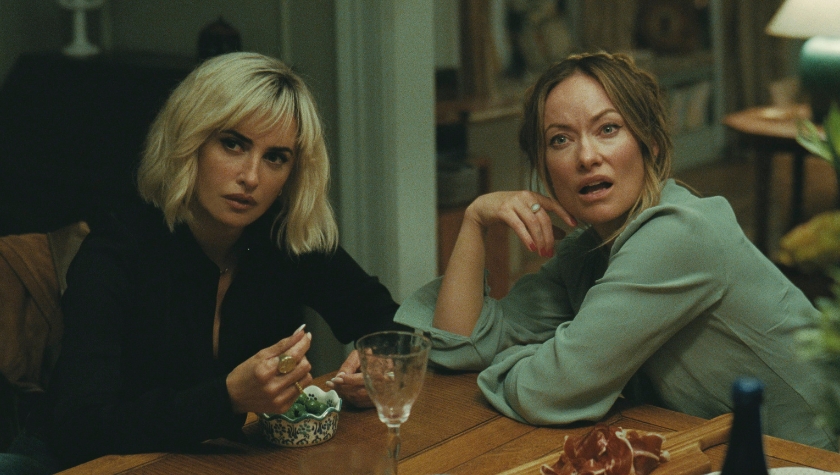
The Invite is a frantic night of bad decisions, so a similar process made sense. McCormack said he sees it as part of something bigger, a skill every screenwriter has to learn eventually.
“I think that all the whole process of life and filmmaking is just one long letting go,” he said. “You write a movie and the studio’s really happy, it gets greenlit, they want to book it, and then the cast changes, and then the director changes, and then it goes through so many iterations. And I think as a writer, your goal is to keep the train on the tracks and just trust. You’re working with four of the best actors in the world, but we were doing a lot of writing even through production. We were rewriting the ending 25 times. So the writing didn’t really end until the movie ended, and that was unique for a film. TV, of course, that happens all the time, but it also felt like, as Rashida said, it added to the propulsive nature of the project and gave it this sort of frenetic energy.”
Most screenwriters would probably say there isn’t a perfect screenplay. A script isn’t technically finished until the film is shot, and endings get rewritten during production all the time. Jones said their experience on Toy Story 4 helped mentally prepare them.
“We were well-trained because at Pixar, you’re literally turning around full drafts every three weeks as a rule, and that was also stressful, but you build that muscle more. So we maybe felt slightly more comfortable with the pace, but no, it’s definitely not my choice. I’m a very slow thinker, processor. It takes me a long time to do everything if I want to feel like it’s really sitting in me.”
How to Keep One Room Moving
Contained screenplays are a common and practical goal for newer writers because they’re cheap to shoot, but they’re also hard to sustain. Jones credits proven source material on The Invite because the premise had already been remade in four countries besides Spain.
“So the premise works, and that was so helpful for us to have that. And then yes, we had to keep stress testing everything, i.e. Why wouldn’t Joe just leave? If he’s so unhappy about them coming over, why wouldn’t he leave? So we had many versions, many drafts that were him leaving and coming back and being like, ‘I’m not leaving. This is my house.’”
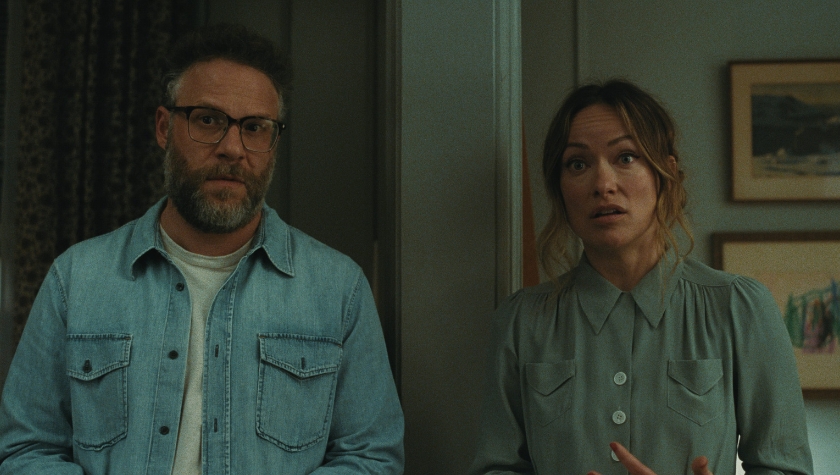
McCormack also pointed to production designer Jade Healy, cinematographer Adam Newport-Berra, and director Wilde as guards who kept the film from feeling like a stage play.
“It really had so much cinema to it, because there’s a real danger in that, right? Oh my God, we’re shooting a movie in one room.”
McCormack also offered advice to beginning writers. You might not need to worry about a contained setting first.
“I think whenever I would talk to young writers, I always say just be really, really honest about what you want to say, and don’t even worry about making it good. Just be really, really honest, and then it will be good.”
What They Learned from The Invite
The film had a long development history before it became the version that got released. In 2023, Deadline reported Amy Adams, Paul Rudd and Tessa Thompson set to star, with Jonathan Dayton and Valerie Faris directing. Then the team shifted, with Wilde eventually taking on the director role.
Jones said you just have to get used to the uncertainty.
“It’s the same thing that I think we always take away, which is there’s so little that’s in your control, and the business part of this thing that we get to do for a living is so weird and forever changing,” she said. “And I feel so grateful to have Will as a partner because we know each other so well and we can really support each other through any process. But you just never know, and you have to continue to stay open and grateful and to pursue opportunities and to just push towards what you know to be true about the thing you’re working on. That sounds so general, but this was such a clear explosion of all these wonderful talents in one place and clearly the best version of this film. And you just never know. There was another version of this film that we were hired to write, and it wasn’t that, and it was clearly meant to be this version.”
McCormack agreed.
“I have the exact same answer, which is you don’t know. You just don’t know. Time and time again, I think I know, and I don’t know. This movie died so many times. It came back to life and died again and then came back to life. I can be proud of the fact that Rashida and I connected to the material. We met on the movie, we got the job, we wrote something we were proud of, and then it fell apart. It got put back together, but—you know, just hang in there.”