
Monologues have the power to transform stories. Though they’re often cut from films, since screen time is precious, they can serve an essential purpose in a screenplay by deepening character, enriching themes, and heightening emotional stakes. To understand how to craft a monologue that truly gives your story purpose, let’s first explore what this device does and look at ten of the best examples every screenwriter can learn from.
What Is a Monologue?
A monologue is an extended speech by one person that expresses thoughts aloud, addressing another character or speaking directly to the audience. Monologues often reveal the character’s feelings or advance the plot. The best ones can do both at the same time. Sure, great dialogue can do the same thing in fewer words, but monologues function as a tool for self-reflection, allowing characters to address conflict aloud.
Unlike traditional theater, movie monologues are written to be felt. From the use of silence to character development, monologues in film capture a unique turning point in a character’s relationship with another, and in the emotional heartbeat of the movie.
The 10 Best Monologues in Film
1. Don’t Kill It, 'Call Me By Your Name' (2017)
Father-son dynamics are one of the most enduring staples of the coming-of-age genre. The wisdom, love, and understanding passed down from one generation to the next can strengthen bonds, heal wounded hearts, and, at the right place and time, tell the audience exactly what they didn’t realize they needed to hear.
What makes this monologue so powerful is what it refuses to say outright. Perlman never labels Elio’s sexuality, his own sexuality, or centers himself as a cautionary tale. The speech is rich with subtext, trusting that the audience can read between the lines and connect the dots. For screenwriters, the lesson is clear: the most profound monologues don’t need to overexplain the “why” behind the monologue. Instead, write what needs to be said to drive connection, and leave the rest unspoken.
2. In Another Life, 'Everything Everywhere All at Once' (2022)
In a story built around multiversal chaos and the philosophy of nihilism, the idea that life is ultimately without inherent meaning, Everything Everywhere All at Once finds its emotional center in a monologue about laundry and taxes. Big ideas like nihilism are notoriously difficult to dramatize without getting too abstract or didactic with your themes. EEAAO smartly uses monologues to ground its themes in character. The “In Another Life” speech in particular reveals Waymond’s quiet power in the narrative, showing how his worldview doesn’t overpower Evelyn’s, but softens it and slowly shifts her perspective on what makes a life worth living.
For screenwriters, this monologue is a reminder that great speeches don’t just reveal character; they reorient the story. Waymond’s words give the chaos context, providing a gentle thematic statement that can be carried across every universe.
3. Cool Girl, 'Gone Girl' (2014)
The “Cool Girl” monologue is almost infamously good. It exposes everything wrong with the “cool girl” ideal, giving a voice to the repressed female rage created by a system shaped around men’s expectations. Under those constraints, Amy (Rosamund Pike) lays out the exhausting performance she (and other women) perfected to become the woman of a man’s dreams: effortless, sexually available, emotionally low-maintenance. It was hard work, and she was punished for it anyway.
Placed at the film’s midpoint, the “Cool Girl” monologue detonates the narrative by shifting perspective and giving us the “why” behind Amy’s actions. For screenwriters, the lesson is twofold: cultural touchstones are born from specificity, and rage is most powerful when it’s allowed to be articulate and morally complicated. Writing a moment like this requires listening to cultural undercurrents, understanding who feels unheard, and trusting a character to say the thing that isn’t polite, but is true.
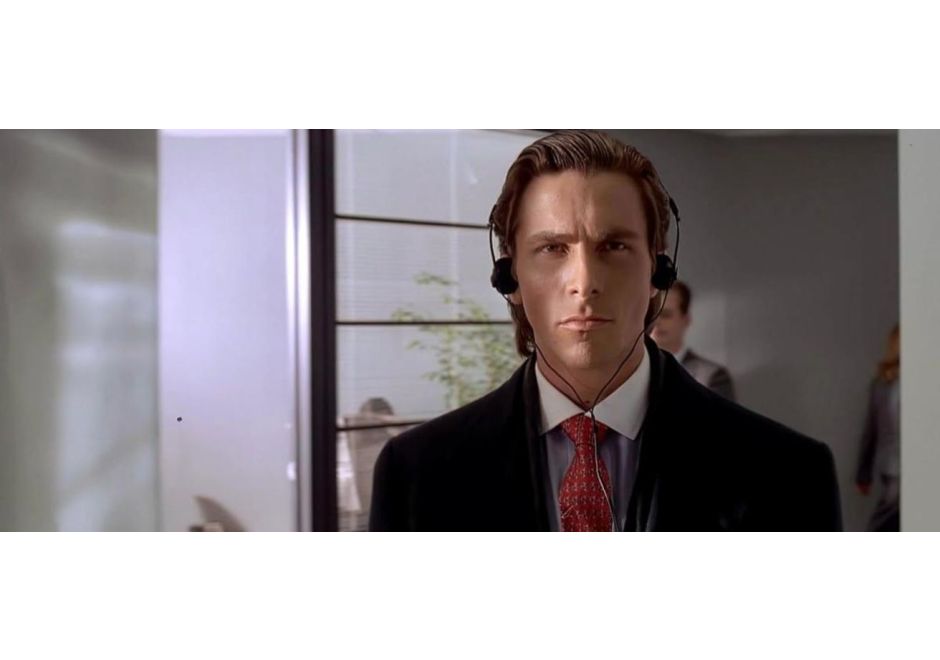
4. My Name is Patrick Bateman, 'American Psycho' (2000)
Listing your character’s address before his name as a defining trait is an efficient way of telling the audience that material wealth matters a little too much to this guy. American Psycho screenwriters Mary Harron and Guinevere Turner cleverly step around that trap of a cliche voiceover introduction by making Patrick Bateman’s (Christian Bale) introduction less about who he is and more about the meticulous routine he uses to construct an identity.
Introducing a character through a monologue is a delicate balancing act. You don’t want it to feel like lazy screenwriting that tells the audience exactly who someone is, nor do you want narration that exists without purpose. American Psycho shows how to avoid both pitfalls by focusing on obsessive detail and the way Bateman perceives his own actions. For screenwriters, the lesson is simple: a great introductory monologue doesn’t explain a character. It exposes their worldview.
5. Your Move, Chief, 'Good Will Hunting' (1997)
Monologues have the power to pin characters in a corner by stripping away their excuses to force a choice. When used well, these elements can function as true threshold moments, which is the point when a character is confronted with what their life will become if they refuse their call to action again. In Good Will Hunting, that threshold is crossed not by Will Hunting (Matt Damon), but by his therapist, Sean Maguire (Robin Williams).
For screenwriters, this is the key lesson: a strong monologue should operate as a story beat, not as a pause in the story. When a mentor articulates the cost of refusal, the narrative gains momentum. The audience understands what’s at stake, and rooting for the protagonist becomes inevitable, not because they are likable, but because they are finally being asked to grow into the person they could become.
6. The Same Spot As You, 'Fences' (2016)
Not only does Viola Davis deliver a dynamic performance as Rose in Fences, but her final monologue strips the character down to her essentials. Rose’s wants, hopes, and long-held dreams, and her acceptance of her relationship with Troy (Denzel Washington) and their place in life, are laid bare as her grief detonates the story.
As discussed throughout this piece, monologues can shift the direction of a story by giving a character the space to speak their truth when no other option remains. If this speech does not detonate the narrative, Rose risks fading into the background, her desires once again pushed aside, as they have been throughout her marriage. The lesson for screenwriters is simple: give your character no other choice but to explode. Give them an “I want” moment when everything has already been taken from them. The result is catharsis; not only for the character, but for the audience as well.
7. Closing Argument, 'To Kill a Mockingbird' (1962)
Atticus Finch’s (Gregory Peck) closing argument in his defense of Tom Robinson (Brock Peters) shows how a courtroom monologue can carry a film’s theme without stopping the story. The speech is persuasive and character-driven, fusing legal logic, moral urgency, and subtext in a way that advances plot, theme, and character development simultaneously.
The scene dramatizes systemic injustice rather than merely naming it, centering the film’s moral thesis by forcing the audience to grapple with the ethics of what the jury chooses to do. For writers, this closing argument offers a framework for embedding themes in a monologue by making the stakes explicit, tying them to a concrete decision, and showing how those choices reveal the story’s moral world.
8. America Ferrera’s Monologue, 'Barbie' (2023)
This monologue, written by Greta Gerwig and Noah Baumbach (with input from actor America Ferrera), captures the impossible double standards women are held to, even if they are just a doll. Delivered by Gloria (Ferrera), the monologue provides clarity for the story’s themes through a clear shape: affirmation, a litany of contradictions, admission of how “rigged” the system is, and the call to reject it.
The monologue established a rhythm immediately by Gerwig and Baumbach by purposefully stressing words, which are either italicized or capitalized. Through that repetition and piling of clauses, there is a rising tension that reflects the frustration Gloria feels. Near the end, Gloria gives a name to the underlying truth, giving the audience release, giving us that “she finally said it” release. This is a structure that can help you build a monologue that provides clarity of your story’s themes.

9. I’m Mad as Hell, 'Network' (1976)
Network is a satire of media culture, showing how our obsession with attention is rotting away our morality. After discovering he is going to lose his job due to a decline in ratings, news anchor Howard Beale (Peter Finch) rants during his final broadcast about how crazy the world has become and tells people to get angry. While many can see this as a mental breakdown of some sort, the public and the media’s response to Howard’s anger gets commodified.
This monologue strikes a genuine chord that the film wants to interrogate. Howard’s authenticity, anger, and fear are exactly what the system exploits. The aftermath continues to comment on the monologue itself, making his speech a vital part of the narrative that reveals another part of the media machine. For screenwriters, creating a monologue that tips the critique of the story to the point of no return has to do two things: strengthening the narrative’s spin, or its central narrative, and driving the character’s actions as the plot unfolds.
10. The Final Speech, 'The Great Dictator' (1940)
Despite The Great Dictator being a political satire that denounces Hitler, Mussolini, the Nazis, anti-Semitism, and fascism, Charlie Chaplin’s first full sound film concludes with one of the most powerful speeches in cinema history. Though some critics at the time dismissed Chaplin’s final monologue as overly sentimental, that very sincerity, following so much biting comedy, became the perfect reminder that audiences are capable of feeling something deeper than fear or despair.
Movies are empathy machines: they invite us to live in another reality. Screenwriters, like Chaplin, are guides through that emotional landscape. Every choice, every laugh, every pause, can prepare viewers for a moment of truth. That final monologue or moral revelation is not just an ending; it’s the culmination of everything the audience has been led to feel and understand.