
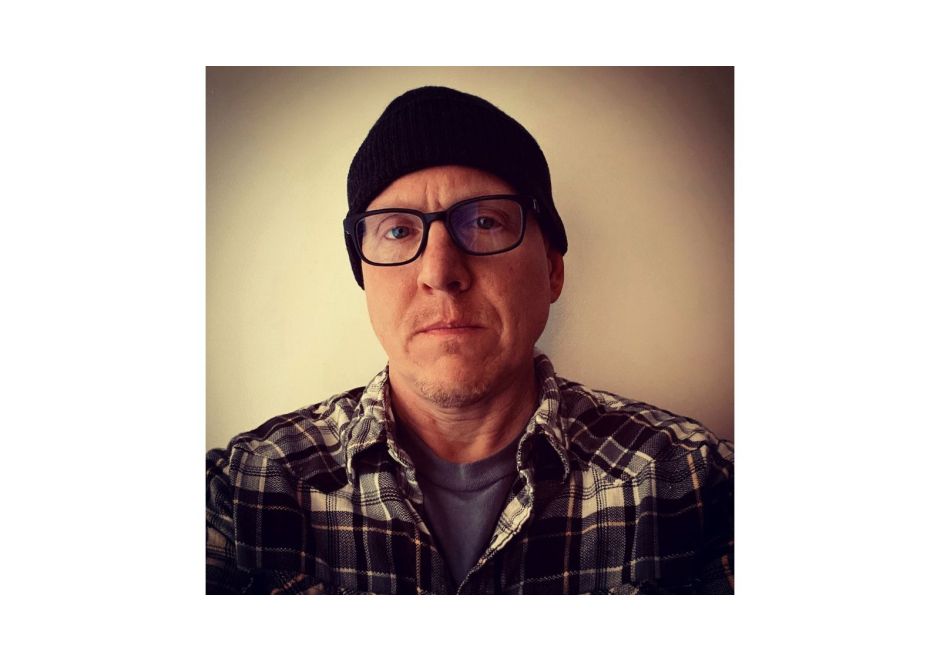
For years, Philip Fracassi was doing what most working writers do: writing constantly, chasing opportunities, and trying to break in through multiple mediums.
He worked in film for decades, spent seven years in the music business, owned a bookstore in Venice Beach, and wrote screenplay after screenplay, some for Disney, one for Lifetime, all while waiting for his career to take off.
“It was really what I was doing full-time. I probably wrote 50 screenplays,” Fracassi says.
But like many screenwriters, he ran into the wall that so many know well: endless development, constant notes, and projects that never quite made it to the big screen. So he made a decision that would change everything.
Instead of chasing assignments, Fracassi doubled down on horror fiction, writing the kinds of stories he wanted to tell without the committee-driven development process that often defines Hollywood. That pivot led to a breakout story collection, a book deal, a USA Today bestseller, and now, two of his short stories becoming feature films.
One of those films is Skeletons, a Sony thriller directed by JT Mollner and starring Brie Larson, Willa Fitzgerald, Ione Skye, and Kyle Gallner. Fracassi’s path shows that sometimes your best screenplay isn’t a screenplay at all. Yet.
Short Stories as Proof of Concept
Skeletons began life as a short story called “Fail-Safe,” originally published in Fracassi’s collection Behold the Void. The premise is pure horror-engineered tension: A young boy lives with his parents in a house with a locked room. When his mother transforms into something monstrous, she is placed inside that room for everyone’s safety. But when his father disappears inside with her and never comes out, the boy is left alone, communicating with them only through a microphone. His mother begs to be released, but his father has trained him his whole life never to open the door. And if things go wrong, there’s a failsafe button that will flood the room with gas and kill everyone inside.
Fracassi says he wrote the story about 10 years ago when a big debate was happening in the genre community. “At the time, there was a lot of conversation about ambiguous storytelling,” he says. “I thought it would be interesting to write a story that was literally about ambiguity, where anything could happen and anything is possible. Sometimes the point of the story is not to know how it ends.”
Getting to the Big Screen
Fracassi says the challenge wasn’t whether “Fail-Safe” could become a movie; it was when. It was optioned about six years ago, and the wait has been challenging. He says it went through a lot of hands, a couple of script versions, and various directors. Finally, the wait has paid off.
“They’re actually filming right now in Melbourne, Australia. I’m excited to get out there. I’m going to go at the end of July for a week and hang out on set,” he says.
Why Hollywood Loves Short Fiction
Fracassi’s other short story adaptation, “Altar,” was picked up by A24 and is expected to be out next year. It stars January Jones and Kyle MacLachlan. He says that the sale changed his career.
“‘Altar’ was the story that kind of put me on the map. It got me my book deal.”
Once “Altar” sold, development executives started paying attention to his catalog. “Fail-Safe” was optioned, and he signed with WME. Now he has eight projects in development.
Studios are looking closely at short fiction because they are pre-tested concepts with a distinct voice and a clean, contained premise. This is a huge benefit for genre writers, especially since it’s much easier to get someone to read a short story than a screenplay.
The Hard Truth About Screenwriting
Fracassi’s experience on both sides of fiction and screenwriting has given him a blunt view of how development works. And it isn’t always pretty. He tells a story about a screenplay he adapted from his own short story. After multiple drafts, the producers told him they needed him to “come in with a fresh perspective.”
He responded by saying, “I wrote the story. This is my perspective. You should really go and find another writer.” He ended up stepping away from the project.
Though it’s not the ideal outcome, it’s not surprising. “With screenwriting, you have to really be able to let go,” Fracassi says. “This is no longer my story. This is all of our story.”
Fracassi remembers one project in which, after months of rewrites, executives pitched a change identical to what he’d written in the original draft. “We’ve gone full circle,” he told them.
Control Versus Collaboration
For Fracassi, fiction and screenwriting are both exciting, but with a book or short story, he controls everything. “The nice thing about writing fiction is that there are no other cooks. It’s just me in the kitchen,” he says.
He’s fiercely protective of his prose and wary of editorial overreach. But screenwriting, by design, is collaborative. “I think outside of ideation, the actual writing of it are two very, very different things,” he says.
A short story, a novel, a screenplay, a play, even a comic book, all use different muscles.
Advice for Writers
Fracassi’s advice for fiction writers who want to write screenplays is twofold: The first is to read a lot of scripts. “The number one thing I tell people who want to write fiction is read, read, read,” he says. “I think it’s the same with screenplays.”
Secondly, keep writing. “I think you always have to have a solid baseline of work ethic. I’m so grateful for these opportunities, but they’re just that, they’re opportunities, and they could all go away. So, I know that I have to keep writing and coming up with new ideas. I know I have to keep getting my work out there because I think that’s the only way to sustain any sort of long-term success.”
It’s good advice.