
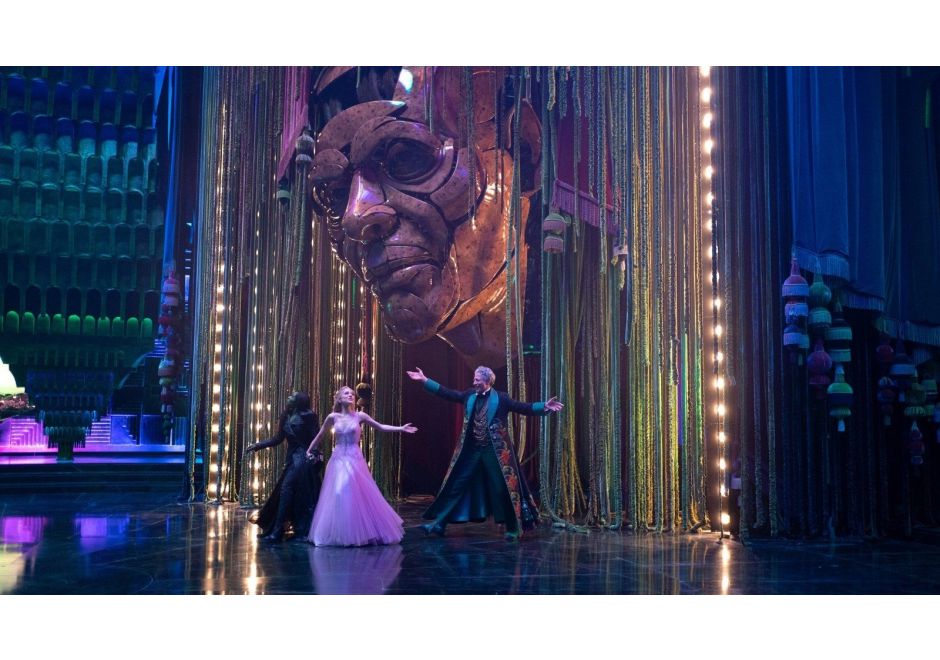
Wicked and Wicked: For Good are magical films. The incredible music, the iconic pink and green color scheme, and the fearless performances from Ariana Grande as Glinda and Cynthia Erivo as Elphaba all make these two movies blockbusters for the ages. But writing nearly six hours of story split into two films, based on a Broadway musical that was based on a novel by Gregory Maguire that was based on an MGM movie from 1939 that was based on an L. Frank Baum book from 1900, well, it didn’t happen through a magic spell out of the Grimmerie. It came about through old-fashioned hard work.
Getting the job despite having never seen the play 'Wicked'
We sat down with screenwriter Dana Fox (Couples Retreat, Cruella), who collaborated with Winnie Holzman (playwright of the stage musical Wicked and creator of the TV show My So Called Life), to find out what the writing process was like, and how she got the job even though she had never seen the Tony-winning musical that took Broadway by storm. Wait, what?
“It’s sort of awful,” she laughs, “and it turned out to be very helpful.”
Fox had previously collaborated with director Jon M. Chu on Home Before Dark, and after that experience, she told him she’d drop anything to work with him again. So, when Chu called and asked if she wanted to work on his next project, Fox said yes without even asking what it was. When he finally told her it was Wicked, excitement quickly gave way to terror.
“How am I the only American human who hasn’t seen this play?” she remembers thinking.
Because this happened during the pandemic, Broadway was totally shut down. Fortunately, that outside perspective became her secret weapon. While longtime Wicked collaborators Winnie Holzman and composer and lyricist Stephen Schwartz had the show embedded in their bones, Fox was able to represent a different audience: the moviegoer encountering this version of Oz for the first time.
“What we kept saying early on was: these have to really be movies,” Fox says. “Not a play on screen. Fully cinematic. Otherwise, why are we doing this?”
Fox says a large part of her contribution was curiosity.
“I’d ask things like, ‘What are Elphaba’s actual powers?’” she says. “Can she do spells without the Grimmerie? Is flying innate? Where are the rules?”
They were questions that felt obvious to the creators who’d lived with the story for decades. But for Fox, it was a matter of clarity.
Through intense collaboration, hundreds of hours of Zoom meetings and years of writing experience, Fox and Holzman succeeded in taking all the best things about the Wicked stage experience and elevating them into powerful cinema full of spectacle, high-stakes drama, and some of the best vocal performances ever put on screen.
Making the story relatable to a modern audience
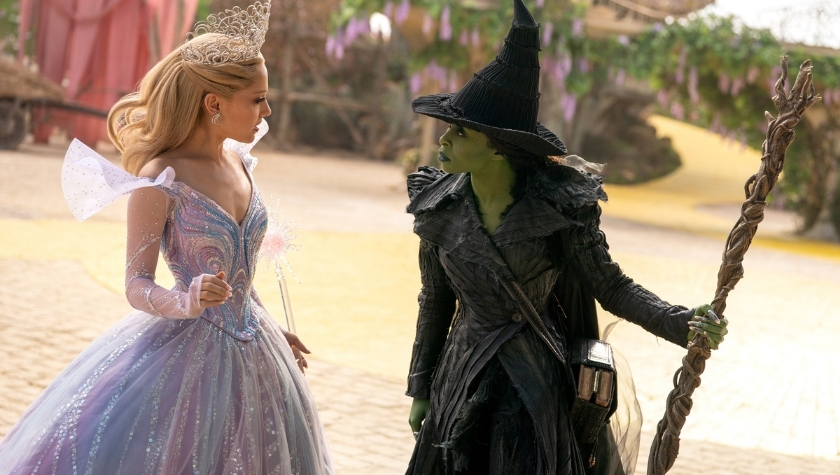
But there was another aspect the movies had to get right: making the films socially relevant for audiences today. Themes like moral courage, ethical leadership, complex friendship, wickedness versus goodness and caring for those most vulnerable in society all play out in the films as if the storylines were plucked from today’s headlines. Obviously that wasn’t the case.
“We wrote these movies five years ago,” says Fox, who still seems shocked by how current they feel. “They wrote the play 22 years ago. Gregory Maguire wrote the novel before that. And it’s like, how is this still so relevant?”
Fox’s exploration of character and courage guided her thematically, especially when it came to Glinda. The pink witch gets labeled “good” in the film, mostly because she looks the other way when it comes to the Wizard’s prejudiced policies of discrimination and intolerance. It was Fox’s academic interest in World War II that guided her. Specifically, she delved into the moral gray zones some civilians inhabited during the war that quietly shaped Wicked’s emotional architecture.
“What fascinates me isn’t the machinery of war,” she says. “It’s when people don’t know [the truth about what’s happening], or don’t allow themselves to know, until it’s too late.”
That lens sharpened Glinda’s arc in Wicked: For Good. Elphaba confronts injustice early and pays the price. Glinda delays. She doesn’t risk rocking the boat.
“I don’t think Glinda is a villain,” Fox says. “I think she’s like most of us. Acknowledging the truth would require giving up privilege. And that’s terrifying.”
That choice to look away is what makes Glinda’s eventual reckoning devastating. It’s also what makes her human.
Worldbuilding is all about character
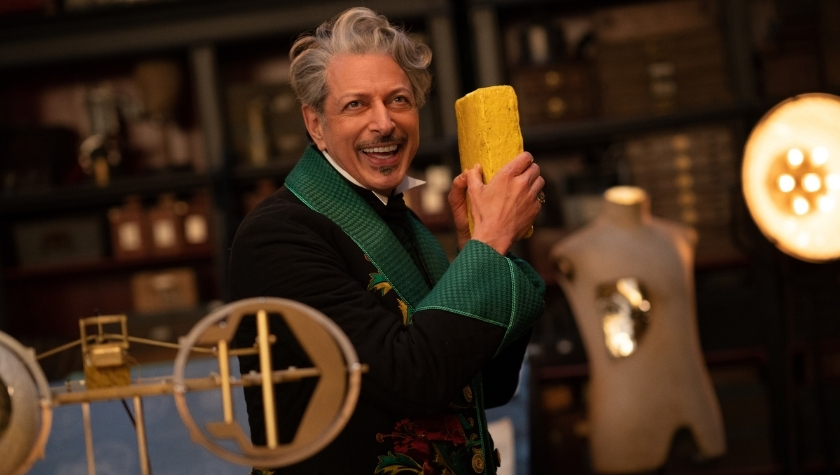
Worldbuilding, Fox realized, isn’t about creating a backstory or set of rules for a fantasy land far, far away. It’s about characters and their choices. Worldbuilding happens when you put your characters under pressure.
“I always thought worldbuilding wasn’t my thing,” she says. “I thought it meant less focus on humans, and I write character, comedy born out of pain and emotional drama.”
Instead, Wicked revealed the opposite truth.
“Worldbuilding is about human emotion,” Fox says. “Every choice we made about the world came from a conversation about who someone is, or what they’re being forced to confront.”
The world doesn’t exist to impress the audience. It exists to shape the character.
Under Chu’s direction, that philosophy extended to every department. Fox recalls sitting in VFX reviews, watching Chu evaluate not just how a CGI creature looked, but how it felt.
“He’d say, ‘Can the monkey look down a little more? When he looks up, I want to feel something.’ Color, composition, scale – every choice was emotional.”
Dealing with legal constraints
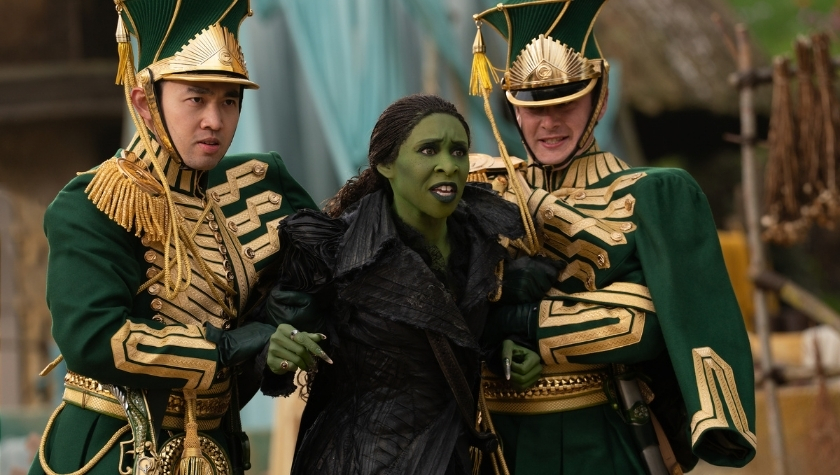
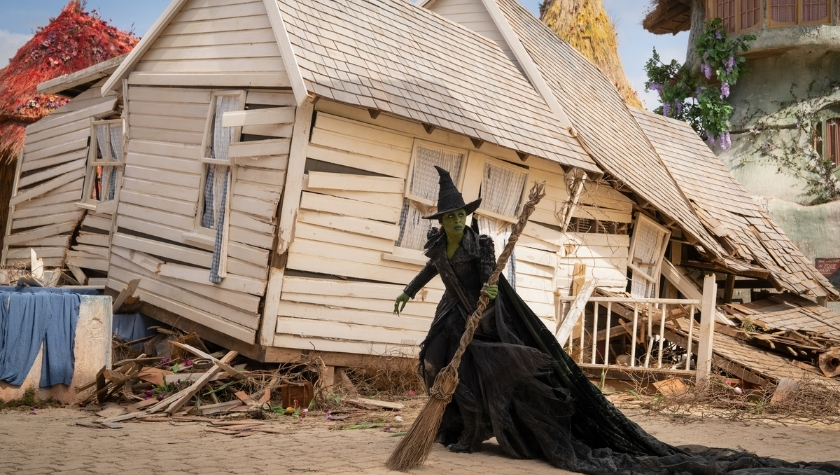
Wicked’s connection to The Wonderful Wizard of Oz created another layer of complexity: legal boundaries. Fox and the team had access to L. Frank Baum’s books because they are in the public domain, but not the MGM film’s iconography.
That meant no ruby slippers and no legs under the house.
But sometimes constraint breeds creativity. Dorothy’s gingham dress, her braids and Toto were all in the book. But the slippers couldn’t be ruby. In the book they are silver but to get the most out of the new-fangled technology Technicolor, MGM made them ruby red in the film. In Wicked: For Good, they are also silver until heat briefly turns them red, a flicker of shared memory to satisfy those of us who are emotionally attached to the ruby slippers.
“We were constantly reminding the audience: maybe what you thought you saw wasn’t the whole truth,” Fox says.
Writing advice in Hollywood’s changing landscape
Fox has had such a long and fruitful career, so we asked her for some advice in this uncertain time in Hollywood. She doesn’t sugarcoat the industry’s current contraction. Her advice is practical.
“If it’s your first script, write something commercial,” she says. “The idea has to be bulletproof, something they’d want even if you weren’t the writer.”
Execution matters, but early on, the idea is most important. Then there’s finishing the script which is always the hard part.
“Writing a screenplay is like confronting death every day,” Fox says, laughing. “By the end, you feel like you’re going to die. And I think that feeling exists to force you to finish.”
Push through, she urges, because the pain is temporary.
Her other non-negotiable? Her work ethic.
“Ninety percent of my career is work ethic. Only ten percent is the writing,” she says.
And when you get notes, never get defensive.
“Say thank you. Mean it. Try them,” she says. “The minute you get defensive, they’re already thinking about replacing you.”
Professionalism, Fox believes, is an act of generosity. It keeps doors open long after talent gets you in the room.
Wicked: For Good is currently playing in theaters and on VOD.