

How do you reinvent a villain without losing what made them iconic in the first place? How can you kill the killer and make them reappear consistently?
This is what Scream has accomplished for nearly 30 years. It’s not an easy task, as each iteration has a standard masked killer or killers that move differently and have varying personalities. Ghostface, the serial killing antagonist, hasn’t changed in three decades: black robe, ghoulish mask, a knife and a voice that sends chills down the spines of its victims. And for that whole time, Scream has seemed to do the impossible:
- Have a consistent serial killer (Ghostface)
- Change the killer(s) in every movie
In this, the Scream franchise creates a new ‘Whodunit’ mystery where a killer, or killers, donning the now infamous mask slices their way through victims for any number of reasons: revenge, fun, fame, because they were told to, etc. Warning: Spoilers ahead.
“Your goal with the Scream films is to keep doing something fresh and new, but you also want to bring back the nostalgic feeling that the first film gave us,” said Scream 7 writer/director Kevin Williamson (and writer of the original Scream that started it all) in a Rolling Stone interview.
In Scream 7, that’s what Williamson accomplishes as a new band of Ghostface killers descend onto Pine Grove, the home of Sidney (Neve Campbell) and her family. Nostalgia is one of the themes as presented in the first scene of the film where a couple visits the Macher household (where several murders in a few of the movies occurred) which has been turned into a nostalgia-filled Airbnb-type museum attracting fans of the film series – Stab, that is – and the “real life” history of Woodsboro murders.
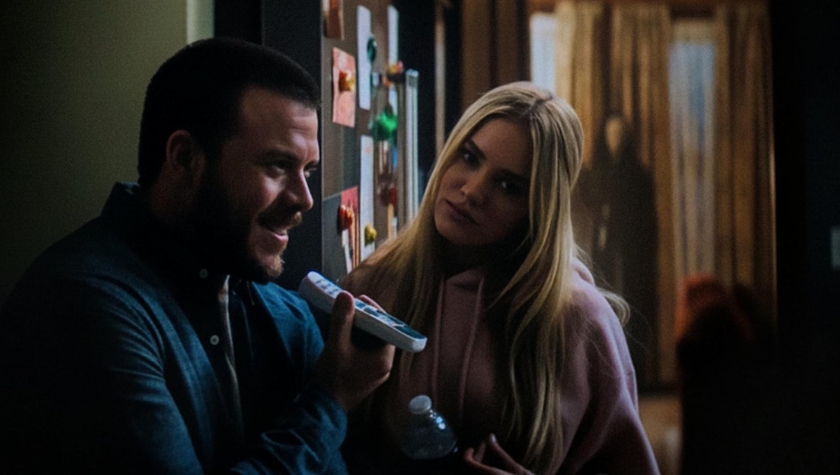
Scream 7 also touches on themes regarding generational trauma, true crime obsession and its commercialization with podcasts, documentaries and streaming limited series, and technological advancements.
And for the seventh time, the Scream franchise has brought back the elusive Ghostface.
Creating a Consistent Human Serial Killer
Scream’s villains aren’t supernatural or unstoppable embodiments of evil like Freddy Kreuger, Jason Voohees, Michael Myers or even Dracula. The person behind Ghostface can die (and usually does), and is replaced in every sequel garnering a fresh new mystery which helps keep the brand alive.
Ghostface is allowed to be fallible: he trips, gets hurt and runs away. While Michael Myers seems to be able to slowly walk and slash and never die, even when he’s killed, Ghostface doesn’t get that luxury. The killers die, but Ghostface lives on.
Those who hide behind the ghostly mask have their reasons, but the methods rarely change. A sinister voice (Roger Jackson), a phone call before killing, a connection to Sidney Prescott – these are all consistent with how Ghostface operates, but the fact that they have individual motives drives the story more than the thrill of a masked maniac chasing down innocent people.
Ghostface endures because the idea behind the mask is stronger than the person wearing it. Each Ghostface has a different personality, motive and thirst for blood.
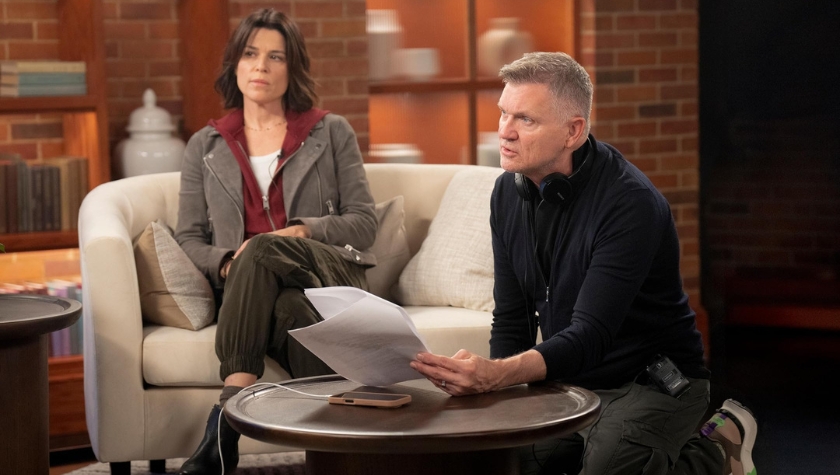
The ‘Whodunit’ Mystery
Scream asks both “Who survives?” and “Who are the killers this time?”
There are several aspects of a ‘Whodunit’ that Scream utilizes in all its films. Of course there is the murder. But consider these tropes in a ‘Whodunit’ also found within the franchise:
- The story features a small cast of characters. As Randy (Jamie Kennedy) hollers in the first film, “Everybody’s a suspect!”
- Each character is a potential victim, and as the series progresses, even the leads are not immune.
- The characters focus on clues and information to solve the case (in Scream, that information begins with horror movie tropes). Scream 7 leans into nostalgia, bringing back the “scream queen” à la Jamie Lee Curtis in the latest Halloween films, along with those familiar tropes.
- The films use red herrings and misdirection to fool both the characters and the audience, making them second-guess everything.
- The killers deliver a monologue at the end, explaining their motives.
Ghostface rarely ends up being the obvious suspect. The fact that from the very beginning there have been two killers makes this mystery an interesting challenge. The killers are usually people embedded in the protagonist’s world in some way: friends, boyfriends, classmates, etc. In fact, for Sidney it seems like she attracts killers into her life wherever she goes.
This also means the violence isn’t just about gore, but about betrayal. Even before the murders begin, the impact of her boyfriend’s betrayal in the first film reveals itself in the way Sidney treats her own daughter’s boyfriend in Scream 7.
The Cast of Characters
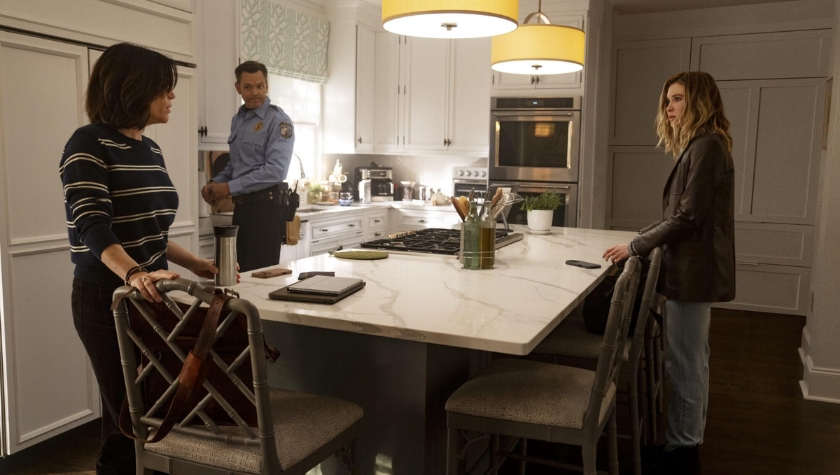
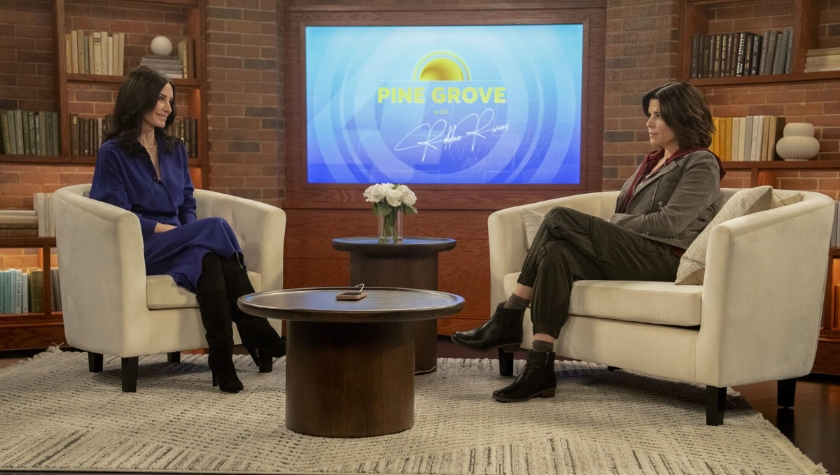
Horror movie sequels always bring back characters from the previous films, and Scream is no exception. Sidney and Gale (Courteney Cox) are the staples from the first, and there is a little commentary on Sidney missing out on the last film in the franchise. There are also two other surviving members of the other movies who share the screen and have experience in dealing with Ghostface.
Horror movie sequels always bring back characters from the previous films, and Scream is no exception. Sidney and Gale (Courteney Cox) are the staples from the first, and there is a little commentary on Sidney missing out on the last film in the franchise. There are also two other surviving members of the other movies who share the screen and have experience in dealing with Ghostface.
Williamson set out to build Sidney’s life and explore how she would think and act in a world shaped by trauma, with herself at the center of it all.
“It’s continuing the legacy of Sidney Prescott. It’s about her daughter. It’s about family,” Williamson said in an interview with Empire.
Sidney’s daughter, Tatum (Isabel May), is the same age she was when her boyfriend Billy Loomis (Skeet Ulrich) betrayed her and, along with Stu Macher (Matthew Lillard), tore through Woodsboro. Williamson explored this aspect as well.
“What’s her family like? What would happen if she had a daughter the same age that she was when this all started? How does she parent, how does she talk about the past?” Williamson said in a Hollywood Reporter interview. “It’s just not something you want to talk about, but if you have a daughter who desperately wants to connect with you, that’s a conflict that we establish in the movie.” There are lessons Sidney picked up along the way that Tatum must learn to survive.
Ultimately, the Scream franchise serves as a commentary on horror movies and the modern world. Over the past 30 years, technology, scary movies, and the franchise itself have evolved, yet what keeps audiences coming back is their love for Scream. The films feel like a conversation that movie buffs respect and casual viewers understand. In the end, it’s Ghostface we want to see unleash chaos, as we wonder: Who is it this time, and how will Sidney stop them?