
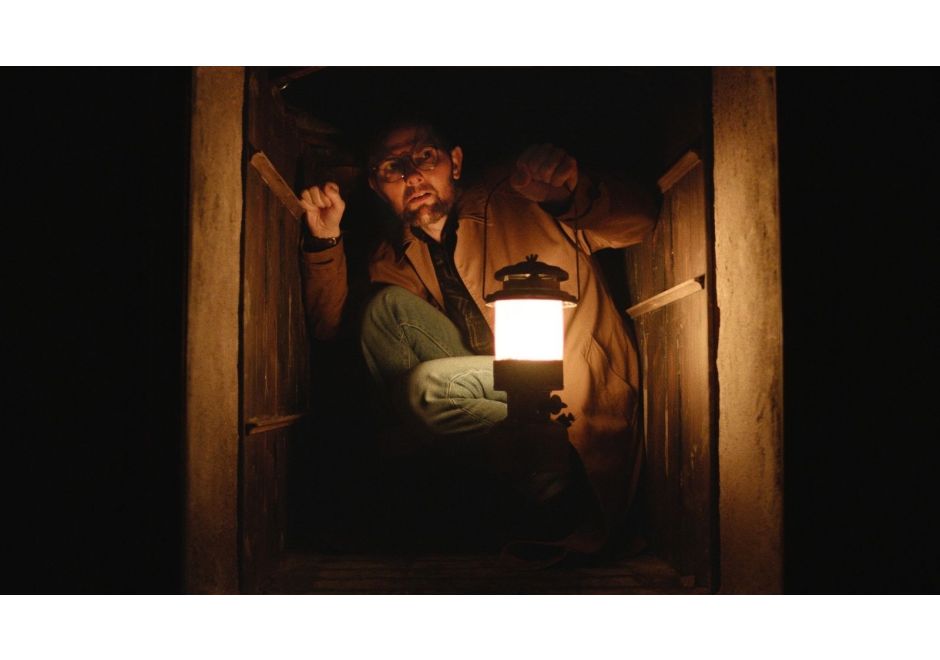
Horror often begins with a simple question: What is something really and truly terrifying? But for writer-director Damian McCarthy, writing a good horror movie must be personal. To create a successful scary movie, he must investigate what scares him.
His latest film, Hokum, is a supernatural horror movie that delves into his own fears around writing, isolation, and family trauma. Starring Adam Scott as Ohm Bauman, Hokum is about an American novelist who travels to a hotel in Ireland to scatter the ashes of his deceased parents.
Gruff and egotistical, Ohm is haunted not just by a supernatural force, but by his own past. McCarthy shows his horror expertise by prioritizing character psychology as much as he does scares.
Growing Up in the Horror Aisle
McCarthy’s relationship with horror started early. “My parents owned a video shop when I was growing up. You’d find me in the horror section all the time, reading the backs of the boxes or getting lost in the artwork,” he says.
That image-driven exposure shaped his point of view long before he ever wrote a script. Influenced by films like Poltergeist, Alien, and Child’s Play, McCarthy developed an appreciation not just for fear, but for how it’s packaged, including how tone, imagery, and suggestion work together to unsettle an audience.
But like many filmmakers, his real education came from doing.
“I spent years making short films, some were good, some were bad,” he says. “You learn so much from watching how an audience reacts. Can you get a scare from your crowd?”
That process of throwing everything against the wall to see what sticks (or scares, in this case) is embedded in Hokum, particularly in the way it handles character and structure.
The Risk of an Unlikable Protagonist
One of the film’s boldest choices is the protagonist Ohm, who isn’t immediately sympathetic. He’s closed off, prickly, even difficult to like. That’s intentional, according to McCarthy, but it can be risky.
“It goes against how you would normally approach it,” McCarthy says. “Usually you’d have a character who’s doing their best, someone the audience wants to root for, like the ‘save the cat’ idea.”
Instead, McCarthy pushes the audience away before pulling them back in.
“I just found that character [Ohm] more interesting,” he says. “The challenge is: Can you slowly win the audience back? Can you justify why he is the way he is?”
For screenwriters, this is key because likability is not a requirement. What matters more is that the audience understands why the character is the way they are. McCarthy builds empathy by peeling back layers of anger to expose the trauma underneath.
By the film’s final act, the character’s arc isn’t about becoming heroic; it’s about letting go.
“There’s a moment where he’s kind of resigned,” McCarthy says. “He stops beating himself up and just accepts what’s coming.”
It’s a quieter form of redemption, one rooted in emotional resolution, but still powerful.
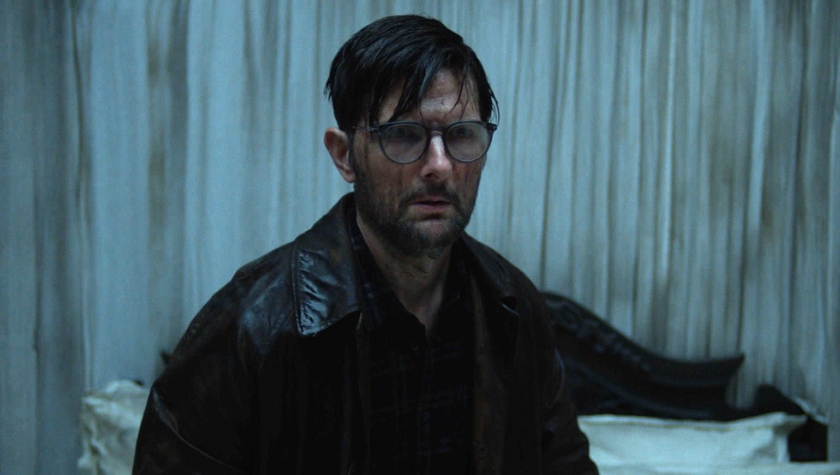
Designing Horror Around Character
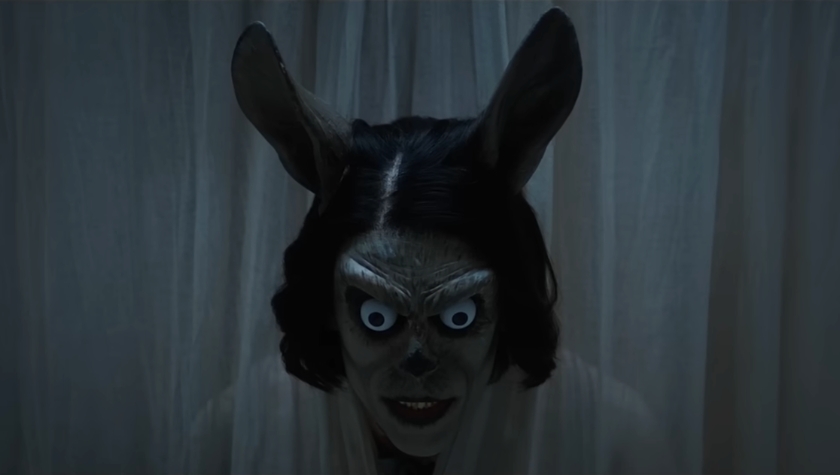
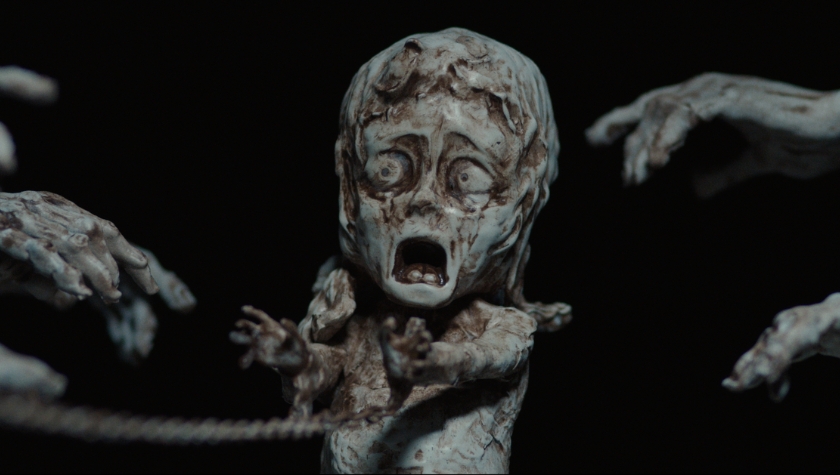
In Hokum, the supernatural threat is a witch, not a ghost. The choice is loosely tied to the protagonist’s psychological state, particularly his childhood wounds.
“There’s something about him that’s still stuck in childhood. He’s still that 10-year-old who did this terrible thing.”
Witches in folklore often target children, and here, the protagonist is emotionally frozen in that vulnerable state. This illustrates that horror becomes more effective when it reflects character, even indirectly. The monster doesn’t need to represent the trauma explicitly; it just needs to echo it.
Why Write a Witch
McCarthy’s choice of antagonist also speaks to his understanding of tone. “I’ve always thought witches were scary. Their motives are so strange and vague. What are they after? What are they up to?”
Unlike more familiar horror archetypes, like vampires, werewolves, or mummies, witches are unpredictable, often amused, delighted even, and rarely under threat themselves.
“They always seem to be enjoying themselves,” McCarthy says. “Even when they can’t get their hands on someone, they find it funny.”
That unsettling combination of evil and amusement adds a layer of tonal complexity. There’s even a hint of dark comedy in the dynamic, a reminder that horror doesn’t have to be uniformly grim to be effective.
Don’t Isolate Your Character Too Much
One of the biggest challenges McCarthy faced was structural, and it stemmed from a common writing instinct.
“I left the character isolated,” he says. “I wanted to follow him and never really leave his side. But it kept falling apart.”
For nearly two years, the script languished. The problem wasn’t the premise; it was the lack of interaction.
The breakthrough came with the introduction of Jerry (David Wilmot), an isolated man who’s a bit of a drifter, maybe a murderer, and enjoys drinking goat milk infused with psychedelic mushrooms.
“As soon as I brought in Jerry, everything clicked. A lot of writing is about combining characters [into one, for simplicity],” he says. “But this was the opposite. The story needed another voice.”
For screenwriters, especially those working in contained or psychological genres, this is critical. Isolation can heighten tension, but too much of it can keep the story at a standstill. Strategic relationships create friction, contrast, and forward movement.
Writing What Scares You
If there’s one piece of advice McCarthy offers to horror writers, it’s this: Don’t start with what’s selling in the marketplace or even what you think an audience wants.
“It’s got to scare me first,” he says.
He describes writing in his kitchen, with a long hallway behind him, a setup that’s naturally unsettling. When something in the script starts to work, he feels a chill run down his spine.
“If I find myself looking over my shoulder, I know I’m onto something.”
When Real Life Gets Creepy
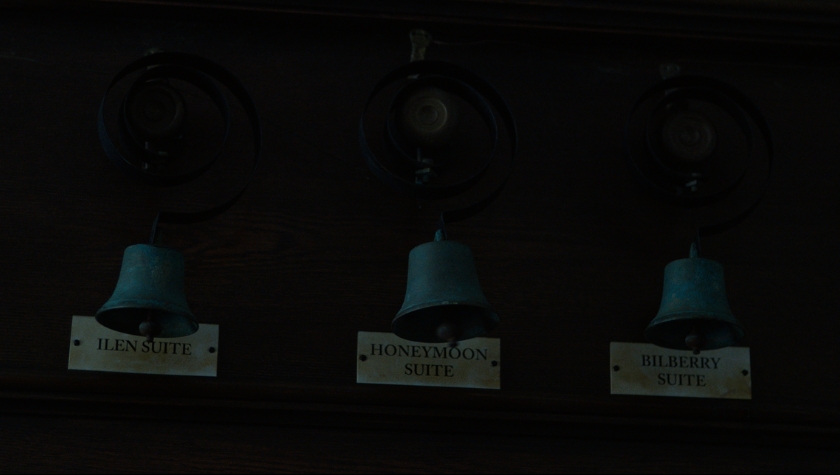
While writing Hokum in a Dublin hotel, McCarthy experienced something he still can’t fully explain.
“There was a cup on the table. It just moved towards me.”
No dramatic crash, just a quiet cup moving on its own. “It’s not something you’d put in a horror movie. But in real life, it’s so much creepier because you can’t explain it.”
That distinction between what works on screen and what unsettles in reality is at the heart of McCarthy’s approach. The smallest, strangest details often make the biggest impact.
Why Horror Works Now
As horror continues to dominate both film and television, McCarthy sees opportunity.
“There’s no one trend right now,” he says. “There’s such a mix of subgenres, so there’s room for everybody.”
That creative openness makes horror one of the most accessible genres for emerging writers. But there’s a deeper reason for its appeal.
“Horror is great escapism,” McCarthy says. “Whatever’s going wrong in your day, you watch a horror film and think, ‘Well, it could be worse.’”
Hokum was written on Final Draft and is now in theaters.