
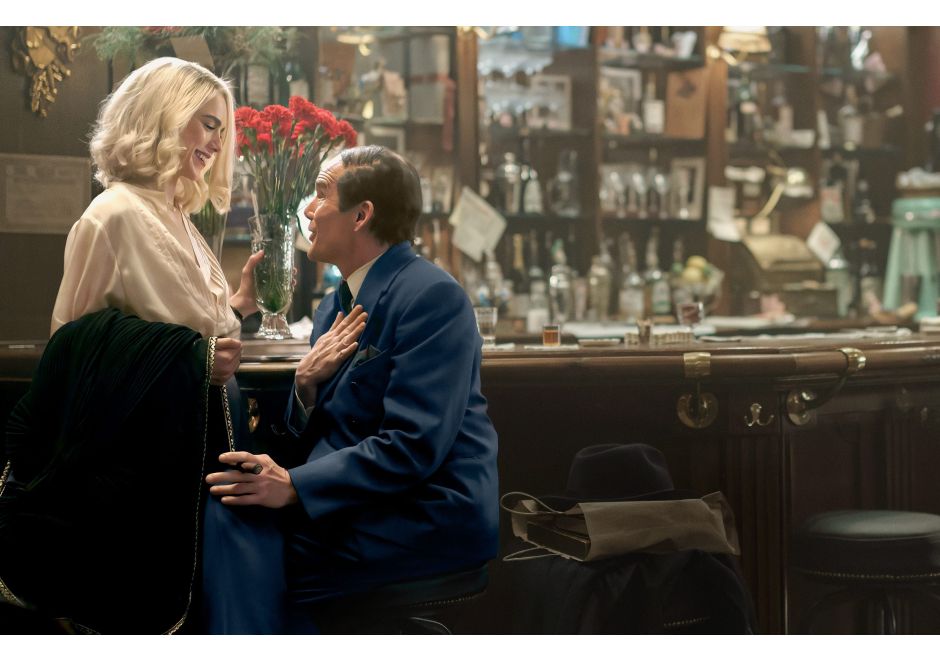
When 71-year-old screenwriter Robert Kaplow found out he’d been nominated for an Oscar for Blue Moon, his excitement came with gratitude. And a little bit of a surprise.
“To me, it’s so heartening that a small film like this, so dialogue-driven, got some notice and that people paid attention to it. There are no explosions, no car chases. It’s characters, you know,” says Kaplow.
Blue Moon is about lyricist Lorenz Hart (played by a shortened Ethan Hawke with a comb-over), that unfolds across a single night. For Kaplow, the nomination is a reminder that great writing still matters, even when the industry is overloaded with vampires and superheroes.
“My hope would be that this script and the notice that it got would give writers faith to carry on because sometimes a small, smart story can still find an audience,” he says.
A Long Relationship with Richard Linklater
Kaplow’s collaboration with director Richard Linklater goes back to Me and Orson Welles, a film adapted from Kaplow’s 2003 novel. Kaplow wasn’t the screenwriter on that project, but he was impressed by Linklater’s respect for the writing process.
“You always hear that writers are this dismissible commodity,” Kaplow says. “But that was never the case on Me and Orson Welles, which is why I think I trusted Richard Linklater so much with this material.”
Kaplow remembers meeting Linklater before shooting started, when Linklater invited him to see a show.
“He invited me to get an extra theater ticket in New York to see a one-man Wallace Shawn play and then we went out to a diner afterwards. And we just talked about what it would take to make the film,” he says.
Linklater told him they couldn’t make Me and Orson Welles until they found someone who could play a believable Orson. Kaplow found actor Christian McKay, who was performing as Welles in the play Rosebud at the time.
The only problem was that McKay wasn’t a movie star so Linklater said they’d need to surround him with movie stars, or they’d never get the film financed. Luckily, Zac Ephron and Claire Danes signed on and the film was released in 2008.
Reuniting with Linklater
Years later, Kaplow and Linklater were on the phone talking about movies and politics when Linklater asked what Kaplow was working on. Kaplow mentioned he was trying to write something about Lorenz Hart.
“And he said, ‘Could I read that?’” Kaplow says. “As a writer, how often does anybody say that? You know, it just opens the door.”
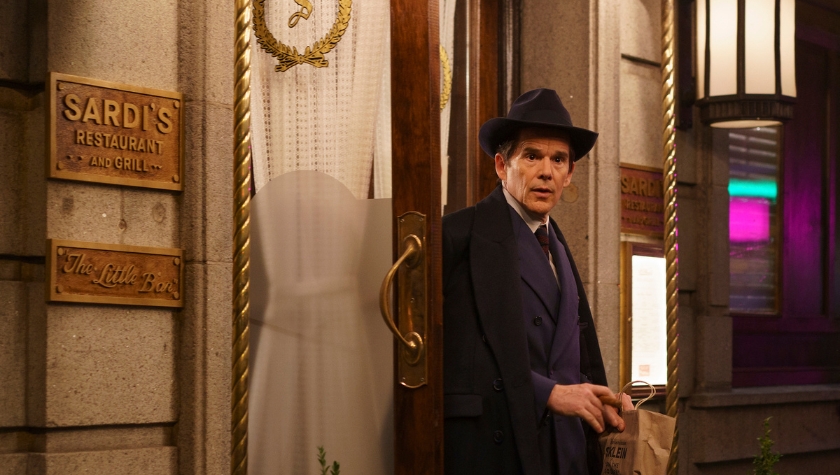
Kaplow sent Linklater what he calls a long, messy first draft. Linklater liked it and that launched the long process of refining the screenplay into the film, keeping it all in one location (a set built in Ireland to look like Sardi’s) and in one single night.
Starting With Character
Kaplow says he never outlined the story for Blue Moon, and started only from thinking about his talkative main character who’s both a great wordsmith and tragic figure.
“I have this character that just has to speak,” he says. “I remember going out buying a school notebook and a ballpoint pen, and I just took the brakes off. And by the time I was done, this character had spoken for 71 handwritten pages.”
Only after that vomit draft did Kaplow step back and ask the structural questions: What is the shape of the night? Who else is here? How does Hart’s drinking affect the night and relationships?
Kaplow describes Hart as, “Funny and angry and in love. But he’s also cynical about love.” He points to the tonal shifts in Hart’s song lyrics as a guide, the way humor can flip into heartbreak without warning.
“There’s something Chaplin-like about him,” Kaplow says. “He’s very funny, and then it turns around and breaks your heart in the same moment. I thought the challenge is to write a character that's both of those things simultaneously and get an audience to believe it.”
A True Story (with Some Creative License)
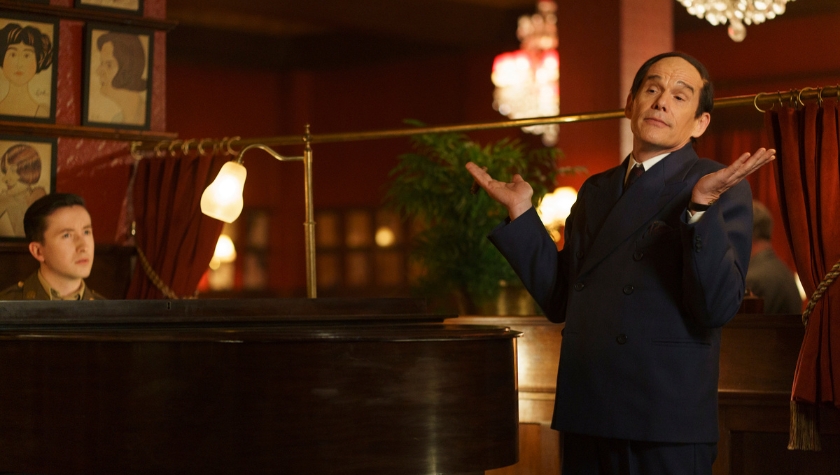
Kaplow anchored the story in a historical fact: Hart did attend the opening of Oklahoma! What happened after that is imagined.
“Whether he went to the after-party or not, I think is largely my invention,” Kaplow says. “The idea of bringing him to the after party seemed to be both brave and tragic, even self-destructive.”
That choice sets up the tension in the story by forcing Hart to celebrate the success of Oklahoma! – a success he won’t be part of.
Ten Years of Readings and Rewrites
Linklater gave the script to Ethan Hawke early in the process. The three of them then started the process of refining the script.
“For 10 years or so, we would meet a couple times a year, often at Ethan’s place in New York, and read it out loud,” Kaplow says. “And I’d be sitting there with my ballpoint pen.”
The feedback from Linklater and Hawke was blunt and practical.
“I think we’ve heard this already, Robert, we don’t need to hear this twice,” Kaplow remembers Linklater saying to him, also, “Can we bring Richard Rogers in earlier? The script gets a lot more interesting when he comes in.”
This was an important lesson because in a dialogue-driven script, repetition can get old quick. Also, a well-timed entrance in a small story creates momentum and reinforces structure.
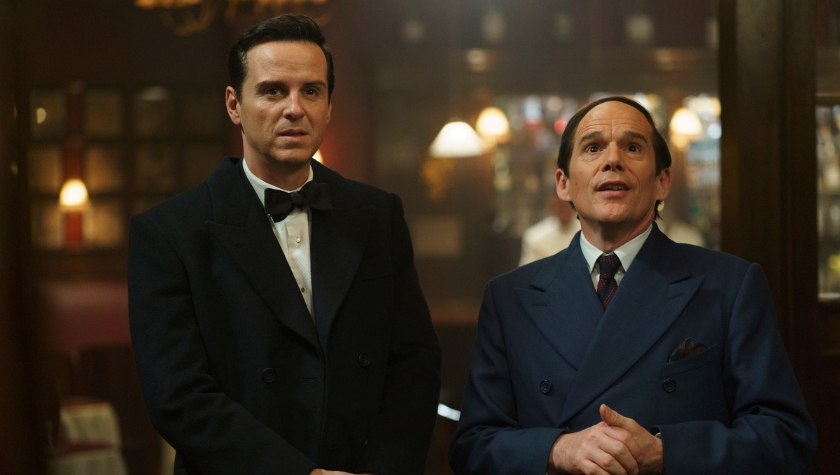
Kaplow says Linklater brought his cinematic sense to getting the story moving, while Hawke brought his theater sense to staging and conflict, especially in the film’s signature long scene.
The Scene That Functions as a Mini Three-Act Play
Near the end of the film is a 14-minute scene that takes place in Sardi’s coatroom between Hart and Elizabeth (Margaret Qualley). It’s an emotionally intimate scene that reveals secrets, extreme adoration and even heartbreak. During rehearsals, Hawke offered a staging idea to frame the scene.
“Ethan said, ‘I think we should stage that like a little three act play. They start standing and then they sit. Then finally, they’re sitting on the floor,’” says Kaplow.
Though the scene is full of emotion and conflict, Kaplow says that to keep the audience interested during a long dialogue scene, you need physical movement to keep up the energy and reflect what’s going on in the scene.
They are both on the floor when Elizabeth tells Hart she doesn’t love him, reflecting that his heart can’t sink any lower. It’s a beautiful scene.
Kaplow’s Rewrite Rule
Kaplow says that while the 10-year road was long, he never resented the process.
“I enjoyed the revisions,” he says. “I kept thinking, ‘It’s actually getting better.’”
His rule for rewriting is intense. Instead of revising a single scene, he’d start at the beginning and reread through to the end, even if he was only changing one small section.
“I wanted the script to ring on a certain frequency. Like hitting a piece of crystal – all the pieces oscillate on the same frequency,” he says.
Oscar Momentum
Kaplow says the nomination changed his status as a writer overnight. “I never realized the footprint that the Oscars really left. Now, I go to a restaurant, and the owner congratulates me and then pays for my dinner,” he says with a laugh.
Since the nomination was announced, the phone’s been ringing with multiple job offers. But he says he’s been very picky when it comes to taking the right one.
“That’s a year of your life. And I’m not going to give a year of my life to something I’m not in love with. I’m waiting to write a screenplay that I desperately want to see.”
We hope Kaplow doesn’t wait too long. Blue Moon is currently streaming on Netflix and VOD.