

Office Romance is one of the best romantic comedies of the year, which is worth studying as you prepare to write your next rom-com screenplay. Written by Joe Kelly and Brett Goldstein, who also stars in the movie alongside Jennifer Lopez, Office Romance follows a lawyer, Daniel (Goldstein), and an airline CEO, Jackie (Lopez), navigating a taboo workplace romance while fighting a competitor's lawsuit that weaponizes their personal lives.
Like the movies that inspired this Netflix original, it takes classic rom-com elements and structure to craft an original story that feels like a prequel to His Girl Friday set in the corporate world of Working Girl. While it may feel familiar, Office Romance's screenwriters succeeded in crafting a witty, feel-good story thanks to its distinct pace, character chemistry, a clear obstacle, the classic break-up-and-make-up formula, and knowing when action scenes can reward the audience more than words ever could. Let's break down each of these elements and how you can implement them in your next rom-com screenplay.
1. Find that Distinct Rom-Com Pacing
Rom-coms are pure escapism, which is part of the reason why we love them. But that escapism isn't accidental; its pacing is crafted to keep the audience hooked.
Pacing is the heartbeat of any story. It leads the audience through distinct emotional landscapes that exercise their empathy while rewarding them for paying attention. While Office Romance's director, Ol Parker, calls this distinct rom-com pacing a "vibe" to What's on Netflix, here's how you can write the wavelength you want the audience to ride:
- Tension and Release: Alternate between intense, fast-paced action and slower, introspective moments to create meaningful contrast.
- Selective Detail: Slow the pace with rich details, or skip mundane or inconsequential ones to maintain a scene's energy.
- Sentence Structure: Character's dialogue can be concise and witty or flowy and unguarded to set the emotional tone. You can also break patterns with pointed statements that snap attention back to the story.
- The Breadcrumb Trail: Lure audiences in with carefully foreshadowed revelations that withhold answers, making audiences crave the next one.
- Cliffhangers: End scenes on unanswered questions or unresolved conflicts that build narrative drive.
As a screenwriter, you control how people emotionally engage with a story. By effectively implementing the elements listed above, you establish a pace that keeps the audience excited to ride the emotional rollercoaster of your rom-com.
2. Build Chemistry Through Genuine Conflict
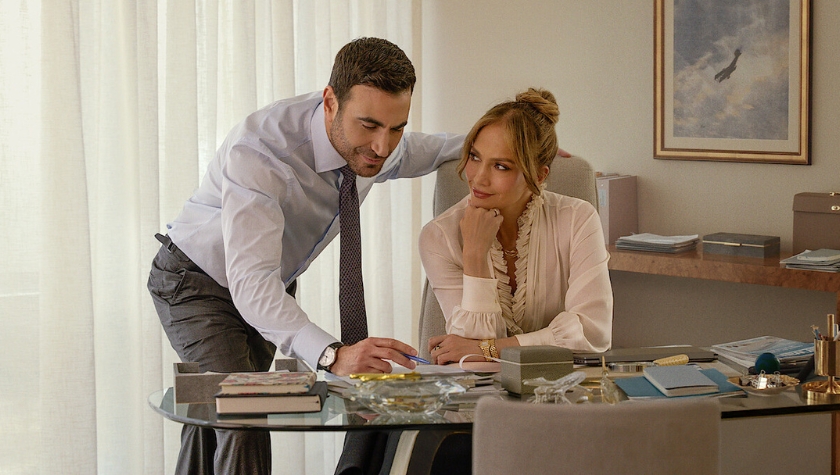
Writing characters with chemistry is more than just making them good fits for each other. The relationship has tension that ebbs and flows, from lighthearted, comedic moments to romantic, vulnerable scenes that deepen their connection. By standing up for each other in workplace conflicts or taking a chance to ride in a big jet plane through a thunderstorm, Daniel learns to open up and manage interpersonal relationships, while Jackie learns to stand up for her wants against her board of directors, which includes her father. Their actions and words shape their character arcs, as well as the relationship and story arcs.
3. Every Rom-Com Needs an Obstacle
What is a story without conflict? If there's nothing to build the stakes around the relationship, then there's no real reason for the audience to invest in the story of the relationship. Conflict must exist to keep our romantic leads apart so they can come back together at the end with full character arcs. "Those things are hard to find nowadays," Parker tells What's on Netflix, but not impossible to discover.
In Office Romance, the competitor's lawsuit doesn't just threaten the characters' jobs; it forces them to decide how their private lives will affect their careers, putting both Daniel's professional integrity and Jackie's authority directly at odds with their feelings for each other. When outlining your rom-com, find an obstacle that doesn't just separate your leads but actively punishes them for wanting each other.
4. Earn the Breakup and the Makeup
After watching enough rom-coms, you quickly realize that the end of the second act is defined by the "breakup." Whether it's caused by a misunderstanding or by fear of losing their high-powered jobs, the breakup separates our romantic leads, forcing them to realize they are willing to overcome any obstacle to be together. When lead characters realize they need to be together, they make up and launch the story back into swoon-city by resolving the conflict in a grand, dramatic way that resolves the mounting tension (Office Romance goes the old-fashioned way with a big declaration of love that is equal parts funny and romantic). The relationship is saved, and even better, the romantic leads can keep pursuing their desires and dreams without sacrificing them. That sense of earned resolution is what separates a forgettable rom-com from one people return to.

5. Some Things Are Best Left Unsaid
Dialogue can only carry a relationship so far. The most resonant moments of connection are often visual, built through action lines that show what characters feel rather than say. For Office Romance, Goldstein and Kelly show the audience that the romantic leads are made for each other by mirroring the awful "dates" at the beginning of the movie, merging into one swoony date where everything goes right. It's a smart way to show how open these characters are to love when mutual respect is involved. This visual mirroring is one of the most efficient tools in a rom-com screenwriter's kit. When done right, it tells the audience everything about where the relationship has landed without a single line of dialogue.
The greatest rom-coms are engineered. Office Romance reminds us that the formula works when you commit to it: find your pacing rhythm, build chemistry through genuine conflict, set a clear obstacle, earn the breakup and the makeup, and trust that the right action can say what dialogue never could. Master those five elements, and you won't just write a crowd-pleasing rom-com. You might write something that people are still quoting 20 years from now.