

For nearly nine years, screenwriter Ajon Singh struggled to break into Hollywood. He drove Uber during the graveyard shift, worked briefly in casting on Survivor, and wrote screenplay after screenplay, hoping one would finally give him some momentum. When he finished Primetime, a psychological thriller inspired by the controversial NBC series To Catch a Predator, he thought he might finally have something special. As excited as he was about the script, it seemed he was the only one.
“We took the script out and we couldn't get a read. That was really devastating, because I was like, if people read it and then pass, there's some closure in that, but if they don't read it, you don't ever have a shot,” says Singh.
Then a Hollywood miracle happened. Actor Robert Pattinson got his hands on the screenplay at a party. He read it and called Singh. “Like an angel from the heavens, I got a call from Rob Pattinson,” Singh says.
That unexpected phone call set in motion a series of events that would lead to Primetime, Singh's first produced feature, directed by acclaimed documentary filmmaker Lance Oppenheim (co-director of You Can See Everything) and starring Pattinson as journalist Chris Hansen.
Set in 2006, Primetime explores the behind-the-scenes world of To Catch a Predator, the hugely popular Dateline NBC series in which Hansen confronts suspected online sexual predators catching them in elaborate sting operations. As the show's ratings soar, Hansen becomes increasingly obsessed with success, pushing the boundaries of journalism, morality and his own psychological well-being.
Embracing the Darkness Behind ‘To Catch a Predator’
Singh was about ten years old when To Catch a Predator became a cultural phenomenon. Like many kids growing up in the mid-2000s, he watched plenty of “gotcha” TV shows including Jerry Springer and Maury. But To Catch a Predator left a really strong impression.
“It's strange for a child to watch. I mean, it's amazing that, Chris Hansen was putting online predators away. That's a net good. But the fact that it was entertainment was really strange to me,” Singh says.
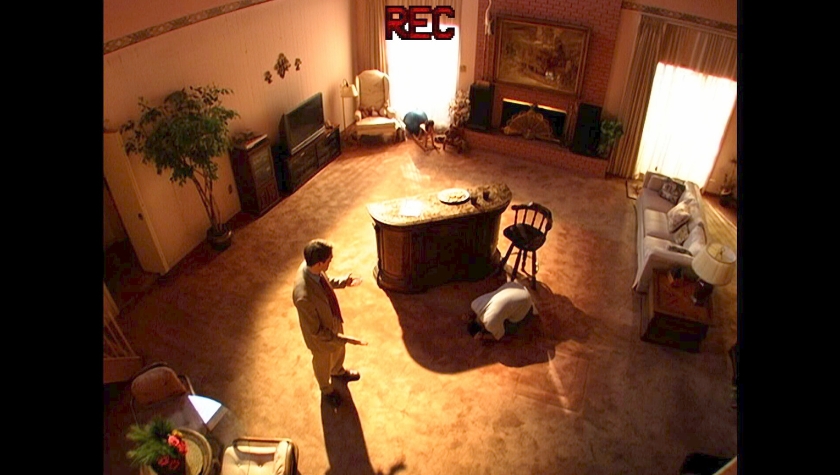
Looking back, he became fascinated by the show's popularity. “Why was this one of the top-rated shows on television? What does that say about humanity?” he asks.
Singh admits he was part of the audience that made the show successful. “I would be a hypocrite if I said I wasn't a part of that. I love the show dearly, and I watched it religiously,” he says.
That contradiction became the spine of the screenplay. What does it mean when a legitimate pursuit of justice becomes a form of entertainment? And what happens when television ratings begin influencing the pursuit itself?
The questions feel especially relevant today, when social media algorithms reward increasingly sensational content. “I think maybe what's most relevant in 2026 is that the more we engage with ugly stuff on social media, the more the algorithm rewards it with more ugly stuff,” Singh says.
But he believes the impulse behind that behavior is much older than television or the internet. In the film, Hansen (Pattinson), compares modern television to the stocks and pillories once used for public humiliation. For Singh, the comparison raises the question: Why are human beings so drawn to public punishment? The film makes it clear there is no easy answer.
Writing a Complicated Protagonist
One of Singh's biggest creative challenges was deciding how to portray Hansen. Rather than writing him as a heroic journalist or a corrupt television personality, Singh wanted to explore his contradictions.
“Lance [Oppenheim] and I never set out to villainize Chris. We never wanted to show him as a pure hero, which I think some people want us to do. I mean, we just wanted to show him as complicated,” Singh says. After spending months researching the real events, Singh decided to create a shocking character arc for Hansen.
“The film starts with Hansen dedicated to the idea of this petty chase of primetime ratings, and he undergoes this transformation. By the end, he wants to conquer evil itself,” Singh says.
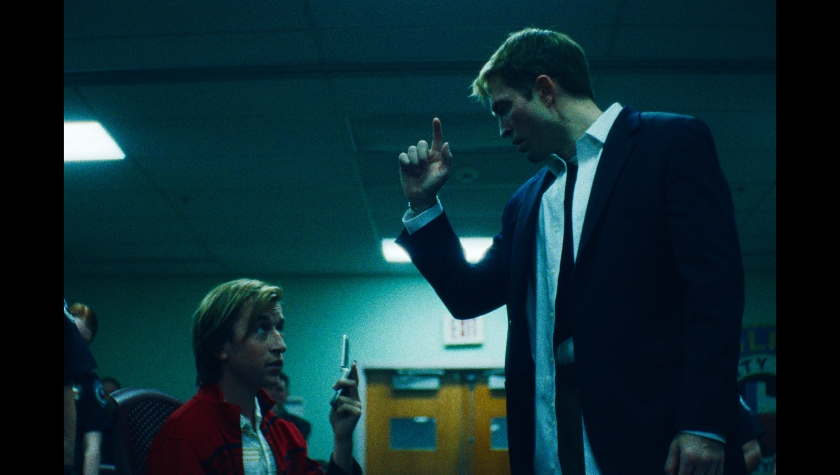
The Five-Day Rewrite That Changed Everything
After Pattinson and his producing partner Brighton McCloskey connected with Singh, they passed the screenplay to Oppenheim at another party. “Of course, I'm at none of these parties. I'm not cool enough to be at any of these parties,” jokes Singh.
Singh and Oppenheim quickly became friends, bonding over their shared fascination with unconventional storytelling. But Pattinson had yet to come on board to play Hansen, preferring to be a producer on the project. Singh and Oppenheim continued developing the project, incorporating Pattinson's feedback. Then, during a dinner with the team, Singh realized Pattinson might be reconsidering. Pattinson mentioned that he had been running around the Silver Lake Reservoir listening to material related to Hansen. Singh sensed an opportunity. “I think he's on the hook,” he remembers thinking.
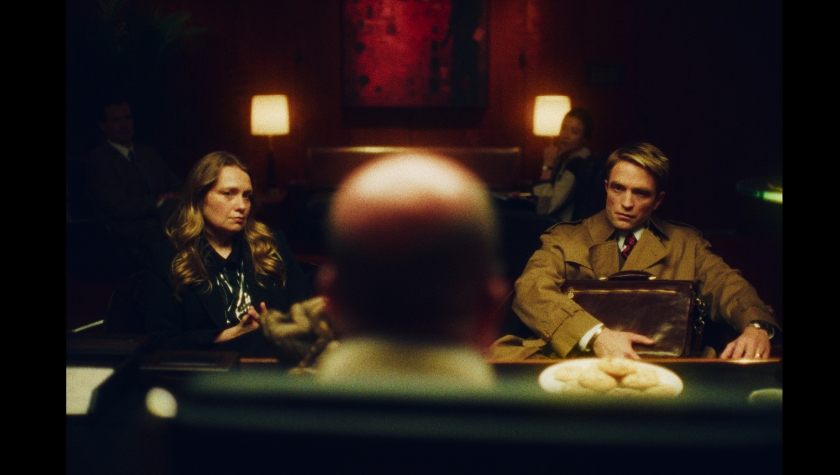
Singh went home and rewrote the character specifically for Pattinson in just five days. “And that did it. He signed on after that, and then we had a real movie, which was unbelievable,” Singh says.
Learning to Embrace the Unexpected
Working with Oppenheim, whose background is in documentary filmmaking, also challenged Singh's understanding of how a screenplay can evolve during production. Rather than relying on traditional shot lists, Oppenheim and cinematographer David Bolen approached scenes with the spontaneity of documentary filmmakers, responding to the actors in the moment. “He's constantly searching for something honest and true,” Singh says.
Singh was on set throughout filming, and Oppenheim encouraged him to pull dialogue from earlier drafts and offer it to actors to see what might happen. Sometimes the actors were pushed outside their comfort zones, but Singh believes the unpredictability led to more interesting performances.
“I think it made some actors feel off-kilter, but I think that's a good thing, because then actors would do really interesting sort of takes,” he says.
The approach helped Singh understand that a screenplay doesn't have to remain rigid once production begins, as long as the team is open to trying new things.
Advice for Writers Adapting True Stories
For screenwriters interested in telling stories about real people or events, Singh believes the most important decision comes before the writing even begins: What kind of film are you trying to make? Some filmmakers want to recreate history as faithfully as possible. Others want to use real events as the foundation for something more metaphorical. Both approaches are valid, but the writer needs to understand the difference.
“I did months and months of research. I knew the details of the cases,” Singh says. “We dramatize the film to an extreme degree to create this sort of fever dream sort of experience.”
For Singh, the goal was to explore the emotional and psychological truths beneath the real events. “And I think that's a choice. You know, that's a choice that you have to make. What kind of film are you trying to tell?” he says.
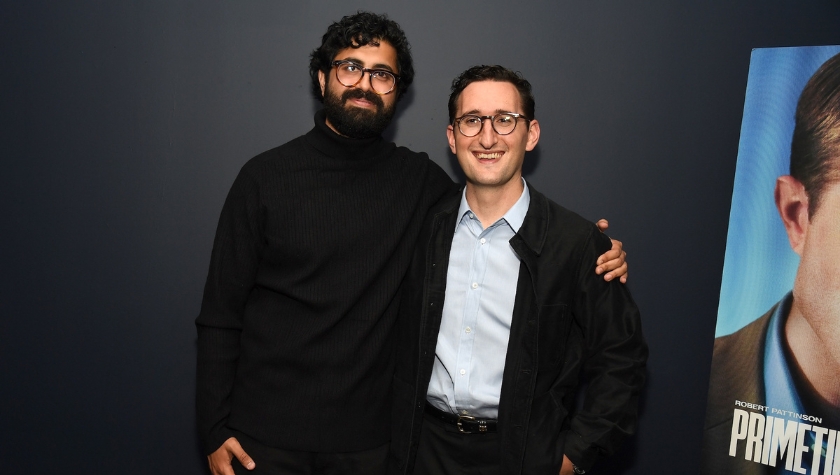
Now, after nearly a decade of writing without a produced credit, Singh is moving on to new projects, including Spider-Punk, set in the Spider-Verse and starring Daniel Kaluuya. And he turns to Final Draft to write all his scripts.
“In fact, I will be going to Final Draft the moment our conversation ends because I have a lot of work to do,” he says.
Primetime is currently playing in theaters.