
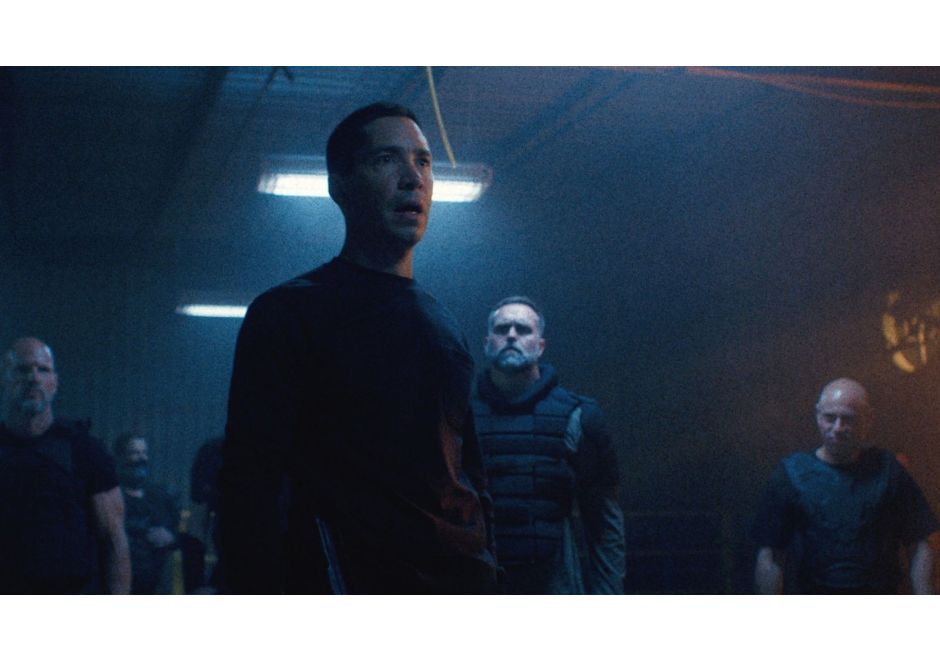
There have been many great movies about the Los Angeles police force over the years. Classics like Chinatown, Training Day and Heat; great buddy comedies like the Beverly Hills Cop and Lethal Weapon franchises; even an esoteric cop movie like Mulholland Falls. There’s something about crime in this sprawling metropolis that engages our imaginations and serves as a backdrop for powerful stories. The new film Night Patrol, directed and co-written by Ryan Prows, is no different in that it also explores law enforcement in L.A. but from a very bloody perspective.
Filmmaker Ryan Prows has always set out to push boundaries. From his Student Academy Award winning thesis film Narcocorrido to his cult breakout Lowlife and his ferocious segment “Terror” in V/H/S/94, Prows has built a reputation for horror that’s messy, political, funny, and deeply rooted in character.
Set in Los Angeles and centered on an LAPD officer forced to confront a sinister task force operating in his childhood neighborhood, Night Patrol blends crime thriller, vampire mythology, and cultural commentary into something that feels both grounded and mythic. The film stars Jermaine Fowler, Justin Long, Nicki Micheaux, Flying Lotus and Dermot Mulroney, a lineup Prows describes as his “literal dream cast.”
At its core, Night Patrol is about belonging, power, and the hidden systems that prey on marginalized communities. But it’s also a monster movie. Prows acknowledges that vampires, despite being one of horror’s oldest creatures, are still endlessly adaptable.
“I think it’s such a cool creature,” Prows says. “Every vampire kind of gets to rewrite its own rules: what the mythology is, what part of it you’re leaning into, and how you’re playing against audience expectations. It’s such a pliable subgenre, and you can use it to lead a larger conversation.”
Building Horror Through Collaboration
Unlike many writer-directors who work alone, Prows developed Night Patrol with a longtime writing group that includes Shaye Ogbonna, Tim Cairo, and Jake Gibson. They first met at the American Film Institute, where Prows directed while the others focused on screenwriting. That dynamic, director plus a tight-knit writing team, has remained intact ever since.
“We treat it almost like a TV writers’ room,” Prows says. “We break story together, then go our separate ways and write different segments or pieces of the script. Then we come back together and touch everything.”
That approach proved invaluable on Night Patrol, which was shot in Los Angeles under the logistical pressures that come with indie filmmaking. Actor availability shifted, locations changed and time was limited.
“Having multiple writers became a secret superpower,” Prows says. “We were constantly problem-solving, having to rewrite for actor availability, tailoring scenes when we only had someone for a limited amount of time, or adjusting character beats on the fly. It honestly strengthened the film.”
In some cases, key cast members were locked in just weeks before shooting began. Rather than seeing that as a setback, Prows leaned into it.
“I’d sit with them and really tailor the role as much as we could. We were able to jump ahead of what would normally be a rehearsal process and really write to who they were. That saved us more than once,” he says.
“Make the Budget Your Aesthetic”
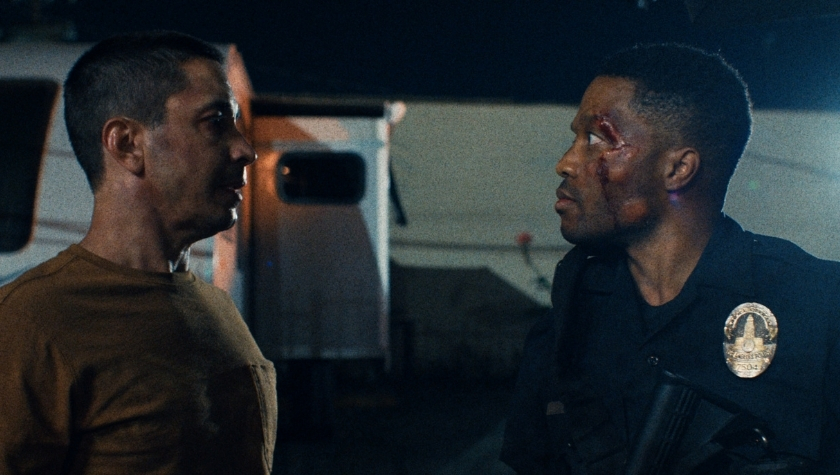
Prows has a mantra he keeps returning to, one that feels especially relevant in today’s indie horror landscape: make the budget your aesthetic.
“It was really important to shoot L.A. for L.A.,” he says. “We could have chased tax incentives, but we wanted the city to be part of the film’s DNA. That meant fewer shooting days, tighter schedules, and a lot of thinking instead of money.”
Scenes that might traditionally be shot over multiple days had to be captured in a matter of hours. But instead of fighting those limitations, Prows and his team embraced them. “So the question becomes: how do we make that work for us story-wise and character-wise? How do we throw elbow grease at it instead of money?” he says.
That philosophy extends beyond logistics and into tone. Night Patrol doesn’t feel cheap or constrained, it feels urgent and stripped down. The constraints sharpen the film’s edge.
Rewriting Vampire Mythology
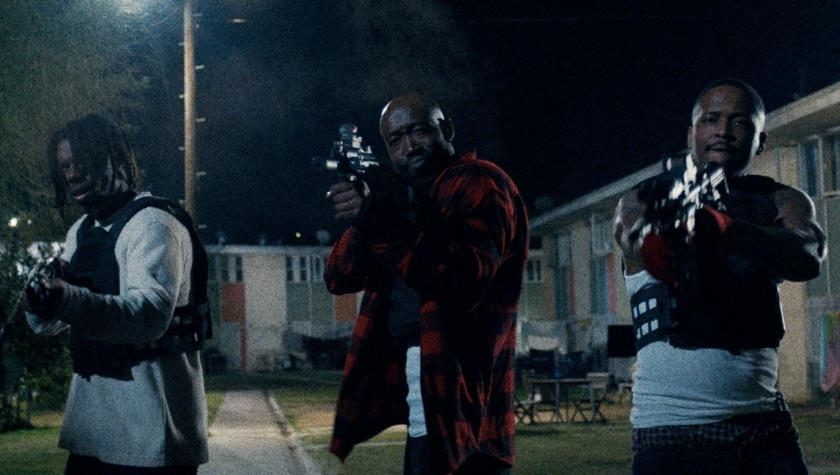
One of Night Patrol’s most distinctive elements is its incorporation of Zulu mythology into its vampire lore. Rather than defaulting to familiar European tropes, Prows and his collaborators looked globally for inspiration, grounding their supernatural elements in research and cultural specificity.
“We really dug into different vampire myths throughout the world,” Prows says. “The Zulu mythology was incredibly rich and had some really interesting parallels, like iron teeth, which became metal fangs in the movie.”
Prows not only wanted to add something new, but also make it feel personal.
“It felt like a real-world thing we could pull in. Another wrinkle that adds depth to the monster myth and brings something fresh to the genre,” he says.
The result is a mythology that feels both ancient and modern, tying supernatural horror directly to the lived experiences of the film’s characters and setting.
Horror is Always Relevant
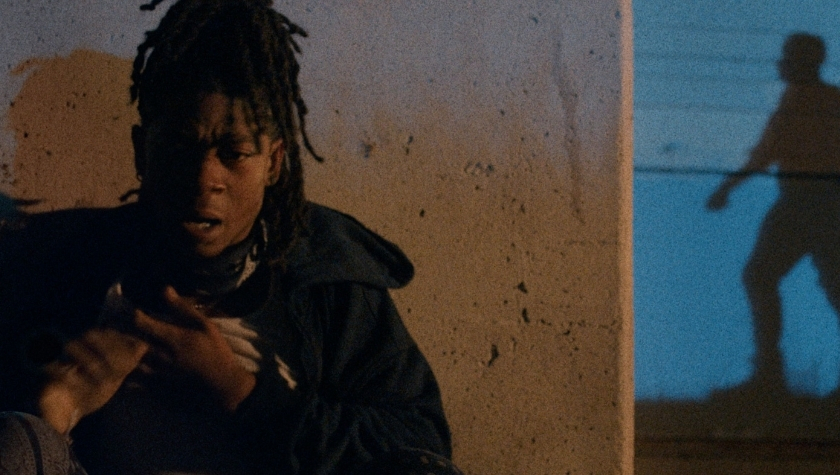
While Night Patrol engages with social realities like policing, power, community, and secrecy, Prows resists the idea that horror needs to chase relevance.
“Horror in general is going to be culturally relevant whether you want it to be or not,” he says. “It’s already doing that work.”
The challenge, he believes, is sticking with a story long enough to see it through.
“We’ve been trying to make this movie for a long time,” Prows says. “It pressure-tested itself. Producers, actors, filmmakers, we just kept pushing the boulder up the hill. If you stick to your guns and feel like there’s something there, there probably is. You just have to figure out how to get it made.”
Don’t dwell on perfection, he says. Just keep moving forward.
“The movie being done and out there is worth more than whatever giant version you had on the page,” he says. “It’s reality meeting expectations and learning how to make that work for you.”
Night Patrol opens in theaters Jan. 16.