
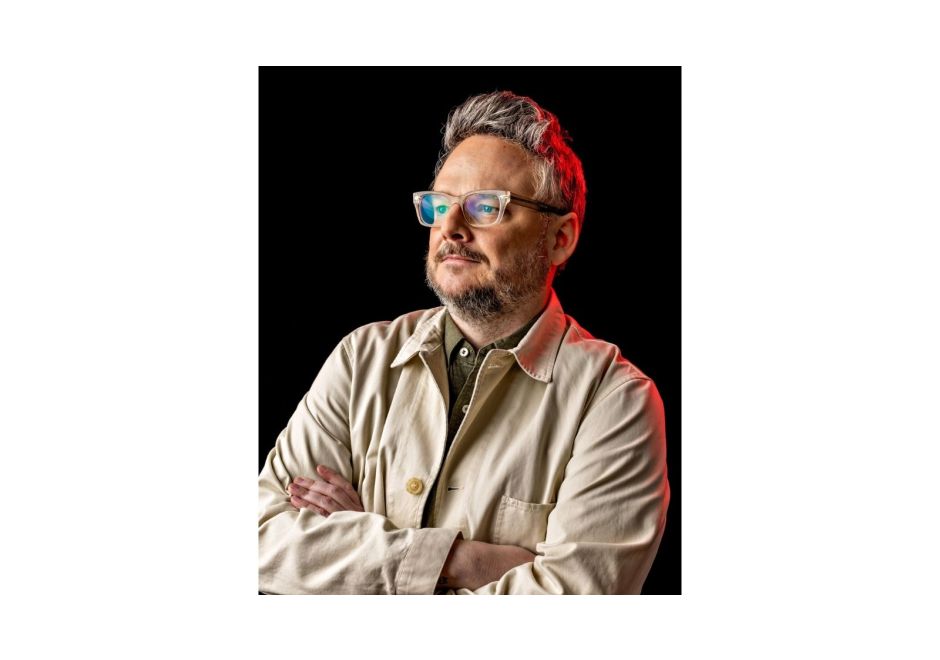
Yes, Mike & Nick & Nick & Alice, involves a time machine. Yes, it’s packed with action, comedy, and chaos. But for Grabinski, who co-created Netflix’s Scott Pilgrim Takes Off, the real engine of the story isn’t the sci-fi: it’s the emotional and comedic potential of a character forced to confront a version of himself with whom he has some big issues.
We sat down with writer/director BenDavid Grabinski to find out how he combined all these elements to make a highly satisfying, fun movie starring Vince Vaughn, James Marsden and Eiza Gonzalez.
Turning Time Travel into Character Conflict
We asked Grabinski what inspired him to write a total genre mashup. “I wanted to make a buddy action comedy I hadn’t seen before, and I wanted to make a time travel movie with a bunch of lovable idiots who aren’t scientists.”
Grabinski admits he’s not a research guy and wasn’t interested in a rules-based exploration of time travel mechanics like worm holes or infinite universes. Instead, he was excited to experiment with people pre and post their character arcs. Surprisingly, he says he was inspired by Ebenezer Scrooge from Charles Dickens’s A Christmas Carol.
“I felt like it would be really interesting to see Scrooge at the end of the story having to deal with Scrooge at the beginning of the story,” he says. “An enlightened version of a character having to deal with a less enlightened version.”
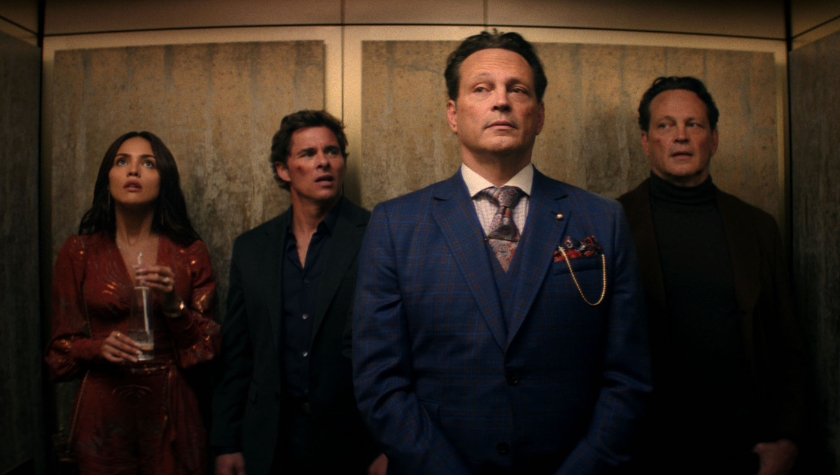
That idea, essentially pitting first-act Scrooge against third-act Scrooge, became the main dramatic device in Mike & Nick & Nick & Alice. Putting together two versions of the same character, Present Nick (Vince Vaughn) and Future Nick (also Vince Vaughn), you get enormous tension.
It’s a deceptively simple construct, but one that’s comedic (because of the absurdity) and dramatic (because of the life and death stakes). It’s also psychological because it explores the idea that we are our own worst enemies.
For Grabinski, that’s the real function of the time machine.
“The time machine is a device to create the emotional thing of, ‘What if you could try to get your younger self to get their shit together,’” he says. “You do the time machine so you can have the emotional and comedic conflict, not because time travel is fun.”
It’s a philosophy that aligns with some of the most enduring genre films. Grabinski points to Back to the Future as an example.
“The time travel in that movie is just so you can see what it would be like to hang out with the 16-year-old version of your dad,” he says. “It’s a way to create a dramatic or comedic function.”
The “One Night” Structure
Once Grabinski had the central dynamic, he needed a structure that could hold it all together in a way that made sense and was satisfying. His solution was to use the “one night gone wrong” framework.
“I thought the thing that would make it simpler and contained is making a one-night movie,” he says. “A bunch of characters who have to survive the night. Will they still be alive in the morning? Will they resolve their differences by the time the sun comes up?”
It’s a classic structural device that naturally creates urgency, escalation, and momentum. By compressing the timeline, Grabinski ensures that every decision carries immediate consequences, and that the narrative drive never stalls.
For writers, it’s a reminder that when you’re juggling multiple genres like action, comedy, sci-fi, constraint can be your best ally.
Writing Two Versions of a Character
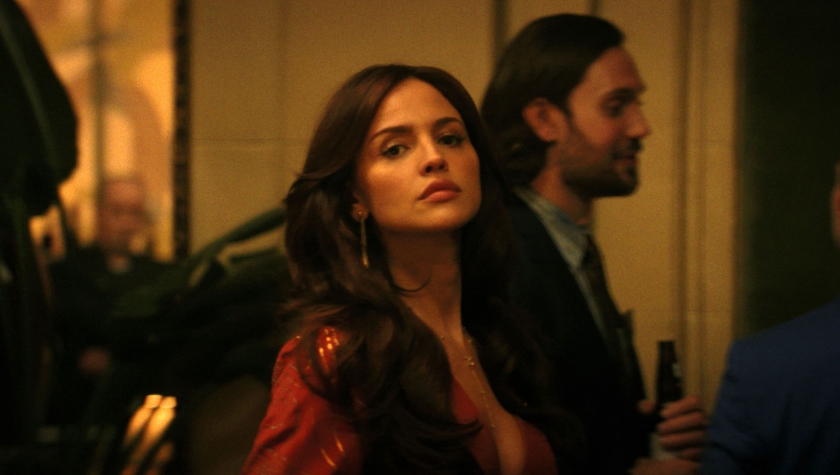
On the page, writing two versions of the same character might seem like a logistical challenge. For Grabinski, it was a blast.
“The dynamics you get with yourself are funny and relatable,” he says. “There’s no one you have more conflict with than yourself. As they say, you’re your own worst enemy and that’s great for entertainment.”
By leaning into that idea, Grabinski avoids one of the common pitfalls of high-concept writing: relying on external stakes without anchoring them in personal stakes.
A Good Read Vs. the Shooting Draft
Grabinski told us how he encountered an unexpected problem during production that illustrates the difference between writing a script that makes an entertaining read and writing an effective shooting script.
In the screenplay, he intentionally withheld the reveal that a character was Future Nick, labeling him simply as “Nick” to preserve the surprise for the reader. It worked on the page, but not on set.
“We had a scene where Vince Vaughn got put in the wrong costume,” Grabinski says. “And I was like, how did this happen? And then I realized – it’s because of how I wrote it.”
Because the film was shot out of order, the ambiguity that made the script engaging became a liability for the crew.
“The script is designed to be as entertaining as possible. But once you’re shooting, it’s a functional blueprint designed to get departments to do the correct thing,” he says, adding, “The next movie I make, I’m going to rewrite the script into something much more boring just to make sure there’s no room for error.”
At the end of the day, the draft that sells the movie and the shooting draft are not always the same document.
Maintaining Tone Across Genres
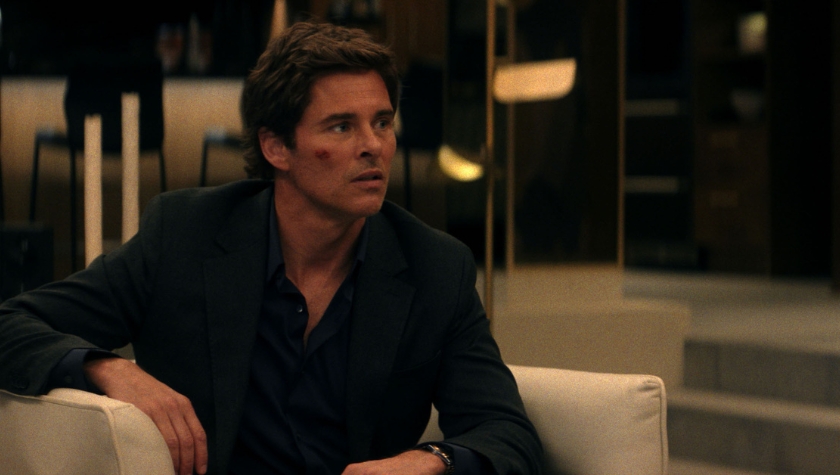
With a film that blends action, comedy, and sci-fi, tonal consistency becomes one of the more difficult but most important tasks. For Grabinski, there’s no formula.
“It’s really your gut,” he says. “Sometimes something might be too funny, so you’re not going to get the emotional catharsis. Sometimes something might be so emotional that it feels a little ham-fisted, so you want to undercut it.”
The key is balance across the entire film.
“It’s about what is the most engaging thing in the moment that also doesn’t feel like it’s violating the world you created,” he says, adding, “I didn’t want to make something that feels unhinged. The movie is insane in a way that I hope is charming but it’s not haphazard.”
Building a North Star
If there’s a single takeaway from Grabinski’s process, it’s the importance of having a clear internal compass.
“You have to have your own internal North Star of what you’re trying to do,” he says. “Otherwise, it’s just chaos.”
In Mike & Nick & Nick & Alice, that guiding principle is to use every tool from time travel, to action and comedy to explore character. Because at the end of the night, the question isn’t just whether these characters will survive. It’s whether they’ve changed.
Mike & Nick & Nick & Alice is currently streaming on Hulu.