
Years before Cassie Pappas was writing for TV shows like Griselda, Silo and now Apple TV+'s Lucky, she was busy managing theater rehearsals with college basketball practice.
"I was kind of a theater nerd and a jock at the same time," Pappas says with a laugh. "My teammates remember me running into practice late with a full kabuki mime-painted face from stage makeup."
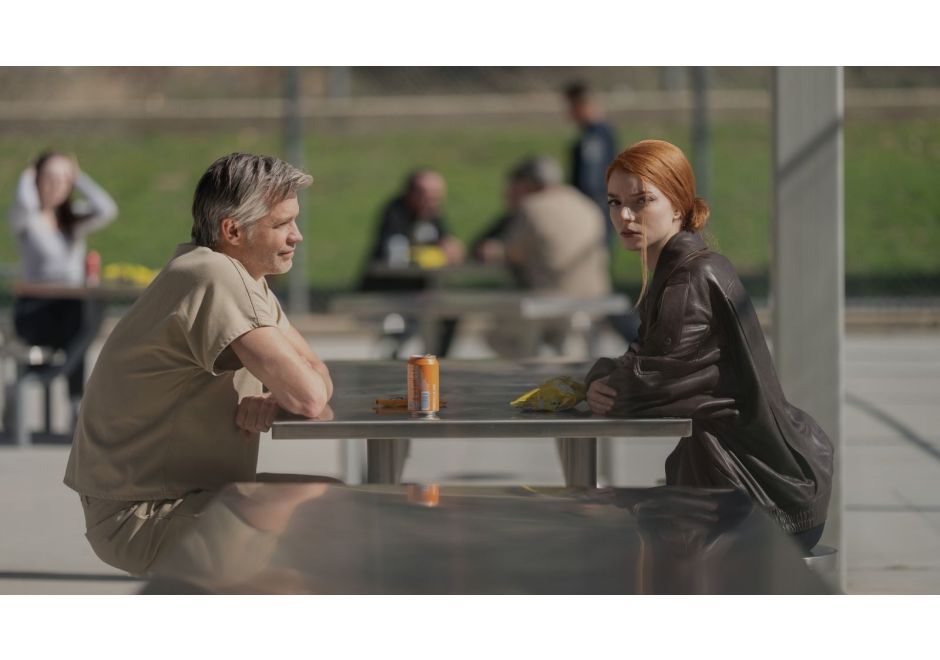
With the discipline of an athlete and the creativity of a playwright, becoming a TV writer came naturally to her. She now serves as co-showrunner alongside Jonathan Tropper on Lucky, the crime thriller starring Anya Taylor-Joy as Lucky, a gifted con artist trying to escape the criminal world she inherited from her family.
Pappas' career is proof that there isn't one path into the industry. Her work on Lucky offers a master class in writing morally ambiguous characters who remain emotionally irresistible.
From Stage to Television
Pappas' first break came as a playwright. A play she wrote was selected for the Kennedy Center American College Theater Festival, earning her an agent and giving her the confidence to move to New York.
While writing and performing in Off-Broadway shows, she became enamored with the idea of writing for television.
"I started to really fall in love with television," she says. "Specifically Alan Ball, specifically Six Feet Under."
Wanting to give it a try, Pappas packed up and moved to Los Angeles with a single goal: Break into television writing. At the time, the standard advice was to write a spec episode of an existing series. "I wrote a Weeds spec script, and that got me my first agent."
Soon, she got her first television job as a writers' assistant on The L Word, where she got her first real look inside a professional writers' room.
"The room was all women. We did rooftop yoga every morning, Monday through Friday. Someone was macrobiotic, so we were eating macrobiotic lunches," she laughs. "By the time I was done working on The L Word, I thought, 'Oh, this is what a writers' room is.'" She quickly discovered that wasn't exactly industry standard.
"I had lost weight, gotten buff. It felt like I'd gone to some women's health camp. But I learned not all writers' rooms were like that."
Becoming a Showrunner
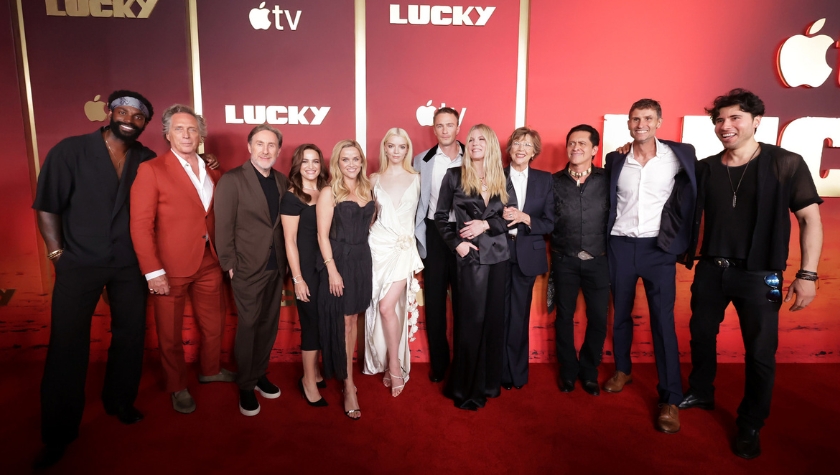
After years writing and producing, Pappas was ready for the next step when Jonathan Tropper called. Tropper had already developed Lucky for Apple TV+ while also launching Your Friends & Neighbors at the same time. With two productions demanding his attention, Apple began looking for a co-showrunner.
Pappas had never worked with Tropper before, so they had to develop a partnership fast. "We had never met before. We had never worked together. But suddenly we were in a creative marriage."
The collaboration became even more unusual because they were running different productions, on opposite coasts, simultaneously. "He'd be shooting in New York while I was shooting Lucky in Los Angeles. We'd call each other whispering because one of us was about to roll cameras. Half of our conversations were whispered."
Although this marked her first time guiding a series from production through post-production, she didn't feel intimidated. "I have been ready."
She says seeing every episode through filming, editing, and post-production was exhilarating.
"Usually when you're a writer on a show, you get to go to set for your episode. This was my first time to be there all the way through to the end."
The Secret to Writing a Criminal Audiences Love
Lucky (Anya Taylor Joy), is a complicated protagonist. Within seconds of meeting her, she's lying, manipulating people, and committing crimes. Yet we instinctively root for her. Pappas says that challenge became the central question of the show. "How do you root for her? How do you make her likable while she's doing horrible things?" says Pappas.
The answer wasn't to make her more vulnerable; it was to show her relationship with her father, John (Timothy Olyphant), often through flashbacks to Lucky's childhood, to get a sense of why she's committing crimes.
"She's doing it because she's trying to get out from underneath a life that she didn't choose. I think it's the whole notion of, I was born into this life, I didn't choose it, which allows us to root for her."
Lucky is using the only tools she was ever taught to escape her life of crime. It shows that an audience doesn't need a character to behave morally; they just need to understand why that character does what they do.
Crime as a Family Drama
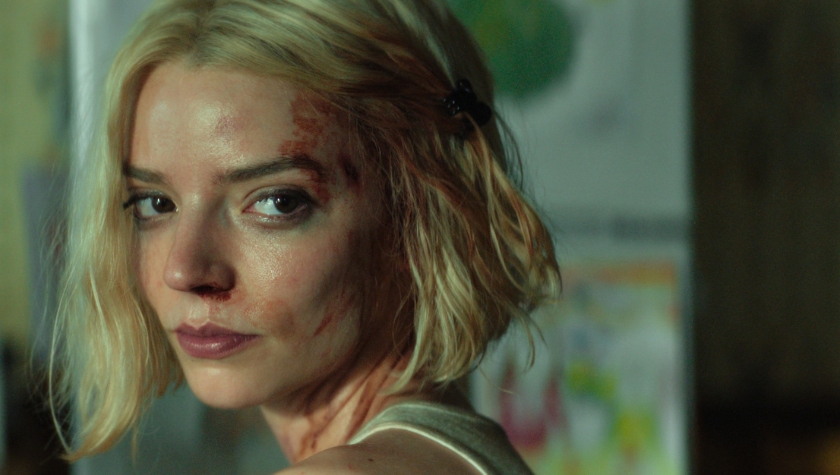
While Lucky is structured as a crime thriller, Pappas says its emotional core comes from the family dynamics. "The father-daughter relationship and the dysfunction of that relationship is what drew us to the show." Then she poses a question that became the writers' north star: "What does that baggage look like when the baggage you've inherited is criminal?"
Because Lucky's dad is a con artist and her mother-in-law is a mob boss with a gun, it just adds multiple layers of tension and conflict, and gives the show its emotional weight underneath all the spectacle and action.
Pappas also believes great casting can answer narrative questions writers struggle with on the page. One example came when Timothy Olyphant joined the series as Lucky's father, John. Before he was cast, the writers worried viewers might wonder why Lucky remained emotionally connected to someone so toxic. Then Olyphant walked in. "The moment we cast him, I was like, 'Oh! that's why she can't see it.'"
His natural warmth and charisma instantly made the relationship believable. "He could charm the pants off and con anyone that comes into his orbit," Pappas says.
Writing Villains Without Easy Answers
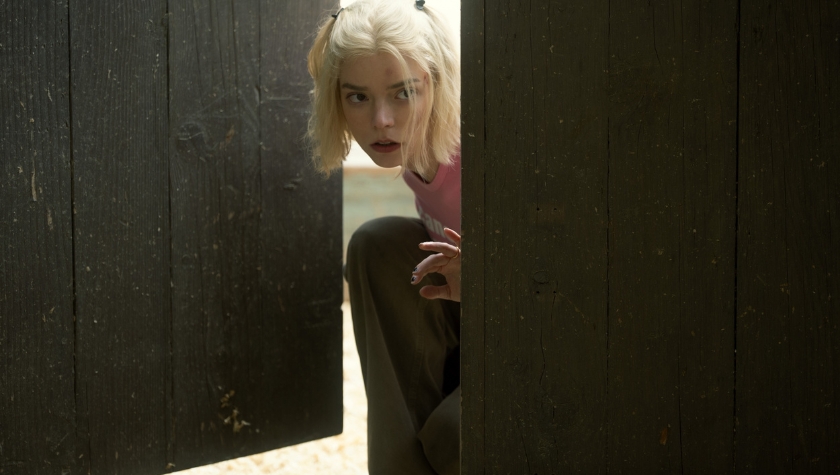
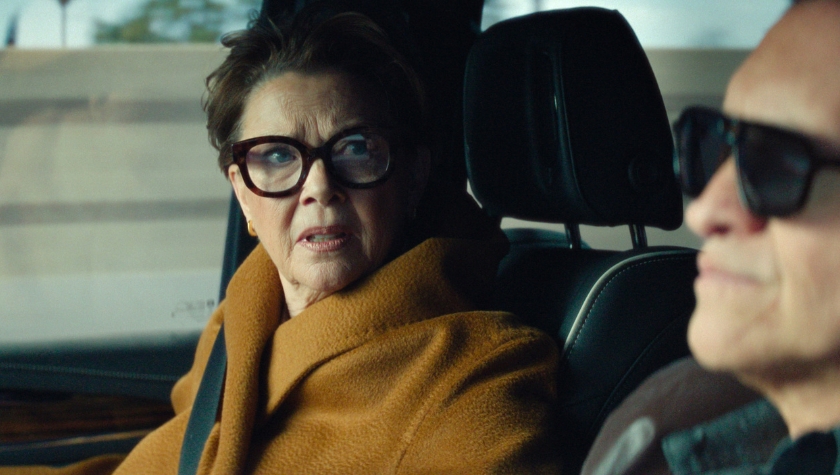
Annette Bening plays Pricilla, Lucky's mob boss mother-in-law. Pappas says Bening would call to discuss scenes, saying things like, "I don't think her feelings quite work right." She deliberately avoided labeling Priscilla as a sociopath. Instead, she focused on creating someone whose emotional responses were unpredictable. Those conversations shaped the character throughout production.
Pappas says Bening also enjoyed getting to play a woman wielding power in a way she'd rarely explored before. "The first time we put a gun in her hand, her eyes lit up."
After thinking through her filmography, Bening realized something surprising. "I've always been shot at," Bening told Pappas. "I've never been the one with the gun."
That discovery added another layer of excitement to an already intriguing villain.
When Law Enforcement Mirrors The Criminals
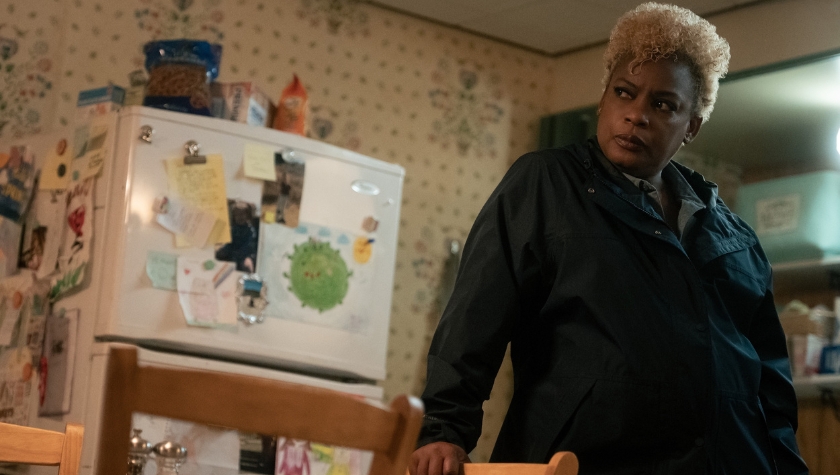
One of the show's most compelling writing choices is that the FBI agent chasing Lucky isn't entirely emotionally healthy either. Agent Rand (Aunjanue Ellis-Taylor) becomes consumed by the pursuit of Lucky.
Pappas says that obsession was intentional. The writers wanted to explore the impossible balance many women experience while trying to excel professionally and personally. "No matter where you are, you're losing," she says.
Rand feels she's failing at work because she can't catch her target. She's failing at home because work continually pulls her away from her family. Pappas compares it to the classic cat-and-mouse stories where neither side truly knows how to stop. "I'm chasing you because I don't know how to do anything else."
Meanwhile, Lucky continues running because survival is the only life she's ever known. This dynamic allows the criminal and cop to mirror one another.
Advice on Building Momentum as a Writer
Pappas says it's really important to write consistently and try to write three to five pages a day. It sounds simple, but she says momentum matters. "It's confidence-building. The blank pages and blinking cursor can be super scary."
Her second piece of advice is to create an excessively detailed outline for whatever you're working on. For her, the pressure disappears because she tells herself she's only outlining. "I trick myself into writing the first draft."
Eventually, the outline becomes such a complete blueprint that writing the script feels less intimidating. "There are some writers who love the feeling of the gun to the head," she says. "There's no right or wrong way."
What matters is finding the process that keeps you writing. "It gets easier the more you do it," she says.
Lucky was written on Final Draft and is currently streaming on Apple TV+.