
Connor Hines didn’t plan on becoming a television writer. He was trained as an actor, working in theater after studying at a conservatory in New York. Early on, though, he realized the profession left him creatively unfulfilled.
“You’re just sort of subject to everybody else,” Hines says. “You don’t have access to a creative outlet unless one is given to you.”
Craving more acting opportunities, he began writing short sketch videos, often built around the simple setup of one half of a very bad Tinder date. These were easy to film and he could act in them. “I just need one other person, a waiter, a table and two chairs,” he says.
Originally, the videos were meant to attract representation. Instead, they gave Hines something more valuable: momentum. “I just remember feeling such a high when I would be writing them,” he says. “When people started responding, I thought, maybe there’s something here.”
That instinct was confirmed when he landed representation and flew to Los Angeles for meetings. Asked if he had ideas for television, Hines couldn’t imagine writing an entire TV show. Then the executives asked what he actually did as his day job. “I told them I was basically a nanny/butler on the Upper East Side,” he says. “They said, ‘Go home and write a pilot about that.’”
Hines did exactly that, teaching himself television writing through repetition. “I found Final Draft,” he says, after babysitting on weekends to afford it, and wrote what he describes as, “a very messy pilot.” Instead of reading craft books, he rewrote constantly.
“It was just trial and error,” he says. “Writing scripts, getting feedback, realizing what wasn’t working, and figuring out structure on my own.”
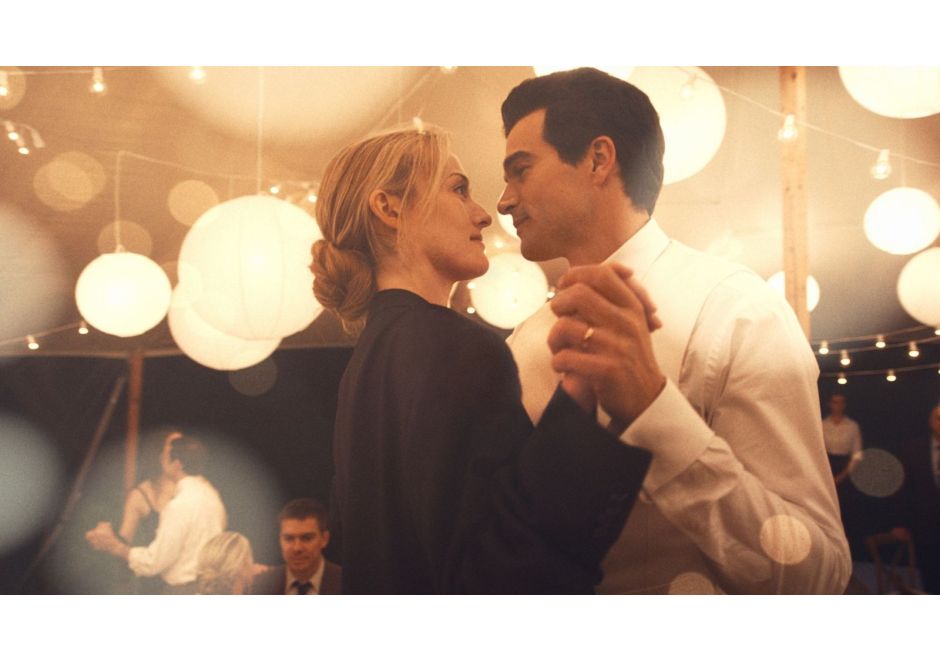
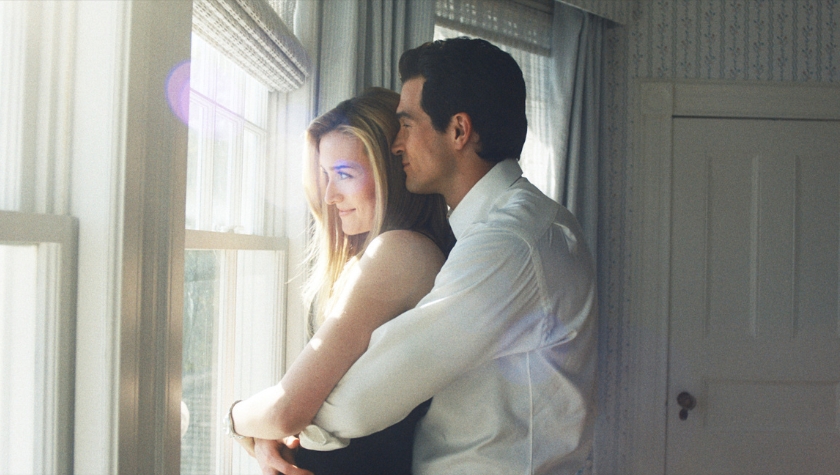
Years of writing scripts he says people liked, but nobody wanted to make, built the endurance and discipline that eventually led to Love Story, FX’s romance anthology series. The first season, John F. Kennedy Jr. & Carolyn Bessette, centers not on political legacy or tabloid fluff, but on intimacy and the emotional toll of being loved by the world.

Writing From an Actor’s Body
Hines relies on his instincts as an actor to fuel his writing process. “I perform like I’m in the scene,” he says. “I say the dialogue out loud, on walks, in the shower. If I don’t feel excited to say it, I know there’s something wrong.”
That visceral approach shapes how he thinks about dialogue. “I write from the perspective of, ‘Is this something an actor wants to sink their teeth into?’” he says. Having auditioned for small roles himself, Hines also brings a deep respect for every character on the page. “No character should ever be wasted, no matter how small.”
He cites Nora Ephron as a major influence, pointing to her ability to give even minor characters inner life. “I always think about the mailman in Sleepless in Seattle,” he says. “Two lines, but a whole character.” Those details are what create texture and make a world feel inhabited.
Finding the Humanity Beneath the Public Persona
Hines’ fascination with the whole Kennedy family began as a kind of American royalty obsession. But when he reached John F. Kennedy Jr. and Carolyn Bessette, something clicked.
“The biggest thing that stood out to me was the disconnect between the public narrative and how they were described by people who actually knew them.” Carolyn especially, since she was often reduced to an icy, one-dimensional fashion icon. Her friends, though, described someone affectionate, funny, and deeply human. “That gap is where the story was,” Hines says.
Rather than starting with public milestones, Hines began with psychology. He studied their childhoods and formative wounds: John growing up in a fishbowl after losing his father, Carolyn navigating abandonment and fierce independence after her parents’ divorce.
Before breaking the season, Hines wrote what he calls an extremely long psychological dissertation on both characters. His agents advised him not to share it with anyone. “It reads like a professor in psychology,” they warned. But Hines needed it.
“I wanted to know that if you put them into any situation, I’d immediately know how they’d respond,” he says. “Only then could I move forward.”
Making It Personal
As with acting, Hines believes writing only works when there’s a personal connection. “Until I can find myself in it, I don’t even know where to begin,” he says.
Hines found unexpected parallels with both John and Carolyn: a complicated relationship with his own father, learning disabilities, pressure to succeed in academic environments where he didn’t thrive. “In John’s case, people valued his charm and looks. He was made to feel like he wasn’t very bright. I had a lot of empathy for that.”
With Carolyn, he connected to her drive and guarded independence. “Growing up closeted, I had that same instinct to prove myself – that edge.”
Those emotional overlaps helped Hines locate the characters’ voices and understand why he was the right person to tell this version of their story.

Writing Jackie Kennedy
One of the season’s most memorable scenes in the pilot belongs to Jacqueline Kennedy Onassis (Naomi Watts), whose monologue warns John about the cost of bringing a wife into the Kennedy family that belongs to the public. Hines approached Jackie not as an icon, but as someone who once entered the Kennedy world herself.
“She was a civilian before she married into the institution. Very few people understand what it means to be center stage in that way.”
Hines sees Jackie’s warning not as maternal control but lived experience. It’s an understanding of how a spouse becomes a gatekeeper, a protector, and often a target.
“You’re made to feel like you’re orbiting something bigger than yourself,” he says. “And that’s an incredibly difficult role to survive.”

The Episode That Feels Like a Play
Hines points to Episode 8, “Exit Strategy,” as the emotional core of the season. It begins with Carolyn watching news coverage of Princess Diana’s shocking death. Written by Hines and Juli Weiner, the episode isolates John and Carolyn in their apartment, functioning almost like a two-person play.
“We did an exercise where I played John and Juli played Carolyn,” Hines says. “We said the worst things they could ever say to each other.” The goal wasn’t cruelty, but truth. “We knew their wounds. We knew their Achilles’ heels.”
At the height of an argument in the episode, Carolyn says to John, “I’m just another tragedy you bravely endure.” Ouch. But the line says so much about their relationship.
By keeping them holed up in the apartment, Hines wanted the audience to feel the claustrophobia of living under constant scrutiny. “It becomes a gilded cage,” he says. “Especially for her.”
Advice for Writing Real People
For writers tackling biographical material, Hines cautions against letting history dictate structure. “You can’t just write, ‘And then this happened,’” he says. Instead, he urges writers to understand who their subjects were before they became famous.
“Start with childhood. Start with family,” he says. “Those things inform how people love, how they attach, how they protect themselves. Their coping mechanisms.”
Most importantly, he advises stripping away fame entirely. “You have to approach every character like they’re not famous,” he says. “Fame is something projected onto them. Nobody looks in the mirror and sees a celebrity. They see the same person they’ve always been.”
That perspective allows Love Story to do what biopics often struggle to achieve: telling the truth without it feeling like a history lesson. “It helps to love your characters. And it helps to want to protect them while still being honest about who they were.”
In Love Story, that honesty transforms icons into human beings who are fragile, intimate, and devastatingly real.
Love Story: John F. Kennedy Jr. & Carolyn Bessette is currently airing on FX.