
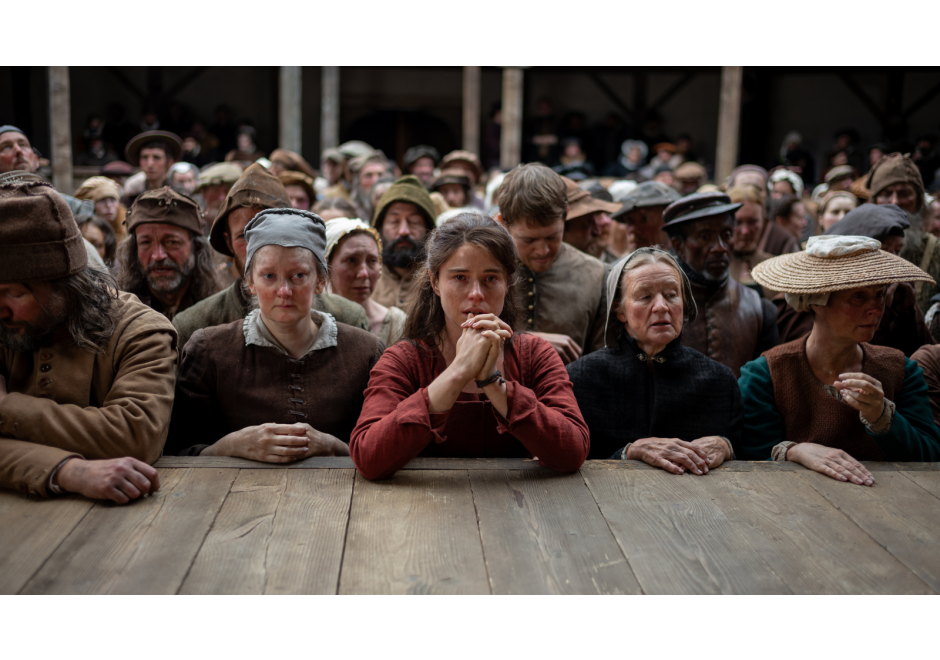
When Maggie O’Farrell wrote her bestselling novel Hamnet, she never thought she’d be adapting it for the screen. The award-winning author had already moved on to another project when Oscar-winning filmmaker Chloé Zhao (Nomadland, The Rider) reached out with a surprising proposition: Would she help turn her book about Shakespeare’s family and the devastating loss of his son Hamnet into a feature film?
“I actually initially thought, no, I don’t want to do it,” O’Farrell admits. “I was moving on to other projects and had plans for another novel. But Chloe is a very persuasive person. We got on a Zoom call, and I was about to say no, and I found myself saying yes.”
That “yes” began a long-distance collaboration stretching from O’Farrell’s home in Scotland to Zhao’s office in California. Together, they wrote Hamnet, a 2025 historical drama starring Jessie Buckley and Paul Mescal as Agnes and William Shakespeare. The film explores the relationship between the couple and the impact of their son’s death, a story both intimate and universal.
Step One: Accept Your Story Will Never Be the Same (Because It Shouldn’t Be)
For O’Farrell, the first and hardest lesson in adaptation was learning to let go.
“You can’t go into it expecting that it’ll be an exact replica of your book, because you’re bound to be disappointed,” she says. “The book already exists. The film isn’t going to be a twin, it’s going to be a sibling, or maybe even a cousin of the book, and I think you have to embrace that right at the start of the process.”
That meant cutting entire storylines and backgrounds that had helped define her novel. “There’s quite a lot of the story that had to go, just for time, really,” she says. “In the book, there’s a lot more about Agnes’s mother and her childhood. There’s also more about the sisters Judith and Susanna and Shakespeare’s parents. All that needed to go.”
Step 2: Find the “Endoskeleton”
Before writing a single line of dialogue, O’Farrell and Zhao spent time breaking down the structure or what O’Farrell calls the story’s “endoskeleton.” Screenwriters call this the three-act structure.
“The novel moves back and forward in time over a period of about fifteen years,” she says. “That’s fine on the page, but it doesn’t really translate very well to the screen. Chloe had a very clear vision about how she wanted to disassemble the chronology of the book.”
Their collaboration was organic and conversational. “Chloe’s quite a verbal person. She works things out by talking and I’m totally the opposite. I need a pen and paper to work things out. So in that way, we were quite well matched.”
Working across time zones, they sent drafts back and forth. “She would often, overnight, leave me sometimes ten or twelve voice notes of very varying length,” O’Farrell says. “I would listen to them, transcribe them in the morning, and then respond, usually in an email or with a rewritten scene.”
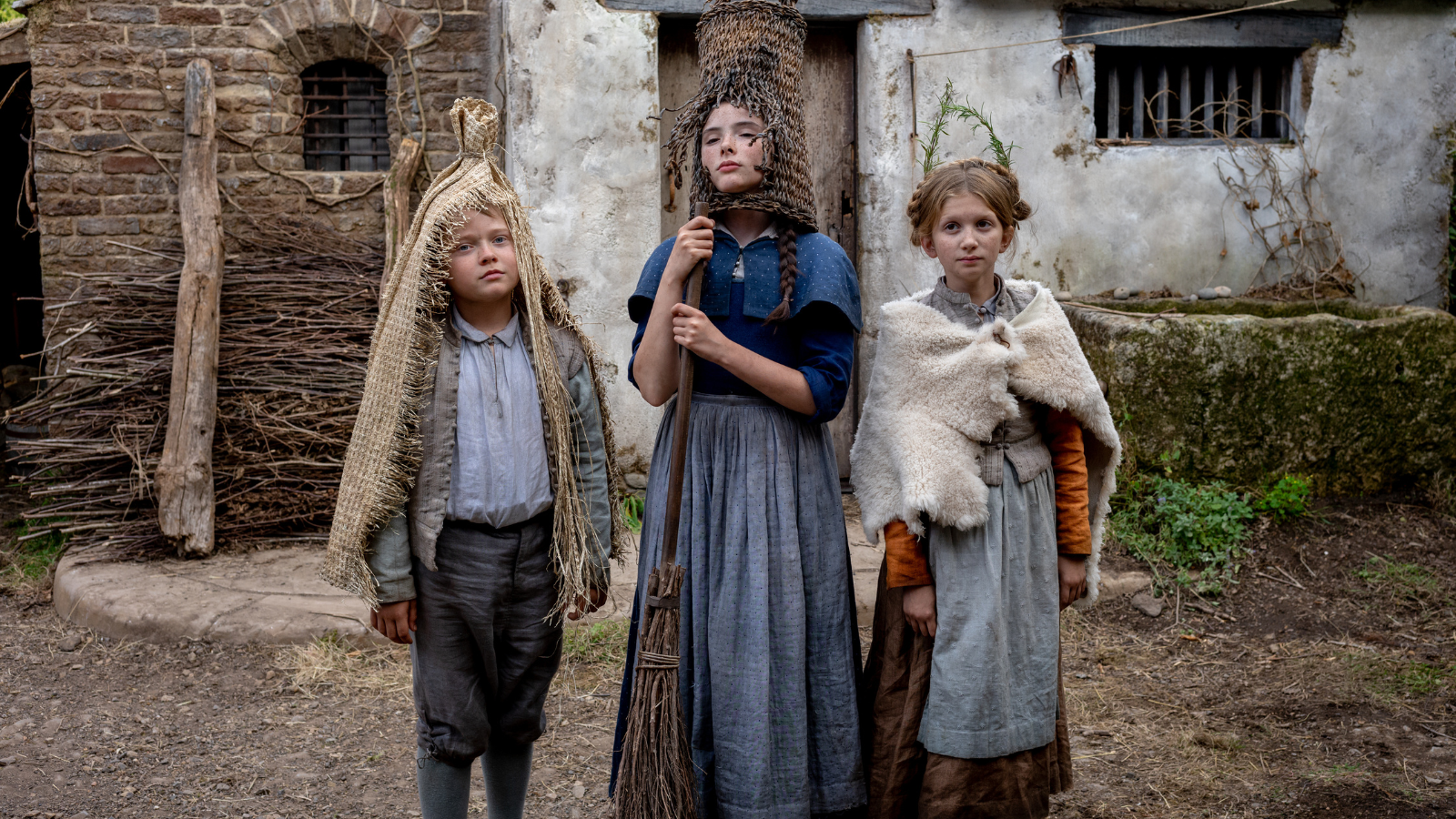
Step 3: Switch Writing Muscles
When it came time to actually write, O’Farrell had to remind herself she was no longer writing prose.
“I noticed that I had to really turn off my novelist brain,” she says. “I’d write, EXT. THE FOREST, and I would have a really large paragraph describing the forest. And I’d think, actually, no, this is not that kind of writing.” She laughs, adding, “All this description I can use somewhere else. I’ll keep that for my novels, but the screenplay is going to be very bare bones only.”
Her first step was using the right tool for the job. “Novels, Microsoft Word definitely. Screenplays in Final Draft,” she says. “It’s easy to use. I liked using it.”
O’Farrell says the software itself helped her shift into screenwriting mode. “It keeps you concise. You can’t hide behind long paragraphs, you have to make every line matter.”
Step 4: Turn the Interior into the Exterior
For O’Farrell, the biggest creative challenge was finding ways to externalize what, in a novel, lives inside a character’s mind.
“Novels by nature are often quite interior,” she says. “You have to think about ways that you need to make that interior exterior, and it doesn’t always have to be somebody speaking aloud. There are lots of different ways to do it.”
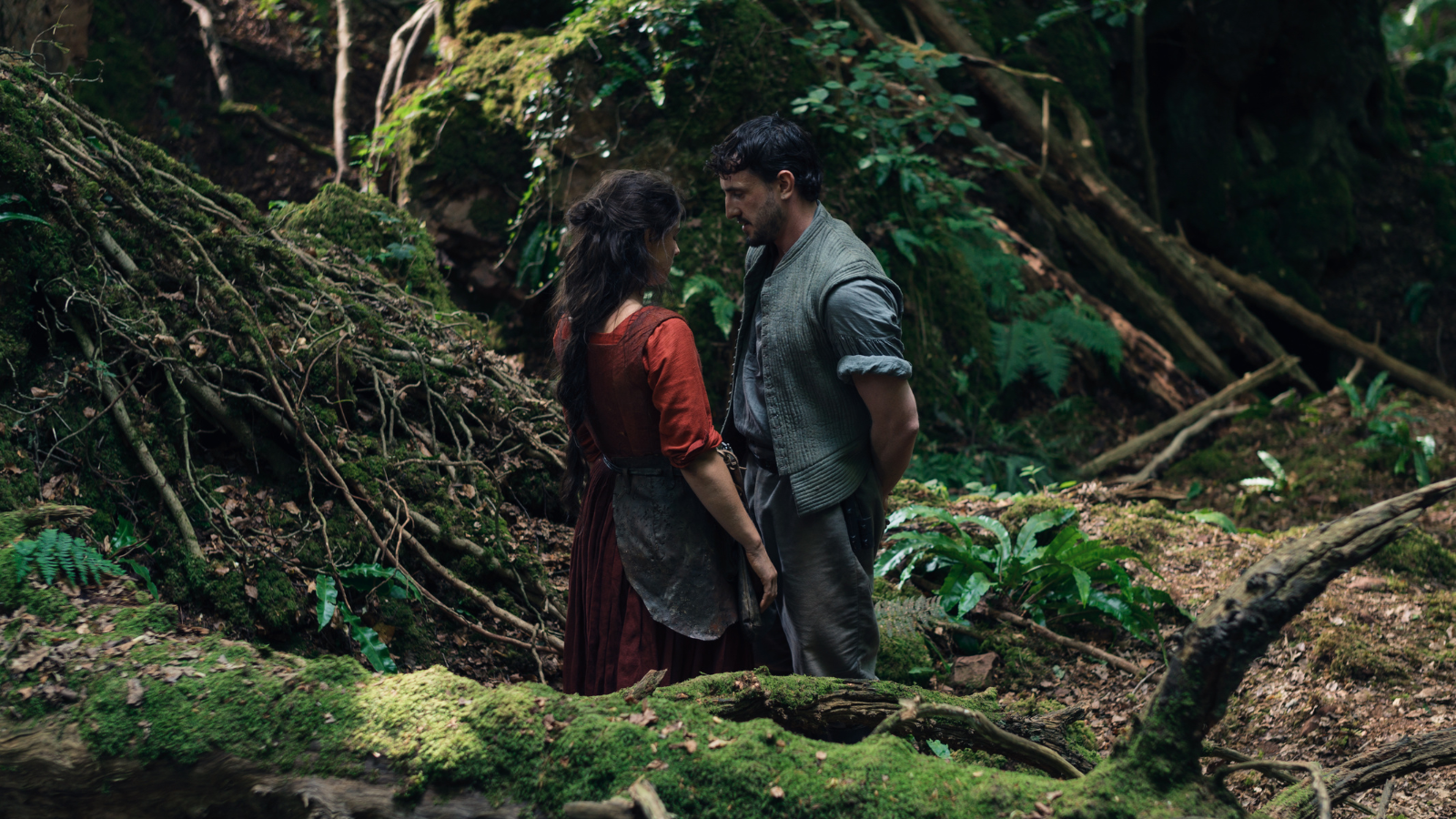
She points to Zhao’s visual storytelling as inspiration. “In The Rider and Nomadland, those are often about people who are suppressing an awful lot of emotions, but Chloe communicates it by the landscape around them,” she explains. “She does that really beautifully, especially in the first third of Hamnet with the forest. That’s one way to make the interior exterior.”
Sometimes, the solution was as simple as changing a scene partner. In O’Farrell’s novel, when Agnes goes to watch her husband’s play Hamlet, she enters the theater alone. “In the novel, it’s all very interior, you hear her thoughts,” O’Farrell says. “But we needed the audience to understand what she was going through. So we just brought the brother in with her. Everything that’s in the novel, she feels it, and in the film, she speaks it aloud to him. It was an incredibly easy fix.”
She smiles. “Very simple. But genius.”
The Hourglass of Adaptation
O’Farrell likens the process of adaptation to the shape of an hourglass.
“You start off with a novel which is large, whatever, 350 pages, and you have to distill it right down to its essence, to ninety pages of a screenplay,” she says.
She makes the hourglass shape with her hands, indicating that the novel is the top of the hourglass and the screenplay is that skinny part in the middle.
“But when you’re writing the screenplay, you don’t really realize that you’re going to see the bottom half of the hourglass, which is the director expanding it out again to something different.”
All the visuals and acting performances are the sands that fill up that bottom globe. “You’re going to see something different, and it’s going to be expanded out again, on screen,” she says.
Unexpected Surprises
For a novelist used to solitary work, screenwriting was a new experience that she grew to love.
“The life of a writer, as you’ll know, is very solitary by nature, and I really like that,” O’Farrell says. “But the life of a screenwriter and being on set is not solitary at all, it’s very collaborative. I really enjoyed it.”
Will she write another screenplay? O’Farrell smiles. “Who knows? I really enjoyed it, and I feel like I learned an awful lot.”
In the end, O’Farrell says, adapting Hamnet wasn’t about translating her novel line by line. It was about reimagining it through a different artistic lens.
“Cinema is a very young language compared to the written and spoken tradition of storytelling,” she says. “You have to think differently. But when you see your story come alive in another medium, when you watch it move and breathe, it’s extraordinary.”
Hamnet opens Dec. 12.