
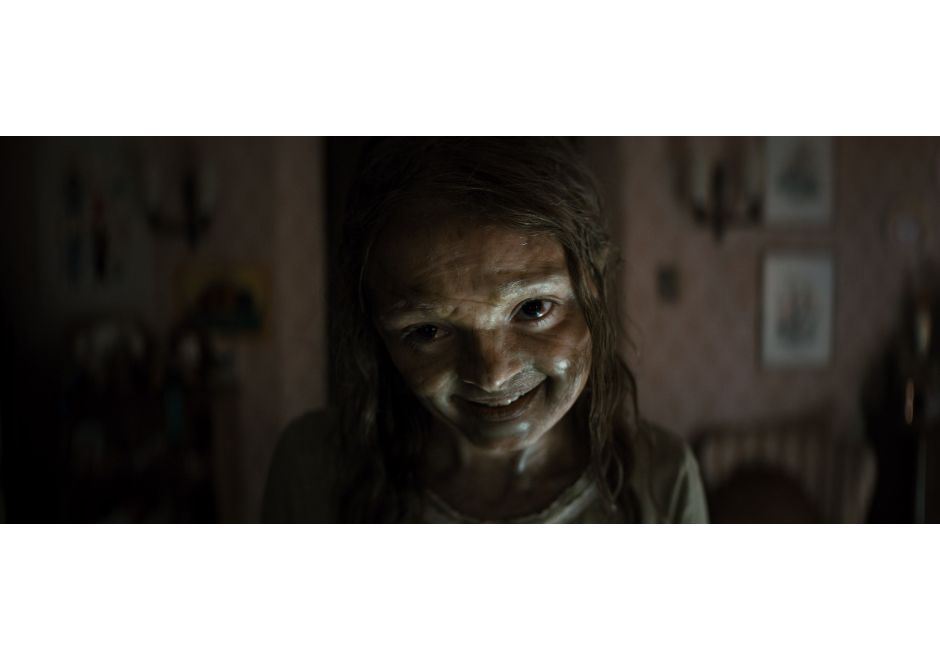
Lee Cronin’s The Mummy follows an American family, the Cannons, living in Cairo, Egypt. When their young daughter, Katie (Natalie Grace), disappears into the desert without a trace, it takes eight years before she’s finally found. But when she returns home, she’s not quite the same. What should be a happy time for the family quickly turns into a very grotesque family reunion.
The film leans heavily into body horror and flips the old idea of an ancient mummy wrapped in disintegrating rags on its head. In this version, the mummy is a teenage girl, subverting all our expectations. We sat down with writer-director Lee Cronin to explore how he reimagined the classic tale of an ancient evil, and why this isn’t his first time bringing such a story to life.
A New Take on an Old Classic
When Lee Cronin set out to reimagine The Mummy, he wasn’t interested in cursed Egyptian tombs or relic-hunting adventurers. Instead, he asked a far more unsettling question: What if the horror didn’t stay buried and came home with you?
The result is a visceral, deeply personal horror film that reframes mummification as a desperate attempt to save a daughter from an evil spell.
But The Mummy isn’t the first time Cronin was tasked with reimagining an already established mythology.
“I made Evil Dead Rise, which was a reimagination of a beloved franchise from the past, and I knew within that movie there were certain pillars that I absolutely wanted to adhere to, as a fan, but also for the fans. But then, nonetheless, I still have to tell my own story, and I think the success of that movie was that it's still its own thing within that world,” he says.
But taking on one of the more traditional, well-known cinema monsters was trickier.
“There were less pillars approaching The Mummy for me because I didn't necessarily have the same frame of reference for mummy movies from the past. I really like them, and I've explored them, but it wasn't necessarily an influence for me from the past. It was more about, how do I change perspective? How do I surprise people? What if a loved one was mummified? And then I’m like, well, why and how?”
That question becomes the foundation of a story that blends possession horror, family drama, and global mythology into something that feels both ancient and modern.
Horror at Home
Unlike traditional versions of mummy monsters, Cronin reinvents the mummy as a teen girl, dragging the monster into a typical nuclear family.
“I’m always interested in bringing the evil into your familiar space, as opposed to you going to the odd place,” he says.
In The Mummy, the terror unfolds not in a tomb, but in a family home in New Mexico, after the Cannons flee Cairo. A teenage girl’s bedroom becomes a site of dread. By making this choice, the horror isn’t just survival; it’s emotional and nostalgic. Parents aren’t trying to escape a monster; they’re trying to save their child from it. Or worse, from being it.
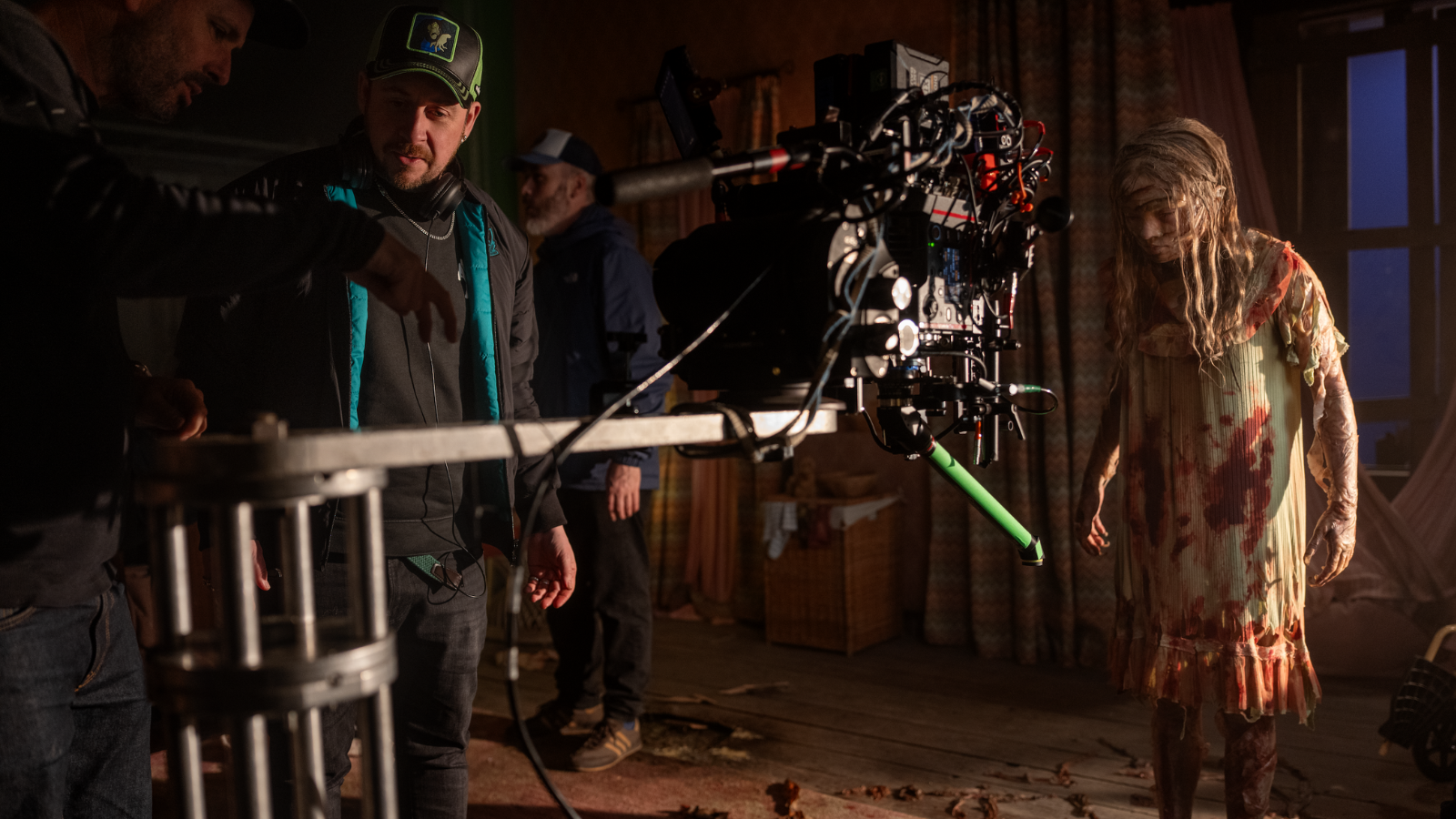
The Changeling: Irish Folklore Meets Global Myths
While the premise of the film draws from Egyptian mythology, its emotional and thematic roots are deeply tied to Cronin’s Irish background.
“My first feature film [2019’s The Hole in the Ground] is based on changeling mythology, which has quite a grip in old Irish folklore,” he says.
At its core, The Mummy functions as a changeling story. A child returns home, but something is fundamentally wrong.
“There’s something very powerful in that idea of something that’s familiar, but also disturbing at the same time,” Cronin says.
This concept is known in horror (and psychoanalysis, thanks to Sigmund Freud) as “the uncanny.” Daughter Katie isn’t just possessed; she’s not what she should be. And that gap between who the family hoped she’d be and the gruesome reality becomes the film’s most haunting space.
Even Cronin’s depiction of family dynamics carries an Irish sensibility. The Mexican grandmother character, Carmen (Veronica Falcon), is influenced by what he describes as the wise and strict Catholic women he grew up around.
That cultural layering of Irish, Mexican and Egyptian creates a story that feels both specific and universal, grounded in shared rituals around family, faith, and death.
Grief Without Closure
Beneath the supernatural framework, The Mummy is ultimately a story about unresolved grief. Cronin describes the film as his most personal work, driven by a fascination with what happens when loss doesn’t come with closure.
“What is the grief like if you’ve never been able to close the door on hope?” he asks.
The return of a missing child should typically be a moment of relief, but becomes something more complicated.
“I just thought that that was a really interesting place, because when Katie does get back, the grief doesn't necessarily improve. In fact, it kind of gets worse. So, it was definitely personal from that point of view,” he says.
In the film, there’s a very intense funeral scene that Cronin says was inspired by his own experience at an Irish wake.
“There's little textural touchpoints, like the two Spanish ladies who are speaking over the coffin at the start, and it's very intentional that we don't even see what they're looking at. We know it's Carmen in the casket. But that, to me, also rings very true to any wake or Irish funeral I've been to, where there's always your mother's friends, or your aunties saying, ‘Oh, didn't she look lovely?’ And I'm like, no, not really. She looks super dead and it's horrific and it's sad.”
Writing the “Wrong” Version of Reality
One of the film’s most disturbing elements is its attention to mundane detail. Cronin delivers intense body horror through the uncomfortable reality of bathing, feeding, and tending to someone who is physically present but emotionally absent.
“They bring her home, they put her to bed, they bathe her, give her a pedicure, all of these things,” he says.
This grounding in the mundane amplifies the horror. The supernatural elements don’t replace real-world trauma; they increase it. It’s a technique that elevates the material from a genre flick to something more important: Horror as a lens for exploring human experience.
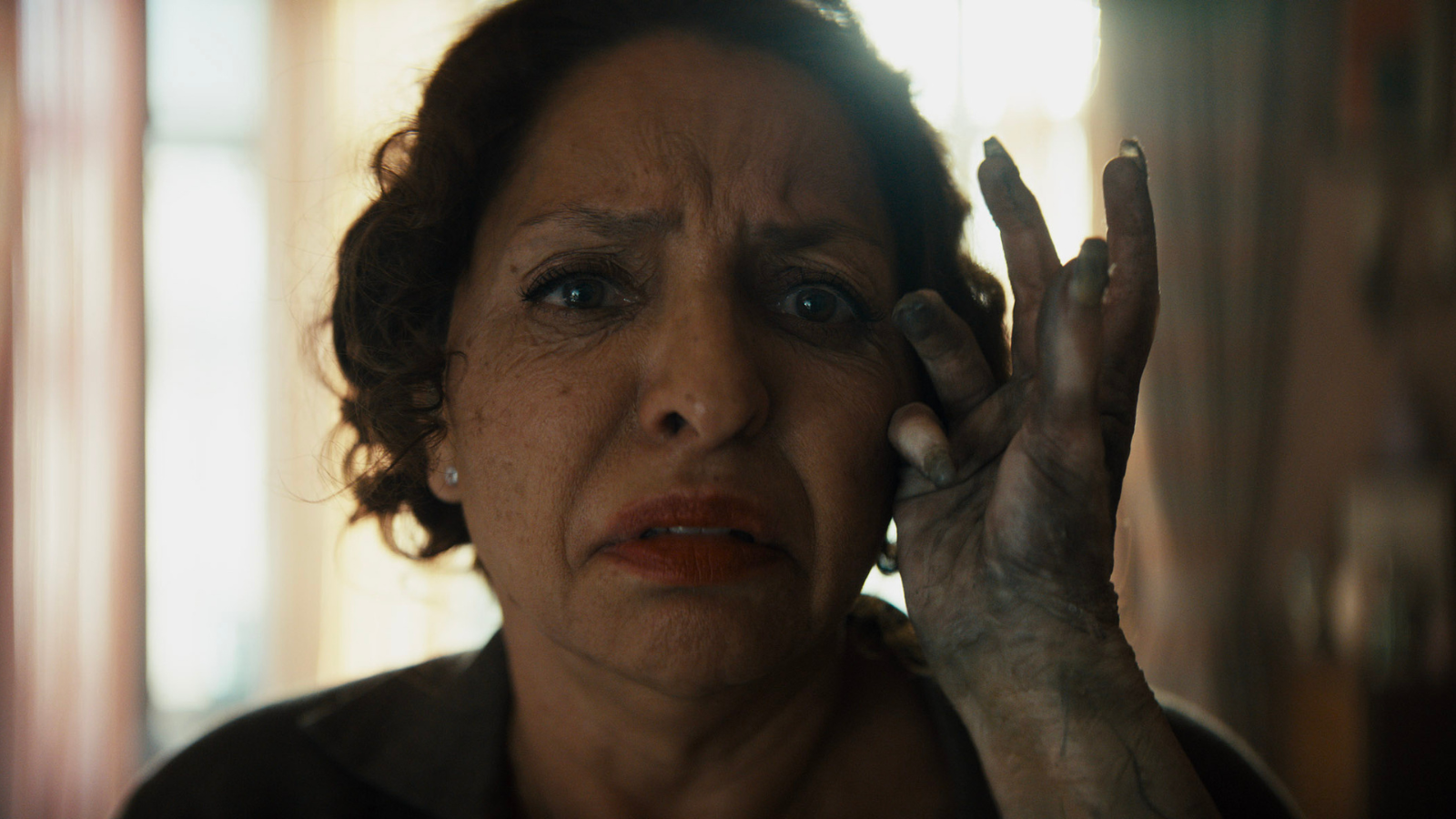
Process: Talking Is Writing
Cronin’s creative process may surprise writers accustomed to rigid outlining.
“I don’t write treatments or outlines at all,” he says. “I talk the idea to death.”
For him, storytelling begins in conversation, through interrogating ideas, exploring possibilities, and accumulating enough material to build multiple versions of the film before committing anything to the page.
“It’s almost like trying to collect enough ideas that you could write two or three movies out of.”
Only then does he begin the process of distillation. It’s a reminder that there is no single “correct” way to write a screenplay, only the method that allows you to fully realize your vision.
Advice for Horror Writers
When it comes to screenwriters breaking in, Cronin’s advice is simple.
“Don’t try and second-guess what you think the marketplace might want,” he says.
Instead, he says to focus on authenticity and on creating something that reflects your unique voice and perspective.
“Horror allows for that more than anything,” he adds, noting that the genre consistently introduces new filmmakers who succeed by bringing a new point of view to familiar genre tropes.
The New Face of the Mummy
With The Mummy, Cronin isn’t just updating a classic monster, he’s redefining what that monster represents.
It’s no longer a relic of the past. It’s grief that won’t resolve. It’s a family turned against itself. It’s the terror of recognizing someone you love, only to discover they’re no longer who they were.
Or, as Cronin’s work repeatedly suggests, the scariest place for horror isn’t a tomb. It’s your home.
Lee Cronin’s The Mummy is currently playing in theaters.