

Ken Estin began his television career in a way that sounds almost mythological to writers trying to break into Hollywood today: He wrote a spec script, mailed it directly to a television show, and somebody actually read it. Seriously.
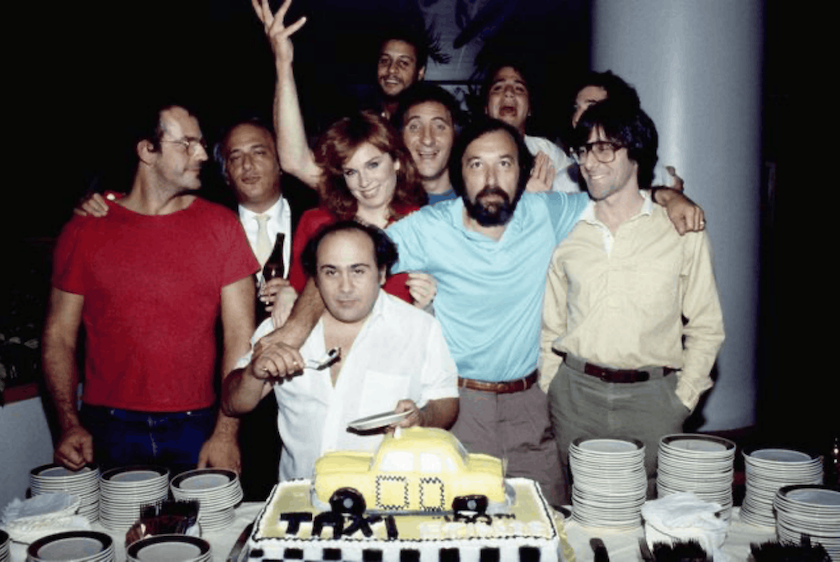
Estin sent his spec episode of The Bob Newhart Show, which eventually landed in the hands of producers Glenn and Les Charles. They liked it, held onto it and, two years later, when they were working on a new sitcom called Taxi, they remembered the young writer whose script had impressed them.
"I got on Taxi by a way that is impossible for new writers anymore," says Estin.
At 25, he was suddenly writing professionally for one of television's best sitcoms. He would eventually become Taxi's showrunner and win an Emmy at just 28. From there, Estin went on to run Cheers and The Tracey Ullman Show, work with Matt Groening on the animated shorts that eventually evolved into The Simpsons, and help transform a Sylvester Stallone project into the Eddie Murphy blockbuster Beverly Hills Cop.
But when Estin first walked into Taxi, he says he really didn't know what he was doing.
"I just kept watching the show and trying to do exactly what I saw," he says. "I learned by being in the fire."
That experience, and everything he learned in the decades that followed, forms the basis of his new book, And the Emmy Goes to... YOU, a practical guide to succeeding as a television writer.
The Door That Opened for Estin Is Now Closed
There's a frustrating irony to Estin's origin story. His career exists because established writers and producers were willing to read an unsolicited script from an unknown writer. At Taxi, Estin says the show continued that tradition.
"We would read anything sent to us by anybody from any source," he says.
Eventually, however, Paramount stopped the practice, citing the potential for plagiarism claims and other lawsuits. Today, unsolicited submissions are generally prohibited, and even getting material to an agent can be difficult.
"Basically, it's virtually impossible to get through to the people who make the decision," he says.
Estin believes the industry has gone too far in protecting itself at the expense of discovering new talent.
"I think that the studios and networks and the streaming services should have an obligation to read unsolicited material or at least take calls from agents who are not their regular stable of agents. I think they should be required to do that. I think the Writers Guild should all get together and somehow force that upon them. But nobody's doing that," he says.
For Estin, the problem became particularly apparent during the decade he spent teaching television writing at the Academy of Art University in San Francisco. He could teach his students how to write, structure a script, and navigate the creative demands of television. But inevitably, they would ask the question he struggled to answer: How do I get in?
"The business shut down paths that were wonderful in the early days when I started," he says. "You could look up the name of a production company, get their address and mail a script to them, and they read it. But no more."
Teaching Writers What He Had to Learn the Hard Way
Estin may not have an easy solution to Hollywood's access problem, but he can demystify what happens once a writer gets an opportunity. That's the purpose behind And the Emmy Goes to... YOU.
"It's everything I know that I didn't learn in college," he says.
One of his most fundamental lessons is surprisingly simple: Understand the three-act structure.
When Estin wrote the spec script that ultimately led to Taxi, he had obtained a 50-page Mary Tyler Moore script and essentially reverse-engineered it. The sample had an act break on page 25, so his spec had an act break on page 25.
He later learned that whether a half-hour series is presented in two acts, four acts, or another broadcast or streaming format, writers need to think of the story in three acts.
"Write your stories in three acts and then make it fit the commercials or the streaming programming that they require," he says.
The first act begins the story and is roughly one-quarter of the script. The second develops the story and occupies approximately half. The final act resolves the story and makes up the remaining quarter. From there, writers can adapt that underlying structure to whatever format a particular show requires.
Build the Car Before You Add the Options
Estin's other major piece of advice for comedy writers is even more fundamental: Story comes before jokes.
Writers attempting a half-hour comedy can become obsessed with the old expectation that a script should deliver a certain number of laughs per page. Estin argues that jokes don't matter if the audience doesn't care about what is happening.
"You have to tell a really good story first," he says. "People struggle to write the jokes and sometimes lose track of the story."
He compares writing a comedy to buying a car.
"The car is more important than all the options," Estin says. "Do the car right, then add the options. The options are the jokes."
Once the car runs, then you can start adding the extras.
Even a Bad Note Is Telling You Something
Perhaps one of Estin's most useful lessons comes from an unlikely source: A network note involving goat droppings.
During Taxi, the network objected to a joke in which Latka described fertilizer as containing "goat droppings." The network censors said he must change the line to "goat pellets."
Estin thought the note was ridiculous. Instead of simply fighting it, however, he reconsidered the sequence and decided the scene played better without Latka's intrusion. "They kind of did me a favor," he says.
The experience taught him that even when a note seems misguided, the writer should consider why someone gave it.
"When people give you a bad note, try and figure out why they're missing the point," Estin says.
Estin's career has given him plenty of lessons about structure, jokes, notes, and navigating Hollywood personalities, but perhaps the thread connecting them all is openness: to material, to criticism, and especially to writers who haven't yet gotten their shot.
Hollywood may have changed dramatically since a 25-year-old Estin mailed off that Bob Newhart Show spec. The fundamentals of good writing, he argues, haven't.
"Tell your story in three acts and write a good episode."
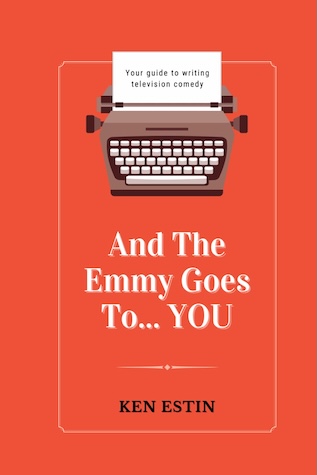
Estin's book And the Emmy Goes to... YOU is available on Amazon.