

James Gunn is one of Hollywood's most successful and prolific talents. He's a celebrated and popular writer, director, producer, and now studio executive. Gunn was the creative force behind Marvel's Guardians of the Galaxy trilogy, and he then shifted from Marvel to DC with The Suicide Squad, Peacemaker, and the hit new Superman franchise (and its spinoffs). Now, he's the co-head of DC Studios, one of the biggest jobs in Hollywood.
And like most screenwriters, he started at the bottom, writing for smaller productions.
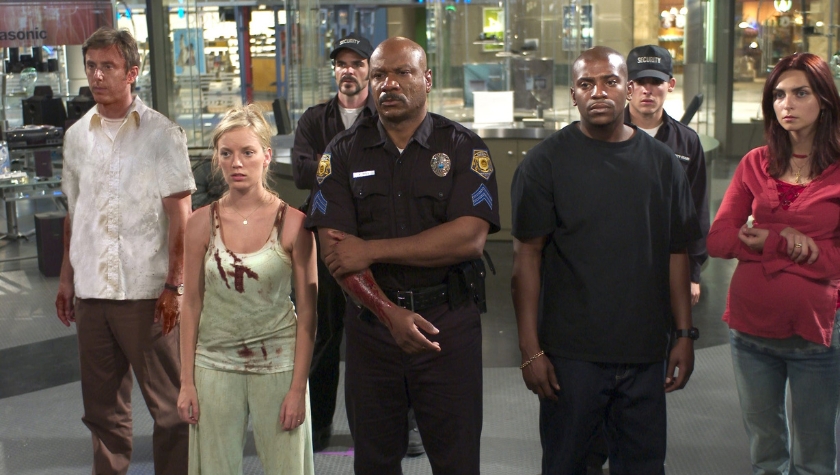
He first worked with Troma Entertainment, where he learned about low-budget filmmaking. He wrote Tromeo and Juliet in 1996, which was a wildly unconventional Shakespeare adaptation. From there, Gunn slowly built a Hollywood career for himself, writing projects like Scooby Doo (2002) and its 2004 sequel and Dawn of the Dead (2004). He then became a writer-director with the horror-comedy Slither in 2006.
His career skyrocketed when he took on the task of adapting one of Marvel's least known comics - Guardians of the Galaxy. After success at Marvel and DC, he was handed the keys to the DC adaptations for DC Studios.

Gunn recently delivered a powerful and inspiring commencement speech at Saint Louis University, where he shared personal stories and four general, all-purpose rules for success for graduates.
Here we share his four rules and many of his inspiring quotes from the speech, along with our own elaboration on how you can use his words of wisdom and inspiration in your screenwriting journey and career.
#1 Finish What You Started
"You can never be successful if you don't finish whatever task you set out to do. We all try to sabotage ourselves, and we all want to stop when things get hard."
It's easy to quit. It's much, much more difficult to keep writing as you deal with self-doubt, difficulty in breaking the story, finding the time to write, making the mistakes you need to make to learn how to write better, and just finding the drive to continue on amidst seemingly endless rejection or silence from Hollywood.
But you need to keep writing. You need to write through despair, frustration, and hopelessness. And you need to finish your scripts rather than leave them incomplete.
Closure on each project helps you to move on to the next. And in screenwriting, it's vital that you continue to learn, hone your skills, get those first few bad scripts out of the way as you learn more, and then stack your deck with 3–5 excellent scripts that are ready to be taken out wide to managers, producers, development executives, and major screenwriting contests/fellowships.
"As a writer and a filmmaker, I have to sit through hours and hours of me telling myself I suck or the work sucks. But I've learned over the years that my judgments, my thoughts, my feelings have very little to do with the quality of the work, and are simply uncomfortable mental states I must wade through while taking the steps to achieve my goal."
Sometimes you need to step away from your work for a while and get past your frustrations. It's easy to burn out. While it's great to stay in the zone and work hard, if you ever feel overwhelmed, overly frustrated, and blocked, step away, take a breath, get your mind off the work, and then come back to it.
On the flip side, you also need to always listen to your own self-criticisms. Don't wallow in frustrations, failures, or mistakes you've made. Just breathe; take a moment (or an hour, or a day, or a week) to step away and come back with a clear head. The solutions will come. And sometimes, as Gunn said, you just need to wade through those feelings and move on.
"The biggest difference between a professional and an amateur writer is [that] professionals write. They finish their projects."
Finish your scripts. You need that closure. There will always be opportunities to update them. If any of them get picked up, there will surely be some rewrites. But for your specs, simply set a deadline, preferably one that mirrors Hollywood contract deadlines (2–3 months), and then finish each project you take on in that time.
#2 Don't Follow Your Dreams
"Don't chase something. Be it. Challenge yourself. Learn. Get better. Find goals that are difficult to achieve. But truly examine and be honest with yourself about what your skills are, about how you can be of use to your fellow human beings so that you're setting yourself up for the best possible outcome."
Gunn explained that when he was younger, one of his first dreams was to be a rock star. He had a band. He played music. But he wasn't good enough to be a star. He also wanted to play basketball for the Lakers. But he didn't have the necessary skills and talent, no matter how hard he practiced.
The point he's trying to make is that you shouldn't be chasing dreams. You don't really know what's right for you until you're in it, doing the work, learning, growing, getting better, and figuring out what your true talent and skill levels are.
Don't chase a dream. Do it.
"Instead of following your dreams, find what you're good at doing and what contributes to society. There is a state of flow that results from truly acknowledging our talents and being of service to others. I'm not saying take the easy way out. And I'm not saying you won't like your dreams if you follow them. I'm just saying don't make that the reason you're doing something."

#3 Be of Service
"I'm a guy who tells stories. I make movies. But I hope that when someone goes with a loved one to see one of my films in the theater, that they love that person a little more when walking out than they did when they were walking in."
In life and your career, be of service to others. As a screenwriter, you can accomplish that by injecting relatable, empathetic, and cathartic themes into your scripts, things that can inspire people, inform people, and change people as well. You can do this in any genre, even the more entertaining ones like comedies, horror flicks, and action-packed adventures.
- The Fast and Furious franchise has more than action, car chases, fights, and amazing stunts. The movies explore deep themes about what family means and how friends can be just like family. Additional themes of loyalty and doing what's right ring throughout those movies.
- E.T. wasn't just a fantasy story about a boy who befriends an alien. It was a story about a broken family grappling with relatable struggles such as divorce and regret.
You can be of service to others as a screenwriter by digging deeper and finding opportunities to convey themes that can change a person when they walk out of the theater.
"I'm committed that everyone involved in making my films, my crew, my casts have richer lives because of the process of making them. That's my family."
Be a great collaborator and surround yourself with good people. Everyone has heard horror stories about difficult people on difficult sets. Be a good person. Treat people right. And surround yourself with others who do the same.
#4 Know That Obstacles are Opportunities
"Accept that adversity is the nature of life itself and a component of nearly any action we take, it makes things easier. And if we can see this adversity, these obstacles as opportunities to find a more creative path or to learn about ourselves and life will truly open up for us in ways we've never imagined."
Embrace failure. Embrace rejection. Embrace tough feedback and notes. When things don't go the way you had hoped or imagined, understand that you're still on the path you're supposed to be on.
Obstacles are inevitable. Failure and rejection are inevitable. Use them, and any adversity, as opportunities to get better, find a more creative path, and learn about yourself. When you do that, your life, as well as your screenwriting career, will open up in ways you likely couldn't have imagined.
"Look at the world with the knowledge that the worst thing that ever happens to you just might be the best. You all have times ahead of you that will seem wonderful and times that will feel horrible that you don't think you can make it through. But who you are, your character is not defined by the things that happen to you, but how you react to them."
The last line is key. You, as a screenwriter, are not defined by the things (good or bad) that happen to you. You are defined by how you react to them.
How are you going to handle rejection, failure, tough feedback and notes, and overall adversity in your screenwriting journey? Are you going to wallow in sorrow, succumb and quit, or have a bad attitude and blame your struggles on Hollywood? Or are you going to learn from the rejection and failure, appreciate the tough feedback and notes, and welcome adversity knowing that it will make you a better screenwriter?
How are you going to handle success as well? How are you going to react to it? Are you going to get a big ego, stop learning, and feel entitled? Or are you going to be humble, keep learning, and know that any success is a true blessing, but it's never promised to continue?
How you react to success, failure, and adversity will define who you are as a person and as a screenwriter.
"Embrace being scared. Allow it to keep you on your toes. Embrace the hard times. They make the easy times so much sweeter."
Take these wise words from James Gunn and go have fun doing what you love. If you follow these rules, you'll see much success in your life and in your screenwriting. The journey and career may not go as planned, but you're always on the right path for you. Trust in that, trust in yourself, and you won't have to "chase" any dreams at all. You'll be living them.