
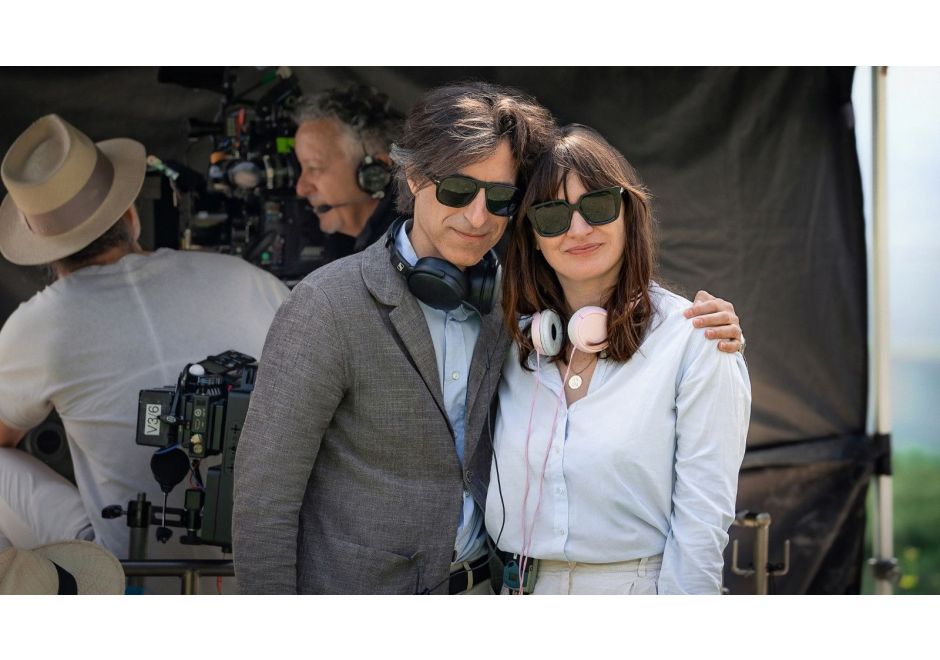
Directed by four-time Oscar-nominee Noah Baumbach and written by Baumbach and actress/writer Emily Mortimer, Jay Kelly is a mix of memories, relationships, regrets and victories. We sat down with Baumbach and Mortimer to find out more about their writing process.
In the film, George Clooney plays Jay Kelly, a movie star who begins soul-searching after the death of his mentor, Peter (Jim Broadbent), and later gets into a fistfight with his old acting buddy, Tim (Billy Crudup), following the funeral. Adding tension to Jay Kelly’s fragile identity are his two daughters, whom he loves but feels considerable distance from since he was absent through most of their formative years. On a whim, Jay decides to follow his daughter Daisy (Grace Edwards) to Europe, accompanied by his devoted manager Ron (Adam Sandler). The film is about a man searching for his own identity after spending his entire life pretending to be other people.
When the idea for this film came to Baumbach, he admits it was all a bit amorphous. Adding Mortimer into the writing process just made sense. “To know Emily is to want to collaborate with her,” says Baumbach.
Mortimer is a screenwriter in her own right, with two TV series, Doll and Em and The Pursuit of Love listed in her IMDb writing credits. But Jay Kelly would be her first feature film and she couldn’t think of anyone better to partner with than Baumbach.
“We had known each other a little over the years, but not well,” Mortimer says. Then her kids, Sam and May Nivola, were cast in Baumbach’s 2022 film White Noise, and suddenly she was with her family in Cleveland for an extended stretch at the end of the pandemic, quarantining alongside Baumbach and his wife, Greta Gerwig, and their kids. “We got to know each other well there,” she says. “That’s when we started talking about life and movies and things.”
Her summary of their conversations, “Life and movies and things,” is also a deceptively perfect mission statement for Jay Kelly. For Mortimer and Baumbach, two people who’ve worked in the film business their whole lives and raised their families around it, they have intimate knowledge of the regret and glory surrounding a character like Jay Kelly.

When the idea for this film came to Baumbach, he admits it was all a bit amorphous. Adding Mortimer into the writing process just made sense. “To know Emily is to want to collaborate with her,” says Baumbach.
Mortimer is a screenwriter in her own right, with two TV series, Doll and Em and The Pursuit of Love listed in her IMDb writing credits. But Jay Kelly would be her first feature film and she couldn’t think of anyone better to partner with than Baumbach.
“We had known each other a little over the years, but not well,” Mortimer says. Then her kids, Sam and May Nivola, were cast in Baumbach’s 2022 film White Noise, and suddenly she was with her family in Cleveland for an extended stretch at the end of the pandemic, quarantining alongside Baumbach and his wife, Greta Gerwig, and their kids. “We got to know each other well there,” she says. “That’s when we started talking about life and movies and things.”
Her summary of their conversations, “Life and movies and things,” is also a deceptively perfect mission statement for Jay Kelly. For Mortimer and Baumbach, two people who’ve worked in the film business their whole lives and raised their families around it, they have intimate knowledge of the regret and glory surrounding a character like Jay Kelly.
“It’s going to be bad until it’s not”
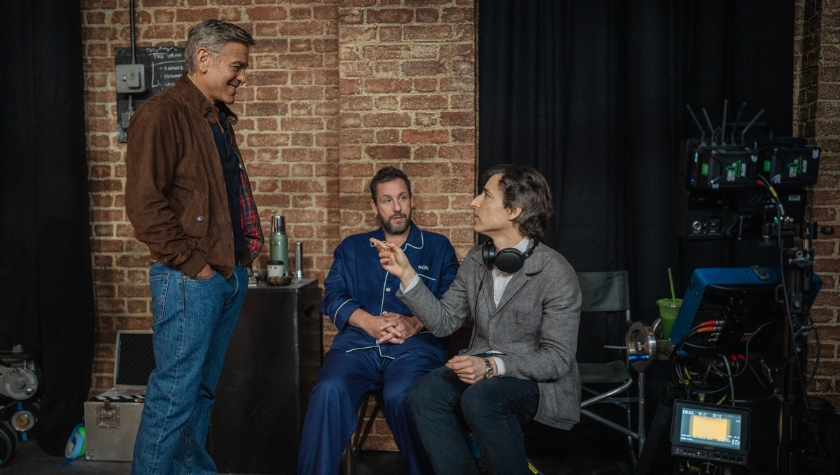
Baumbach describes how the writing process started. “I'd been trying to make sense of this idea I had about a movie actor on a train, kind of going out into the wild in a way. I just had a lot of loose information. I felt I needed guidance. When I was telling Emily about it I just liked it so much more than I did when I was alone with it. And Emily had so many great things to say, too, about it, and brought her own amazing perspective to it,” he says.
Mortimer says it all started very organically. “Noah was in London, and I was in France and he was doing Barbie and we were just talking every day.” But at a certain point, the conversation had to turn into pages which she says was very nerve-wracking as imposter syndrome set in. “I felt like I'd sort of pulled the wool over his eyes with the gift of the gab somehow. Then when it came to actually writing the thing, I was just like, ‘Oh my god, this is the moment where he's going to really regret this, but we're now in it so deep. I mean, how is he going to get rid of me?’”
Baumbach chimes in, “It was too late to get rid of her at that point.” They both laugh.
What calmed her fear was Baumbach’s attitude toward the early mess.
“One of the sweetest and nicest things about the whole collaboration for me is how Noah has kind of helped me understand that it’s not only okay that it’s bad, initially. It’s just inevitably going to be,” Mortimer says. “You’ve got to start being brave about things not being right, because they’re not going to be right until they’re right. And then they’re not going to be right until it’s done.”
Mortimer is describing an environment where drafts are allowed to be drafts, where the work is not “result-oriented” at first. “It can’t be,” she says. “It has to just be thoughts and ideas and, ‘Oh, is this something?’”
Baumbach echoes that sentiment, saying that collaboration doesn’t just make the writing better; it makes the writer more emotionally mature in the work.
“When you’re with somebody else, you can be more mature about the pain of writing,” he says. Alone, he says he still falls into the same trap of wanting it to be good immediately. He cites a short story writer who once described her process as writing the story and then spending six months to a year taking all the clichés out of it. Baumbach says he thinks about that constantly, because with movies we only see the finished version and forget the bad versions that came first.
So if you’re surprised that Noah Baumbach also struggles with his first drafts, you shouldn’t be. That struggle doesn’t mean you’re failing. It just means you’re in it.
The love story you didn’t think you were watching
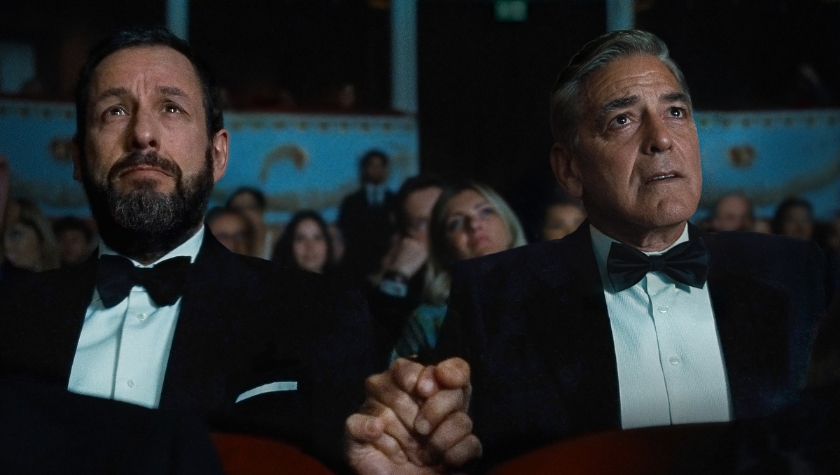
The “love story” of Jay Kelly is not the one the audience assumes it will be. Jay has daughters. He has old relationships. He has the gravitational pull of his own legacy. But emotionally, the “romance” is between Jay and Ron, his longtime manager who’s been there for him through thick and thin.
Baumbach says that Jay’s journey begins with, “The illusion of controlling his own destiny, but reality keeps interrupting. His mentor dies, his daughter’s going away and doesn’t want to hang out with him. His old friend from childhood has very complex feelings about him,” Baumbach says. “He can’t control any of those things.”
But Ron is different. “Ron is the constant,” he says. “Ron is the one there all the time. It’s almost like an element of a certain kind of romance. The person next door who’s the true love you’ve been looking for in the world, and it’s really the person who’s right there.”
He even frames it in a way that’s almost mischievous: “It could be part of a John Hughes movie or something.”
By the end, Jay can see beyond the transactional nature of their relationship and recognize Ron as a true friend. “It’s a small step,” Mortimer adds, “but it’s a very important one.”
The heart of the film isn’t Jay finding a partner, it’s Jay learning how to receive love at all.
Memory as a storytelling engine
One of the most interesting things about the movie is the stylistic choice the writers make with showing memories on screen. Instead of the usual dissolve and cut to, Jay is firmly present in the flashbacks, watching his younger self as the memories unfold.
Baumbach describes how, as writers, once they understood how the memories would play out, they realized each memory had its own development. Jay is in some, not in others. He interacts more in some. He speaks more in some. They approached memory as it actually arrives: triggered, often uninvited. “A thing can trigger a memory that we don’t see coming. It’s not something we’re in control of.”
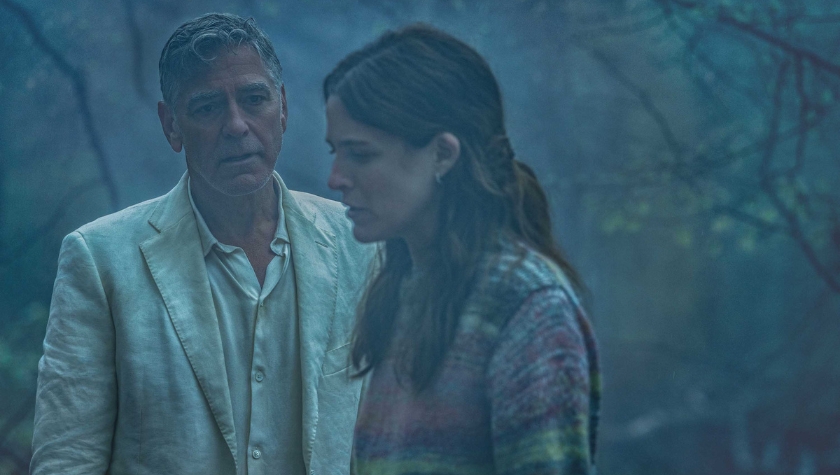
And later, as Jay makes a phone call to his daughter from the Tuscan woods, his daughter appears with him, turning a boring phone call into something more visual, more emotionally immediate. “It's a big scene. We didn't want to be intercutting on a phone call, but she wasn't there, so how could we do it in a way that would feel satisfying dramatically but stay coherent in terms of the language of the movie? I think it offered us an opportunity to introduce an element to the movie, even in the present-tense of the movie, that it wouldn't have had otherwise,” says Baumbach.
Mortimer agrees, saying the memory structure gave the film freedom and looseness, but it was also a technical problem figuring out how to get in and out of the scenes. “We wanted everything to happen on camera, there shouldn't be some magic trick or some sort of woo-woo mystery. These memories are sort of ambushing him, or he's walking into them physically. It was also like, ‘How the hell are you going to do that?’ And then Noah did it.”
Building a story with ScriptNotes in Final Draft
When asked if they wrote the screenplay in Final Draft, Mortimer says with a smile, “What other software is there?”
For Mortimer, the software helps to ease her into the process. “It already looks like you know what you’re doing before you know what you’re doing,” she says. “It just sort of gives you the illusion that you’re writing a screenplay when you’re not even writing anything yet.”
Then she confesses a habit that’s relatable to many writers: she can’t get rid of anything. So she puts everything, including tons of dialogue, in the ScriptNotes feature (found listed in the dropdown menu when you click the Insert tab).
Baumbach shares his own workflow: in the earliest stages, he writes pages of notes not in screenplay format, but he puts them inside the Final Draft document anyway, in the General element. “It can be intimidating or challenging if it looks too much like a screenplay too soon. I sometimes feel like we're not ready to be there yet, you know? It's not yet a movie. I'm still just playing around here. I'm not ready to do this. I'm not ready to pick a character name, so I’ll just take notes – but it's in the Final Draft document, which I like, because then, as soon as I feel ready to turn a thing into a scene, I can then start tabbing and doing the whole thing. It's like the script is hidden in the notes,” he says.
Jay Kelly is currently streaming on Netflix.