
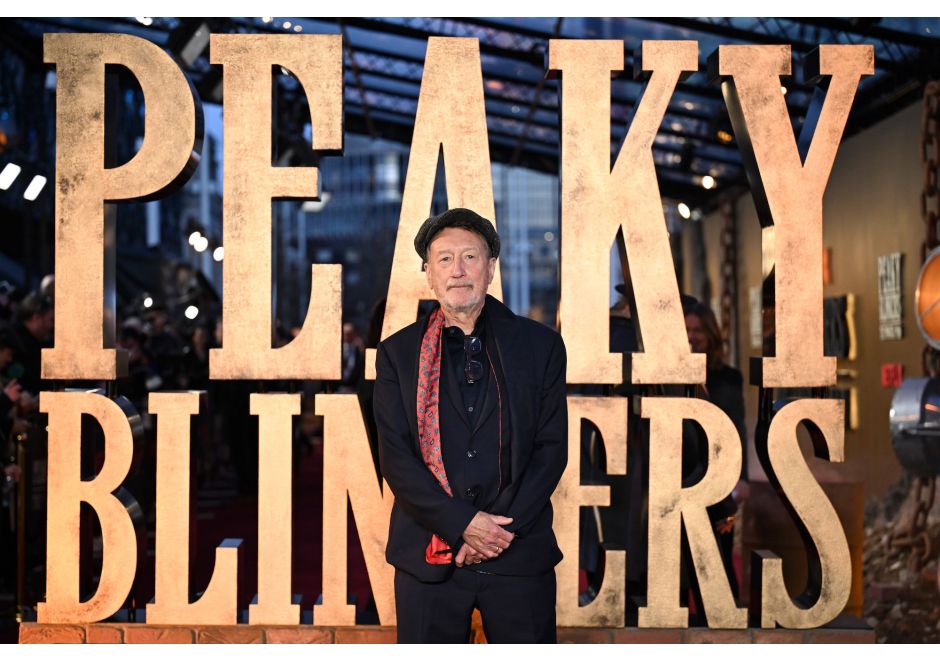
Even after creating 36 hours of Peaky Blinders for television over six powerful seasons, writer/creator Steven Knight still wasn’t ready to say goodbye to the iconic crime boss Tommy Shelby (Cillian Murphy). Behold the feature film Peaky Blinders: The Immortal Man, an explosive, morally charged, family-driven film with supernatural elements that operates as a three-hander: a World War II thriller about a Nazi plot to destabilize Britain, and a ghost story about the memories and spirits that continue to haunt Thomas Shelby, and a father/son reckoning as Tommy, reluctantly passes the torch to his son, Duke (Barry Keoghan).
We sat down with Knight to find out how he delivered Tommy and the gang into the next era.
A Film was Always the Plan
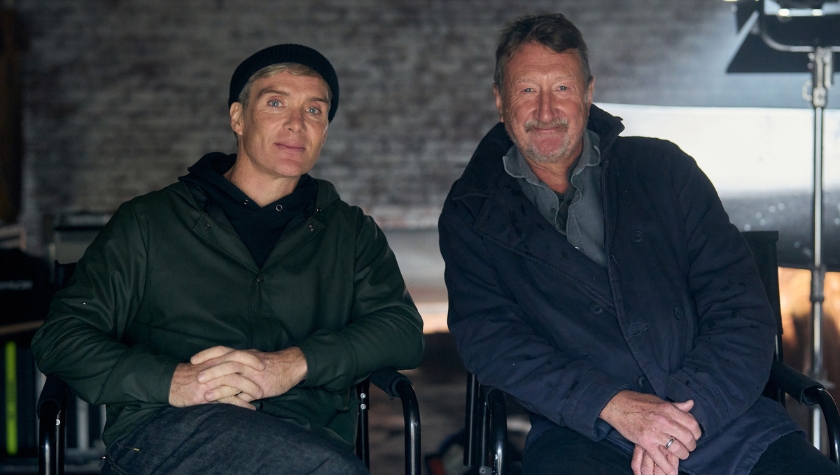
For Knight, the jump from television to film wasn’t a decision inspired by other British franchises like Downton Abbey that has successfully released three feature films. He says the movie was part of the plan from the very beginning.
“Bizarrely, at the end of the first series when it was just a little thing on BBC Two, I did an interview and I said I’m going to take this all the way to the Second World War and end it with a movie,” Knight says. “Considering what it was at the time, that was a very bold and naive thing to say. But I always wanted to end it with a film.”
A Collective Experience for Fans
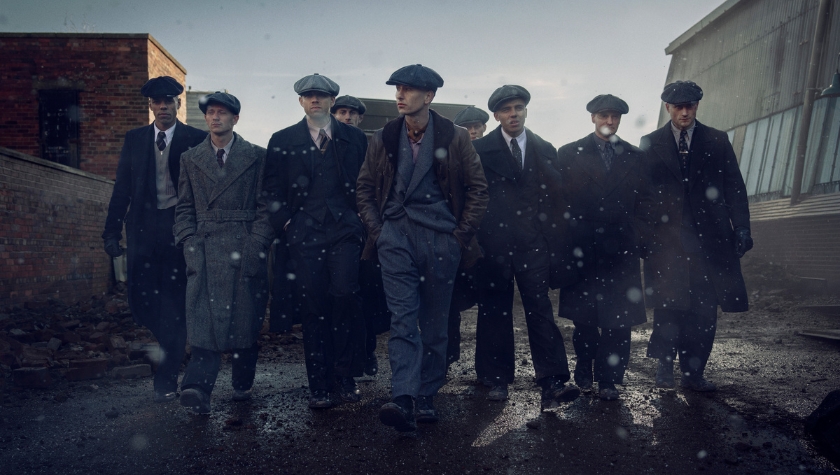
Knight’s prolific writing career has always been a mix of television and features, and he felt the story of the Shelby family could naturally exist in both spaces. What mattered most to him was that the film functioned as a true final chapter by having the sprawling criminal empire and family saga merge against the backdrop of World War II. But another motivation was just as important: the fans.
“Peaky Blinders has succeeded because of the fans,” Knight says. “It was never promoted heavily. It was sort of our secret. People would find it and talk to someone else, and they’d love it.”
That grassroots enthusiasm created a community around the show that Knight has encountered everywhere, from pubs in England to international fan events.
“You’d go into a pub and there’d be a bloke who’s a builder or a scaffolder or whatever, someone you wouldn’t imagine to be a fan, who rolls up his trouser leg and says, ‘Look at that,’ and it’s Tommy Shelby tattooed on his leg,” Knight says with a laugh. “That’s real commitment.”
For Knight, making a film offered a way to transform that fandom into a shared theatrical experience.
“What we wanted to do was create a film so that all the fans who have communicated virtually for so long could go to a building, go to the theater, watch it together, dress accordingly if they want to, and feel the emotions together.”
The strategy appears to be working. Screenings in Birmingham, where the show is set, have sold out multiple times a day, beginning early in the morning.
“It’s become an event,” Knight says.
The Meaning of 'The Immortal Man'
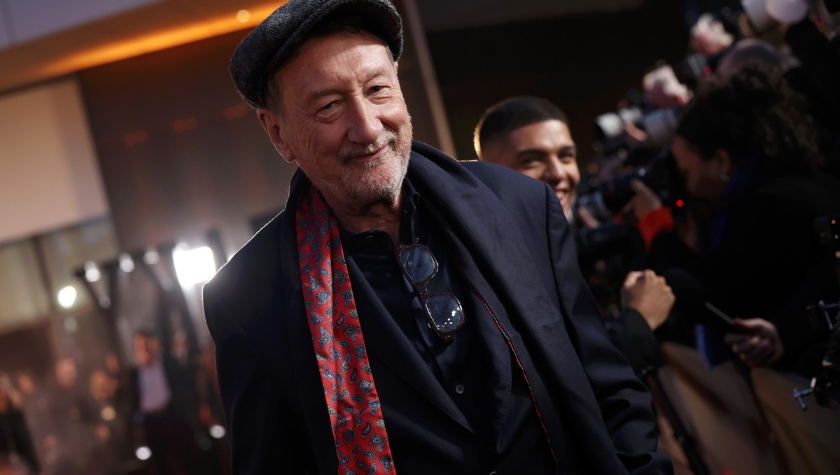
The film’s title, The Immortal Man, hints at the mythology surrounding Tommy Shelby. But according to Knight, the title came before he fully articulated its meaning.
“The title came before the reason,” he says. Only later did he realize how well it reflected the psychology of the character he had been writing for over a decade.
The key lies in Shelby’s wartime experience. Knight has always imagined a backstory in which Tommy and his fellow soldiers survived a seemingly certain death in the trenches of World War I.
“They were stuck in no man’s land, certain they were going to die,” Knight says. “Certain the Germans were coming to kill them. But they survived.”
After that moment, everything in life felt like borrowed time. “They all said to each other, from now on everything’s a bonus. Everything is extra.”
That mindset became Shelby’s defining trait. “He’s always walked this tightrope between life and death. And in a sense that means he’s immortal,” Knight says.
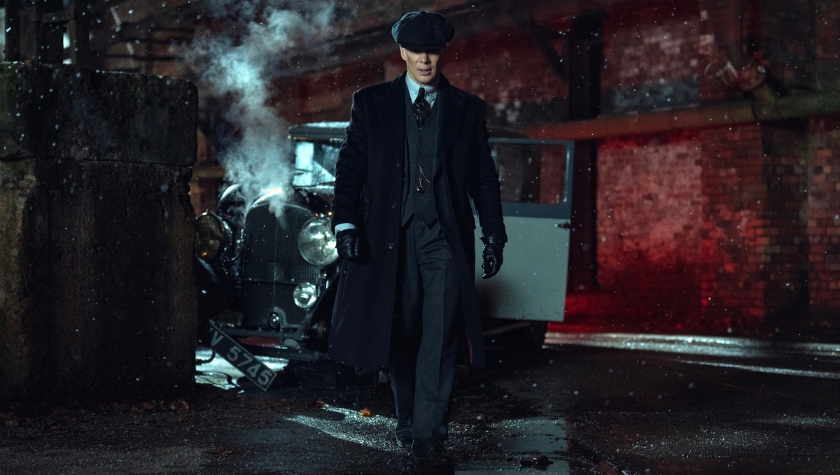
The film also explores another form of immortality: legacy. In the film, Shelby is writing a book for his children, hoping to pass on lessons he never quite managed to express as a father.
A Complicated Father-Son Story
Family has always been at the heart of Peaky Blinders, but the film places particular emphasis on the relationship between fathers and sons.
“I gave Tommy a line that says, ‘I was never a father. I was a form of government,’” Knight says.
Shelby’s sons grow up in the orbit of his reputation, trying to define themselves in relation to a legendary and highly intimidating figure.
“They live in the shadow of him,” Knight says. “Even if Duke Shelby feels he’s rebelling against his father, in actual fact he’s imitating him.”
In the film, Shelby is living in self-imposed exile when events force him back into action. The external plot, sabotaging a Nazi operation, becomes meshed with the internal story of protecting his son.
“The blowing up of the currency is also the saving of the son,” Knight says. “He wants something good to come out of all this.”
Mining History for Story
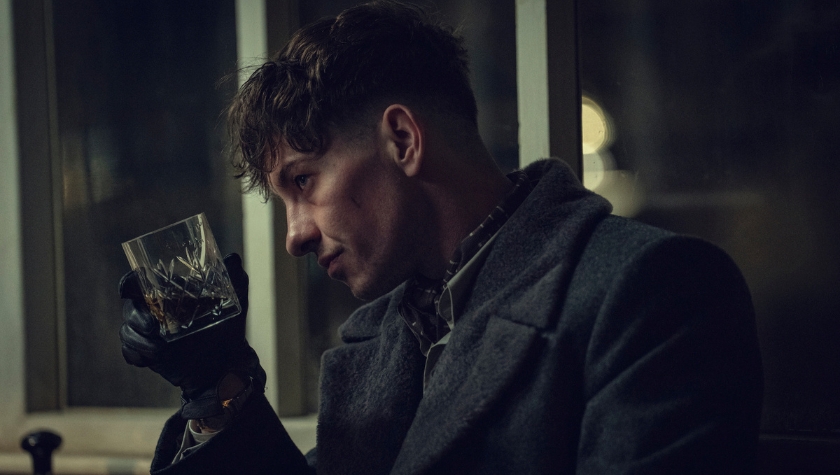
One of the film’s central plotlines comes from a real World War II operation that many viewers may never have heard of. Operation Bernhard was a Nazi plan to destabilize the British economy by producing massive quantities of counterfeit pound notes using forced labor from concentration camp prisoners.
“They forged about £350 million,” Knight says. “According to the Bank of England it was the best forgery that had ever been made.”
The plan was hugely ambitious. At one point, the Nazis even considered dropping counterfeit currency from airplanes over British cities.“What an image that would have been,” Knight says.
For Knight, historical facts often serve as the starting point for fiction.
“The true bit is always more remarkable than anything you could make up,” he says. “Then you weave a story around it.”
Father and Son Duke it Out in the Mud
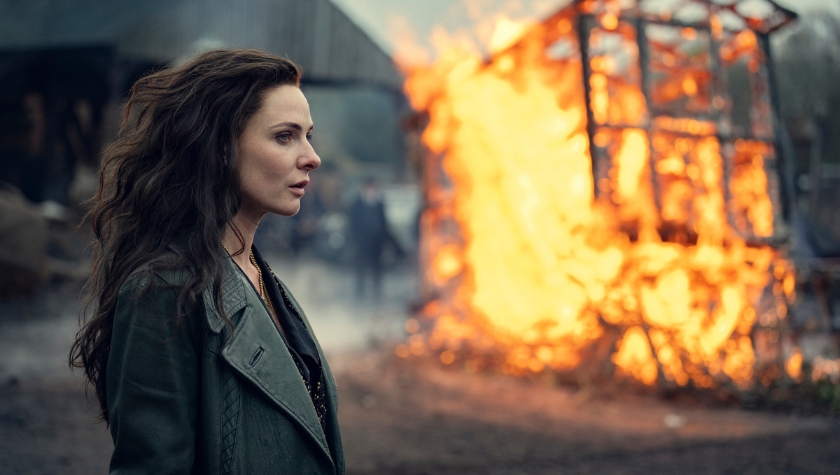
One of the film’s most visceral moments is a brutal confrontation between father and son in a pig pen. It’s a scene that Knight says emerged organically during the writing process.
He had earlier written a small scene involving pigs, but later realized the location could become the setting for a climactic fight. “I thought I should have this confrontation in that environment where it gets to the lowest of the low,” Knight says.
The setting also evokes the trenches of World War I. “Tommy’s experiences in the war were mud and blood,” Knight says. “Now he’s dragging his son down into the mud.”
On set, the sequence became even more chaotic than planned. Production tried to prepare separate areas of “clean mud,” or mud that was devoid of pig excrement. But two days of rain turned the entire set into a filthy swamp and the pigs couldn’t be contained.
“In the end they’re fighting in mud that’s largely a consequence of the pigs,” Knight says. The actors, he adds, could smell exactly what they were standing in. “That’s raw filmmaking,” he says with a laugh.
Stories From Home
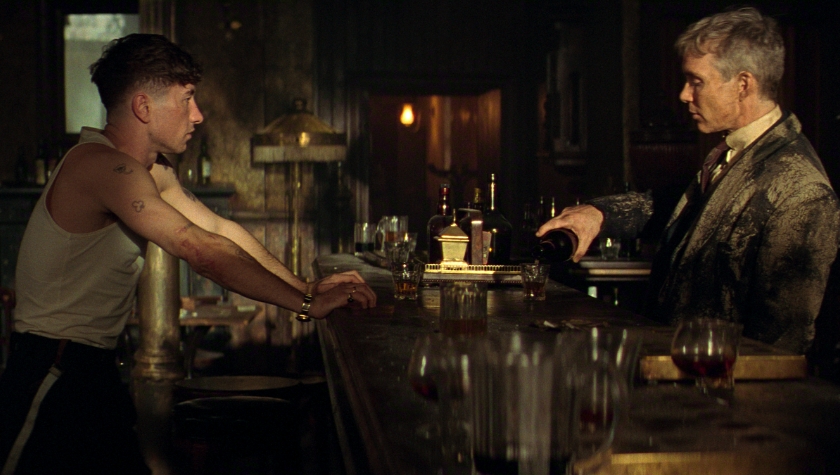
Despite the epic scope of Peaky Blinders, the idea originated in family stories Knight heard growing up.
His parents were raised in Small Heath, the Birmingham neighborhood where the series is set. “My mum was a bookie runner when she was nine years old,” Knight says.
Children were used to collect illegal bets because they were less likely to be arrested. “She’d walk down the street with a basket of washing,” Knight says. “People would pass by, drop a piece of paper with the horse and the odds and a coin wrapped inside.”
Those small, vivid stories sparked his imagination that led to the Shelby family saga. “They’re the things that made me want to write Peaky Blinders,” Knight says.
The Next Chapter
Even as Peaky Blinders reaches its cinematic conclusion, Knight’s writing career continues at full speed. Among his current projects is one of the most coveted assignments in film: writing the next installment in the long-running James Bond franchise.
“I can’t tell you anything about it,” he says with a smile. “But that’s what I’m doing and I’m loving it.”
For Knight, it’s the jewel of a lifelong ambition. “Bucket list,” he says simply.
And if his Bond script is half as exhilarating as Peaky Blinders, we’re all in for a treat.
Peaky Blinders: The Immortal Man was written on Final Draft. It streams March 20 on Netflix.