
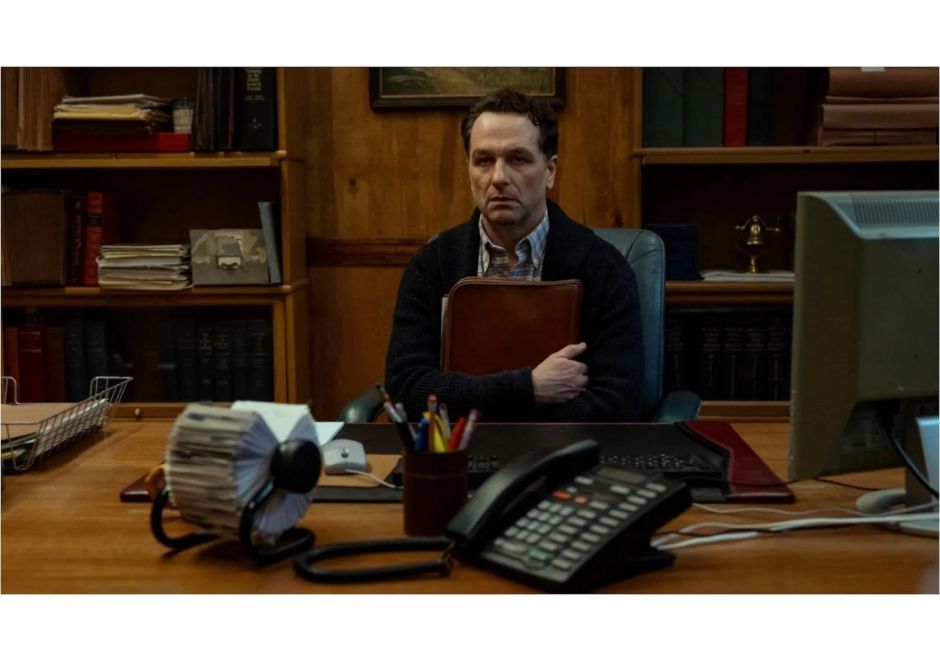
Widow's Bay is unexpectedly one of the scariest and funniest shows to grace our TV screens. Series creator and writer Katie Dippold (Parks and Recreation, The Heat, and 2016's Ghostbusters), who is best known on the internet as the "Babadook" Halloween lady, spent years developing a show that evokes the sense of fun and fear you can only get from running through a haunted house.
Widow's Bay follows Tom (Matthew Rhys), the town's mayor, in his attempt to make the haunted island the next Martha's Vineyard. Amid the show's unnerving duality, there are some great lessons we can take away from oddball characters who seem trapped and endure an increasingly unhinged situation.
1. Know the Ending Before You Start
Horror and comedy are both, at their core, about control (more specifically, the writer's control over when something lands). A punchline delivered a beat too late dies. A scare telegraphed too early dissolves. When you're working in both registers simultaneously, that control becomes even more critical because you're managing two kinds of anticipation at once.
This is why Dippold's approach to Widow's Bay is so instructive: she always knew where the story was going, but the path there was built on feeling. "I think you have to go in knowing exactly what you want to do and knowing how you want it to feel," she tells IndieWire. "So then you can navigate the conversation, and when someone pitches the perfect joke, you know, 'Oh, that's exactly what this show needs.'"
Knowing your ending isn't just about the plot's destination; it's about knowing the emotional key the story resolves in. Is the final note funny? Devastating? Both at once? In a horror-comedy, that question matters enormously, because the whole tonal dance of the story is secretly in service of that last beat. Every joke that lands and every scare that sticks is quietly building toward it.
Having the freedom to play, follow a detour, or let a pitch surprise you can only exist because the destination is fixed. You can afford to explore the route precisely because you won't get lost. And when the tone starts to slip, when a scene tilts too far into comedy or too deep into dread, knowing the ending gives you the compass to correct it: does this choice move toward the feeling you're building to, or away from it?
2. Create Characters That Ground the Story's Reality
The most effective horror-comedies balance tone through their characters. In Widow's Bay, the humor doesn't come from the monsters; it comes from the townsfolk who have learned to live with them. Tom functions as the audience's straight man: his insistence on logic is the straight line every joke and every scare bends against. The natives, each locked into their own particular kookiness, are comic relief that makes the horror feel plausible. A town weird enough to be funny is a town weird enough to be genuinely dangerous.
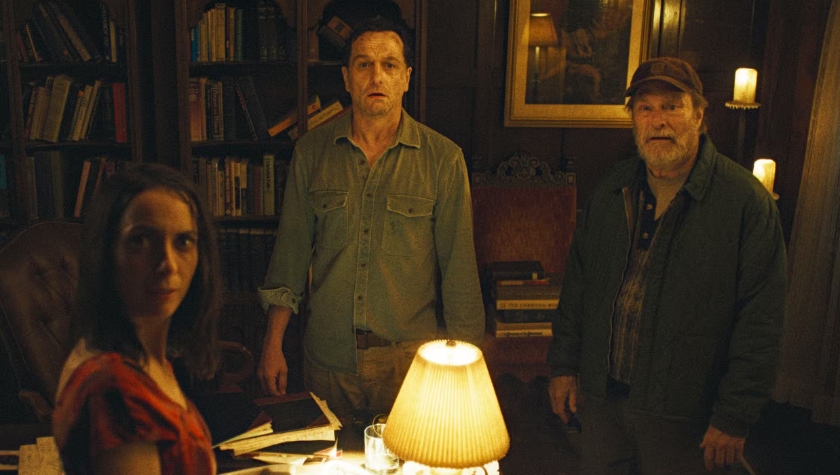
The characters hold the two tones of horror and comedy together without collapsing them into one. When Widow's Bay's "monster a week" premise starts asking harder questions about Tom's motives, it works because Dippold has built characters whose psychology can carry that weight. The comedy doesn't undercut the horror; it earns it.
When writing characters meant to hold this kind of tonal tension, go further than personality. Write their full history before the story begins. Understand what warped them, what they're protecting, what they've normalized that they absolutely should not have. Because in horror-comedy, a character who is funny and a character who is frightening are often the exact same person, seen from two different angles — and the writer has to know both angles completely to control which one the audience sees.
3. Set Up the Laugh and the Scare
Comedy and horror have long walked hand-in-hand. We've seen screenwriters like Jordan Peele, Zach Cregger, and (most recently) Curry Barker graduate from sketch comedy to create some of the scariest on-screen stories. How? They know how to build a setup that can either scare your pants off or make you laugh them off.
In its most basic form, a great joke/scare is built around a premise, a setup, and a punchline. Episode two gives us a perfect example to work from:
- The premise: Tom wants to prove that the hotel is not haunted by a fisherman.
- The setup: After several failed attempts to capture evidence of the ghost, Tom spends the evening with an unexpected guest staying at the hotel.
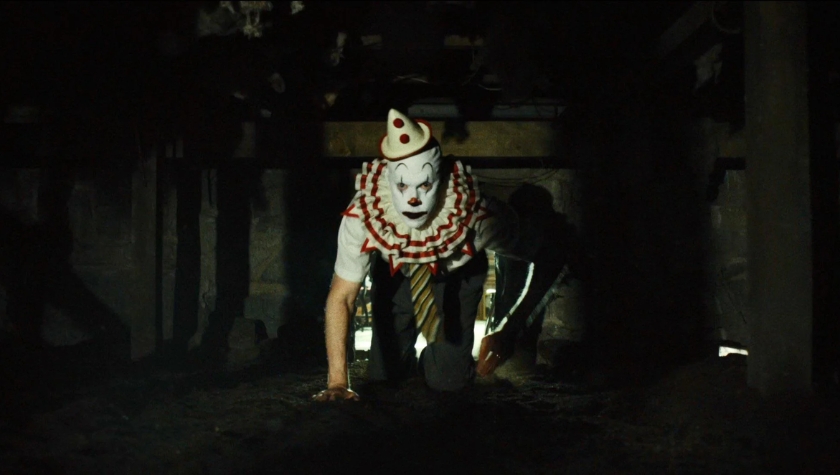
- The punchline: Tom has the courage to check the crawlspace only to get chased by another ghost (the other guest at the hotel).
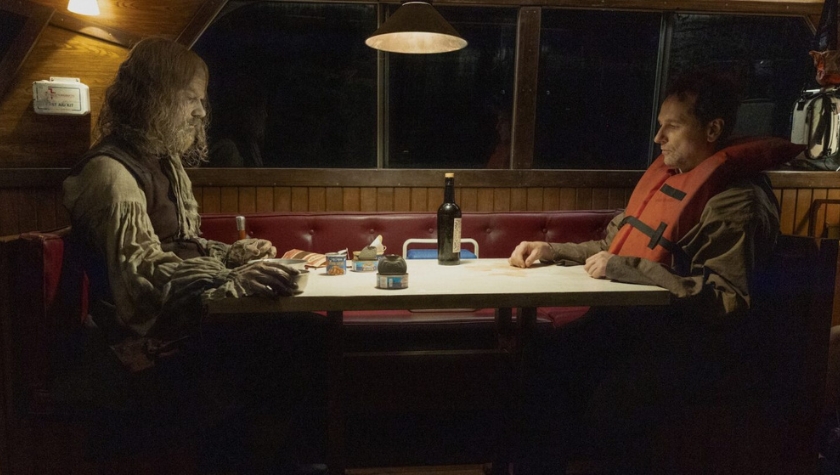
The humor comes from Tom finally letting down his guard and trusting his senses, only for him to be immediately proven wrong by an actually terrifying moment that you can't help but laugh in terror at. Widow's Bay sits comfortably in the absurd and the unexplained, allowing a setup to balance two tones at once. Horror sits atop the comedy to build tension, making the audience feel anxious and excited about the unknown.
“I really do think there’s something to people who started in sketch comedy understanding how to build something, setting up the anticipation and the payoff,” Dippold tells Filmmaker. “What I find fun is that you don’t know if that build is going to lead to something that’s going to make you laugh or scare you.”
Bonus: Balancing Genres is a Skill That Takes Time
In fact, Dippold first wrote Widow's Bay as a Parks and Rec spec script and has been refining her story for 18 years. The problem wasn't so much that the script was difficult to sell; Dippold seemed to want to develop a feeling that she had been trying to capture her whole life and find the best way to put it on screen.
Some of the best stories, especially ones that balance genre and tone as well as Widow's Bay, will take time. Don't get discouraged by the screenplay you've been working on for what feels like eons. As writers, we are constantly working to develop the best ways to communicate, and it will take time to develop those skills or connect with the right people who will help lift a project off the ground.
Staying motivated to continue a project you've worked on for years can look like joining a writers' group or reserving 30 minutes to an hour a day to writing, re-writing, editing, or exercising a skill you learned from screenwriting blogs. Knowing your goal before sitting down at the laptop each day will help you be more intentional about what you plan to do when you open Final Draft.