
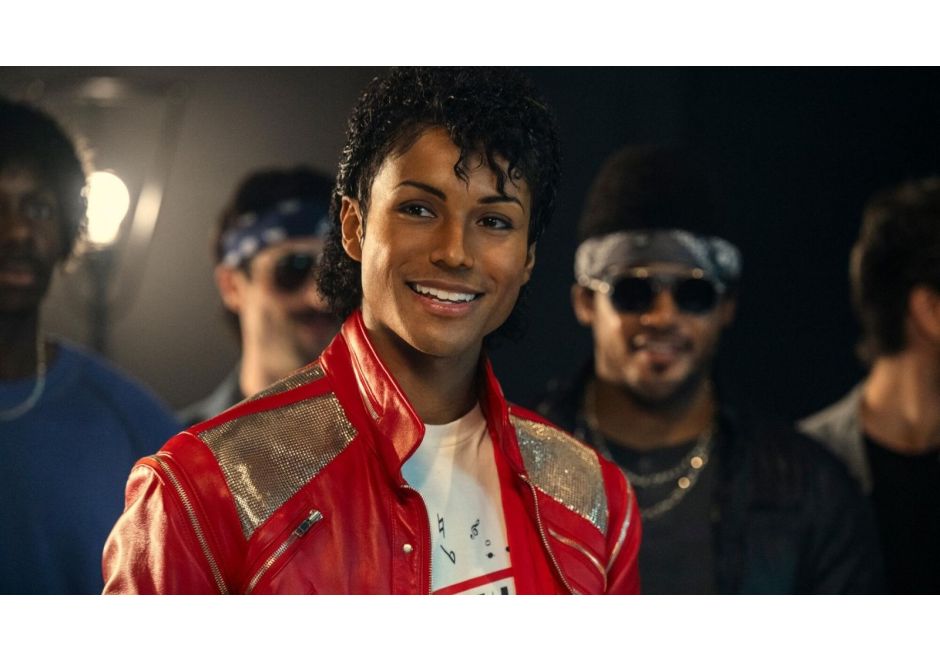
There’s a staple on cinematic release schedules around the world, one that’s treated like an awards golden goose and always seems to attract exciting talent. That staple is music biopics.
You’ll see one come out nearly every year. Last year, it was the awards contender, Springsteen: Deliver Me from Nowhere. Before that, there were a few high-profile releases, the biggest of which was A Complete Unknown. Go back farther, and you’ll find biopics about Elvis, Bob Marley, Elton John, Robbie Williams, all the way to Loretta Lynn and Selena.
Which brings us to the present. Hitting theaters this week is Michael, a music biopic about the King of Pop himself, Michael Jackson. Antoine Fuqua directs from a script by John Logan (Gladiator, Skyfall, The Aviator). Michael Jackson's real nephew Jaafar Jackson plays the eponymous lead.
For screenwriters looking to break in, writing a music biopic can be a smart choice for attracting attention. It generates consistent industry heat, can land you on the Black List or in a production deal, and attracts serious attention.
But the genre has its rules. Here's what it demands and what the best ones get right. Should you be writing one right now?
The Black List Loves a Music Biopic
If you're looking for a spec target with proven industry traction, just look at how musical biopics perform on the Black List. If you’re a new or unrepped writer, this can be a great way to get eyes on your work.
In 2022, there were scripts about Britney Spears (It’s Britney, Bitch by Cerina Aragones, which culminates in the notorious night she shaved her head) and Dolly Parton (Dumb Blonde by Todd Bartels and Lou Howe, an origin story).
Blond Ambition by Elyse Hollander topped the 2016 Black List. It’s a Madonna biopic set in early-1980s New York that follows her struggle to get her first album released.
Layla… And Other Assorted Love Songs by Derek Weissbein also appeared on the 2016 list. Its story is built around the love triangle between Eric Clapton, George Harrison, and Pattie Boyd, and the music that came out of it.
Rumours by Tyler Austin and Patrick Eme made the 2019 Black List. It’s a Fleetwood Mac script, following Stevie Nicks and Lindsey Buckingham as they write songs about each other during their feud.
Note that all are structured around specific, defined dramatic conflicts, not just around legacy. So you wouldn’t say, “I want to write a script about Madonna.” That’s a fine place to start, but not a pitch. As you’re planning yours, get more granular.
The Elements of a Music Biopic
As with most genre stories, there are rules to the structure of a music biopic. Typically, you’ll see humble beginnings, the early struggles, the moment of discovery, the darkness that can accompany fame, and a high point in their career (even if, ultimately, the star doesn’t meet a happy ending).
As an audience member, you go into a music biopic expecting to hear some great songs and learn more about the person behind them.
So if you’re writing one, you’d better plan to deliver on both.
A key part of a screenwriter’s job in this genre is to find the right tonal balance. Lean too dark, and you risk losing the spark that made fans care about the artist in the first place. Too twee, and your story might be boring and trite.
Here are a few things to remember when writing your music biopic.
First, focus on a contained timeframe if you can. If you jump around in time every few scenes, the pacing can get disjointed, and the tension can deflate. Straight Outta Compton is about the formation and rise of N.W.A. in the late 1980s. Walk the Line spans a specific era and ends on the famous Folsom Prison concert. Back to Black focuses on the making of one album.
Second, know what your movie is saying thematically. Usually, this is the “why” that drives your musician. Why does this artist do what they do? Is it a search for identity? To escape their circumstances? Is it for redemption? Is it to please an unpleasable figure in their life?
Third, let the music shine. The songs in a music biopic shouldn’t feel like an interruption to the drama. It should be the dramatic payoff, and every performance scene should feel earned. (I can still remember the delight I felt when the improvised organ came in on “Like a Rolling Stone” in Mangold’s Complete Unknown.)
What specifically do you want to focus on? In what era will you set your story, and why? Answer that, then pull up Final Draft and get started.
You Don’t Need the Rights to Write
Did you know you can write a music biopic on spec without securing music or life rights first? (That's technically a producer’s job.)
For example, Shania! by Jessica Welsh follows Eilleen Edwards' rise from an impoverished rural Canadian upbringing to becoming Shania Twain. The script made the 2021 Black List. And it was a spec script.
Welsh wrote it in her spare time while working as a staff writer on an Apple TV+ series. She had no prior relationship with Twain and no rights deal. Sony came aboard as a financier as the script got attention.
You don't need anyone's permission to write about a public figure's life. So if you feel passionately about the subject and their story, there’s nothing to stop you from going ahead and writing your script.
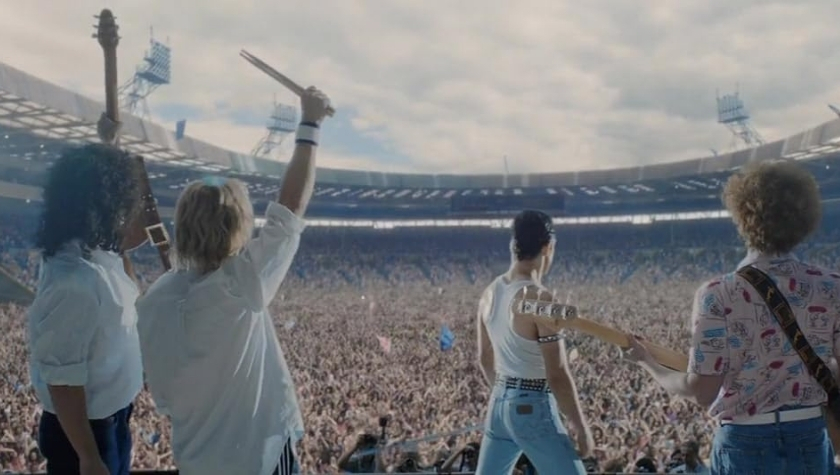
When Music Biopics Work
Like any film, a music biopic doesn’t always hit, but when it does, it's a popular crowd-pleaser and easy for distributors to slot. These are just a few you should study to learn how it’s done.
In 2018, Bohemian Rhapsody grossed $903 million worldwide on a budget of roughly $50 million, making it the highest-grossing music biopic ever. Learn more in our breakdown of the film.
For Elvis, Baz Luhrmann and co-writers Sam Bromell, Craig Pearce, and Jeremy Doner structured the film around the Colonel Tom Parker relationship as the central engine of exploitation, giving the film a clear antagonist. It made $288 million worldwide. You can read the Elvis screenplay here.
Walk the Line is a beloved entry in the genre. Filmmaker James Mangold took 10 years to make it and modeled it on East of Eden. It made $186 million, and you can read the screenplay on Cinephilia & Beyond.
A Complete Unknown, Mangold's 2024 Bob Dylan biopic, is another recent example of the genre working. It approached Dylan’s life through the lens of a contained timeframe (Dylan going electric) and let the music enter the storyline organically. Read the script from 20th Century Studios here.
If you’re a music fan, we hope you’re inspired, and who knows – maybe your biopic script will end up being more than just a writing sample.