

There's an old narrative principle, first developed by Russian playwright and short-story writer Anton Chekhov, later referred to as Chekhov’s Gun. The principle came from a Chekhov quote that stated, “If in the first act you have hung a pistol on the wall, then in the following one it should be fired. Otherwise, do not put it there."
The quote emphasizes the power and importance of setups and payoffs in storytelling, and that everything a writer puts into their story should matter. In Chekhov’s example, if you feature a distinct item like a weapon in your story, there should be a reason that the writer has taken the time to include that item in the narrative. Now, the level at which an item, visual, or line of planted exposition is paid off later in the story can be subtle, or it can become a major reveal (payoff). But it must always matter in the end.
While not every single little detail needs to be a setup for an eventual payoff, the more setups and payoffs you have in your script can lead to a more engaging and entertaining story because you’re allowing the audience the opportunity to take a more visceral part in the story.
With that in mind, we’ll explore how setups and payoffs function in screenplays, breaking down what they are, how they work, and why weaving them throughout your script can elevate both the story itself and your growth as a screenwriter.
What Is a Setup?
A setup is Step One of the setup-and-payoff (also known as plant-and-payoff) process. It can be a physical prop (gun, weapon, map, file, etc.), a standout visual, or a shared piece of information. The key element of a setup is that it must be aligned with the eventual story and plot that unfold. In short, it needs to be there for a reason.
Perhaps one of the most iconic examples comes from the Orson Welles classic Citizen Kane. The first word spoken in the film is “Rosebud.” The rest of the film follows characters (and the audience) as they search for the meaning of that word. It’s the ultimate setup that creates mystery, drives the plot, and takes us on a character’s arc journey.
A more contemporary classic example can be found in Die Hard, where the protagonist, John McClane, is advised by a travel companion to take off his shoes and make fists with his toes on the carpet to help with air travel jet lag. This is a subtle setup that leads to a huge second-act moment. In fact, it’s a setup that is called back to multiple times with multiple payoffs throughout the movie.
A strong setup does more than just plant information. It creates expectation, curiosity, and emotional investment for the reader or audience. Readers and audiences are very attuned with storytelling. They are constantly looking for plot hints, clues, and setups. It’s in our nature to be curious and inquisitive. When we read novels, watch movies, or watch TV shows, part of the entertainment value of storytelling lies in putting ourselves in the shoes of the protagonists and living vicariously through them. We want to solve the mystery, narrow down the suspects, find the culprits, look for clues, and be an active contributor, especially in the cinematic media of film and television.
We have read so many books, watched so many movies, and binged so many TV series. Our brains are trained to look for patterns and meaning in anything we see in a story. We know the best writers love to offer setups that force us to question or validate things we hear and see. We then feel rewarded by finally learning why those setups were introduced and what meaning they have to the story and characters.
What Is a Payoff?
A payoff is Step Two of the setup and payoff process. It’s a moment in the script when a previously established prop, visual, or piece of information is revealed to have deeper meaning for the story.
- An established weapon is later used to thwart a character.
- A featured visual is revealed to be a key to a puzzle.
- A previously discussed piece of information leads to a plot twist.
A payoff doesn’t just repeat information; it transforms it by giving it deeper meaning. Payoffs also play on the audience's emotional investments. Anticipation is powerful. Setups build anticipation, making the audience wonder, “Okay, why is that in the story?” When the audience gets emotionally invested in the story like that, it’s an enhanced form of storytelling and entertainment that stands out.
The bigger and more surprising a payoff is, the more memorable your second acts, third acts, and climaxes can be. They are what offer a more cathartic experience that audiences will walk away with after experiencing your enhanced story.
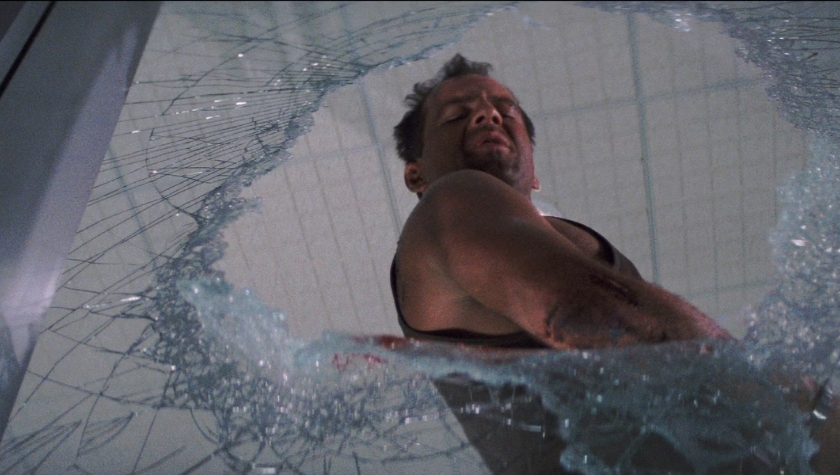
The setup of the “fists with your toes” opening moment in Die Hard pays off when a barefoot McClane is forced to run through a room of broken glass to evade those trying to kill him. Early in the first act, McClane removes his shoes and socks and makes fists with his toes to relieve his jet lag. Moments later, the building is taken over by terrorists. He’s forced to escape and evade quickly, and spends the second act barefoot.
Mini-payoffs include funny moments where he can’t find shoes that fit him after he takes a terrorist out. Later, villain Hans Gruber sees that McClane is barefoot. When a shootout ensues, Hans remembers this detail when they have McClane pinned down in a room surrounded by glass walls. Hans tells the henchman to shoot the glass. McClane is forced to run out of the room through the broken glass, leading to a horrible injury that makes him lose all hope, leading into the third act. This payoff raises the stakes and helps McClane's character through an emotional arc.
The transformation that a payoff delivers from a setup is where the magic of storytelling really comes from. It’s the difference between a character being afraid of water and then later that character having to go on a boat to hunt a deadly shark.
In Steven Spielberg’s Jaws, Chief Brody’s fear of water is mentioned very early on in the story. And it is constantly paid off throughout the film, leading to him being the sole person left to kill the shark as it slowly sinks into the depths of the ocean. Those moments aren’t just callbacks to the setup. They become elements of a character’s evolution and arc.
Why Do Setups and Payoffs Better Your Script?
The payoff of any single setup is the salt and peppering of the cinematic story meal you’re cooking up for the audience. Payoffs (and their setups) add flavor and style beyond the basic ingredients of story, character, concept, and plot.
When audiences see multiple setups and payoffs throughout the story, it deepens their emotional investment.
- They see a deeper meaning in the writing.
- They search for more setups and payoffs, engaging them even more.
- Their anticipation grows, which makes them sit on the edge of their seats with excitement and invested interest.
That said, setups and payoffs aren’t just clever writing devices used to manipulate the audience. They have become essential storytelling tools tied directly to character, stakes, and theme. Using setups and payoffs allows you to intertwine them with necessary character development, raise the stakes to keep things interesting, and include callbacks to overarching themes that audiences can discover.
Start with the Payoff, Not the Setup
It’s always good to know the ending of your script before you start writing it. Why? Because then you can write and build towards something. The same can be said for knowing your payoffs early so you can write towards them using setups.
Setups are the easy and more fun part. Once you know the payoffs, you can pepper your script with setups. The payoff is what matters most.
- A triumphant character moment.
- A shocking reveal.
- A mind-boggling twist.
- A full circle emotional beat.
The easiest and most fun part of screenwriting can be the process of setting up those payoffs you already have planned out. If you don’t know what payoffs you want to set up, it’s difficult to fit effective and meaningful setups within the story. Payoffs are your compass. When you have them in your hand, you always know where to point the story.
In Jurassic Park, it’s established in the first few minutes that Dr. Grant has apparent bad luck when it comes to electronics, computers, and technology. He can’t even touch a screen without a glitch happening. When he arrives on the island and visits the park, we quickly notice that anything related to technology goes haywire, forcing the characters into dangerous circumstances at every turn. This masterful setup and payoff not only offers subtle entertainment but also touches on the story's central theme: whether technology is a blessing or a curse.
Intertwine Setups with Character Dynamics
A common mistake screenwriters can make is to treat setups and payoffs as nothing more than plot mechanics and gimmicks. While certain scripts can use plot mechanics and gimmicks for laughs, shocks, or thrills, it’s always beneficial to also intertwine setups with character dynamics, arcs, and depth.
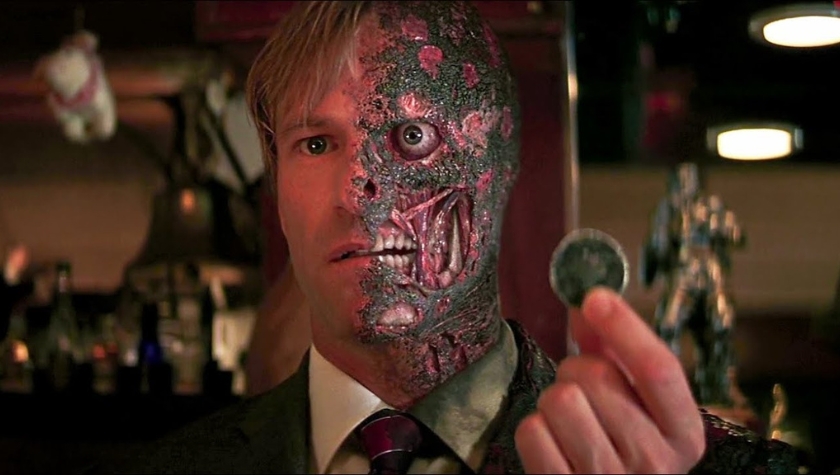
In The Dark Knight, Harvey Dent talks about either dying a hero or living long enough to become the villain. It’s a memorable and cool line of dialogue that immediately plays to the duality between what Harvey Dent is trying to do and how Batman is trying to do the same thing in a different, more violent way. But there’s a payoff. The line lands with much more devastating weight when Harvey actually lives through a horrible explosion, and then goes on to become one of the villains of the story, hell-bent on revenge (mirroring Batman’s motives). It ends up being not just clever plot mechanics. It’s tragic. He becomes the very thing he didn’t ever want to be.
When you tie in setups with characters, you can creatively kill two storytelling birds with one stone. You can showcase a true character arc while also delivering impactful payoffs throughout your script.
One Secret Way to Enhance Your Setups and Payoffs
Audiences have seen it all. Chances are they’ll be able to predict routine setups and payoffs. The key to surprising them is to subvert their expectations as much as possible.
Because we’ve seen it all, we go into movies and certain scenes and sequences with embedded expectations. We generally know what to expect from what we’ve seen in prior cinematic stories. But if you can do your best to subvert the audience’s expectations, you’ll be giving them a more visceral experience because they won’t know what to expect if you surprise them a couple of times.
Play with their expectations. Be creative. Your payoffs still need to be grounded, but you can also offer some that eventually become mini-setups for the real payoff. You can sometimes lead the audience into thinking the payoff will be what they expect (a false payoff), only to surprise them with an option they either forgot about (a potential misdirect or red herring) or something even more surprising.
When you study movies and know the general expectations of any genre, you can masterfully subvert those expectations and use them to your advantage. It’s not about lying to the audience. It’s about giving them an experience they haven’t had yet.
When you are conjuring payoffs, ask yourself:
- What have audiences already seen in this genre or scenario?
- What is the usual go-to payoff?
- What are the cliches and tropes?
- What other options can I play with?
Audiences love the familiar, but they always want something familiar yet different. Master the subversion of their expectations, and you’ll have screenplays that will stand out brightly from the rest.
What Is the Process of Writing Setups and Payoffs?
There’s no single way to develop and write setups and payoffs, but here are the three screenwriting habits you can utilize to create and implant them.
1. Conjure Setups and Payoffs During the Outline Phase
Writing an outline or beat sheet before you write one single word in script form is a key process all screenwriters will need when they make the transition from up-and-comer to pro screenwriter. Outlines are where the collaborative process begins among screenwriters, producers, development executives, and directors. But they are also excellent development tools for newcomers.
An outline or beat sheet consists of bullet points listing sequential scenes, each described in one to three sentences, that outline what the scene or story beat entails. You are mapping out how the whole story will flow, scene by scene.
In the outline phase, it’s so much easier to move scenes around or delete them if necessary. It’s even easier to insert setups and payoffs. When you write your setups and payoffs within an outline, it’s easier to see if you have enough setups for a single payoff. You can also balance how many different setups and payoffs you have going through your whole story.
2. Writing Setups and Payoffs During the Writing Process
You can always inject setups and payoffs during the actual writing process. It’s nice to leave room for discovery. Just because you’ve written a detailed outline doesn’t mean you can’t tweak, add, or delete things. If you’re writing and you know there’s a payoff in mind for later on, you may likely stumble upon a moment or two that would be perfect for a subtle and clever setup. You can also discover new and better payoffs.
3. Pepper Your Script with Setups and Payoffs During Rewrites
This is when you can go back and do the truly fun work! Rewrites allow you to enhance your script. Even when you get your script to its best and tightest version, it’s always beneficial to go back and try to pepper your script with additional and more creative setups and payoffs.
You go into these types of rewrites with the mindset of asking yourself, “How can I make this script even better and more memorable?”
The answer to that is often to pepper your script with more setups and payoffs, or with more effective ones. Quality over quantity. Always.
Watch ‘The Sixth Sense’ For a Master Class in Setups and Payoffs
When you have a movie that hinges on one of the greatest twists (and payoffs) in cinematic history, you’re going to have sticklers who go back to make sure that a twist wasn’t just a cheat to shock the audience. The audience will want receipts. They’ll want to go back and see whether the writer did their due diligence in setting up that amazing payoff.
M. Night Shyamalan did.
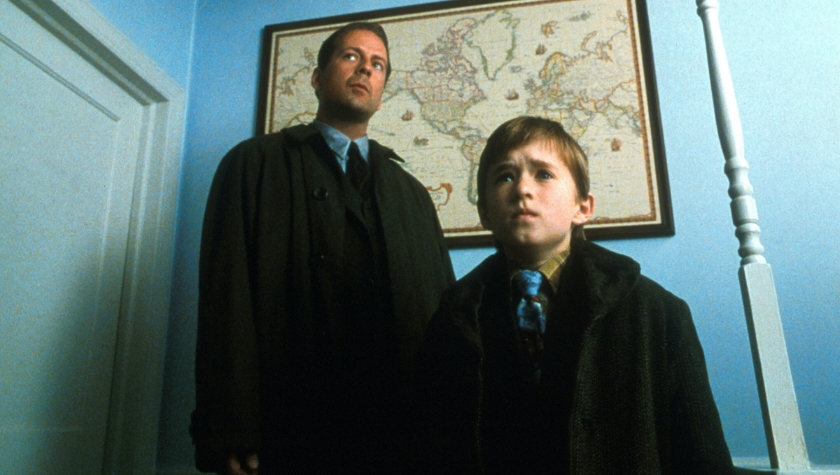
There are so many subtle setups throughout the first, second, and third acts. Here is a spoiler-riddled list with some of the script’s best setups (highlighted in bold) and payoffs. Please do not read further if you haven’t seen the film yet and would like to be surprised.
- Malcolm is shot in the opening scene, which is later revealed as being fatal.
- No characters other than young Cole ever directly acknowledge or speak to Malcolm, which is later because we learn that he’s dead.
- In the restaurant scene, Malcolm’s wife Anna ignores Malcolm completely, which initially feels like marital tension but is actually because he’s dead.
- Malcolm never interacts with physical items in the presence of others. The couple of times he does out of anger, characters react confused, not knowing or seeing who or what caused it (because he’s a ghost).
- Cole explains that the ghosts he sees (before Malcolm discovers the truth that he’s actually dead) don’t know they’re dead and only see what they want to see. This helps explain why Malcolm wouldn’t pick up on these signs earlier.
- Malcolm misinterprets Anna’s behavior as relationship issues rather than grief, because he doesn’t know that he himself is dead.
- The final ring drop reveals the truth about Malcolm’s physical absence and Anna’s reality.
You Can Plant Setups and Payoffs in Any Genre
Setups and payoffs aren’t just for mysteries to be solved or action-adventure rollercoaster rides. You can and should be using creative setups and payoffs in any genre you’re writing in.
- In comedies, setups and payoffs can create hilarious moments throughout the script.
- In dramas, you can use them to amp up the tension and melodrama.
- In television pilots and episodes, you can use them to set up payoffs in ensuing episodes.
Setups and payoffs are perfect enhancements for any type of screenplay you’re writing. Have fun with them. Use them wisely. You’re making your script a better read by having clever and creative setups and payoffs ever-present.